The imposition of "reciprocal tariffs" reflects the United States' pursuit of economic hegemony and will ultimately backfire, harming both American consumers and the global economy, according to Chinese experts
U.S. President Donald Trump signed an executive order on the so-called "reciprocal tariffs" on April 2, imposing a 10-percent "minimum baseline tariff" and higher rates on certain trading partners.
The order took effect on April 5, leaving all imports to the U.S. subject to 10 percent additional tariffs, except as otherwise provided.
Trump will also impose an "individualized reciprocal higher tariff" on the countries and regions with which the United States "has the largest trade deficits," according to a White House document. This will take effect on Wednesday.
Experts say that the U.S. move violates basic economic laws and market principles, harms both itself and others, and poses a huge challenge to the global trade order.
"The United States' so-called 'reciprocal tariffs' lack both theoretical foundation and practical support. It regards international economic and trade activities as a negative-sum game, believing that as long as other countries suffer more losses than itself, it can preserve its economic hegemony. However, it's not the case. When the global economy is in a downturn, it is difficult for the U.S. to remain unaffected," said Sang Baichuan, dean of the Institute of International Economics at the University of International Business and Economics.
The experts agreed that the imposition of such "reciprocal tariffs" is unlikely to reduce the U.S. trade deficit. Instead, it will significantly increase the prices of imported goods in the country, putting the U.S. economy on the edge of stagflation.
"The U.S. 'reciprocal tariffs' will also backfire on its own economy. The tariffs are ostensibly borne by traders, but in fact, a considerable part of the tariffs will take a toll on consumers. The U.S. International Trade Commission has admitted that the imposition of additional tariffs will lead to a significant price hike for all kinds of consumer goods, and investors are also in a panic as major U.S. stock indexes and futures have fallen sharply," said Chen Dapeng, an associate researcher of the Institute of International Economics at the Chinese Academy of Macroeconomic Research (AMR).
"Inflation in the United States has not returned to its target range since 2022. Once additional tariffs are imposed, prices of imported goods are bound to be raised, making them more expensive for consumers. So, the U.S. faces a huge risk of a second wave of inflation, and it will be more difficult to control," said Zhang Zheren, deputy dean of the AMR's Institute of International Economics.
The experts noted that it is a shared responsibility of the international community to make economic globalization more open, inclusive, balanced and beneficial for all.
They said China, as the world's second largest economy and second largest goods consumption market, will only open its doors even wider and share development opportunities with the world, no matter how the international situation changes.
"China's response and countermeasures have demonstrated to the world its position and determination to oppose trade protectionism and unilateralism, uphold the multilateral trading system under the WTO framework, and safeguard economic globalization," said Ren Lin, director of the Department of Global Governance at the Institute of World Economics and Politics under the Chinese Academy of Social Sciences.
"China will adhere to advancing economic globalization that is inclusive and benefits all, enhance certainty through high-level opening up, hedge against the uncertainties brought by the 'reciprocal tariffs' to the world, and pursue mutual benefit and win-win results with other countries through practical and mutually beneficial economic and trade cooperation," said Chen.
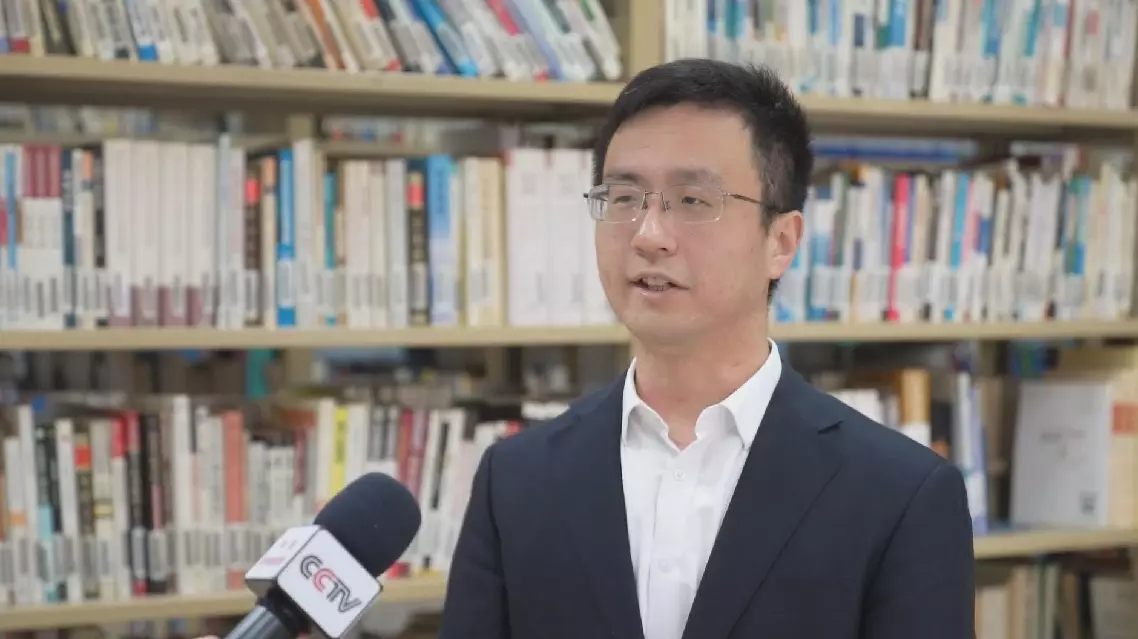
US hegemonistic 'reciprocal tariffs' to take toll on consumers, harm global economy: experts