Skip to Content Facebook Feature Image

Trump: Israel would be 'leader' of Iran strike if Tehran doesn't give up nuclear weapons program

News

Trump: Israel would be 'leader' of Iran strike if Tehran doesn't give up nuclear weapons program
News

News

Trump: Israel would be 'leader' of Iran strike if Tehran doesn't give up nuclear weapons program

2025-04-10 06:13 Last Updated At:06:21

WASHINGTON (AP) — President Donald Trump said Wednesday that Israel would be the “leader” of a potential military strike against Iran if Tehran doesn’t give up its nuclear weapons program.

Trump made the comments ahead of this weekend's scheduled talks involving U.S. and Iranian officials in the Middle East sultanate of Oman. Trump earlier this week said the talks would be “direct” while Iran has described the engagement as “indirect” talks with the U.S.

“If it requires military, we’re going to have military,” Trump said. "Israel will obviously be very much involved in that. They’ll be the leader of that. But nobody leads us, but we do what we want to do."

Israeli Prime Minister Benjamin Netanyahu earlier this week said he supports Trump’s diplomatic efforts to reach a settlement with Iran. He added that Israel and the U.S. share the same goal of ensuring that Iran does not develop a nuclear weapon. Netanyahu, however, led efforts to persuade Trump to pull out of a U.S.-brokered deal with Iran in 2018.

The Israeli leader, known for his hawkish views on Iran and past calls for military pressure, said he would welcome a diplomatic agreement along the lines of Libya’s deal with the international community in 2003. But that deal saw Libya’s late dictator Moammar Gadhafi give up all of his clandestine nuclear program. Iran has insisted its program, acknowledged to the International Atomic Energy Agency, should continue.

“I think that would be a good thing,” Netanyahu said. “But whatever happens, we have to make sure that Iran does not have nuclear weapons.”

The United States is increasingly concerned as Tehran is closer than ever to a workable weapon. But Trump said on Wednesday that he doesn't have a definitive timeline for the talks to come to a resolution.

“When you start talks, you know, if they’re going along well or not," Trump said. "And I would say the conclusion would be what I think they’re not going along well. So that’s just a feeling.”

The U.S. and other world powers in 2015 reached a long-term, comprehensive nuclear agreement that limited Tehran’s enrichment of uranium in exchange for the lifting of economic sanctions. But Trump unilaterally withdrew the U.S. from the nuclear agreement in 2018, calling it the “worst deal ever.”

Iran and the U.S., under President Joe Biden, held indirect negotiations in Vienna in 2021 aimed at restoring the nuclear deal. But those talks, and others between Tehran and European nations, failed to reach any agreement.

Meanwhile, the U.S. Treasury Department earlier on Wednesday issued new sanctions targeting Iran’s nuclear program.

Five entities and one person based in Iran are cited in the new sanctions for their support of Iran’s nuclear program. The designated groups include the Atomic Energy Organization of Iran and subordinates Iran Centrifuge Technology Company, Thorium Power Company, Pars Reactors Construction and Development Company and Azarab Industries Co.

“I want Iran to be great,” Trump said Wednesday. “The only thing that they can’t have is a nuclear weapon. They understand that.”

Iranian President Masoud Pezeshkian again pledged Wednesday that his nation is “not after a nuclear bomb” and even dangled the prospect of direct American investment in the Islamic Republic if the countries can reach a deal.

The comments by the reformist leader represent a departure from Iran’s stance after its 2015 nuclear deal with world powers, in which Tehran sought to buy American airplanes but in effect barred U.S. companies from coming into the country.

“His excellency has no opposition to investment by American investors in Iran,” Pezeshkian said in a speech in Tehran, referring to Iran’s Supreme Leader Ayatollah Ali Khamenei. “American investors: Come and invest.”
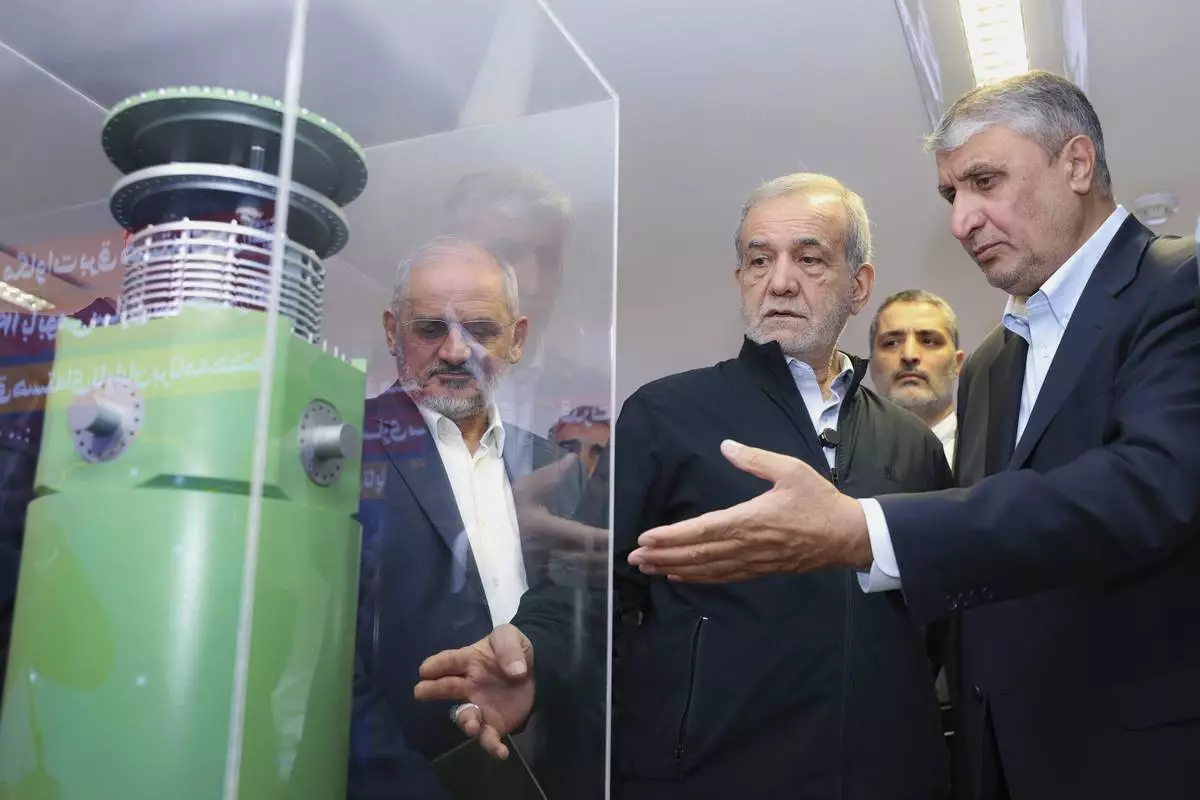
In this photo released by the Iranian Presidency Office, President Masoud Pezeshkian, second right, listens to head of Atomic Energy Organization of Iran Mohammad Eslami as he visits an exhibition of Iran's nuclear achievements, in Tehran, Iran, Wednesday, April 9, 2025. (Iranian Presidency Office via AP)
In this photo released by the Iranian Presidency Office, President Masoud Pezeshkian, second right, listens to head of Atomic Energy Organization of Iran Mohammad Eslami as he visits an exhibition of Iran's nuclear achievements, in Tehran, Iran, Wednesday, April 9, 2025. (Iranian Presidency Office via AP)

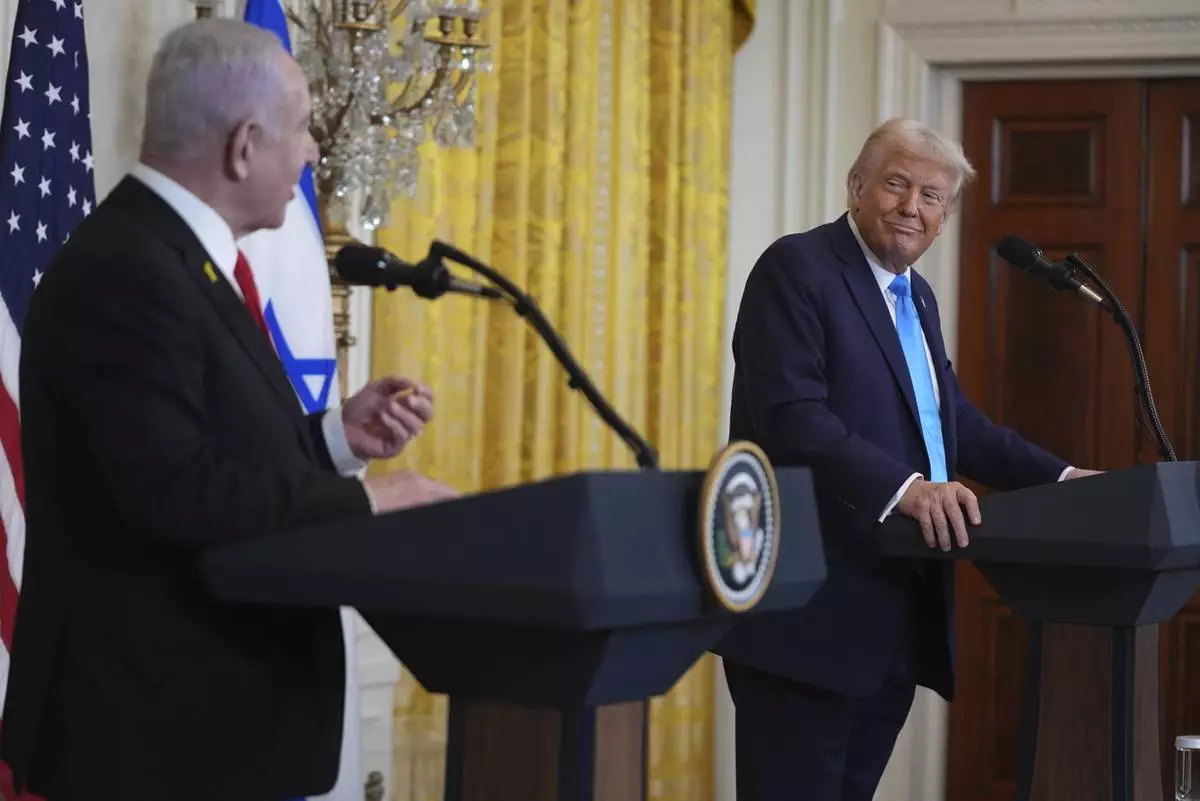
FILE - President Donald Trump listens as Israel's Prime Minister Benjamin Netanyahu speaks during a news conference in the East Room of the White House, Feb. 4, 2025, in Washington. (AP Photo/Evan Vucci, File)

FILE - President Donald Trump listens as Israel's Prime Minister Benjamin Netanyahu speaks during a news conference in the East Room of the White House, Feb. 4, 2025, in Washington. (AP Photo/Evan Vucci, File)
NEW YORK (AP) — U.S. flu infections showed signs of a slight decline last week, but health officials say it is not clear that this severe flu season has peaked.

New government data posted Friday — for flu activity through last week — showed declines in medical office visits due to flu-like illness and in the number of states reporting high flu activity.

However, some measures show this season is already surpassing the flu epidemic of last winter, one of the harshest in recent history. And experts believe there is more suffering ahead.

“This is going to be a long, hard flu season,” New York State Health Commissioner Dr. James McDonald said, in a statement Friday.

One type of flu virus, called A H3N2, historically has caused the most hospitalizations and deaths in older people. So far this season, that is the type most frequently reported. Even more concerning, more than 91% of the H3N2 infections analyzed were a new version — known as the subclade K variant — that differs from the strain in this year’s flu shots.

The last flu season saw the highest overall flu hospitalization rate since the H1N1 flu pandemic 15 years ago. And child flu deaths reached 289, the worst recorded for any U.S. flu season this century — including that H1N1 “swine flu” pandemic of 2009-2010.

So far this season, there have been at least 15 million flu illnesses and 180,000 hospitalizations, the U.S. Centers for Disease Control and Prevention estimates. It also estimates there have been 7,400 deaths, including the deaths of at least 17 children.

Last week, 44 states reported high flu activity, down slightly from the week before. However, flu deaths and hospitalizations rose.

Determining exactly how flu season is going can be particularly tricky around the holidays. Schools are closed, and many people are traveling. Some people may be less likely to see a doctor, deciding to just suffer at home. Others may be more likely to go.

Also, some seasons see a surge in cases, then a decline, and then a second surge.

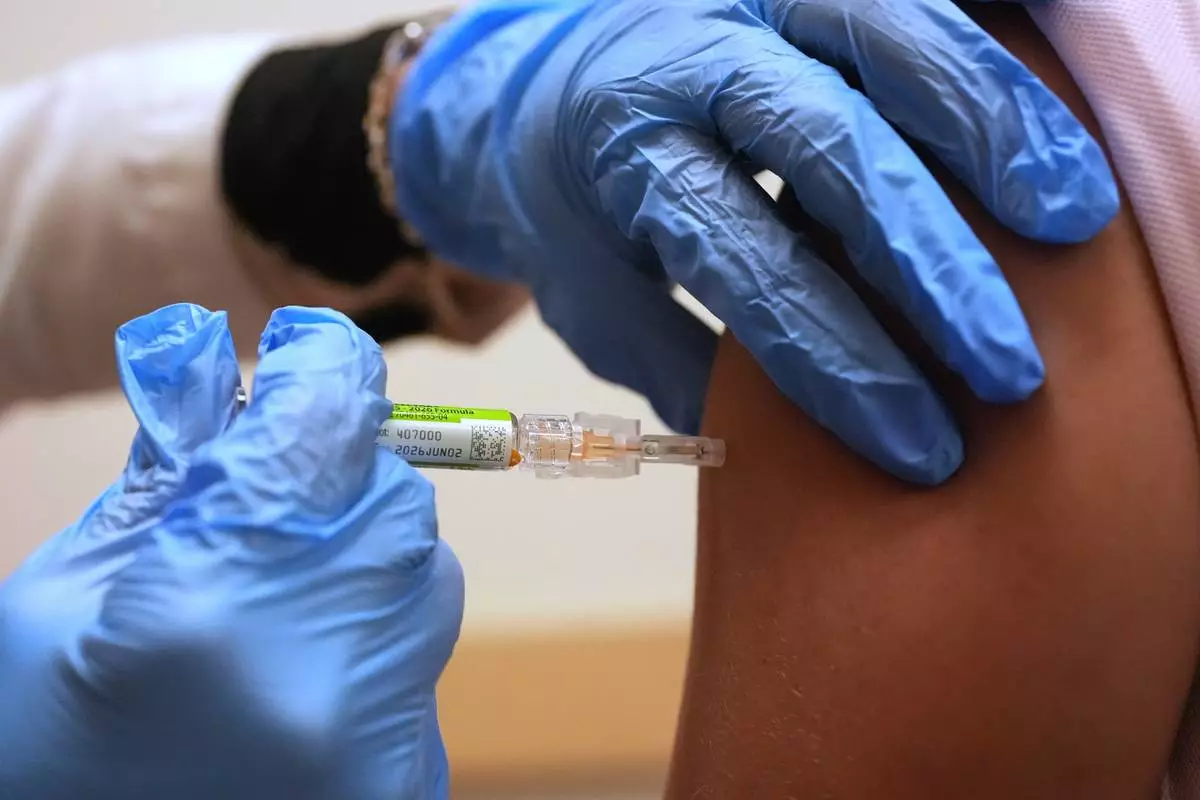
For years, federal health officials joined doctors' groups in recommending that everyone 6 months and older get an annual influenza vaccine. The shots may not prevent all symptoms but can prevent many infections from becoming severe, experts say.

But federal health officials on Monday announced they will no longer recommend flu vaccinations for U.S. children, saying it is a decision parents and patients should make in consultation with their doctors.

“I can’t begin to express how concerned we are about the future health of the children in this country, who already have been unnecessarily dying from the flu — a vaccine preventable disease,” said Michele Slafkosky, executive director of an advocacy organization called Families Fighting Flu.

“Now, with added confusion for parents and health care providers about childhood vaccines, I fear that flu seasons to come could be even more deadly for our youngest and most vulnerable," she said in a statement.

Flu is just one of a group of viruses that tend to strike more often in the winter. Hospitalizations from COVID-19 and RSV, or respiratory syncytial virus, also have been rising in recent weeks — though were not diagnosed nearly as often as flu infections, according to other federal data.

The Associated Press Health and Science Department receives support from the Howard Hughes Medical Institute’s Department of Science Education and the Robert Wood Johnson Foundation. The AP is solely responsible for all content.

FILE - Pharmacy manager Aylen Amestoy administers a patient with a seasonal flu vaccine at a CVS Pharmacy in Miami, Tuesday, Sept. 9, 2025. (AP Photo/Rebecca Blackwell, File)

FILE - Pharmacy manager Aylen Amestoy administers a patient with a seasonal flu vaccine at a CVS Pharmacy in Miami, Tuesday, Sept. 9, 2025. (AP Photo/Rebecca Blackwell, File)

Recommended Articles