WASHINGTON (AP) — President Donald Trump delivered another jarring reversal in American trade policy Wednesday, suspending for 90 days import taxes he’d imposed barely 13 hours earlier on dozens of countries while escalating his trade war with China. The moves triggered a powerful stock market rally on Wall Street but left businesses, investors and America’s trading partners bewildered about what the president is attempting to achieve.
The U-turn came after the sweeping global tariffs Trump announced last week set off a four-day rout in global financial markets, paralyzed businesses and raised fears the U.S. and world economies would tumble into recession.
Click to Gallery
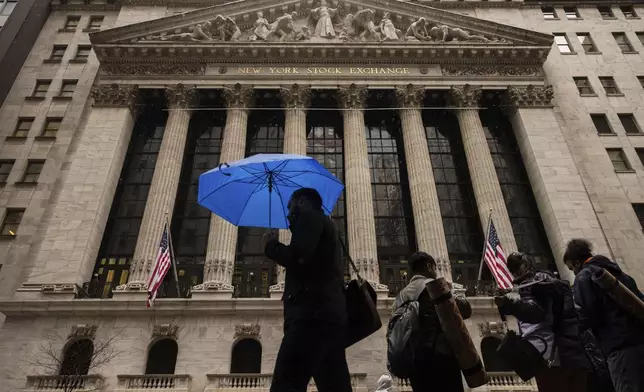
People walk past the New York Stock Exchange, Monday, April 7, 2025, in New York. (AP Photo/Yuki Iwamura)
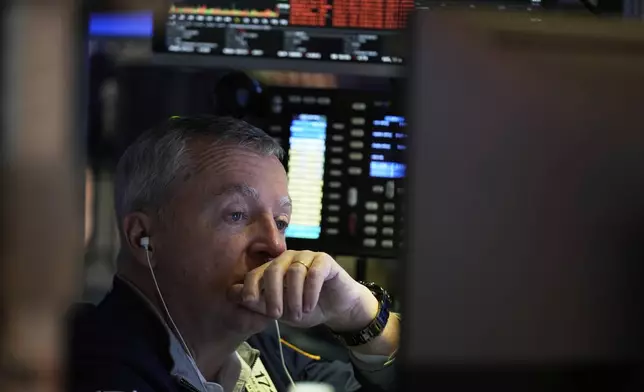
James Lamb works on the floor at the New York Stock Exchange in New York, Monday, April 7, 2025. (AP Photo/Seth Wenig)
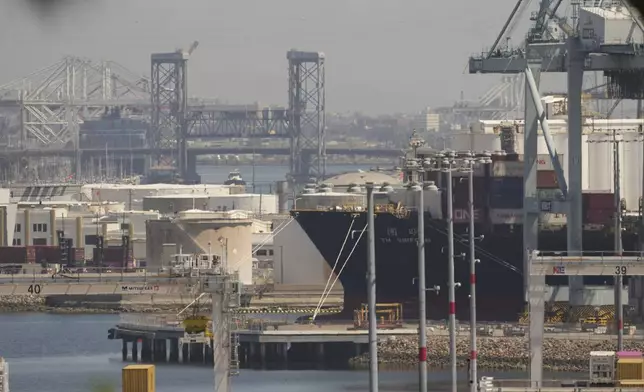
The YM Uniform container ship is docked at the Port of Los Angeles Wednesday, April 9, 2025, in Los Angeles. (AP Photo/Damian Dovarganes)
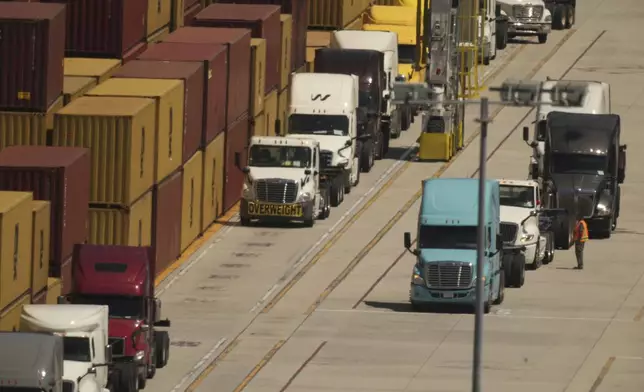
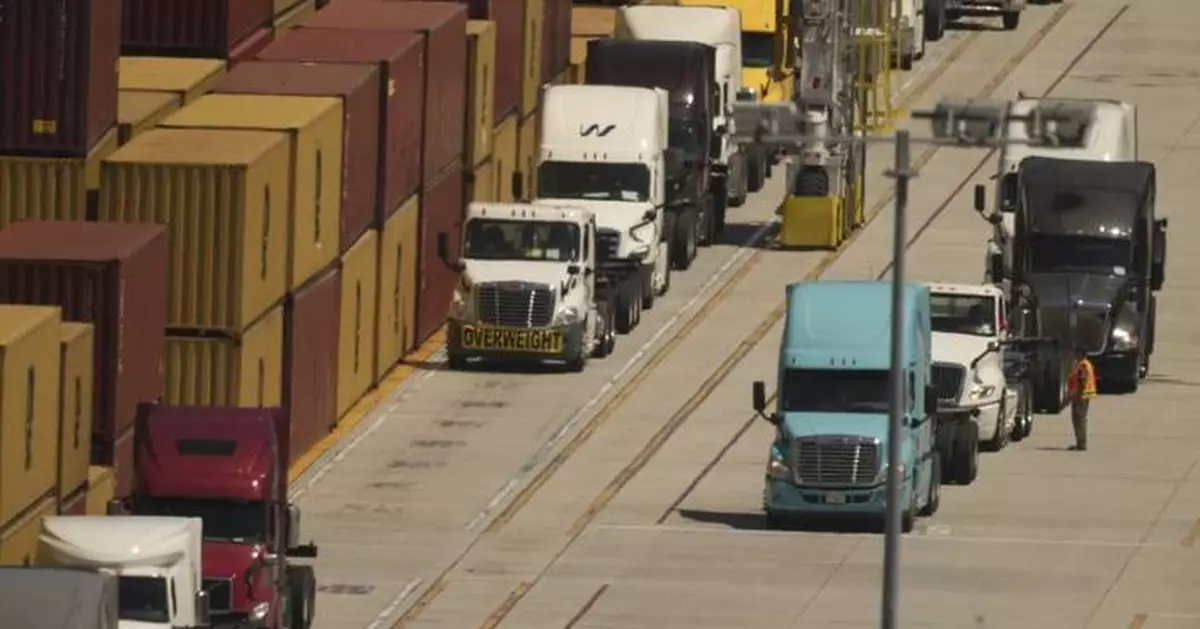
Truck await to load shipping containers at the Port of Los Angeles Wednesday, April 9, 2025, in Los Angeles. (AP Photo/Damian Dovarganes)
White House press secretary Karoline Leavitt tried to characterize the sudden change in policy as part of a grand negotiating strategy. But to those outside the Trump administration, it looked like a cave-in to market pressure and to growing fears that the president’s impetuous use of import taxes — tariffs — would cause massive collateral economic damage.
“Other countries will welcome the 90-day stay of execution — if it lasts — but the whiplash from constant zig-zags creates more of the uncertainty that businesses and governments hate,” said Daniel Russel, vice president at the Asia Society Policy Institute. “The Administration’s blunt-force tactics have rattled allies, who see the sudden reversal as damage control following the market meltdown, rather than a pivot to respectful, balanced negotiations.’’
Trump’s turnaround Wednesday capped a wild week in U.S. trade policy. On Wednesday April 2 — which Trump labeled “Liberation Day’’ — the president announced plans to impose tariffs on almost every country on earth, upending the world trading system. The first of his new tariffs — a 10% “baseline’’ tax on imports from most countries — went into effect Saturday.
At midnight Wednesday, he upped the ante by slapping what he called “reciprocal’’ taxes on countries he accused of unfair trading practices and adding to U.S. trade deficits. Those are the tariffs he suspended for 90 days, saying the pause would give countries time to negotiate with him and his trade team.
There was one exception to the reprieve: He raised the tariff on Chinese imports to a staggering 125%, punishing Beijing for announcing retaliatory tariffs on the United States. That number was adjusted even higher on Thursday — to 145% — after the White House accounted for Trump's previous 20% fentanyl tariffs. Meanwhile, the 10% baseline tariffs on most countries – a substantial act of protectionism in their own right – remain in place.
Trump’s ever-changing trade war tactics — which include earlier levies on cars, steel and aluminum, and Mexico and Canada — have already done damage, forcing dazed companies to delay or cancel plans as they tried to figure out what Trump was doing and how they should respond.
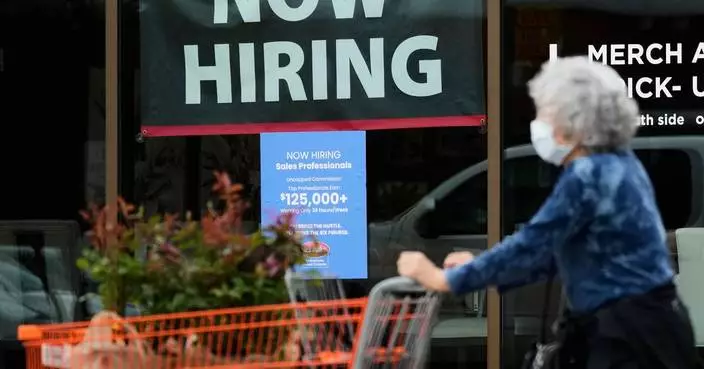
Some companies temporarily laid off workers after Trump’s widespread tariffs were announced, while there were signs that many firms held off on hiring amid the widespread uncertainty the tariffs created.
Carmaker Stellantis temporarily cut 900 jobs at factories in Michigan and Indiana after production was halted at two plants in Canada and Mexico in the wake of Trump's 25% duties on imported cars.
And Cleveland-Cliffs laid off 1,200 workers at a factory in Michigan and an iron ore mine in Minnesota in response to a drop in demand from auto companies. Cleveland-Cliffs said it would resume production at the two facilities once auto production returned to the U.S.
Minutes from the Federal Reserve’s March 18-19 meeting, released Wednesday, showed that many of its policymakers said that their business contacts “reported pausing hiring decisions because of elevated policy uncertainty."
And Delta Air Lines said earlier Wednesday that demand for domestic leisure trips and corporate travel has stalled because of the uncertainty around global trade. In a conference call with investors, the company said it was cutting capacity. It also declined to provide a full-year financial forecast.
“Right now, it’s hard to know how this is going to play out, given that this is somewhat self-imposed,” Delta CEO Ed Bastian said. “I’m hopeful that sanity will prevail and we’ll move through this period of time on the global trade front relatively quickly.”
Businesses have sought greater clarity around Trump's ultimate tariff policies for weeks. It's not clear that the 90-day pause has reduced their uncertainty.
Jeff Jaisli, CEO of the New Jersey-based importer/exporter Jagro, said Trump’s Truth Social post on Wednesday had made things “even worse’’ and more confusing. He was trying to figure out which tariffs applied to which countries.
“We’re scrambling to find correct information and procedures for entries we’re processing NOW in real time,’’ he said by email. He could find no guidance on the websites of the White House or the Customs and Border Protection agency, which collects tariffs. Earlier, Jaisli called Trump's tariffs "a grenade that was thrown into the room that’s going to cause chaos.''
Trump's tariffs have set off a tit-for-tat trade war with China, the world's second-biggest economy. Even before Trump upped his taxes on China to 145%, the Chinese had set their own tariffs on the United States at 84%.
The World Trade Organization's director-general, Ngozi Okonjo-Iweala, warned that the rising tension could reduce U.S.-China merchandise trade by 80% and "severely damage the global economic outlook.”
“Of particular concern is the potential fragmentation of global trade along geopolitical lines,” she wrote in a statement late Wednesday. “A division of the global economy into two blocs could lead to a long-term reduction in global real GDP by nearly 7%.”
Citing WTO projections, she warned the negative effects could ripple through to other economies, especially developing ones. She urged countries to ensure an open global trading system and resolve differences through cooperation.
Meanwhile, U.S. companies struggled to figure out how to respond to huge levies on Chinese products they'd come to rely on.
Jessica Bettencourt is CEO of Klem’s, a third-generation store in Spencer, Massachusetts that sells everything from lawn and garden items to workwear and gifts. She said that the escalation of tariffs from China have made her stop ordering any new fourth-quarter product that is holiday, gifts or toys. She is also reconsidering any fall apparel and footwear orders that aren’t already placed.
“The worst thing is uncertainty and we have massive uncertainty,” said Jason Goldberg, chief commerce strategy officer at Publicis Groupe, a global marketing and communications company. “No one can make any moves. Everybody is trying to save as much cash and defer any unnecessary expense. People are getting laid off. Orders are getting cancelled. Expansion plans are being put on hold.”
Robert Bumsted and Anne D'Innocenzio in New York, Dee-Ann Durbin in Detroit and Jamey Keaten in Geneva contributed to this story.
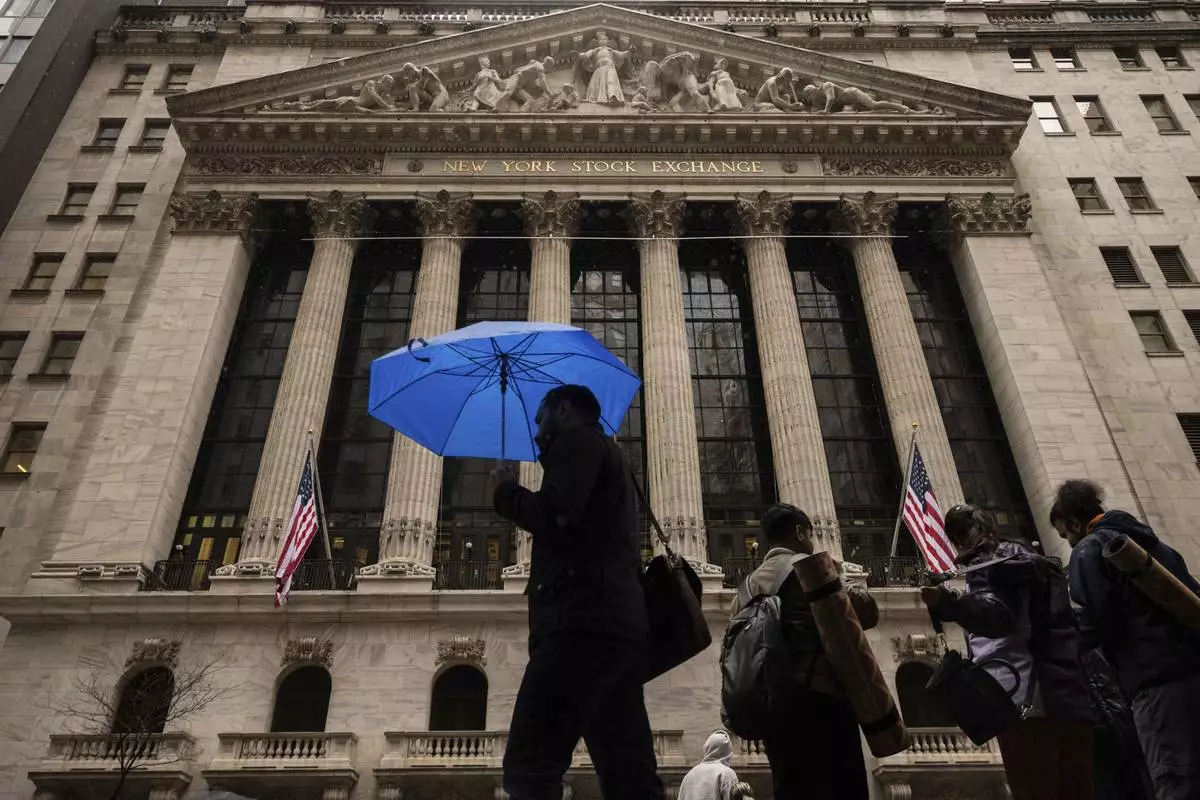
People walk past the New York Stock Exchange, Monday, April 7, 2025, in New York. (AP Photo/Yuki Iwamura)
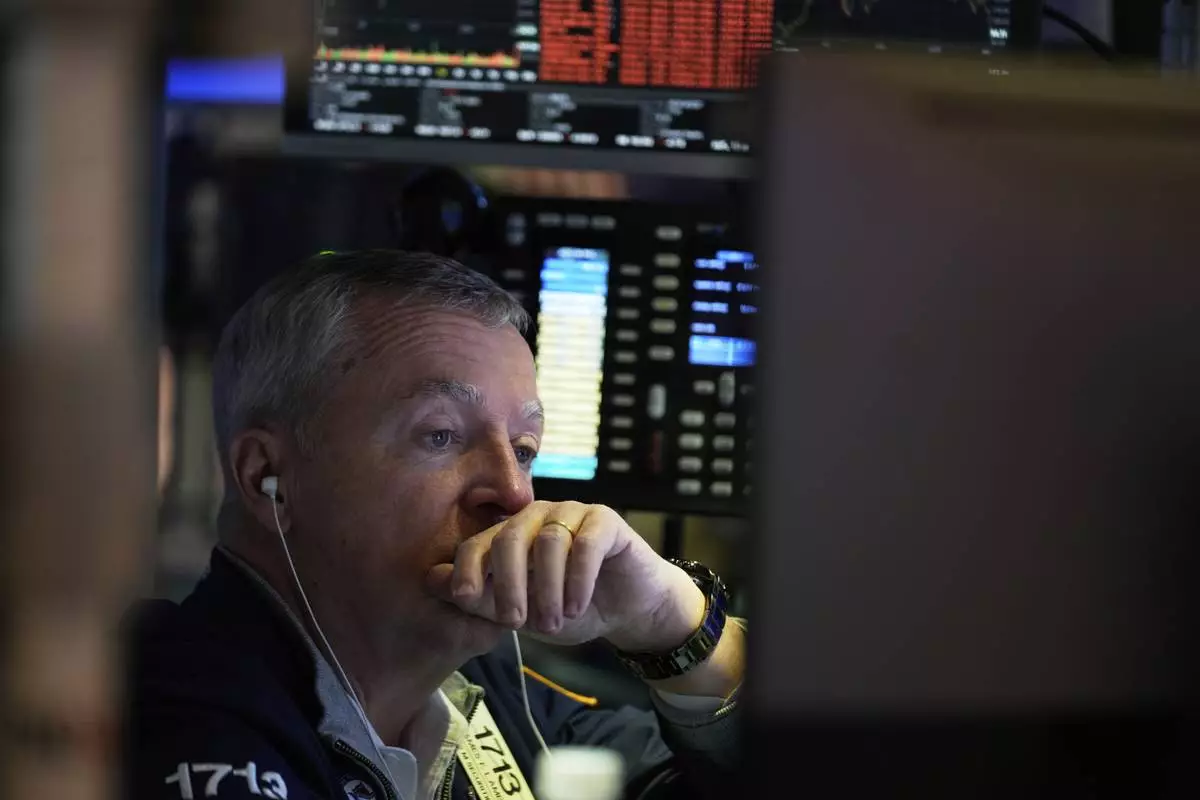
James Lamb works on the floor at the New York Stock Exchange in New York, Monday, April 7, 2025. (AP Photo/Seth Wenig)
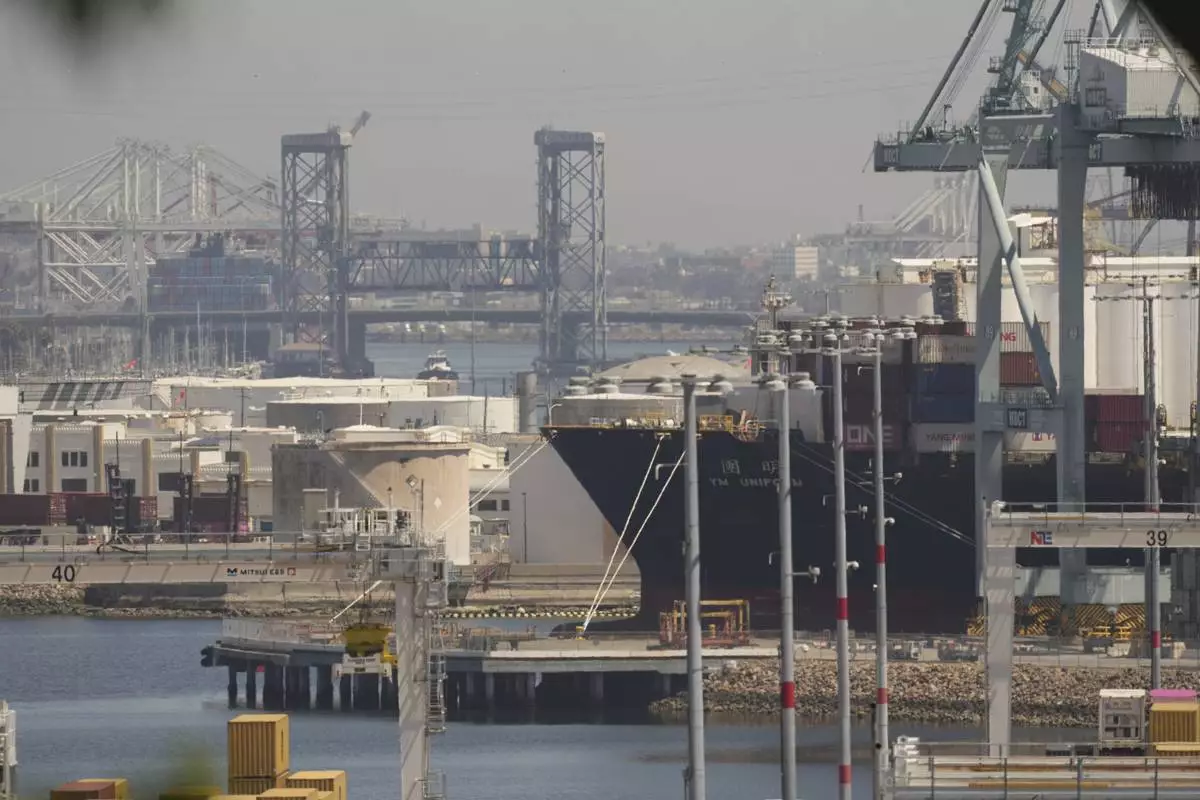
The YM Uniform container ship is docked at the Port of Los Angeles Wednesday, April 9, 2025, in Los Angeles. (AP Photo/Damian Dovarganes)
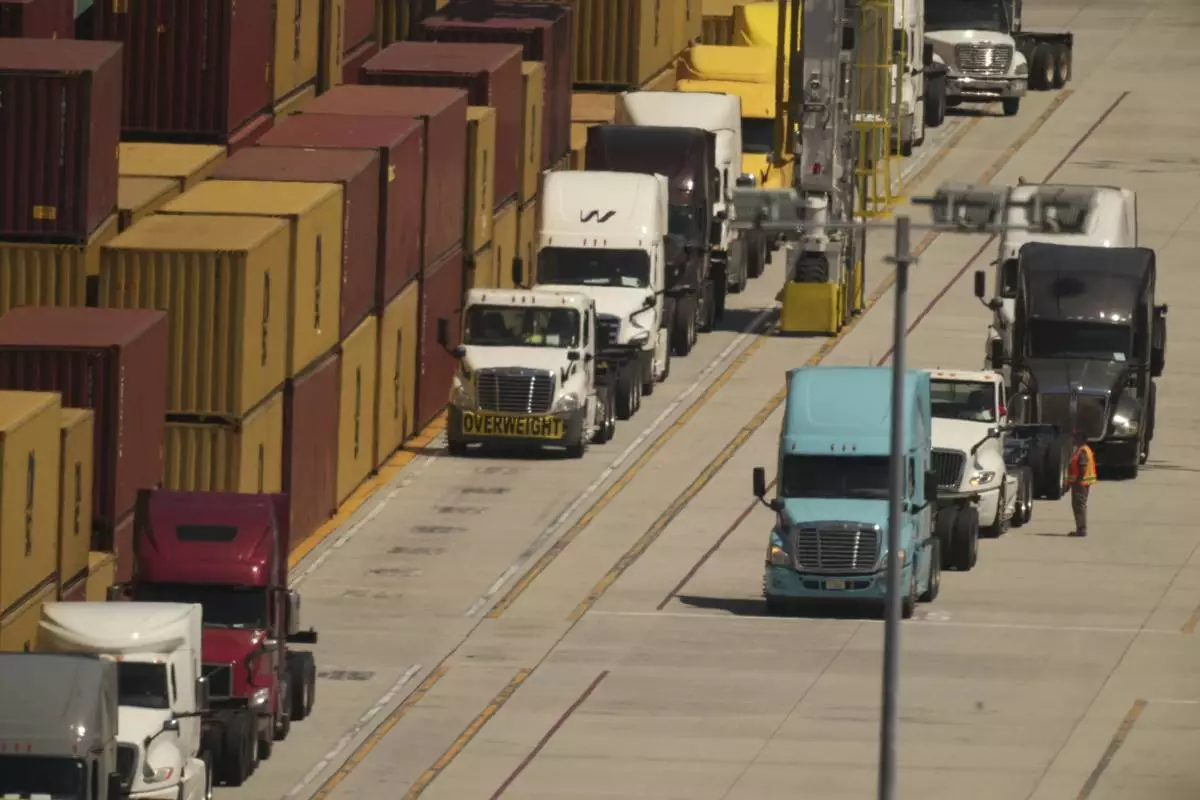
Truck await to load shipping containers at the Port of Los Angeles Wednesday, April 9, 2025, in Los Angeles. (AP Photo/Damian Dovarganes)