Speech by FS at Citi Hong Kong Macro Investor Conference 2025
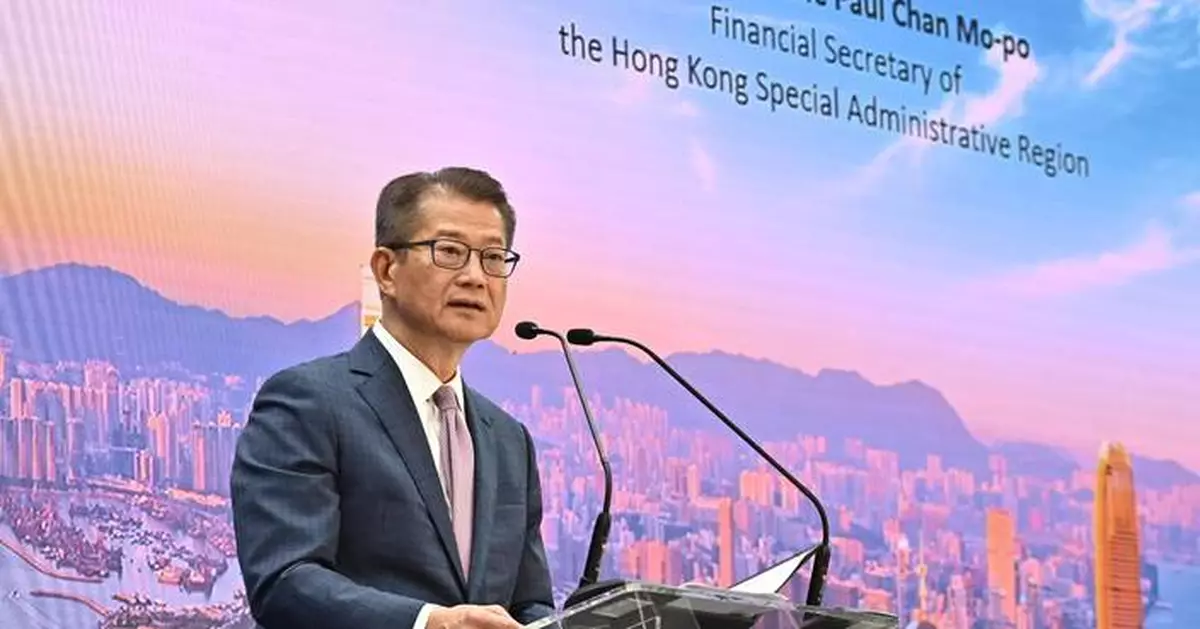
Following is the speech by the Financial Secretary, Mr Paul Chan, at the Citi Hong Kong Macro Investor Conference 2025 today (April 10):
Paul (Head of Markets for Japan, Asia North and Australia of Citi, Mr Paul Smith), Aveline (Chief Executive Officer of Citi Hong Kong and Macau, Ms Aveline San), distinguished guests, ladies and gentlemen,
Good morning.
It is a pleasure to join you today at the Citi Hong Kong Macro Investor Conference 2025. Allow me to first express my gratitude to Citi for bringing such a distinguished group of investors, economists, strategists and senior executives from around the world to Hong Kong.
This forum for dialogue and thought-provoking discussions is particularly timely as we face a trade war marked by ruthless imposition of tariffs. Allow me to share with you our position and response to these challenges.
Impact of unilateral tariff measures
Let me make it clear that the so-called "reciprocal tariffs" imposed by the United States on its trading partners are fundamentally wrong - politically, economically, and historically.
These sweeping tariffs are disrupting global supply chains, inflating costs for both businesses and consumers, and creating significant uncertainty for cross-border investments. While "economic nuclear winter" may be an extreme term, we are certainly witnessing challenges to the global trading system unseen in a century.
Most economists agree that the American public, especially those at the grassroots level, will bear the brunt of rising inflation as tariffs increase costs for groceries and daily necessities. Many financial institutions have revised downward their growth forecasts for the US (United States) and the global economy, with some even predicting a recession for both.
China, as a major economy, has wide policy room and a range of tools to mitigate these impacts. Full details of the measures are yet to be seen, but our country has made its stance clear: we are open to resolving trade conflicts through dialogue based on mutual respect, not intimidation.
Ultimately, these developments will reinforce geo-economic fragmentation. We are likely to see three major regional blocs emerge: first, the Asia-Pacific; second, India, the Middle East, and Europe; and third, the Americas.
Resilience of Hong Kong’s financial markets
Now, turning to Hong Kong, I want to highlight that despite the high volatility in the stock market, our financial system has shown strong resilience.
This Monday, when we experienced a significant drop in the stock market, two key points are worth noting.
First, trading activity was robust, with substantial buying and selling interests. The bid-ask spread stayed very tight, signaling strong underlying liquidity. All margin calls were met on time, with no signs of stress.
Second, the Hong Kong dollar remained strong, indicating there was no capital flight. Our Linked Exchange Rate System continues to function effectively, and the money market is operating smoothly.
The Hang Seng Index has started to recover since Monday, and overall, Hong Kong’s financial market continues to operate effectively. Rest assured that our financial regulators are conducting real-time, round-the-clock surveillance across markets. No systemic irregularities have been detected. We will remain vigilant and agile, and ready to take appropriate measures, if needed.
Responding with composure
In the short term, we will implement a suite of measures to support our businesses. The Hong Kong Monetary Authority is working closely with the banking sector to ensure that SMEs (small and medium-sized enterprises) have the liquidity they need. In fact, banks have set aside over US$50 billion for this purpose. We are also supporting these businesses in opening up new markets in the Mainland, the Middle East, and ASEAN (Association of Southeast Asian Nations) countries, including funding support for marketing and brand building. Additionally, we will help them embrace digital transformation to enhance their competitiveness and e-commerce capabilities.
While these short-term measures are essential, our long-term strategy focuses on economic diversification. Several key strategies will guide us.
First, we will leverage our strengths as an international trade centre. With geo-economic fragmentation, China will likely drive more outbound investments and strengthen trade ties with regions like ASEAN, the Middle East and even Europe. Economy is the top priority of the Central Government, and foreign businesses and investments are welcome. This was evident in President Xi’s recent meetings with both international business leaders and domestic private entrepreneurs.
Hong Kong’s unique connectivity with both the Mainland and the world positions us as an ideal gateway and platform for foreign businesses entering the Mainland market, and for Mainland enterprises going global. Hong Kong will be the hub where Mainland and global companies can establish their regional or international headquarters, corporate treasury centres and supply chain management centres.
Second, there will be new opportunities for Hong Kong as an IFC (international financial centre). Given the current geopolitical landscape, Hong Kong is naturally becoming the preferred fundraising market for Mainland companies. Currently, there are over 100 major companies waiting to list on the Hong Kong Stock Exchange.
And the DeepSeek moment has prompted international investors to reassess China’s technological capabilities and re-evaluate the values of related companies. We believe that more tech companies from the Mainland will list in Hong Kong, and the liquidity of our stock market will be greatly enhanced.
We are also exploring new sources of capital, particularly from the Middle East. Last year marked a milestone with two ETFs (exchange-traded funds) investing in the Hong Kong market listed on the Saudi Exchange. We will encourage quality issuers from the Middle East and Southeast Asia to consider dual primary or secondary listings in Hong Kong.
Finally, at the heart of our long-term economic transformation is innovation and technology, in particular artificial intelligence (AI).
In my Budget this year, I outlined our vision to develop AI as a core industry for Hong Kong. We are pushing forward on five key fronts: supercomputing capabilities, algorithms, data, capital and talent.
To fast-track our innovation and technology ambition, we need innovative enterprises with cutting-edge technologies. We are targeting four key industries: AI and data science, life and health technology, fintech, and advanced manufacturing and new energy. With the support of the Office for Attracting Strategic Enterprises, we have attracted over 80 such enterprises to Hong Kong, which together will invest around US$60 billion in our city, creating about 20,000 jobs.
We recognise the importance of patient capital in this journey. That’s why we established the Hong Kong Investment Corporation Limited (HKIC). Serving as patient capital, the HKIC invests in and guides market capital to support nascent-stage ventures and sectors of tomorrow. It seeks to build a vibrant ecosystem comprising the Government, industry, academia, research and investment sectors. At the same time, it seeks reasonable risk-adjusted financial returns over the medium to long term. To date, it has invested in more than 100 projects, achieving a 1 to 4 co-investment ratio - meaning that for every dollar the HKIC invested, it has attracted four dollars from private investors to follow.
With the development in the Northern Metropolis and collaboration with Shenzhen and nearby cities, we are confident that Hong Kong and the Greater Bay Area will emerge as a global financial and innovation centre.
Conclusion: confidence and opportunity
Ladies and gentlemen, we are navigatingtruly challenging times. The obstacles posed by trade war and geo-economic fragmentation are daunting. However, I want to reassure you that Hong Kong remains steadfastly committed to the “one country, two systems” principle and all the advantages it entails: we will continue to be a free port, maintain our free trade policy, and guarantee the free flow of capital, goods, information, and people. We provide what investors seek: policy clarity, consistency and credibility.
And Hong Kong offers even more: market access, capital, talent and an unparalleled lifestyle - the Rugby Sevens, Coldplay, Art Basel, along with our stunning hiking trails, coastlines, and a vibrant culinary scene featuring 200 Michelin-recommended restaurants. These elements create a unique international metropolitan fabric, making Hong Kong a great city for global talent to live, work and raise a family.
Thank you once again to Citi for hosting this Conference. I wish you all fruitful discussions and a rewarding time here in Hong Kong.
Thank you.
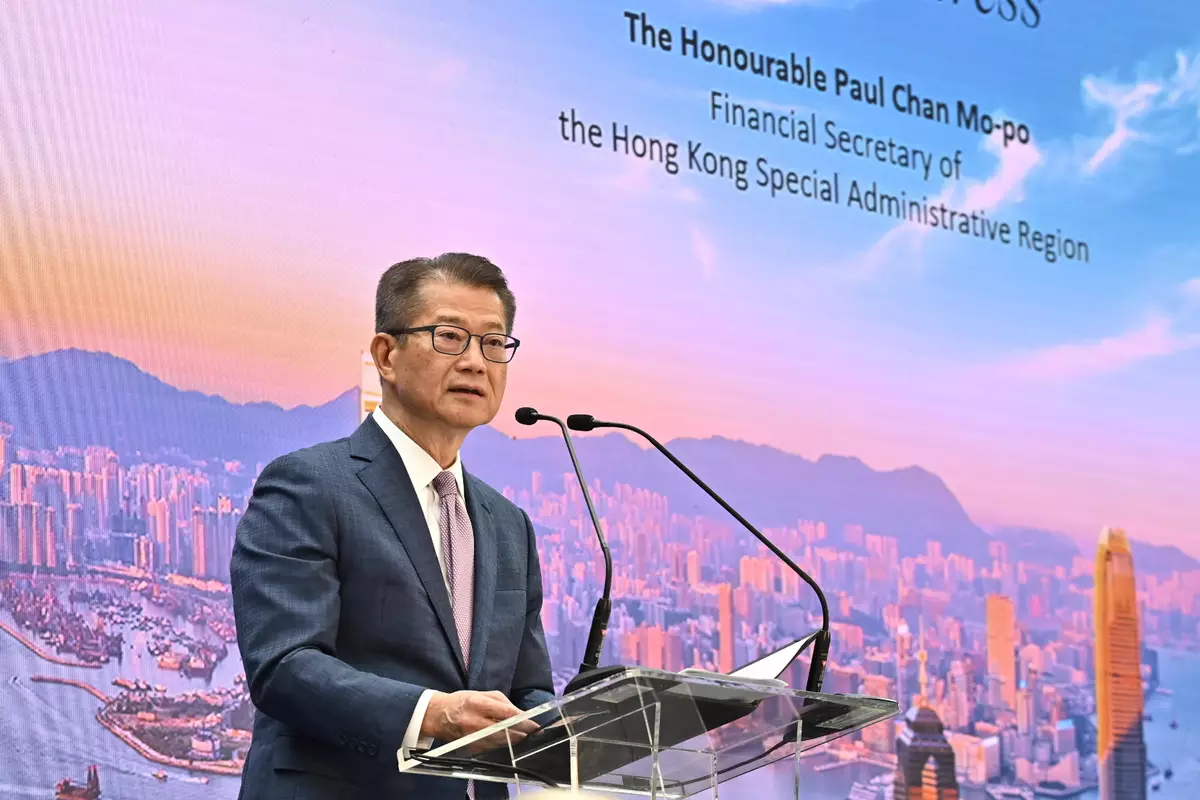
Speech by FS at Citi Hong Kong Macro Investor Conference 2025 Source: HKSAR Government Press Releases