The Trump administration's unpredictable tariff policy has sparked heated debate about the real motivations behind these moves which have caused chaos on the global markets in recent days, with a Fordham University economics professor suggesting that part of reason is that the U.S. views China's rapid development as a threat.
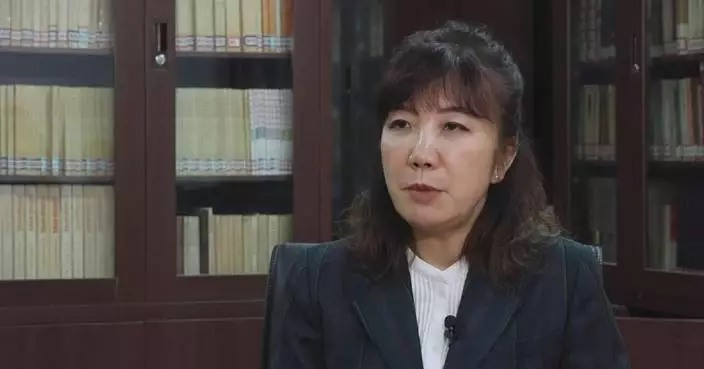
In an interview with the China Global Television Network (CGTN), Yan An, the Robert Bendheim Chair Professor in Economics and Financial Policy at Fordham University, assessed the real motives which have driven U.S. President Donald Trump to launch his aggressive tariff strategy, with China being the biggest target.
Yan said one of the major reasons comes from pressure from voters who expect Trump to follow through on his so-called 'America First' agenda, which looks to turn away from globalization amid accusations of "unfair treatment" to the United States.
"Trump feels that the old system has failed. The system has not worked out to what the United States or Trump has hoped for. Globalization benefits the U.S. only the top population, but the majority of the U.S. population and especially the Trump voters, they do not benefit," he said.
"The second question is that why is the tariff [policy] the choice of de-globalization? I think that's because Trump and his supporters think the reason for globalization to fail is because of the unfair trade policies, trade barriers, and industrial policies," said Yan.
According to the professor, China's rapid development has raised concerns in the U.S. that it may soon overtake America in both manufacturing and technology.
"China has been outgrowing the U.S. for decades. Its economy has surpassed or is on the path to surpass the U.S., not only on the manufacturing side, but also on the high technology, which we know has been the growth engine of the U.S. Now, the U.S. realizes China is a sustainable threat and that China's model could be better than the U.S. You have to compete in the globalization era," he said.
Yan also warned that the ongoing trade conflict between China and the U.S. could be a prolonged issue.
"If you think about these backgrounds, I think this kind of conflict, the tariff policy against China could continue longer than the policy against the Europeans, against Japan, against other countries. The Chinese market, and also the economy could be affected longer than the other countries, other markets," he said.

US tariff policy driven by fear of being surpassed by China's rapid development: expert
The Exhibition Hall of Evidence of Crimes Committed by Unit 731 of the Japanese Imperial Army in northeast China's Harbin released on Thursday a 38-minute video of a former member of Unit 731, a notorious Japanese germ-warfare unit during World War II (WWII).
In the footage, former Unit 731 member Tsuruo Nishijima detailed how the unit used meteorological data to carry out bacterial dispersal and frostbite experiments.
The video was recorded in 1997 by Japanese scholar Fuyuko Nishisato and donated to the exhibition hall in 2019, according to the hall, which was built on the former site of the headquarters of Unit 731 in Harbin, capital city of Heilongjiang Province.
Nishijima joined Unit 731 in October 1938 and served in the unit's meteorological squad. The squad was not a simple observation section but rather an auxiliary force supporting the unit's human experiments in the field by measuring wind direction, wind speed and other conditions to ensure optimal experimental results.
Nishijima confirmed in the footage that "the meteorological squad had to be present at every field experiment." He testified to the "rainfall experiments" conducted by Unit 731, which involved aircraft releasing bacterial agents at extremely low altitudes.
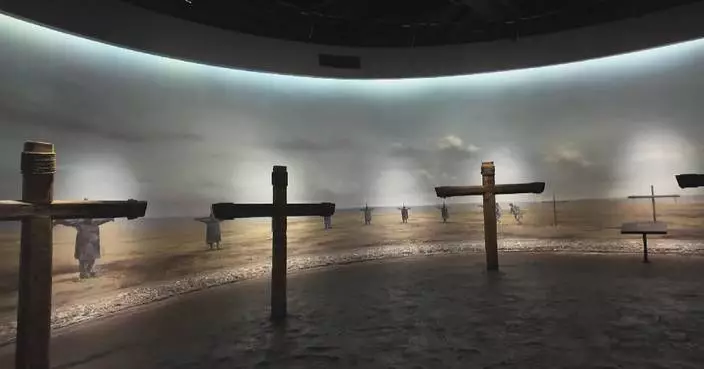
At a field-testing site in Anda City, Heilongjiang, Unit 731 aircraft descended to about 50 meters above the ground and sprayed bacterial culture liquids onto "maruta" -- human test subjects -- who were tied to wooden stakes. Each experiment involved about 30 people, spaced roughly 5 meters apart. After the experiments, the victims were loaded into sealed trucks and transported back to the unit, where their symptoms and disease progression were recorded over a period of several days.
Nishijima also revealed that a Japanese military doctor once died after removing the mask and becoming infected during an experiment, indirectly proving the extreme virulence of the bacterial agents.
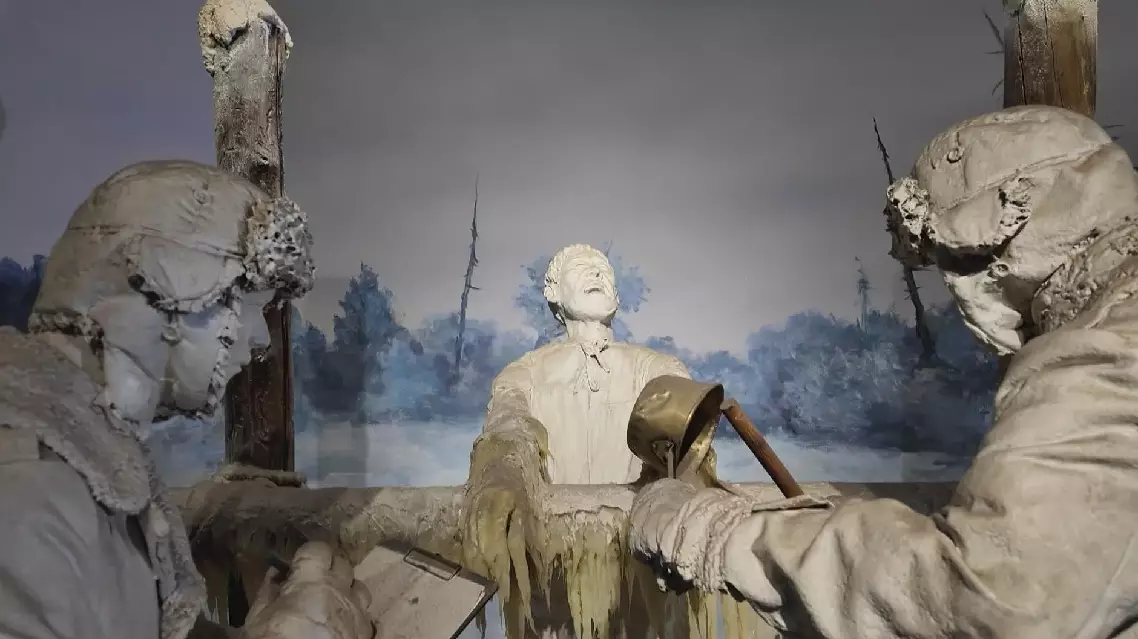
The video further disclosed details of the meteorological squad's involvement in frostbite experiments. To study wartime needs in frigid regions, the invading Japanese army forced the victims to expose their bodies for five to ten minutes in temperatures ranging from minus 20 to minus 35 degrees Celsius and observed their physical reactions.
"For example, during frostbite experiments, we would be sent outside to observe the weather. They wouldn't bring many people out at once, only two or three, who would be forced to take off their upper garments or all their clothes. In fact, it was already quite tough to stay out there for five to ten minutes, because it was too cold," Nishijima said.
According to the exhibition hall, Unit 731 had a separate frostbite laboratory, with Hisato Yoshimura serving as the leader of the unit's frostbite study squad from 1938 to 1945.
In a paper on frostbite published in 1941, Yoshimura recorded data from live human experiments to study the occurrence of frostbite and pathological changes in the human body under different conditions.
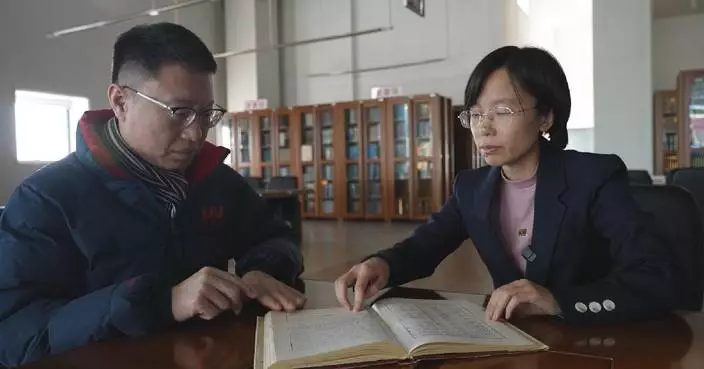
"This is a form from the paper. Titled 'The Severity and Process of Frostbite,' it divides frostbite into three stages. The symptoms of the first-degree frostbite are redness and swelling. Blisters appear in the second stage. And the third-degree frostbite features necrosis and ulceration. It says here that, in the third stage, from the 50th to the 60th day, toes and fingers detached. There is no doubt that these data were obtained through numerous human experiments," said Tan Tian, a researcher of the exhibition hall.
Nishijima's video, a piece of oral history from a perpetrator's perspective, further reconstructs the criminal chain of Unit 731 and once again demonstrates that the invading Japanese army's biological warfare crime was systematic and inhumane, and was an undeniable historical truth, according to the exhibition hall.
"Unit 731's frostbite experiments were essentially conducted to prevent and treat frostbite during combat in cold environments. However, for the so-called prevention and treatment of frostbite, they caused frostbite on living people for experiments and data analysis. So in nature, it still serves the purpose of war," said Jin Shicheng, director of the Department of Publicity, Education and Exhibition at the hall.
Unit 731 was a top-secret biological and chemical warfare research base established in Harbin as the nerve center for Japanese biological warfare in China and Southeast Asia during WWII.
At least 3,000 people were used for human experiments by Unit 731, and more than 300,000 people in China were killed by Japan's biological weapons.
Video offers new evidence of Japan's wartime germ-warfare crimes in northeast China