The latest round of clashes between Thailand and Cambodia has left 15 Thai soldiers dead, and 270 others injured, Surasant Kongsiri, spokesman for Thailand's Ministry of Defense, announced at a Saturday press conference.
Thailand has set up 970 temporary shelters, where 263,105 people are residing, the spokesman said.
The death toll among Thai civilians has risen to seven, he added.
Meanwhile, the Royal Thai Army (RTA) said in a statement on Saturday that Cambodia had launched strikes targeting a civilian area in Thailand's Sisaket Province, leaving two people seriously injured.
The attack took place as local residents were rushing to bomb shelters immediately after hearing air raid warnings, said the statement released on social media.
The RTA strongly condemned the Cambodian military's actions.
The Cambodian side has not yet responded.
Cambodia's Ministry of Interior announced in a press release on Saturday that it would suspend all border crossings with Thailand until further notice. The press release said the move was made after the Thai side had committed acts of aggression against Cambodia's sovereignty through indiscriminate attacks, causing civilian casualties and damaging residential areas and infrastructure.
In this regard, Cambodian citizens currently residing and working in Thailand are advised to continue living and working there as normal. Likewise, Thai nationals currently residing and working in Cambodia are advised to remain in Cambodia as usual, until a ceasefire is in place, it said.
The Cambodia-Thailand border conflict broke out on Dec 7, with the two sides accusing each other of firing first.
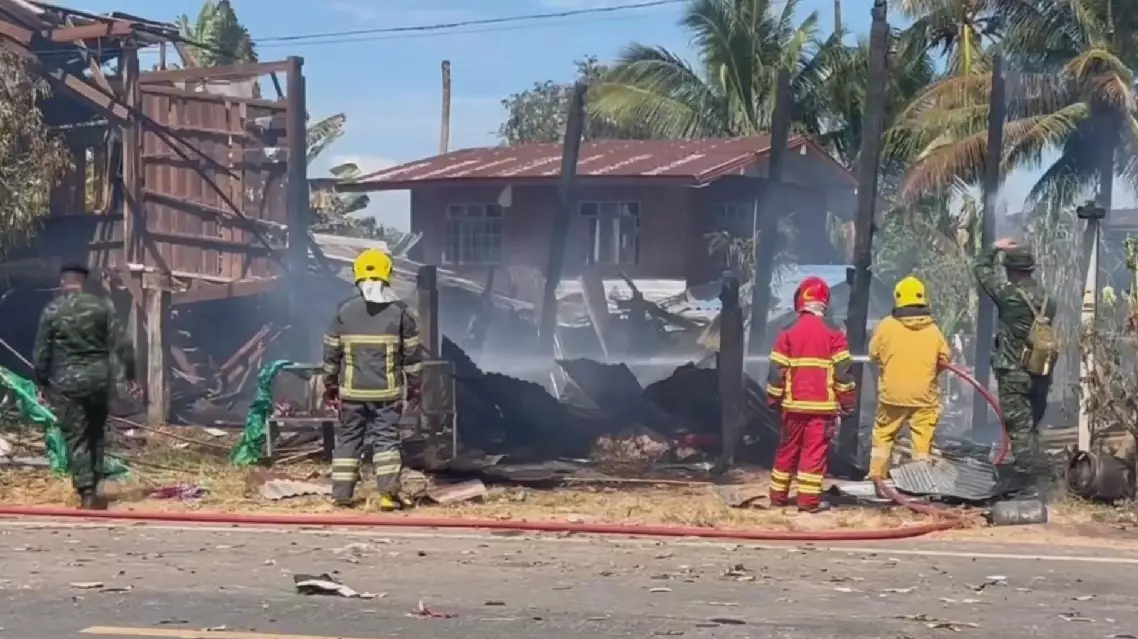
15 Thai soldiers killed in Thailand-Cambodia border clashes
With the United States increasing its military presence in the Middle East and issuing new threats, many Iranians say Washington is using military power to safeguard its own interests and stress that Iran will not bow to U.S. pressure.
The military buildup around Iran follows U.S. President Donald Trump's recent endorsement of Iran's anti-government protests.
On Wednesday, Trump said that a "massive armada," led by the aircraft carrier Abraham Lincoln and larger than the one previously deployed to Venezuela, is heading toward Iran, and warned Tehran that "time is running out" to reach a deal with the U.S. over its nuclear program.
Two days later, Trump called on Iran to return to negotiations for what he described as a "fair and equitable deal," while again emphasizing the U.S. military's strong presence in the region.
Some Iranians questioned Washington's record abroad, accusing the United States of consistently prioritizing its own interests over the needs of local populations.
"Has the U.S. ever truly helped people in any places, like Iraq, Syria, Venezuela or Lebanon? Has it ever considered the needs of local people? The only thing that matters to the U.S. is its own national interests and wealth," said Ghasem, a Tehran resident.
Others said the U.S. military presence in the Middle East has never been about peace, arguing it has instead fueled chaos and instability.
"They (the U.S. military) have never brought security; only anxiety. It's not just us; other countries in the region share the same worries about the future. Can the presence of the U.S. military truly bring security? On the contrary, if they withdraw, peace will follow, and our security will significantly improve," said Mahmoud Reza, another Tehran resident.
Iranian political analysts have pointed out that, given the history of failed negotiations between the United States and Iran, the negotiations currently being proposed by Washington are merely an excuse to legitimize its military actions.
While the prospects for meaningful negotiations appear slim, analysts also warned of serious repercussions if conflict were to erupt, urging restraint and stressing the need to avoid a broader crisis.
Residents say Iran will not bow to US military pressure