Skip to Content Facebook Feature Image

Tariffs stall European car deliveries at U.S. ports

China

China

China

Tariffs stall European car deliveries at U.S. ports

2025-04-12 17:14 Last Updated At:22:47

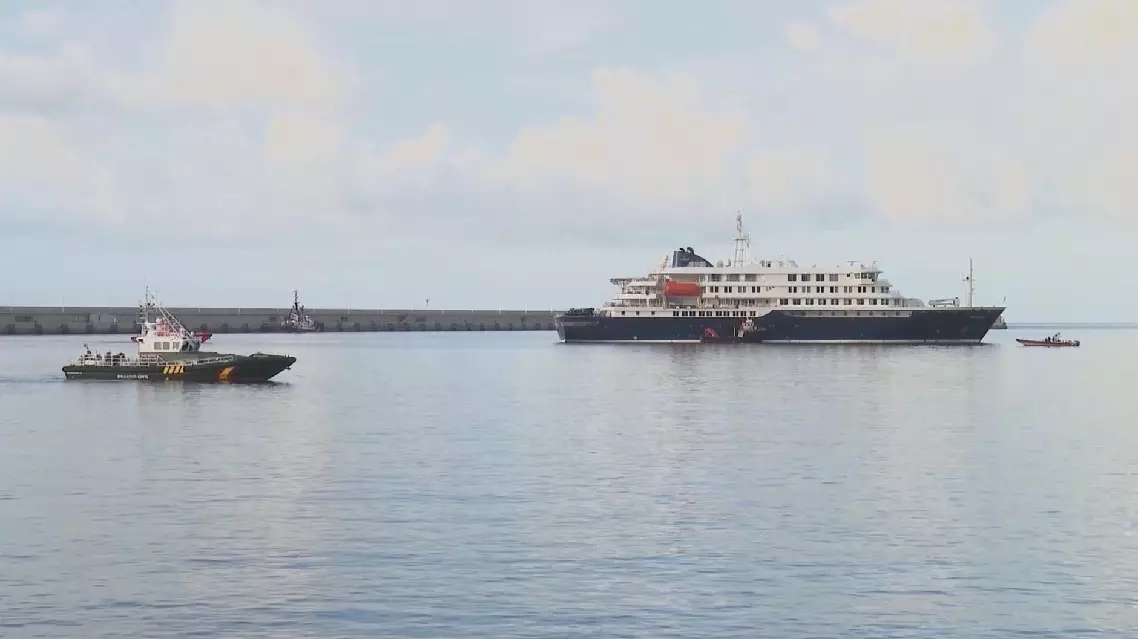
Thousands of European-made vehicles, including popular Audi and Jaguar models, are stuck at U.S. ports after a sudden 25 percent import tariff took effect, disrupting deliveries and sparking global trade tensions.

A major shift in U.S. trade policy is causing widespread disruption across the European auto industry. Since April 2, a new 25 percent tariff on imported vehicles has taken effect, leaving thousands of cars, including German Audis and British Jaguars, stalled at American ports and forcing manufacturers to rethink their export strategies.

Audi's Q5 and Q7 SUVs, long-time favorites among American drivers, are among the most affected. Though assembled in Mexico for the U.S. market, they fail to meet the 75 percent North American content requirement under the US-Mexico-Canada Agreement (USMCA), making them subject to the full tariff.

"This is now to consider to wait what is happening. Are there any further negotiations with the Trump administration? What is the strategy within the Volkswagen Group? How to deal with imports? How to deal with the additional tariffs? Who does it hit, and to what extent? And I think this is why everybody is waiting," said Beatrix Keim, director of Business Development for China Projects at the Center for Automotive Research.

The impact extends beyond Audi. Netherlands-based Stellantis, owner of Chrysler, Jeep, and Dodge, has paused production at several plants in Canada and Mexico. At the same time, British automaker Jaguar Land Rover has halted U.S. shipments entirely to evaluate the financial fallout.

"Their car, the SUVs, they are deemed as light trucks because especially the displacement, the engine volume they have. So that means it is 25 percent which was the original import tariff plus 25 percent of the penalty tariff, meaning 50 percent on. So now the consideration is the volume in the U.S. big enough to perhaps start planning a plant in the U.S., what they didn't have before," said Keim.

The U.S. government said the tariffs are intended to incentivize domestic production, but the move has stirred concern abroad.

Speaking at a Jaguar Land Rover factory in the U.K., British Prime Minister Keir Starmer said that while it was important to remain calm and pragmatic in responding to the tariffs, it was equally crucial to maintain perspective. He emphasized the long-standing relationship between the U.K. and the U.S., which he said had helped preserve peace for 80 years, and argued that it would be wrong to walk away from that partnership simply.

Starmer added that the challenges posed by the tariffs now required a constructive and strategic response.

As governments and carmakers weigh their next moves, the immediate impact is clear: American consumers face delivery delays, European manufacturers confront mounting costs, and the global auto trade is entering a period of profound uncertainty.

Tariffs stall European car deliveries at U.S. ports

Tariffs stall European car deliveries at U.S. ports
The Iranian government is focusing on public concerns and maintaining stable supplies of essential goods amid recent protests, Iranian President Masoud Pezeshkian said in a televised interview on Sunday.

In the city of Karaj, northwest of the capital Tehran, daily life has largely continued as normal. A video filmed by a local resident on Sunday shows food stores open and grocery shelves fully stocked.

"This is the block near my home, and there are some food stores here. Daily life continues here. Last night we did not see many protests in Karaj. Right now the city is very safe. This is a grocery store close to my home. All the food is available; nothing is in shortage. Here are noodles and different types of beans. Here are dairy products, cheese, and yogurt. I also checked other grocery stores and didn't see any shortages. Everything is available," said local resident Ali Reza.

Iranian officials have described recent disturbances as acts orchestrated by the "enemy," including some carried out by well-trained and armed "terrorists." The incidents have caused casualties among security personnel and civilians, as well as property damage.

The Secretary of Iran's Supreme National Security Council Ali Larijani has directed authorities to severely punish the "terrorists."

Meanwhile, Iran's police chief Ahmad-Reza Radan said on Sunday that the police had raised alert levels and arrested several leaders of the troublemakers during the operations on Saturday.

President Pezeshkian noted in the interview that the normal demands of the Iranian people are reasonable and justified, but they must realize that triggering riots and carrying out terrorist acts are the enemy's attempts to undermine the country. He urged the public to remain vigilant.

Also on Sunday, Iranian Parliament Speaker Mohammad Baqer Qalibaf warned that Tehran would regard U.S. and Israeli bases and facilities in the Middle East as "legitimate targets" if Washington takes military action against Iran. His remarks followed media reports saying U.S. President Donald Trump is "seriously considering authorizing a strike" against Iran.

Iranian state media reported that at least 109 members of Iran's security forces have been killed in clashes since the protests began 14 days ago. Meanwhile, human rights groups based outside the country said the number of protesters killed has exceeded 200, though the figure could not be independently verified.

The protests initially erupted over a sharp depreciation of the rial and sweeping subsidy reforms. Iranian authorities have blamed the unrest on foreign-linked agents and sanctions imposed by the United States.

Iranian president says government focusing on ensuring supplies amid protests

Iranian president says government focusing on ensuring supplies amid protests

Recommended Articles