China's Shenzhou-19 crew, who has worked in the Tiangong space station for more than 150 days, made steady progress in neuroscience, medical, and microgravity physics experiments last week.
The experiments were conducted by the three astronauts -- Cai Xuzhe, Song Lingdong and Wang Haoze.
Click to Gallery
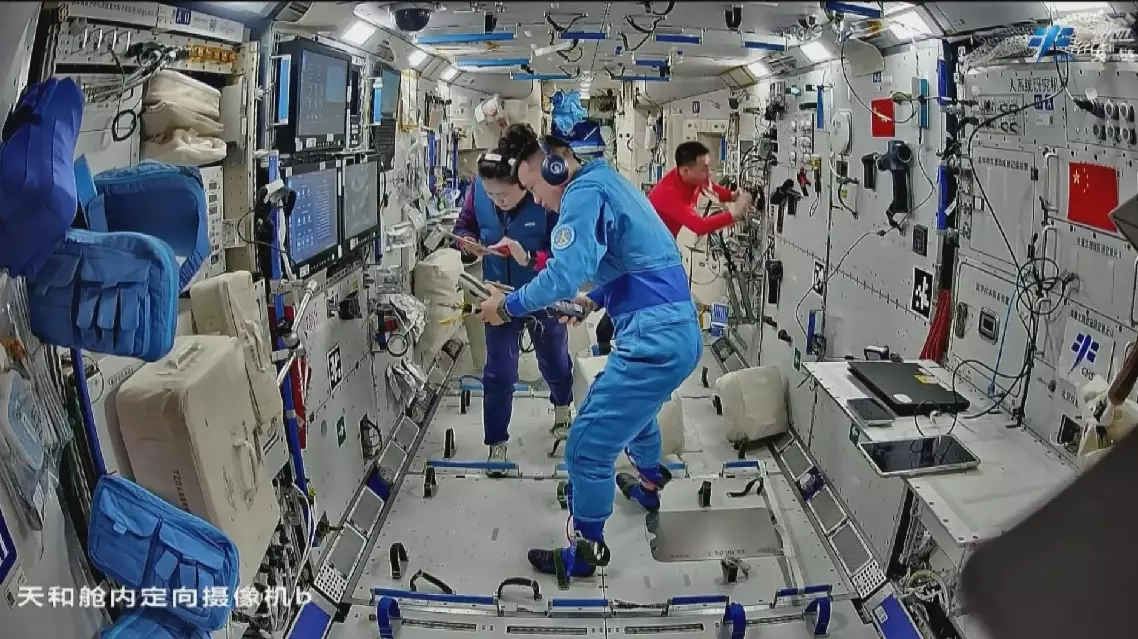
China's Shenzhou-19 crew continues in-orbit scientific experiments
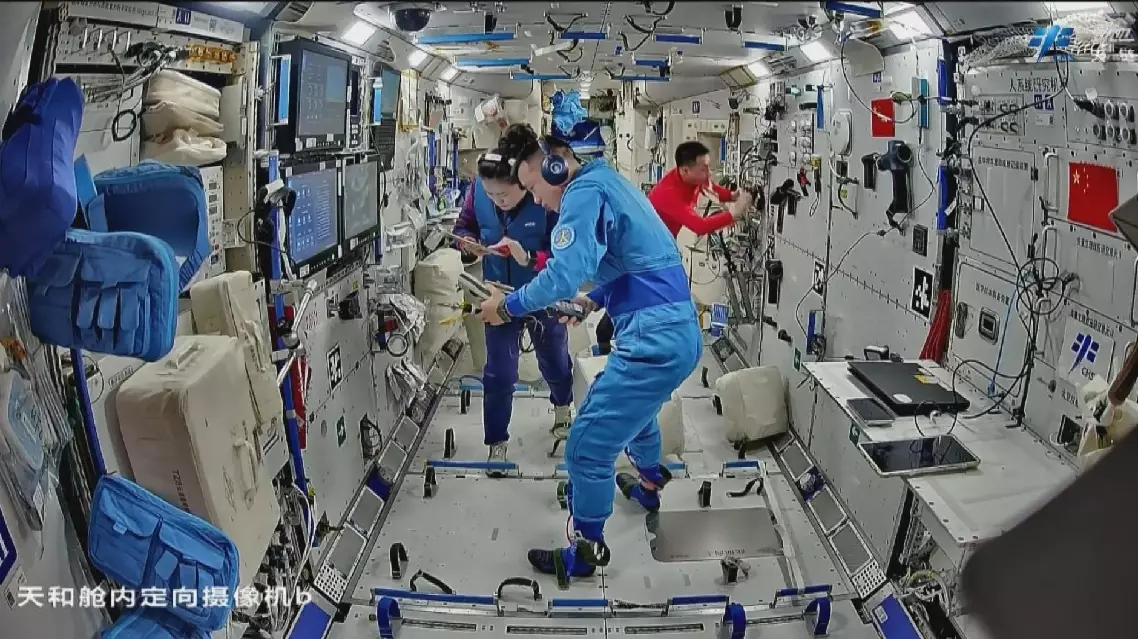
China's Shenzhou-19 crew continues in-orbit scientific experiments
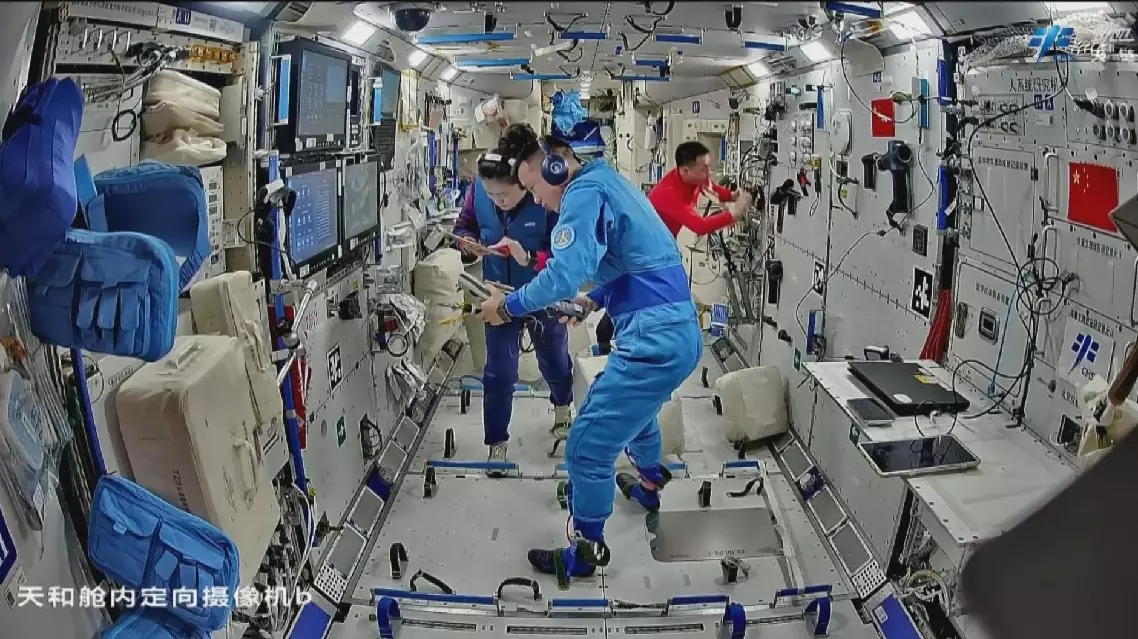
China's Shenzhou-19 crew continues in-orbit scientific experiments
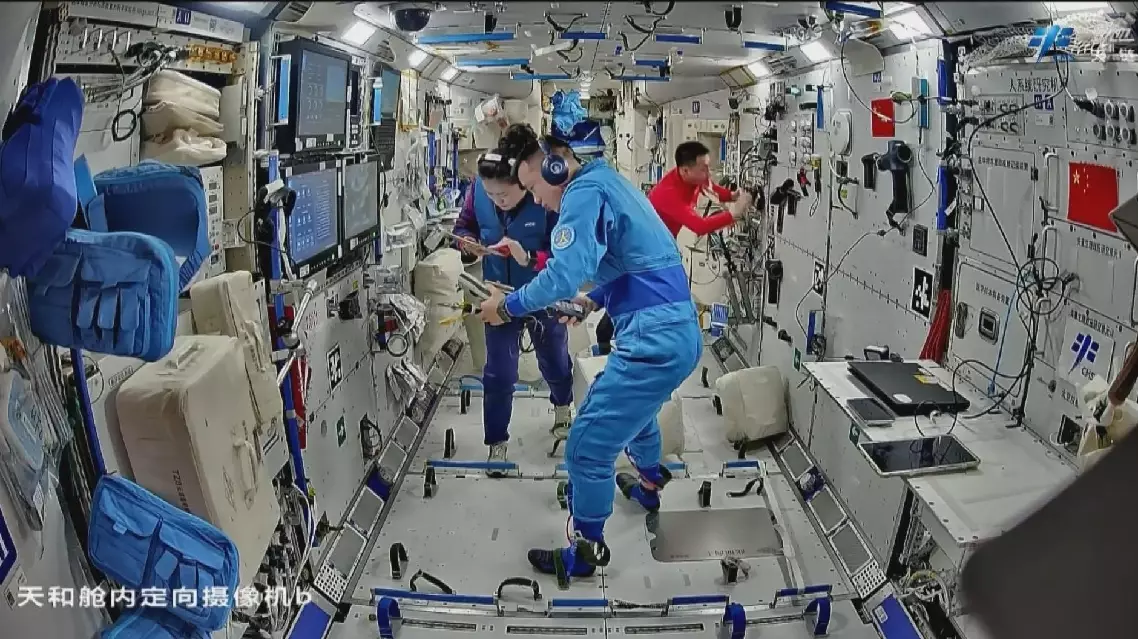
China's Shenzhou-19 crew continues in-orbit scientific experiments
The trio used electroencephalogram devices to conduct multiple experimental tests. Data collected will help ground researchers explore how gravity affects visual-motor information processing, reveal the cognitive patterns and neural mechanisms of how humans perceive spatial relationships in a microgravity environment, and explore the regulatory effects of brainwave music intervention on inhibitory control functions during long-duration spaceflight.
After nearly six months in orbit, the astronauts also shared insights into life aboard the space station. Using questionnaires and video recordings, they documented their experience with the station's livability, real-time feedback on human-machine interfaces, and the layout of various onboard systems. Based on these data and findings, researchers can refine design processes, identify issues, and suggest targeted improvements to enhance the human-centered design of future spacecraft.
In medical research, the crew completed pharmacokinetics-related tasks, collecting valuable data to help shape future in-orbit medication strategies.
In the field of space technology, the team continued work on the reverse Brayton cryocooling experiment, assembling and testing components inside its payload cabin. This cooling technology, based on ultra-high-speed dynamic pressure gas bearings, aims to support future deep space missions and enhance China's space thermal control capabilities.
Meanwhile, several microgravity physics experiments continued. The crew replaced samples in the fluid physics and high-temperature materials experiment cabinets, performed vacuum operations, and managed gas exhaust procedures.
Environmental monitoring remained a priority as well. The astronauts measured airflow and temperature, tested air cleanliness, and conducted routine equipment inspections and maintenance.
In support of their health, the crew also completed a series of medical checks, including electrocardiograms, pulmonary function tests, and dynamic electrocardiogram and blood pressure monitoring, while actively engaging in countermeasures to mitigate the effects of weightlessness.
The Shenzhou-19 crewed spaceship, atop a Long March-2F carrier rocket, was launched from the Jiuquan Satellite Launch Center in northwest China on Oct 30, 2024.
China's Shenzhou-19 crew continues in-orbit scientific experiments
China's Shenzhou-19 crew continues in-orbit scientific experiments
China's Shenzhou-19 crew continues in-orbit scientific experiments
China's Shenzhou-19 crew continues in-orbit scientific experiments