Jorge Heine, former Chilean ambassador to China, stated on Sunday that the "reciprocal tariffs" imposed by the United States may severely impact Chile given its heavy dependence on export markets, with some in the Latin American country concerned about a potential global recession.
During an interview with China Global Television Network (CGTN), Heine said that despite its diversified export markets, Chile could still be impacted if the tariffs induce a slowdown in worldwide trade.
"Obviously, it is potentially a very negative impact that it can have. Chile depends very heavily on the world market. Chile is a country with (one of) the highest number of free trade agreements in the world. Chile has something like 30 free trade agreements with 65 countries around the world. Therefore, export markets are very important for Chile, and we are also concerned about the possibility of a worldwide recession. So, it isn't just a question of our exports to the United States, it is also a question of what will happen with the global economy more generally," Heine said.
"Chile is in a privileged position in the sense that we have diversified our markets quite a bit. For Chile, China is our No. 1 export market, something like 40 percent of our exports go to China. The United States is our second largest export market, but we also export quite a bit to Europe and to Latin America. So, we have a diversified export basket, but even so, these things can hurt us pretty badly," he said.
On the broader picture, the former ambassador emphasized that Trump's will have serious repercussions for global growth and could even backfire for the U.S.
"There are some people that say that the real purpose of this exercise is to decouple the U.S. economy from the Chinese economy. And that it seems to me would be a very serious mistake. Between the two economies, between the U.S. and the Chinese economies, they represent something like 43 percent of the world's GDP. And the bilateral trade between China and the U.S. is around 600 billion dollars. So, to attempt to decouple these two economies would cause enormous damage to the world economy as a whole," said Heine.
"I would hope that there is some pulling back on this. I think we're already seeing some signs. There was today an announcement of President Trump that things like phones, and some computers and laptops, some chips would be exempted from these very high tariffs that the U.S. government has imposed on China. So, we may see some backtracking there," he said.
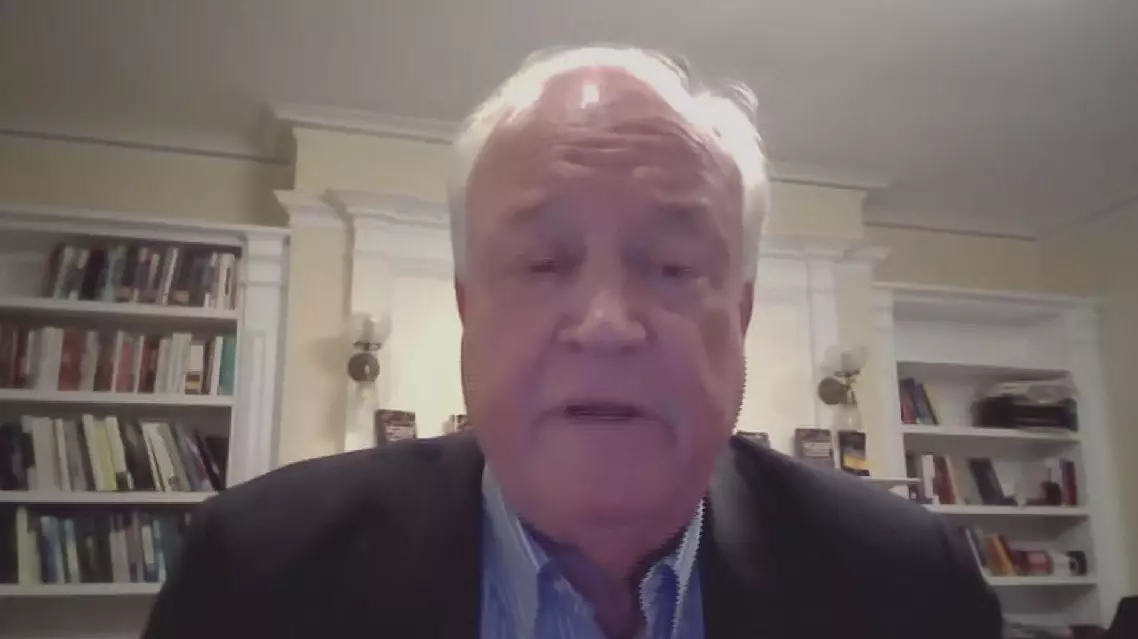
US tariffs could severely impact Chile despite diversified trade: former Chilean ambassador
Visiting Chinese Foreign Minister Wang Yi said Saturday China is willing to work with Lesotho to strengthen exchanges on governance experience, enhance coordination in multilateral affairs, and advance the China-Lesotho strategic partnership.
Wang, also a member of the Political Bureau of the Communist Party of China Central Committee, made the remarks when meeting with Lesotho Prime Minister Sam Matekane in the capital of Lesotho.
During the meeting, Wang congratulated Lesotho on the 60th anniversary of its independence this year, and spoke highly of Lesotho government's efforts to prioritize economic development and steer the African country onto a path of sustainable growth. Since the Beijing Summit of the Forum on China-Africa Cooperation (FOCAC) in 2024, the two sides have advanced cooperation under the 10 partnership action plans unveiled at the summit, successfully implementing a number of key projects to effectively promote Lesotho's development and revitalization, Wang said.
China stands ready to work with Lesotho to strengthen exchanges on governance experience, enhance coordination in multilateral affairs, and push for greater development of the China-Lesotho strategic partnership, he added.
Calling on the two sides to firmly support each other, Wang said that China will accelerate the implementation of its zero-tariff policy for African countries, including Lesotho, expand bilateral trade, investment and industrial cooperation, facilitate broader access of Lesotho's specialty products to the Chinese market, and continue to support Lesotho's national development.
China will continue to stand firmly with African countries, uphold justice for the Global South, including Lesotho, oppose unilateralism and acts of bullying, and work together to build a community with a shared future for humanity, Wang said.
On his part, Matekane said during the meeting that Lesotho cherishes its friendship with China and the strategic partnership between the two countries, and expressed gratitude for China's valuable support for the development of African countries, including Lesotho.
Lesotho firmly adheres to the one-China principle and resolutely supports China in safeguarding its core interests, he said, noting that his country stands ready to strengthen strategic mutual trust with China, expand people-to-people exchanges, jointly implement the outcomes of the FOCAC Beijing Summit, and deepen cooperation in areas such as infrastructure, manufacturing and energy.
Matekane stressed that China's zero-tariff policy for African products will inject new impetus into Lesotho's development. He also expressed Lesotho's willingness to strengthen solidarity and cooperation with China on multilateral platforms such as BRICS to jointly address global challenges.
On the same day, Wang also held talks with Lejone Mpotjoana, minister of foreign affairs and international relations of Lesotho.
China, Lesotho to strengthen exchanges, advance cooperation