Nanning City, in south China's Guangxi Zhuang Autonomous Region, on Friday launched a series of policies to support the development of a China-ASEAN Artificial Intelligence Innovation and Cooperation Center.
The first batch of policies consists of 22 articles, applicable to AI companies that settle in the center from March 1, 2025, and will be valid until Dec 31, 2027.
The new policies will provide enterprises and teams that settle in the center with free office space for no less than two years, with a maximum of 15 square meters per person and a maximum cumulative space of 500 square meters, as well as a startup capital subsidy of up to 5 million yuan (over 680,000 U.S. dollars). Up to 50 million yuan (about 5.84 million U.S. dollars) will be issued each year to support model research and development, and up to 5 million yuan of support will be provided for projects seeking breakthroughs in key core technologies.
The new policy focuses on supporting the construction of intelligent computing centers with a scale of more than 100PFlops.
Newly recruited high-end sci-tech talents in the technology-based AI enterprises above the designated size will be given salary rewards at a rate of up to 10 percent of their after-tax salary.
"We will increase financial and taxation support, and push forward tax reductions and exemptions for the center. For enterprises that meet the current relevant tax preferential policies such as the China-ASEAN Industrial Cooperation Zone, we will provide support for the local share part of corporate income tax under the policy of 'five-year exemptions and five-year reductions'. We will also establish an artificial intelligence industry fund with a total scale of 5 billion yuan (about 683.6 million U.S. dollars), focusing on supporting early-stage and growing AI companies and projects," Zhong Hong, executive vice mayor of Nanning City, said at a press conference on Friday.
The "five-year exemptions and five-year reductions" policy means that enterprises or projects under government support are exempt from corporate income tax from the first to the fifth year of its operation, and the tax is levied at half the statutory tax rate from the sixth to the tenth year.
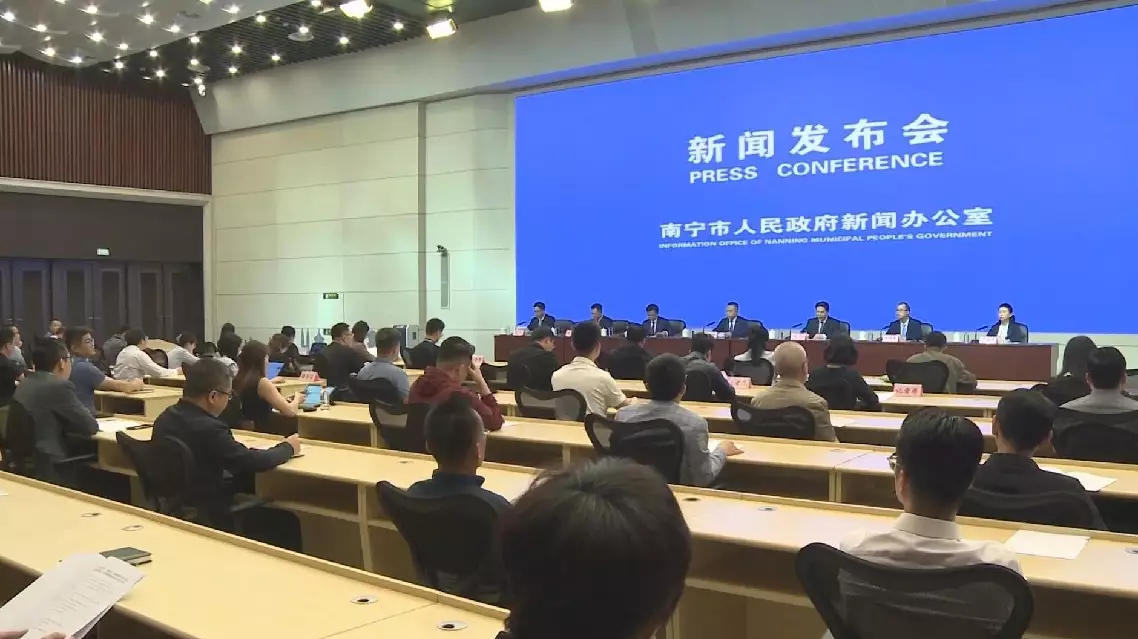
Nanning issues policies to support China-ASEAN AI industry center
China's ambitious "fitness for all" nationwide public health campaign and its determined drive to become a leading sporting nation are unlocking vast opportunities for sportswear businesses in the country's massive consumer market, said Adidas CEO Bjorn Gulden.
Speaking in an interview with China Global Television Network (CGTN) in Shanghai, Gulden said the German sportswear giant's localized approach to the Chinese market is a direct response to competition from stronger-than-ever local brands.
Under its "In China, For China" strategy, the company has delegated full product and creative control to its China team, which now designs and develops roughly half of Adidas products locally to match regional fashion trends and consumer preferences, with a shorter supply chain made possible by producing on the ground.
"Competition forces you to be better. And I'm sure that the reason why we have chosen to do 'In China, For China' model is because of competition. The old days when Adidas and all the brands were just exporting, I would say, concepts into China that were the same as in Europe and in America is over. That's why we have designers and creatives that work in China on a supply chain that is shorter because you can produce here. And that is of course to compete also against the local brands by making sure that we are better," he said.
Noting the evolution of sportswear from functional attire to everyday fashion, Gulden welcomed China's policies encouraging people to get active, saying they are bringing more consumers into the sportswear industry.
"Most sports products today are not being used for sports. They're being used as a comfort shoe or as a lifestyle item, and it's part of our life. It's very, very good that China is pushing sports more. The more people that do sports, the more importance sports get both from selling products, but also to widen the audience for sports culture products," Gulden said.
China's "fitness for all" strategy aims to get around 40 percent of the population exercising regularly by the end of the decade, backed by thousands of new and upgraded community sports facilities, expanded venue space and "15-minute fitness circles" designed to put public exercise areas within a short walk of every urban and rural resident.
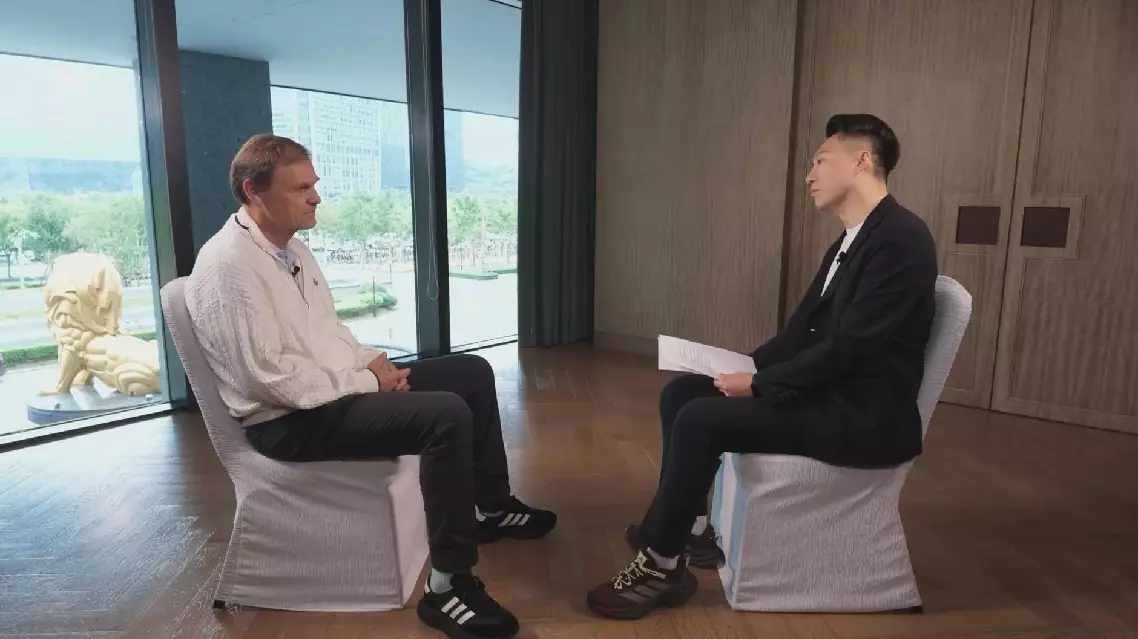
China's push to become leading sports nation benefits sportswear businesses: Adidas CEO