World Health Organization (WHO) chief Tedros Adhanom Ghebreyesus said on Wednesday that the Ebola outbreak in the Democratic Republic of Congo and Uganda remains a public health emergency of international concern, but poses a low risk at the global level.
The WHO director-general told reporters in Geneva that 51 cases have been confirmed in the DRC, with almost 600 suspected cases and 139 suspected deaths.
The director-general also said that after declaring a public health emergency early on Sunday, he immediately convened an Emergency Committee under the International Health Regulations, which met Tuesday and agreed that the situation constitutes a public health emergency of international concern, but not a pandemic emergency.
"WHO assesses the risk of the epidemic as high at the national and regional levels, and low at the global level," he said.

WHO chief says risk for global Ebola outbreak is low
Once confined to the Tibetan plateau as a humble staple, highland barley is now finding its place in China's modern food industry, thanks to the efforts of local young entrepreneurs.
Tashi Norbu, a workshop foreman at Xizang Keyan Agricultural Technology Co., has turned his passion for the crop into a thriving business.
Consulting farmers on harvests and signing contracts early in the season, he ensures steady supplies of the grain that has long sustained Tibetan families.
"I grew up eating tsampa, which is made from highland barley. We eat it for breakfast, lunch, or dinner," said Tashi Norbu.
Last year, the company which Tashi Norbu works for sold three million highland barley products, ranging from cookies to noodles. Spotting a business opportunity, he began visiting various planting bases early this year to sign contracts with farmers.
From the field to the workshop, the transformation of highland barley begins with its refinement through varied processes.
On the traditional water-mill production line, tsampa, butter, and milk residue blend seamlessly, transforming into highland barley cookies suited to modern times.
"I had never imagined before that our highland barley could be transformed into various distinctive products. Now, we can produce fermented foods, specialty noodles, and many other items," said Tashi Norbu.
These products, carrying the flavor of the plateau, are now reaching shelves in big eastern and southern Chinese cities such as Shanghai and Guangzhou, and even have appeared at international food exhibitions.
The company's head Xiaosuodun said that highland barley is not only a product but also a culture, whose flavor evoked home.
"Highland barley is not only a product but also a culture, and its flavor is the flavor of home. Seeking its flavor and promoting its culture will be my lifelong mission," said Xiaosuodun.
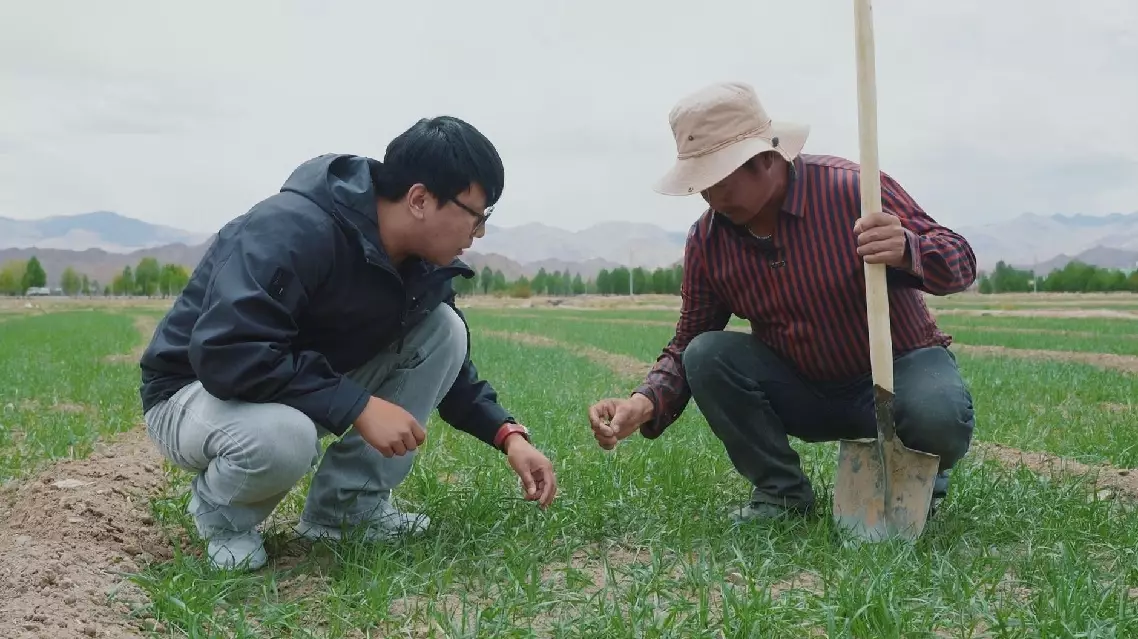
Highland barley finds place in China's modern food industry