Since the start of this year, major commercial centers across China have been racing to reinvent urban consumption by leveraging advanced technology and traditional culture, creating captivating shopping experiences that have sparked a surge in spending.
China's consumer market has shown a remarkable upswing in the first quarter, with offline consumption heat index rising by 14.2 percent year on year, marking a 9.1 percentage-point increase from the previous quarter, according to data from the State Information Center.
In Chengdu, the capital of Sichuan Province, tourists now can enjoy a new mesmerizing experience along the Jinjiang River. The use of mists and laser technology transforms the waterway at night into a poetic wonderland, dubbed as a "floating celestial path."
Visitors can enjoy the river cruise all day long, with boats gliding through the ethereal mists, flanked by lush greenery and iconic city landmarks. As dusk falls, the scene is illuminated by ancient-style lanterns and neon lights, turning the river into a flowing galaxy of light.
Beyond the boat tour, the nearby Chunxi Road business district, home to nearly 2,000 brands, is set to amplify its appeal with 21 major product debut events in the coming two months, including the release of new tech products. One mall has installed AI-powered real-time translation screens, offering international shoppers at least 14 language services.
The "debut economy" has become a key driver of consumer vitality in the Chunxi Road business district. Local authorities are further exploring ways to capitalize on this thriving economy by integrating resources from different departments. The city has established a "Debut Economy Development Promotion Center" this year, offering comprehensive services for related businesses, from incubation to operational monitoring.
"We are exploring ways to leverage existing policies such as launching new consumption scenarios and events while supporting them (businesses) with all-round services," said Sun Qiu, director of Jinjiang District Debut Economy Development Promotion Center.
Meanwhile, in Guangdong Province, new approaches such as "garden plus retail" and "traditional culture plus shopping district" are being adopted to revive urban commerce. In Foshan, a trendy downtown area has been transformed into a popular floral attraction. Six park-like landscaped corridors, adorned with seasonal blooms, have helped drive an average 20 percent revenue growth for local businesses.
"After the renovation, our tables can flip three times every day, with revenue increasing three to four times from the past," said Jiang Yundong, manager of a popular hotpot restaurant in the area. In addition, traditional cultural activities such as Song Dynasty wedding ceremonies, lion dance performances, and immersive script-based garden plays are also boosting consumption.
"In the first quarter, overall foot traffic in our park surged by over 30 percent, with more than 60 percent of businesses seeing sales increases of at least 10 percent compared to the same period of last year," said Liu Qing, head of Foshan Creative Industry Park.
In the first three months, Foshan welcomed over 12 million domestic and international visitors, up 7.9 percent year on year. Tourism-related revenue also saw a significant growth, up 10.71 percent year on year.
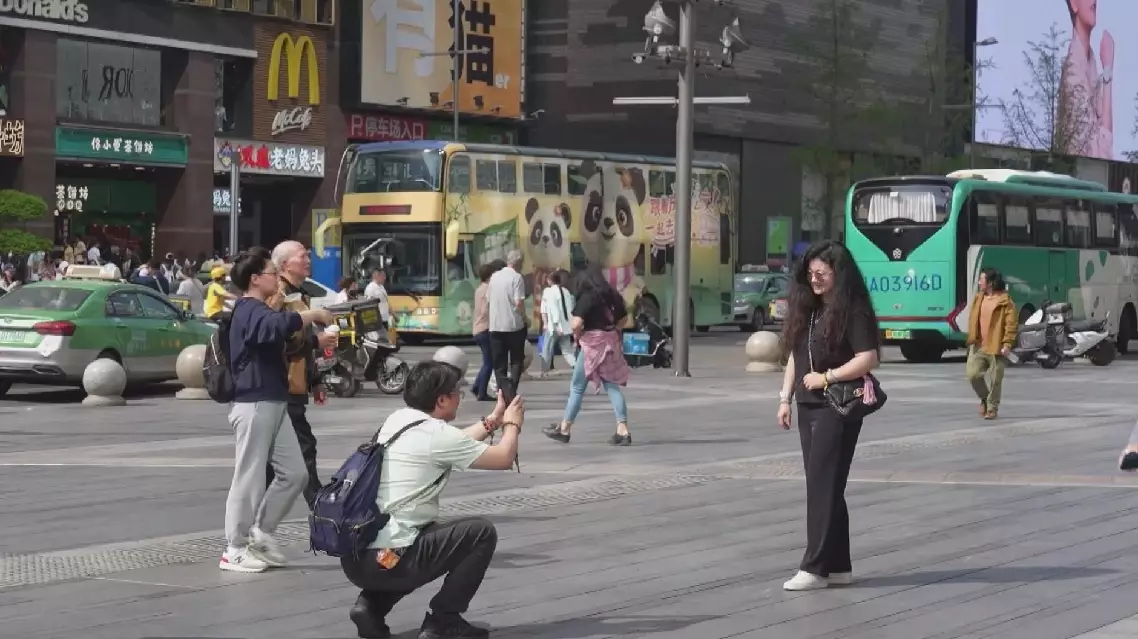
Major shopping centers in China innovate to boost consumption