Skip to Content Facebook Feature Image

Qwilt Leads the Future of Edge Cloud, Surpassing 2,000 Edge Nodes Across Six Continents

News

Qwilt Leads the Future of Edge Cloud, Surpassing 2,000 Edge Nodes Across Six Continents
News

News

Qwilt Leads the Future of Edge Cloud, Surpassing 2,000 Edge Nodes Across Six Continents

2025-04-15 14:02 Last Updated At:14:21

REDWOOD CITY, Calif.--(BUSINESS WIRE)--Apr 15, 2025--

Qwilt today announced that it has surpassed a significant milestone, deploying 2,196 edge nodes across 38 countries on six continents. This expansion solidifies Qwilt’s leadership in Edge Cloud, delivering unmatched proximity, speed, and scale for edge compute and delivery.

This press release features multimedia. View the full release here: https://www.businesswire.com/news/home/20250414387764/en/

Today, Qwilt partners with major service, content and application providers worldwide, including Airtel, BT, Comcast, Telefonica, Verizon, and Vodafone, demonstrating its strategic alignment with the future of the service provider edge. Its highly distributed architecture now forms the world’s largest true Edge Cloud, embedded directly within service provider access networks.

“Through our Open Edge framework, we’ve unlocked access to the last mile of the network, igniting a global edge ecosystem capable of ultra-low latency compute and application delivery,” said Alon Maor, CEO, Qwilt. “Exceeding 2,000 edge nodes proves both the growing demand for hyper-local edge compute and the power of our platform to scale globally. Most importantly, this massive global infrastructure is now accessible through a single, programmatic API, making it easier than ever to build and deliver next-generation applications at the true edge.”

Qwilt’s rapid global deployment redefines what it means to operate “at the edge.” While traditional platforms often stop at metro data centers or IXPs, Qwilt goes significantly deeper—embedding compute and caching directly within last-mile networks. This gives service providers and content publishers a radically more efficient, scalable, and performant alternative to legacy delivery and centralized cloud models.

Qwilt’s Open Edge architecture offers:

“There are two key reasons why our Open Edge Cloud is growing eight times faster than traditional platforms,” Maor added. “First, our deep partnership model puts edge nodes and origin servers directly into service provider access networks—already enabling over 150 Tbps of last-mile capacity. Second, we’ve made this massive global edge accessible via a single, standards-based API. That’s a game-changer for service providers and developers building the next wave of real-time applications.”

As demand accelerates for real-time applications - from streaming and gaming, to enterprise software, large language models, and other compute-heavy services - Qwilt’s globally distributed edge ensures infrastructure is ready, local, and scalable.

About Qwilt

Qwilt’s mission is to deliver connected experiences at the quality they were imagined. Its model is built on partnerships with application and service providers, globally, to create a fabric that powers high-performance services at the very edge of neighborhoods, big and small.

Qwilt’s open architecture and inclusive business model make local edge compute and delivery more accessible than ever, unlocking more reliable, higher-quality experiences at greater scale. A growing number of the world’s leading content publishers and cable, telco, and mobile service providers rely on Qwilt for Edge Cloud services, including Airtel, BT, Comcast, Telecom Argentina, Telecom Italia, Telefonica, TIM Brazil, Verizon, and Vodafone.

Qwilt is a leader of the Open Edge and Open Caching movement and a founding member of the Streaming Video Technology Alliance. Qwilt is backed by Accel Partners, Bessemer Venture Partners, Cisco Ventures, Disruptive, Innovation Endeavors, Marker, Redpoint Ventures, and Digital Alpha. For more information, visit www.qwilt.com.
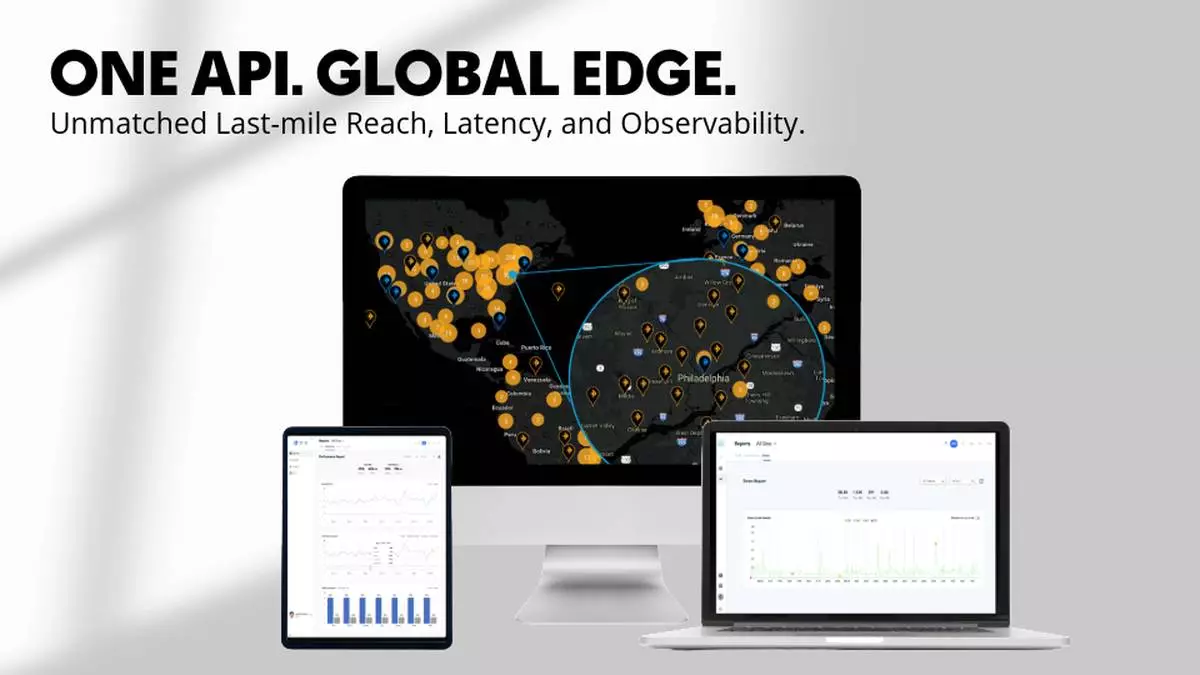
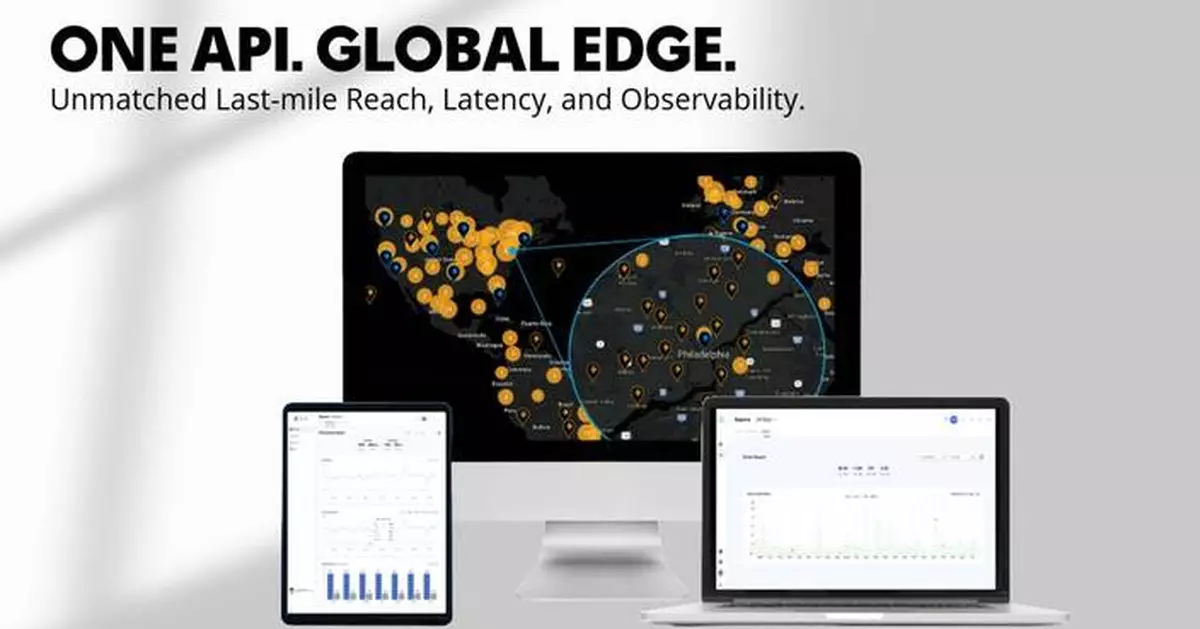
One API. Global Edge.


One API. Global Edge.

MOUNT MAUNGANUI, New Zealand (AP) — Tom Latham took a close look at the pitch at Bay Oval Thursday and made the inspired decision to bat first.

Inspired ultimately because at stumps New Zealand was 334-1 against West Indies, Devon Conway was 178 not out and nightwatchman Jacob Duffy was 9.

Latham and Conway put on 323 for New Zealand's first wicket in a partnership that ended just three overs from stumps when Latham was out for 137. The partnership was New Zealand's second-highest opening stand in tests and the highest for all wickets and all teams in 2025.

Latham faced 245 balls before falling to a slip catch shortly after the arrival of the second new ball. Conway faced 279 deliveries, batted throughout the day and at stumps was approaching his highest test score — his 200 on debut against England in 2021.

Latham's decision to bat first was bold because the pitch was unusually green for Bay Oval. Bold because he had to back his play, pad up and bat first.

Inspired also because the pitch's appearance was deceptive. It was much drier under its carpet of grass than it outwardly appeared. West Indies had planned to bowl first, anyway.

“I guess we left the decision about what we were going to do a bit longer than we usually do,” Latham said. "We were going back and forth and we obviously ended up going with a spinner and decided to bat first.

“It was obviously a great day, a great partnership between Dev and myself and I'm obviously happy with the day's work.”

New Zealand captains don't usually choose to bat first after winning the toss in tests at home. The last time, before Latham took that gamble Thursday, was 14 years ago in January, 2011 when Daniel Vettori chose to bat against Pakistan at the Basin Reserve. Vettori made 110 in the first innings of that match as the gamble paid off for the captain on that occasion as well.

The last time both openers scored centuries in a test for New Zealand was in 2019 when Latham made 161 and Jeet Raval 132 against Bangladesh in Hamilton. That was an opening stand of 200 or more, of which there have been only six for New Zealand. Latham has been part of two.

At 277, Thursday's partnership between Latham and Conway became the second highest for the first wicket for New Zealand, overtaking the 276 between Stu Dempster and Jackie Mills against England at Wellington in 1930.

At 304, it became the highest partnership for any test wicket in this calendar year.

The pitch wasn't lifeless Thursday. There was seam movement early and bounce for most of the day. Kemar Roach and Jayden Seales discharged their opening spells with the new ball cheaply: Roach conceded 12 runs from six overs and Seales 10 runs from five overs.

But West Indies made the decision to select an extra batter — Alick Athanaze — at the expense of a bowler and as the New Zealand openers batted on and on, the toll on the attack of three seamers, one allrounder and one spinner became intense.

The West Indies bowled good balls throughout the day — Latham was dropped on 104 by wicketkeeper Tevin Imlach off Anderson Phillips — but there were not enough good balls in succession to create pressure.

Conway's century came from 147 balls and included 17 boundaries. It was the sixth century of his career, the second in his last six innings but only the third in his last 39 innings.

Latham batted with immense patience to reach his 15th test century, his second of the series, from 183 balls with nine fours and a six.

New Zealand leads the three-match series 1-0 after the first test was drawn and the Black Caps won the second by nine wickets.

AP cricket: https://apnews.com/hub/cricket

New Zealand's Tom Latham bats against the West Indies on day 3 during their cricket test match in Christchurch, New Zealand, Thursday, Dec. 4, 2025. (Andrew Cornaga/Photosport via AP)

New Zealand's Tom Latham bats against the West Indies on day 3 during their cricket test match in Christchurch, New Zealand, Thursday, Dec. 4, 2025. (Andrew Cornaga/Photosport via AP)

Recommended Articles