Two years of Sudan's civil war have dealt a devastating blow to the country's economy, putting the financial system on the verge of collapse, leading to high inflation and soaring prices and leaving the Sudanese people to struggle for a living.
Fighting broke out in the capital of Khartoum on April 15, 2023, between the Sudanese Armed Forces (SAF) and the paramilitary Rapid Support Forces (RSF), and has spread to other areas across the country. The brutal fighting has killed at least 29,700 people and displaced nearly 13 million people.
The conflict has severely damaged Sudan's roads, electricity, water supply, education, and medical care, and almost paralyzed its industrial system.
Sudan's Ministry of Industry and Trade said that about 90 percent of the country's industrial facilities were damaged, and nearly 4,000 factories of various types in Khartoum and its surrounding areas were destroyed in the war.
The 2023 conflict also periled the country's banking sector. According to statistics from the Central Bank of Sudan, the country's financial assets have shrunk by about half during the conflict as hundreds of bank branches were robbed, and more than 70 percent of bank branches were forced to close.
The Sudanese government has launched a currency swap plan in the seven eastern states under its control since December last year, replacing old banknotes with new ones. However, new money cannot be exchanged in areas controlled by the RSF, resulting in a "dual currency system" in Sudan.
"The financial system in western Sudan is separated from other regions. This is a very dangerous phenomenon. It is a heavy blow to Sudan's economy. Because the western Darfur and Kordofan regions are rich in resources, they are indispensable to the national economy," said Asim Ismail, a Sudanese economist.
Fueled by an economic recession, export decline and capital exodus, Sudan's inflation rate has kept rising and its exchange rate has continued to depreciate. From 560 Sudanese pounds against 1 U.S. dollar before the conflict to 2,600 Sudanese pounds against 1 U.S. dollar today, the country's currency has registered a depreciation rate of more than 400 percent.
More than 65 percent of its people are living in poverty. Food prices have soared to 2 to 3 times the price before the outbreak of war, plunging Sudan into a serious hunger crisis. Nearly half of the country's population, or about 24.6 million people, are experiencing acute food insecurity.
"After the conflict broke out, the logistics system was almost paralyzed. Many roads were interrupted, making it very difficult to transport goods. This is an important reason for price hikes. I hope the conflict will end soon and the country will return to peace and stability," said Ismail Salam, a Khartoum resident.
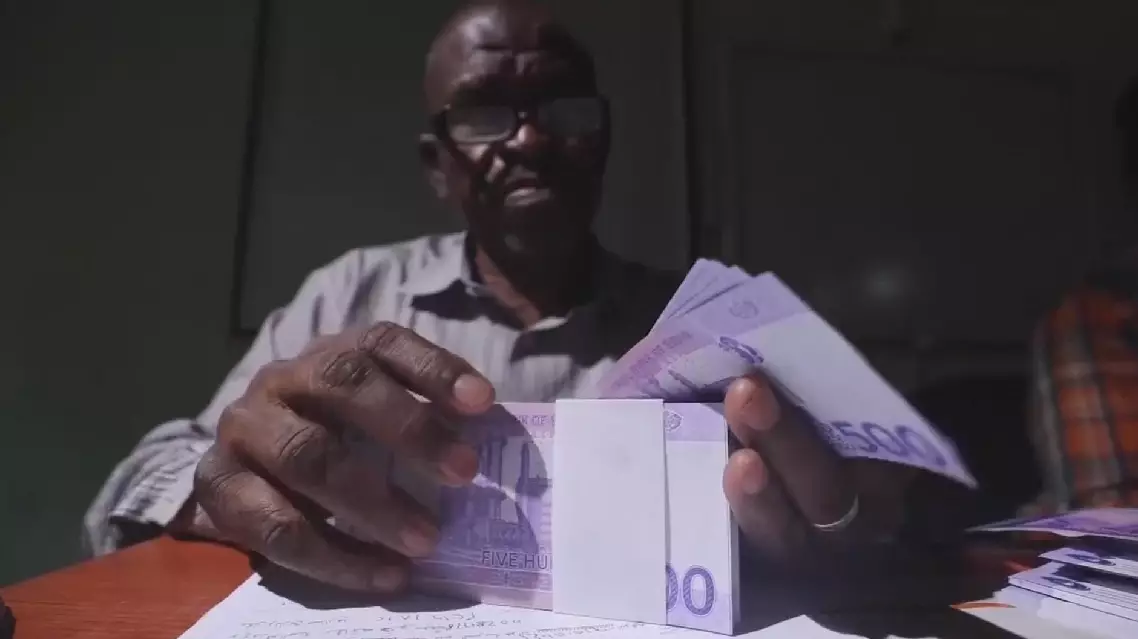
Sudan's conflict pushes banking sector to brink of collapse
The United Nations needs deep reforms to become more focused on people and better respond to today's global challenges, former UN Under-Secretary-General Erik Solheim said on the sidelines of the 2026 Global Governance Forum in Xiong'an, north China's Hebei Province.
Hosted by the Chinese People's Institute of Foreign Affairs, the three-day forum opened on Friday in Xiong'an New Area under the theme "Rebuilding Confidence and Cooperation: Reforming and Improving Global Governance in a Transforming World," with discussions centered on multilateral cooperation, artificial intelligence and sustainable development.
In an interview with China Global Television Network (CGTN), Solheim echoed Chinese Foreign Minister Wang Yi's remarks on multilateralism at the forum, saying that solidarity among countries is the only way to address shared challenges.
"You have huge international challenges: peace in Ukraine, Gaza, Sudan, other places, protecting the planet against destruction and climate change and bringing everyone out of poverty, and these are huge global challenges. We cannot solve them -- one country by itself. We need to find a common solution. If we work together, we are stronger. It's nothing like a zero-sum game. All the big issues of our time, we can win together or lose together," he said.
Stronger multilateral cooperation and a reformed UN are essential to tackling those challenges, Solheim added.
"I think that's absolutely critical, because all big challenges of our time need answers to come from China, from the United States, but also from India, Europe or Africa -- all the rest of the world together. We can resolve these issues. There's nothing we cannot achieve if we work together. However, the United Nations, which is at the core of the multilateral system, needs deep reforms. We need a new leadership; we need a new Security Council composition. And we need a different culture in the UN much more focused on the people out there, much less focused on bureaucracy and process. It's not like there will be peace tomorrow, it is not that simple, but unless you make a concerted effort, you will never get there," he said.
Solheim also hailed the way Xiong'an has been planned and built, saying its scientific approach has produced a smart, digital and livable city from which others can learn.
"What makes Xiong'an different from any other city in the world is that [it was] a planned city from the very beginning. All other great cities in the world where there is Xi'an and Beijing in China, or Mumbai in India, or Paris in Europe, they have grown organically over a long time. Xiong'an is a planned city and that has made it probably the smartest city in the world, most digital city in the world, with a fantastic underground network of canals which can solve problems for people, all that has been taken care of in the planning process in Xiong'an. While of course other cities cannot just take a blueprint from Xiong'an because they already exist, they can learn from this planning so that all other cities are better planned than they are at the moment, because without a plan, we cannot make a people-friendly city," he said.
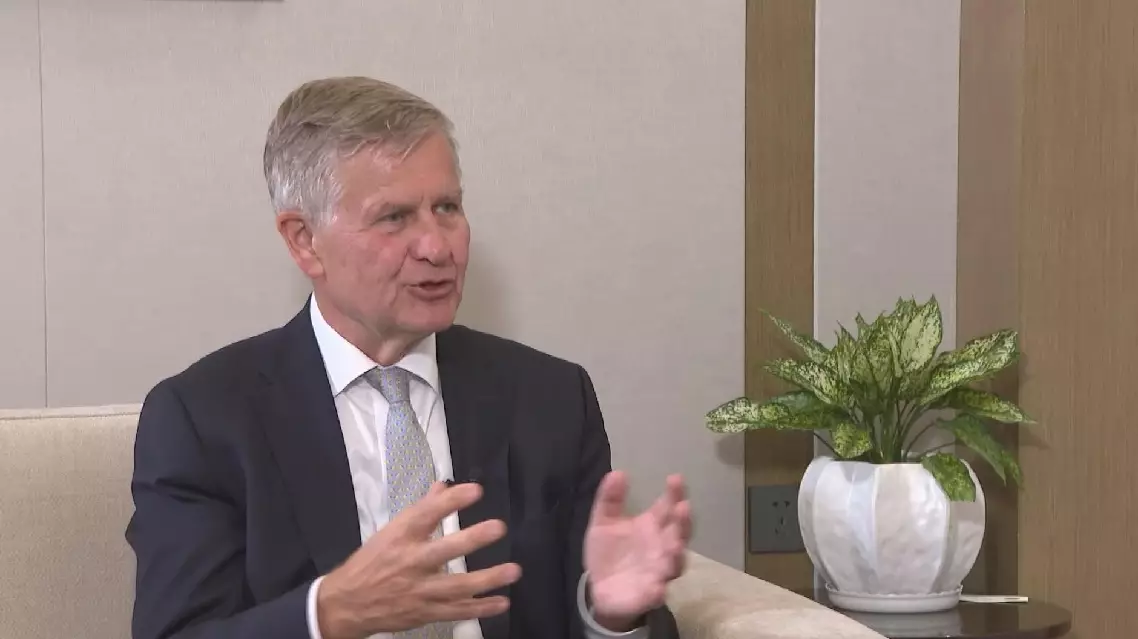
Former UN official urges deep reforms to help world body meet today's challenges