The ongoing high temperatures in Hungary are threatening the survival of Danube River's mayflies, which usually emerge as adults and mate in August and September every year.
The country this year experienced its hottest August since records began in 1901. Severe summer drought has lowered Danube River water levels and threatened local ecology.
Hungary has been dealing with an extended stretch of heat and drought this year, leading to a sharp drop in Danube River's water level, which poses a major threat to mayflies, according to Kriska Gyorgy, an associate professor at the Institute of Biology under Eotvos Lorand University. He has been studying mayflies in Danube River area for 15 years.
"Mayflies lay their eggs in late August or early September. These eggs need to grow in warm water for several weeks, but a cold spell is also crucial for them to develop into healthy adults. This year, Danube has been hit by extreme weather, and this certainly includes a clear rise in water temperature. If this temperature collapse spreads over a long stretch of the river, it could wipe out the entire species in the area," he said.
The country's biologists and nature enthusiasts have been raising public awareness about mayflies, calling on people to protect the environment and reduce the disturbance in river ecosystems.
"During the important period in August, we will be out filming almost every night, because every year there's something new to discover and present. I love filming this topic, and I really want to bring it to the general public," said Kriska Ferenc, a nature photographer.
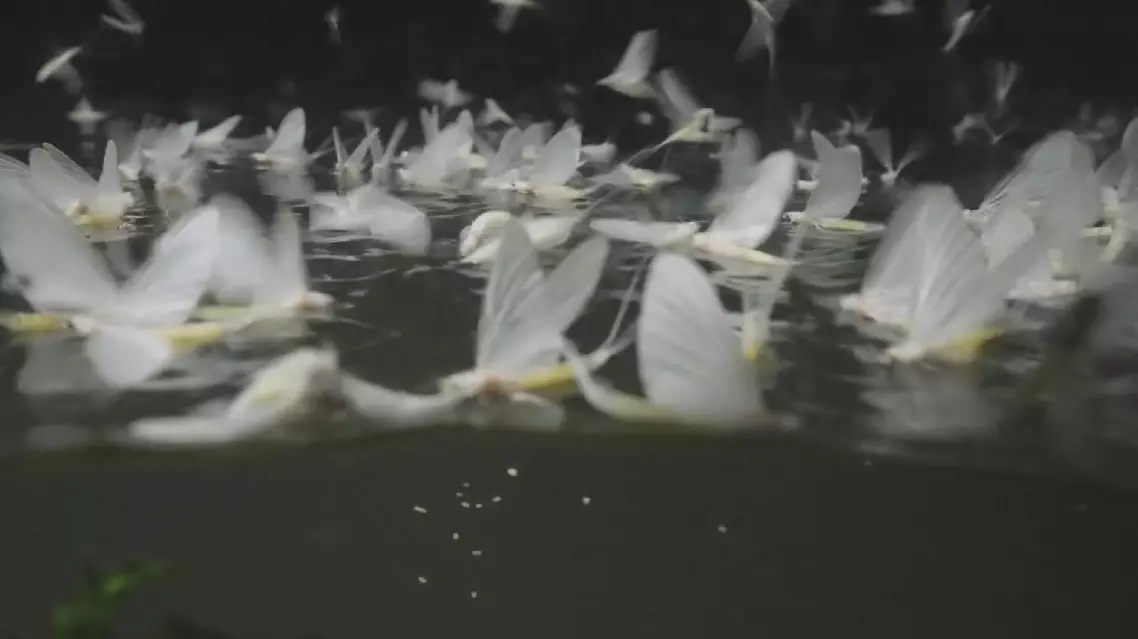
Summer drought threatens survival of mayflies at Danube in Hungary