NEW YORK (AP) — The latest government waste touted by billionaire Elon Musk's cost-cutting Department of Government Efficiency is hundreds of millions of dollars in fraudulent unemployment claims it purportedly uncovered.
One problem: Federal investigators already found what appears to be the same fraud, years earlier and on a far greater scale.
In a post last week on X, the social media site Musk owns, DOGE announced “an initial survey of unemployment insurance claims since 2020” found 24,500 people over the age of 115 had claimed $59 million in benefits; 28,000 people between the ages of 1 and 5 collected $254 million; and 9,700 people with birthdates more than 15 years in the future garnered $69 million from the government.
The tweet drew a predictable party-line reaction of either skepticism or cheers, including from Musk himself, who said what his team found was “so crazy” he re-read it several times before it sank in.
“Another incredible discovery,” marveled Labor Secretary Lori Chavez-DeRemer, who repeated DOGE’s findings to President Donald Trump in a Cabinet meeting last week.
Chavez-DeRemer’s recounting of the alleged fraud, including claims of benefits filed by unborn children, drew laughter in the Cabinet room and a reaction from Trump himself.
“Those numbers are really bad,” he said.
But Chavez-DeRemer needn't look further than her own department’s Office of the Inspector General to find such fraud had already been reported by the type of federal workers DOGE has demonized.
“They’re trying to spin this narrative of, ‘Oh, government is inefficient and government is stupid and they’re catching these things that the government didn’t catch,’” says Michele Evermore, who worked on unemployment issues at the U.S. Department of Labor during the administration of former President Joe Biden. “They’re finding fraud that was marked as fraud and saying they found out it was fraud.”
The Social Security Act of 1935 enshrined unemployment benefits in federal law but left it to individual states to set up systems to collect unemployment taxes, process applications and mete out support.
Though states have almost complete control over their own unemployment systems, special relief programs — most notably widely expanded benefits enacted by the first Trump administration at the outset of the COVID pandemic — inject more direct federal involvement and a flood of new beneficiaries into the system.
In regular times, state unemployment systems perform “very well, not so well and terribly,” according to Stephen Wandner, an economist at the National Academy of Social Insurance who authored the book “Unemployment Insurance Reform: Fixing a Broken System.” With COVID slamming the economy and creating a flood of new claims that states couldn’t handle, Wandner says many more were “quite terrible.”
Trump signed the COVID unemployment relief into law on March 27, 2020, and from the very start it became a magnet for fraud. In a memo to state officials about two weeks later, the Department of Labor warned that the expanded benefits had made unemployment programs “a target for fraud with significant numbers of imposter claims being filed with stolen or synthetic identities.”
That same memo offered an option for states trying to protect a person whose identity was stolen to fraudulently collect unemployment benefits. To preserve a record of the fraud but keep innocent people from being linked to it, states could create a “pseudo claim,” the memo advises.
Those “pseudo claims” led to records of toddlers and centenarians getting checks. The Labor Department's inspector general tallied some 4,895 unemployment claims from people over the age of 100 between March 2020 and April 2022, but another departmental memo explained that the filings stemmed from states changing dates of birth to protect people whose identities were used.
“Many of the claims identified ... were not payments to individuals over 100 years of age, but rather ‘pseudo records’ of previously identified fraudulent claims,” the 2023 memo says.
A Labor Department spokeswoman did not respond to questions about Musk's findings and DOGE gave no details on how it came to find the supposed fraud or whether it duplicates what was already found.
Though DOGE ostensibly looked at longer timeframe than federal investigators previously had, it tallied just $382 million in fake unemployment claims, a tiny fraction of what investigators were already aware.
In 2022, the Labor Department said suspected COVID-era unemployment fraud totaled more than $45 billion. The Government Accountability Office later said it was far worse, likely $100 billion to $135 billion.
“I don't think it's news to anyone,” says Amy Traub, an expert on unemployment at the National Employment Law Project. “It's been widely reported. There've been multiple congressional hearings.”
If DOGE's newest allegations have an air of familiarity, it's because they echo its prior findings of about Social Security payments to the dead and the unbelievably old. Those were false claims.
That makes DOGE an imperfect messenger even when fraud has occurred, as with unemployment claims.
Jessica Reidl, a senior fellow at the conservative think tank The Manhattan Institute, is a fiscal conservative who so champions rooting out federal waste she has written 600 articles on the subject. Though she believes unemployment insurance fraud is rife, she has trouble accepting any findings from DOGE, which she says has acted ineffectively and possibly illegally.
“When DOGE says impossibly old dead people are collecting unemployment in huge numbers, I become skeptical,” Reidl says. “DOGE does not have a good track record in that area.”
Traub said the burst of pandemic-era unemployment fraud led states to implement new security measures. She questioned why Musk’s team was trumpeting old fraud as if it’s new.
“Business leaders and economists are warning about a national recession, so it’s natural to think about unemployment,” says Traub. “It’s an attack on the image of a critically important program and perhaps an attempt to undermine public support on unemployment insurance when it couldn’t be more important.”
Matt Sedensky can be reached at msedensky@ap.org and https://x.com/sedensky.
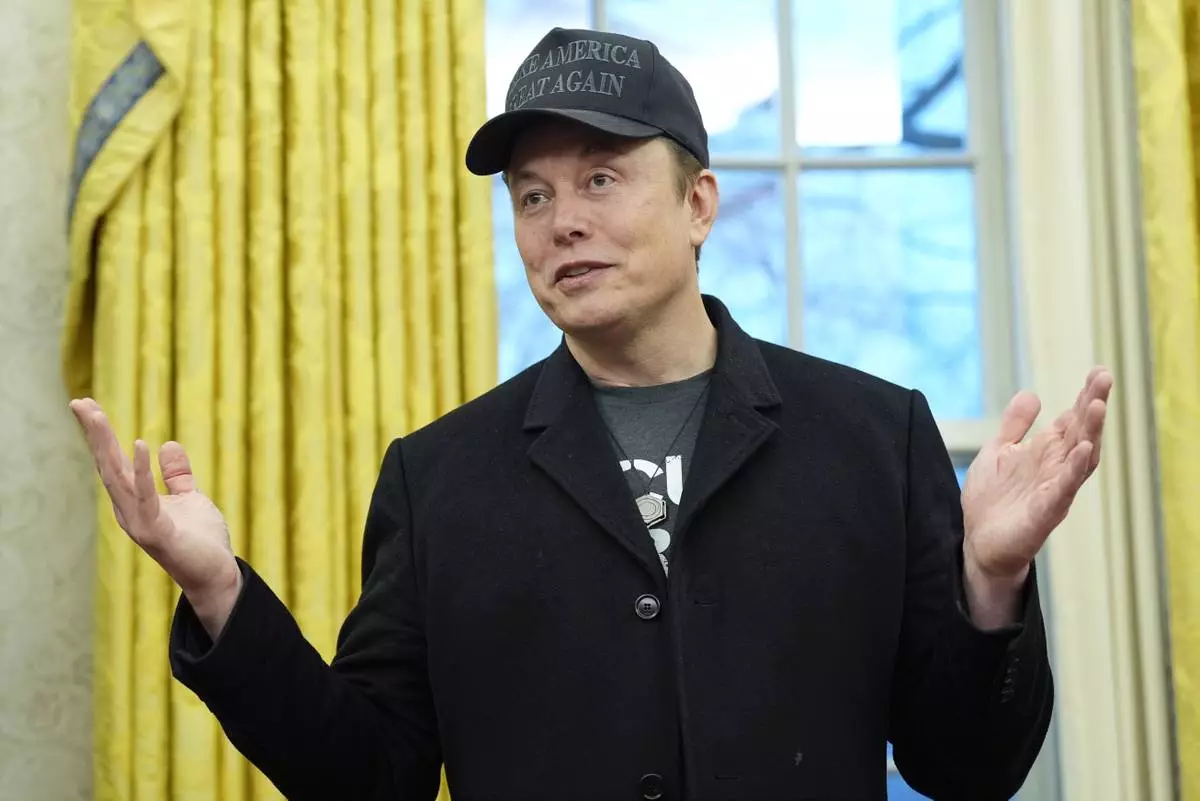
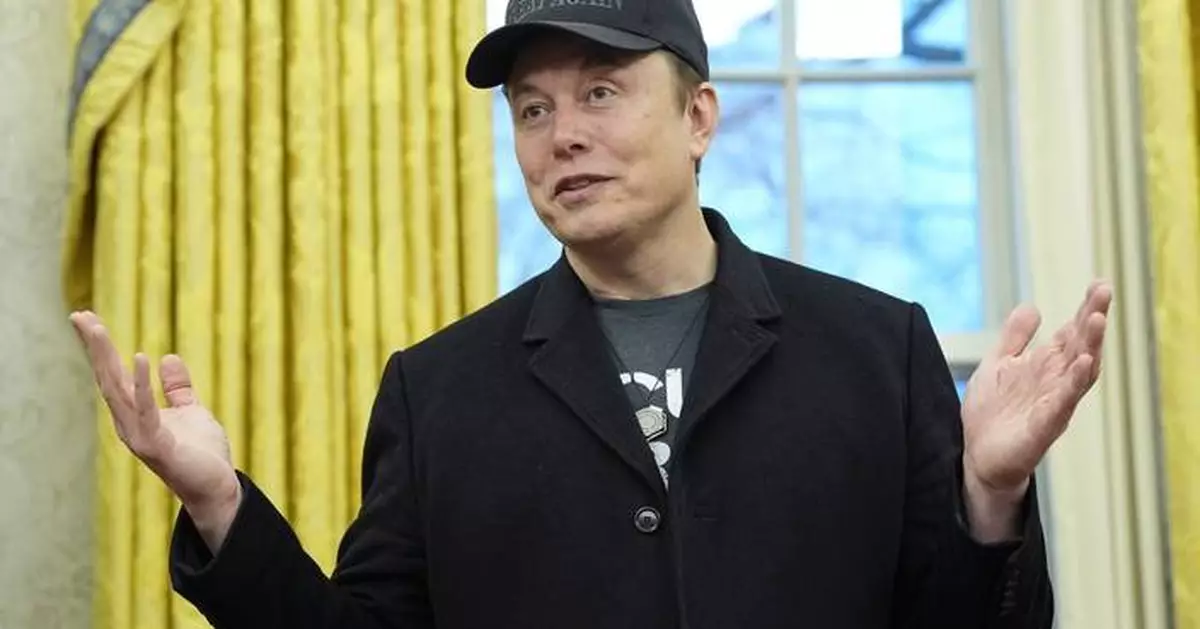
FILE - Elon Musk speaks during an event with President Donald Trump in the Oval Office at the White House, Feb. 11, 2025, in Washington. (AP Photo/Alex Brandon, File)