HONG KONG (AP) — Hong Kong's post office will stop shipping small parcels to the United States after Washington announced plans to charge tariffs on small-value parcels from the southern Chinese city, the government said Wednesday.
The U.S. government earlier announced that it would end a customs exception allowing small-value parcels from Hong Kong to enter the U.S. without tax, slapping a 120% tariff on them starting from May 2. The “de minimis” exemption currently allows shipments that are worth less than $800 to go tax-free.
A government statement said Hongkong Post would not collect tariffs on behalf of Washington, and will suspend accepting non-airmail parcels containing goods destined for the U.S. on Wednesday, since items shipped by sea take more time. It will accept airmail parcels until Apr. 27.
“For sending items to the US, the public in Hong Kong should be prepared to pay exorbitant and unreasonable fees due to the U.S.’s unreasonable and bullying acts,” the government wrote.
It will continue accepting mail that contains only documents.
Hong Kong, is caught in the middle of the trade disputes between the U.S. and China despite being a free port.
The former British colony, which returned to Chinese rule in 1997, has trade and customs policies different from mainland China's, under the semi-autonomy granted by Beijing during the handover. But Washington began treating it as part of China after Beijing imposed a national security law in 2020, and has applied the 145% tariffs imposed on Chinese imports.
The national security law, which China says has brought back stability to the city, has virtually silenced all dissent.

A truck carrying a Hede (Hong Kong) International Shipping Co., Ltd., container moves along the Port of Los Angeles Wednesday, April 9, 2025 in Los Angeles. (AP Photo/Damian Dovarganes)
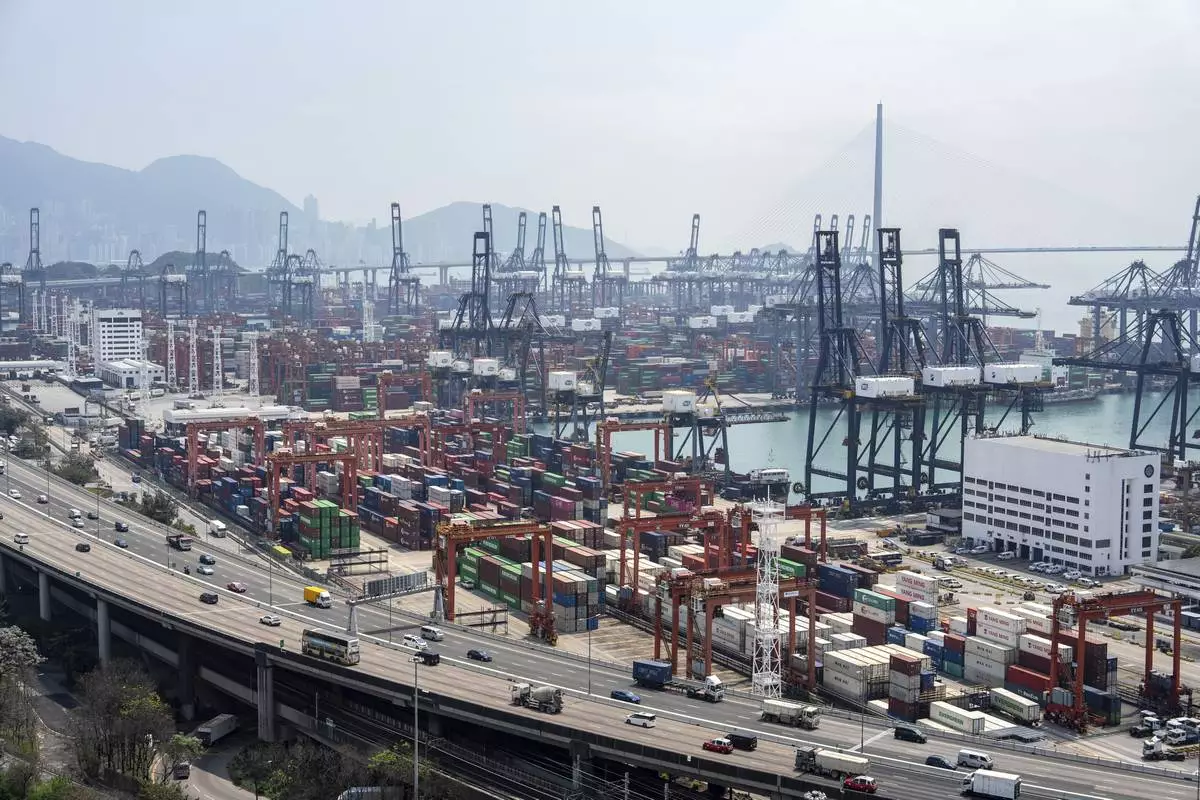
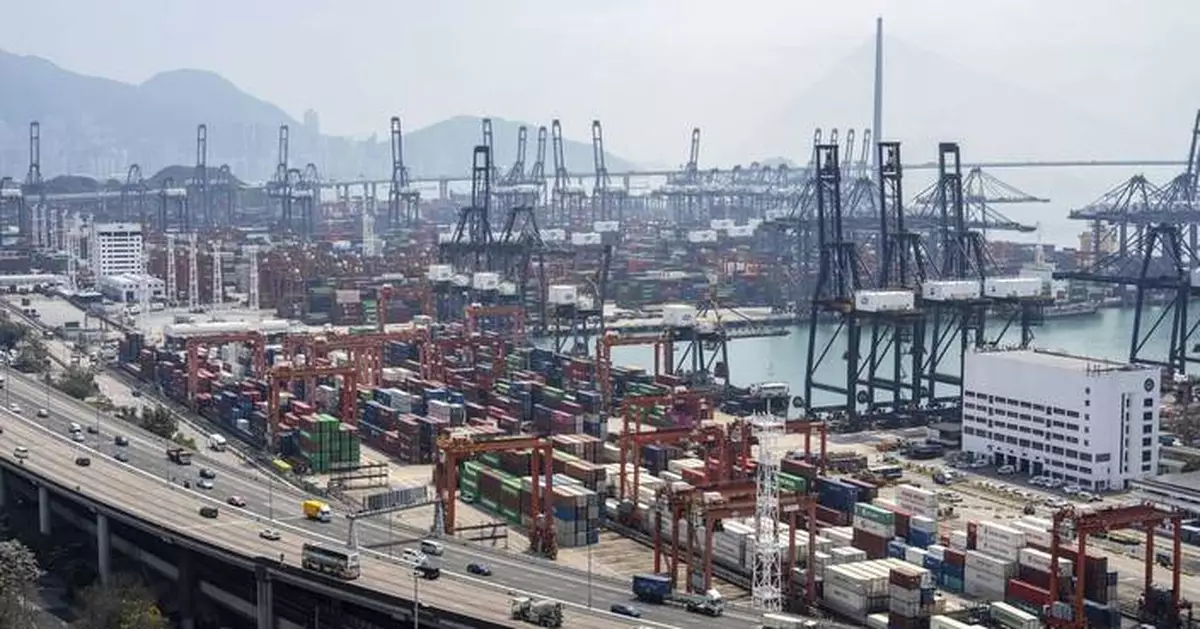
Containers pile up at Kwai Chung Container terminal in Hong Kong, Tuesday, Apr. 8, 2025. (AP Photo/Chan Long Hei)
A Ukrainian drone strike killed one person and wounded three others in the Russian city of Voronezh, local officials said Sunday.
A young woman died overnight in a hospital intensive care unit after debris from a drone fell on a house during the attack on Saturday, regional Gov. Alexander Gusev said on Telegram.
Three other people were wounded and more than 10 apartment buildings, private houses and a high school were damaged, he said, adding that air defenses shot down 17 drones over Voronezh. The city is home to just over 1 million people and lies some 250 kilometers (155 miles) from the Ukrainian border.
The attack came after Russia bombarded Ukraine with hundreds of drones and dozens of missiles overnight into Friday, killing at least four people in the capital Kyiv, according to Ukrainian officials. For only the second time in the nearly four-year war, Russia used a powerful new hypersonic missile that struck western Ukraine in a clear warning to Kyiv and NATO.
The intense barrage and the launch of the nuclear-capable Oreshnik missile followed reports of major progress in talks between Ukraine and its allies on how to defend the country from further aggression by Moscow if a U.S.-led peace deal is struck.
Ukrainian President Volodymyr Zelenskyy said Saturday in his nightly address that Ukrainian negotiators “continue to communicate with the American side.”
Chief negotiator Rustem Umerov was in contact with U.S. partners on Saturday, he said.
Separately, Ukraine’s General Staff said Russia targeted Ukraine with 154 drones overnight into Sunday and 125 were shot down.
The Ukrainian Defense Ministry’s main intelligence directorate said Sunday that Russia this month deployed the new jet-powered “Geran-5” strike drone against Ukraine for the first time. The Geran is a Russian variant of the Iranian-designed Shahed.
According to the directorate, the drone can carry a 90-kilogram (200-pound) warhead and has a range of nearly 1,000 kilometers (620 miles).
Follow the AP’s coverage of the war in Ukraine at https://apnews.com/hub/russia-ukraine
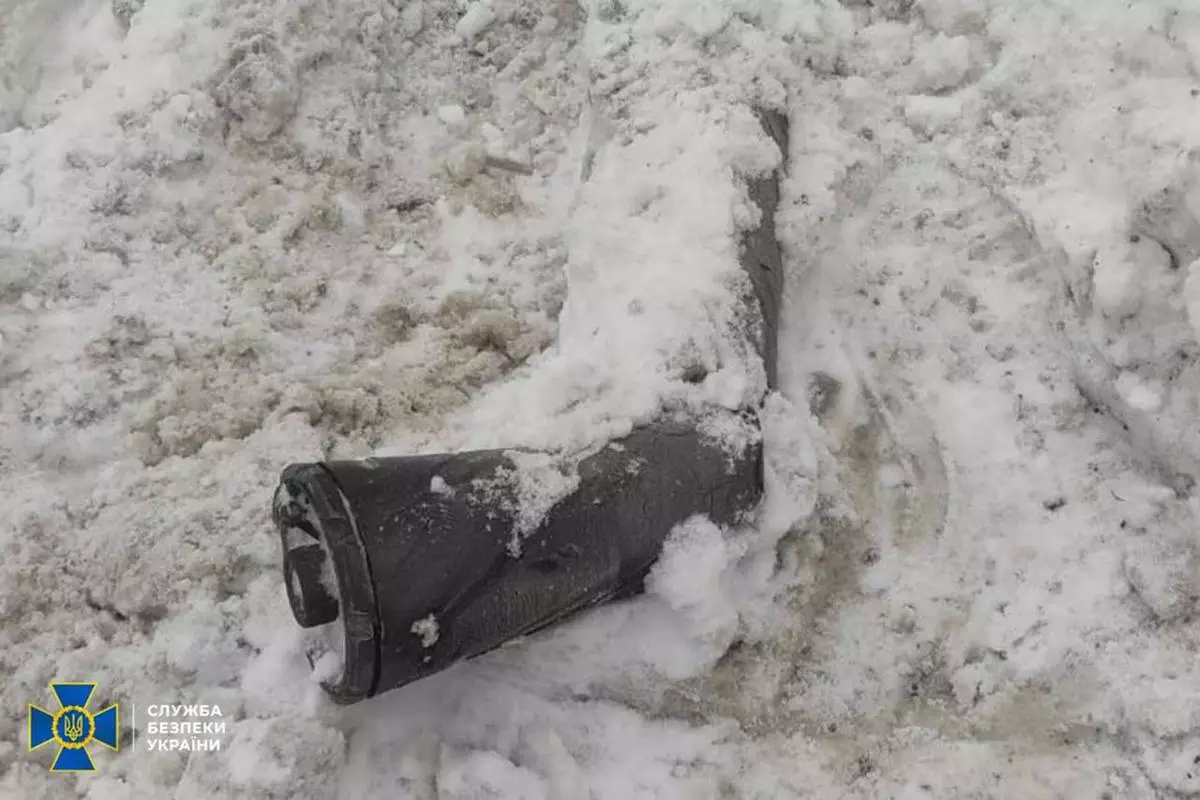
This photo provided by the Ukrainian Security Service on Friday, Jan. 9, 2026, shows a fragment believed to be a part of a Russian Oreshnik intermediate range hypersonic ballistic missile that hit the Lviv region. (Ukrainian Security Service via AP)

President of Ukraine Volodymyr Zelenskyy, second left, listens to British Defense Secretary John Healey during their meeting in Kyiv, Ukraine, Friday, Jan. 9, 2026. (AP Photo/Danylo Antoniuk)