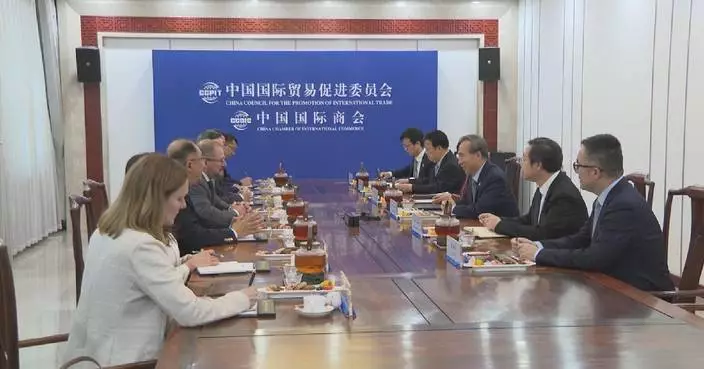
Chinese President Xi Jinping will make a state visit to Cambodia on Thursday and Friday this week at the invitation of King Norodom Sihamoni of Cambodia.
China and Cambodia have traditionally been close neighbors and iron-clad friends. The two countries officially established diplomatic relations on July 19, 1958.
In 2010, China and Cambodia established a comprehensive strategic partnership.
In 2023, the two countries pledged to further build a Cambodia-China community with a shared future in the new era, and have since achieved fruitful results in their diamond cooperation framework with six priority areas including political cooperation, production capacity, agriculture, energy, security and people-to- people exchanges.
Xi's last state visit to Cambodia was in October 2016.
Located in the southern part of the Indochina Peninsula, Cambodia is bordered by Vietnam, Thailand, and Laos. It has a population of approximately 16 million, with the Khmer ethnic group making up 80 percent.
Cambodia has a long and glorious history and culture and was an important stop on the ancient Maritime Silk Road.
Cambodia's Angkor historical site, which was built between 802 and 1201 AD, is renowned for its grand architecture and exquisite bas-reliefs and murals, and was designated a UNESCO World Heritage Site in 1992.
Cambodia is the last leg of Xi's current five-day, three-nation Southeast Asia tour, which also includes state visits to Vietnam and Malaysia.

Xi to make state visit to Cambodia
More than 20 students from Ivy League universities in the United States visited China's Southwest Jiaotong University in on Tuesday, where they got a first-hand look at a fast-moving technological innovation that could power future transportation.
The students paid a visit to a special demonstration lab in Chengdu, the capital of southwest China's Sichuan Province, where they explored the world’s first high-temperature superconducting magnetic levitation prototype and test line, taking part in some fun hands-on experiments and even enjoying a brief trial ride.
Experts say the system could exceed speeds of 600 kilometers per hour, helping to further narrow the gap between high-speed rail and air travel.
The students' visit came as part of a week-long language and cultural exchange program, giving the young participants the chance to experience daily life in Chengdu while learning more about China.
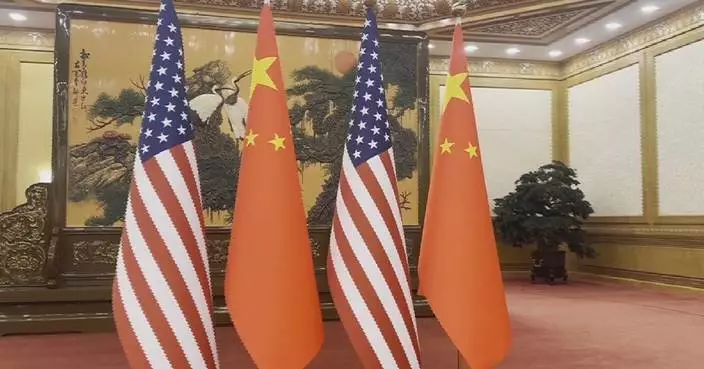
The exchange event comes at a momentous time for China-U.S. relations, with U.S. President Donald Trump on Friday wrapping up a three-day state visit to China at the invitation of Chinese President Xi Jinping, which marked the first such trip by a U.S. president in nine years.
The students taking part in the Chengdu activity said exchanges like the one they have embarked on can help deepen trust and expand cooperation between the U.S. and China.
"The positive signals I am hoping to see is that right now I see China and the United States as two powerful and very important countries in this world. But they also both have a lot of potential, and I think that if they work together, they can make some tremendous change across the world," said Alex Davenport, a student from Mount Holyoke College.
"America and China are two of the largest superpowers in the world right now, and I think politically and culturally it’s really great to communicate with one another," said Caroline Ewald, a student at the University of Pittsburgh.
Others are hoping that Trump's landmark visit will also help improve ties.
"That's probably the biggest thing I am look for is try to cool down the trade stuff that's going on in the U.S.," said McKenna Lundy, a student from the University of Michigan.
China is seen as a world leader in maglev technology. Last December, the country's Hubei East Lake Laboratory announced a groundbreaking achievement, with its test line accelerating a 1.1-tonne model train to an astonishing 800 kilometers per hour in just 5.3 seconds -- a milestone in electromagnetic propulsion research.
The technology is also proving its worth at more manageable speeds, with a restaurant in the southern Chinese tech hub of Shenzhen going viral earlier this year after it used magnetic levitation to serve food, with plates seen floating along tracks to arrive smoothly in front of each diner.
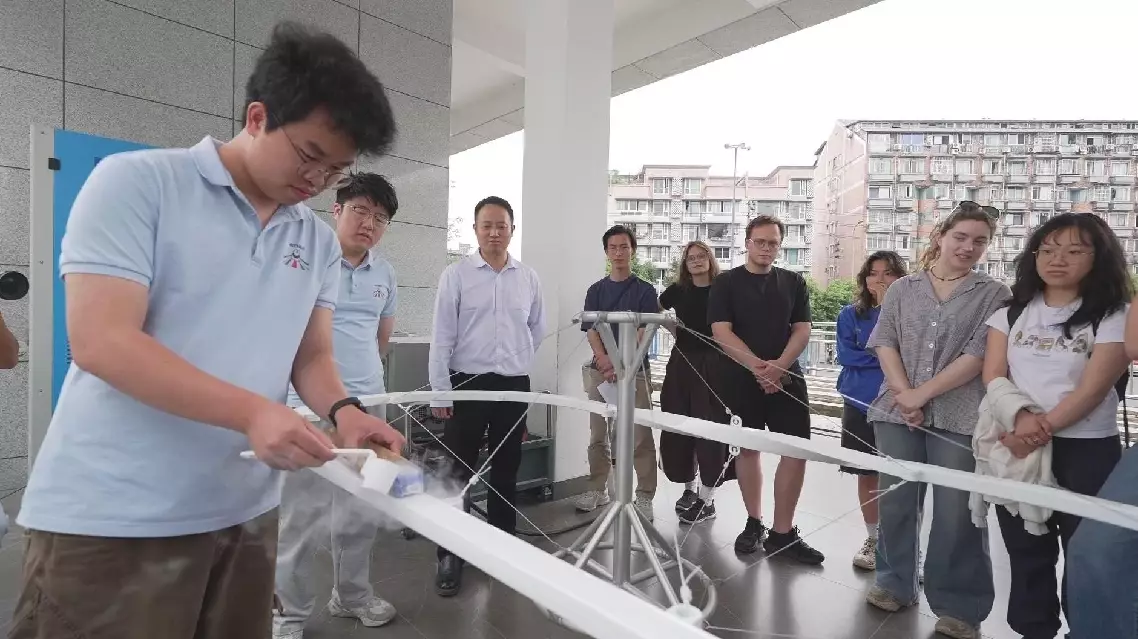
US students get taste of high-speed technology with visit to top maglev lab in Sichuan