HILTON HEAD ISLAND, S.C. (AP) — The farther Justin Rose drove from Augusta National only made him realize how close he came to winning the Masters.
His phone kept buzzing on the way to Hilton Head Island, one text after another, all of them with the same message that applauded his remarkable rally and offered commiseration and condolences for his runner-up finish to Rory McIlroy.
Click to Gallery
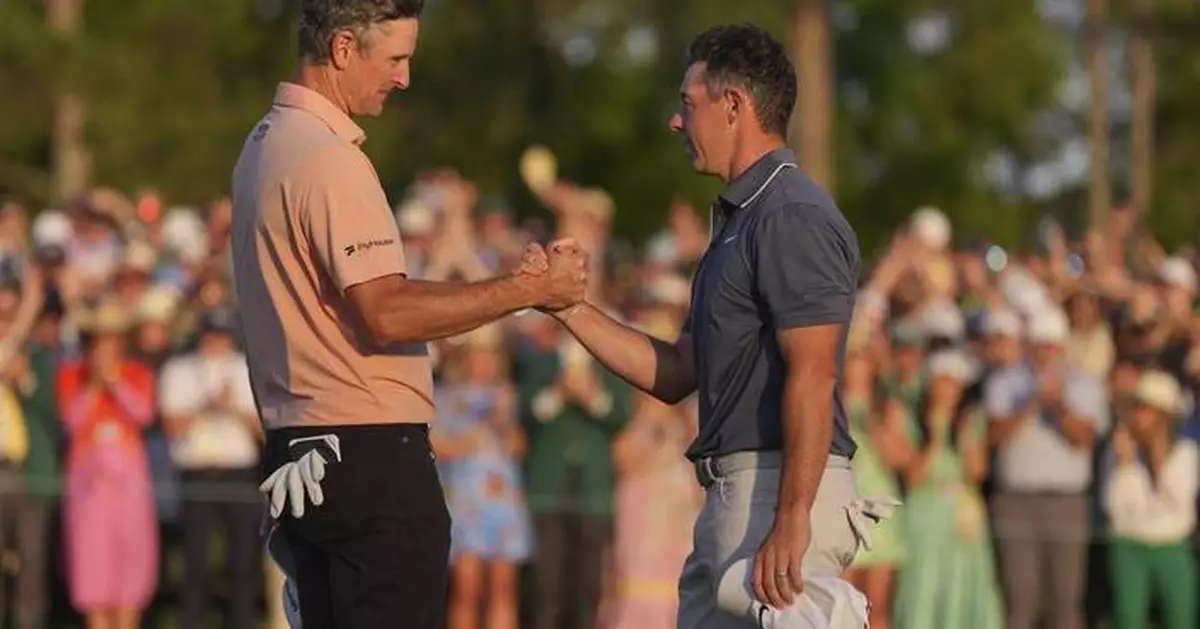
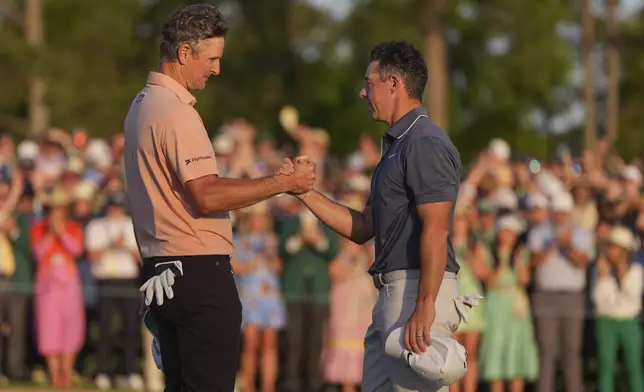
Rory McIlroy, of Northern Ireland, right, greets Justin Rose, of England, after winning in a playoff after the final round the Masters golf tournament, Sunday, April 13, 2025, in Augusta, Ga. (AP Photo/Matt Slocum)
Justin Rose hits his tee shot on the 11th hole during the final round at the Masters golf tournament, Sunday, April 13, 2025, in Augusta, Ga. (AP Photo/Matt Slocum)
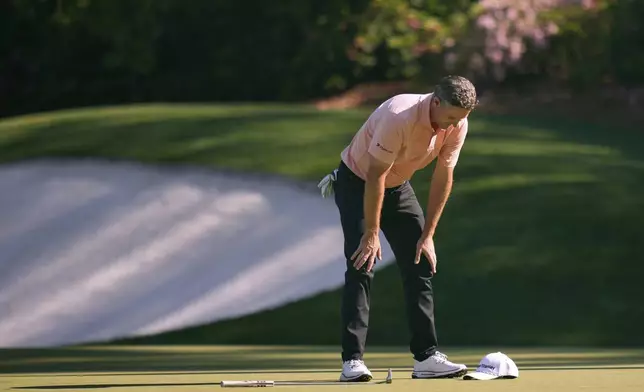
Justin Rose reacts after missing an eagle putt on the 13th hole during the final round at the Masters golf tournament, Sunday, April 13, 2025, in Augusta, Ga. (AP Photo/Julia Demaree Nikhinson)
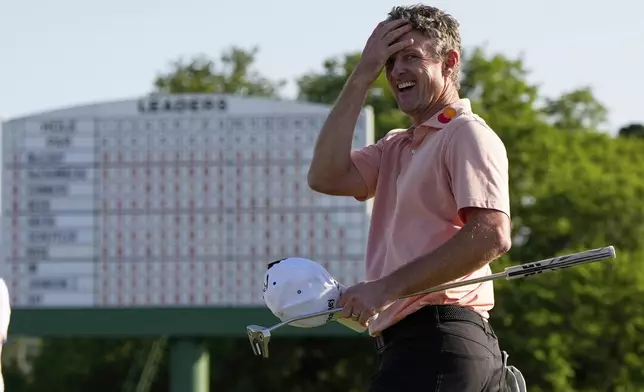
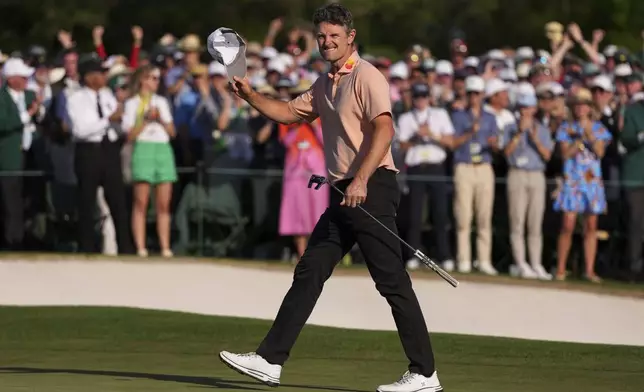
Justin Rose celebrates after a birdie on the 18th hole during the final round at the Masters golf tournament, Sunday, April 13, 2025, in Augusta, Ga. (AP Photo/David J. Phillip)
Justin Rose celebrates after a birdie on the 18th hole during the final round at the Masters golf tournament, Sunday, April 13, 2025, in Augusta, Ga. (AP Photo/Matt Slocum)
Justin Rose celebrates after a birdie on the 18th hole during the final round at the Masters golf tournament, Sunday, April 13, 2025, in Augusta, Ga. (AP Photo/Matt Slocum)
Rory McIlroy, of Northern Ireland, right, greets Justin Rose, of England, after winning in a playoff after the final round the Masters golf tournament, Sunday, April 13, 2025, in Augusta, Ga. (AP Photo/Matt Slocum)
Rose started the final round seven shots out of the lead, too far back to think about winning. He made a 20-foot birdie putt on the 18th for a 66. He was in a sudden-death playoff. He lost on a great shot by McIlroy, who hit gap wedge to 3 feet for birdie.
It was a lot to process.
“A lot of outpouring from people with a lot of positive comments coming at me, so trying to absorb that, trying to absorb the week,” Rose said Wednesday at the RBC Heritage. “But at the same time, looking at my phone and just wishing there was a different message there.”
This is a path he knows well.
Rose had a two-shot lead with six holes to play in the 2017 Masters when Sergio Garcia — like McIlroy, a good friend — made a most improbable rally to force a playoff and beat Rose on the first extra hole.
Rose was classy in defeat that day in 2017. He lovingly patted Garcia's cheek, they embraced, and then Rose tapped Garcia on the heart. He knew what it meant for a talented Spaniard who had played 70 majors before winning.
He was equally gracious on Sunday, telling McIlroy when it was over he was happy to witness such a momentous occasion of the career Grand Slam.
It still hurts.
He searched for the right words. Rose was proud of how he played to match the low score of the final round with a 66. In one of those must-make moments in a major, he poured in a birdie on the last hole. There was a lot that went right. But there was no green jacket.
“Just sort of ... don't know what the right word is,” he said. “Tormented, probably, by the thought of what might have been.”
He joined Ben Hogan as the only player to lose a playoff twice at the Masters, and it might have stung worse for Rose because both his losses were in sudden-death. He now has had at least a share of the lead after 12 rounds at the Masters, fourth on the list behind Jack Nicklaus (19), Arnold Palmer (18) and Gary Player (12), who have combined to win 13 green jackets.
He has 23 wins worldwide, including a major at the U.S. Open and an Olympic gold medal in Rio de Janeiro. He also has the distinction of congratulating a Masters champion on the 18th green three times in the last 10 years — Jordan Spieth in 2015, Garcia in 2017, McIlroy on Sunday.
The last time he lost the Masters in a playoff, Rose said it lingered for about a month. Sure, he made a few bogeys he'd like to have back from the final round Sunday. That's true for anyone at any golf tournament. There's still the sting of seeing someone else win.
Rose would rather look back to what followed after that 2017 loss. He went on to win three more times that year, including his second World Golf Championships title. He won the FedEx Cup the following year and rose to No. 1 in the world for the first time.
“If I look back to my best golf, 2017 August through to the end of '18 is probably the most consistently good golf that I’ve ever played,” Rose said. “Obviously, I was a little bit more in the prime of my career around that time, or you could argue more prime.”
Rose, who turned pro as a teenager in 1998, will be 45 at the end of July.
“But I don’t see any reason why that can’t be the same this time around," he said. “I'm working well. I'm working hard. I'm feeling good about my game. I've been saying all year that my game is good. I've just got to make sure that I’m playing consistently well enough to give myself those opportunities, because majors come around ... only four times a year.”
Rose can't help but think how little it would take for him to be going to the PGA Championship next month at Quail Hollow with a shot at the career Grand Slam himself — briefly tied for the Sunday lead at Royal Troon, a playoff loss at the Masters.
“The last two majors I’ve been right there and been beaten by the top players in the world at the peak of their game,” he said.
What keeps him going at this stage? He will have completed his 28th year as a pro in July.
It's moments like Sunday, being in the thick of it, delivering clutch moments. There was the birdie putt on the 18th at Augusta. There was that 8-foot putt on the 18th hole at the Ryder Cup in 2023 that earned a key halve. There was that walk up the 18th at Royal Troon last summer with thousands on their feet showing appreciation.
“I’m close to kind of some seriously good stuff,” Rose said.
AP golf: https://apnews.com/hub/golf

Justin Rose hits his tee shot on the 11th hole during the final round at the Masters golf tournament, Sunday, April 13, 2025, in Augusta, Ga. (AP Photo/Matt Slocum)
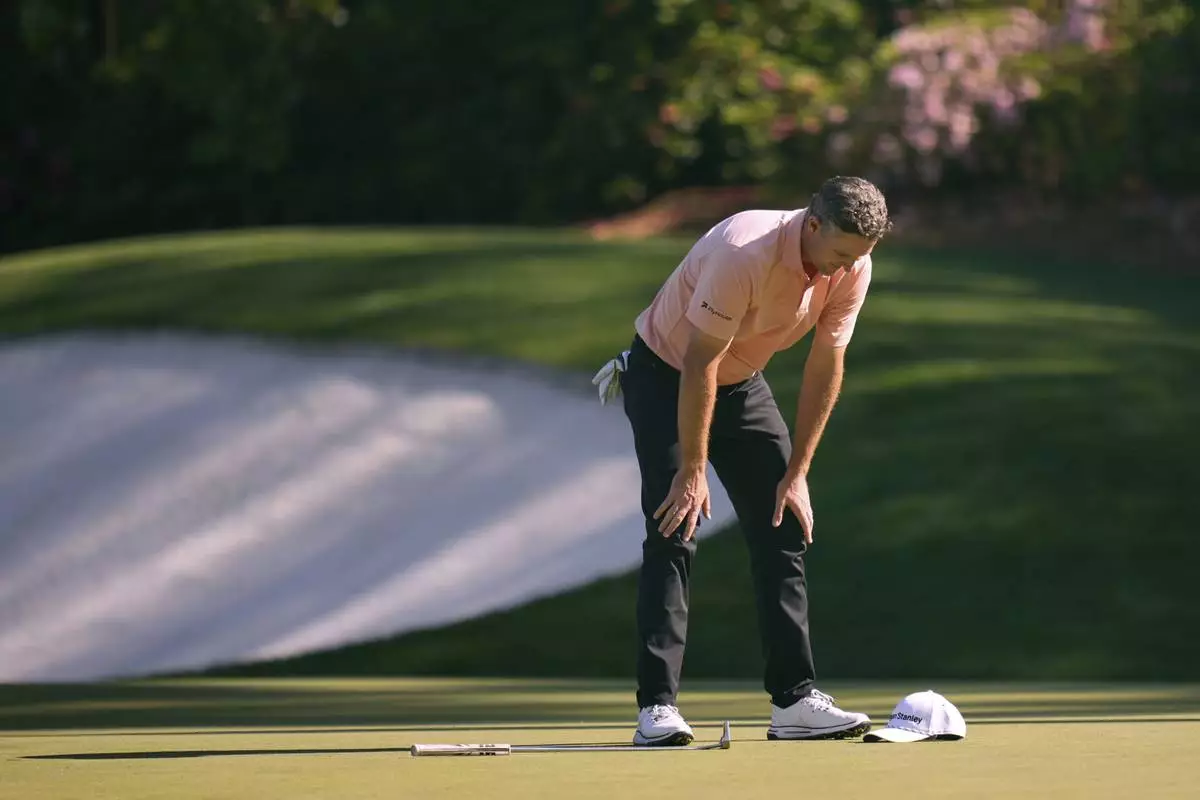
Justin Rose reacts after missing an eagle putt on the 13th hole during the final round at the Masters golf tournament, Sunday, April 13, 2025, in Augusta, Ga. (AP Photo/Julia Demaree Nikhinson)
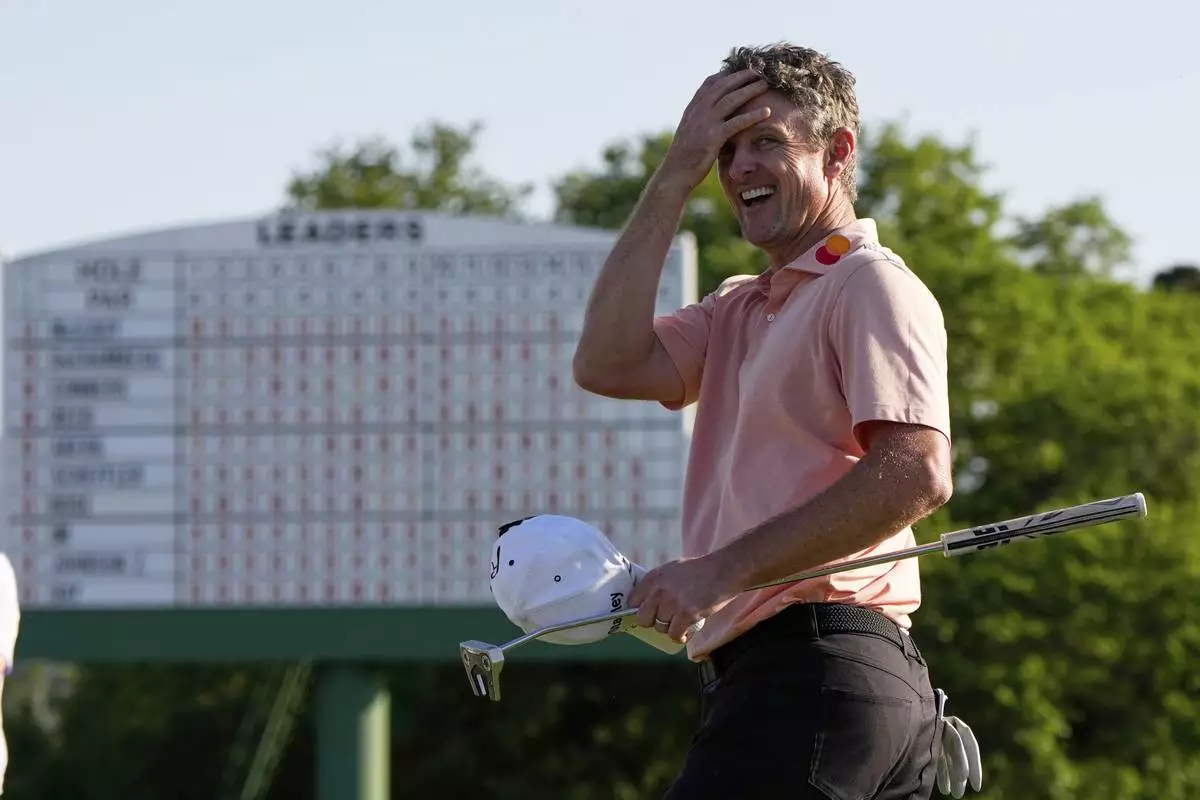
Justin Rose celebrates after a birdie on the 18th hole during the final round at the Masters golf tournament, Sunday, April 13, 2025, in Augusta, Ga. (AP Photo/David J. Phillip)

Justin Rose celebrates after a birdie on the 18th hole during the final round at the Masters golf tournament, Sunday, April 13, 2025, in Augusta, Ga. (AP Photo/Matt Slocum)
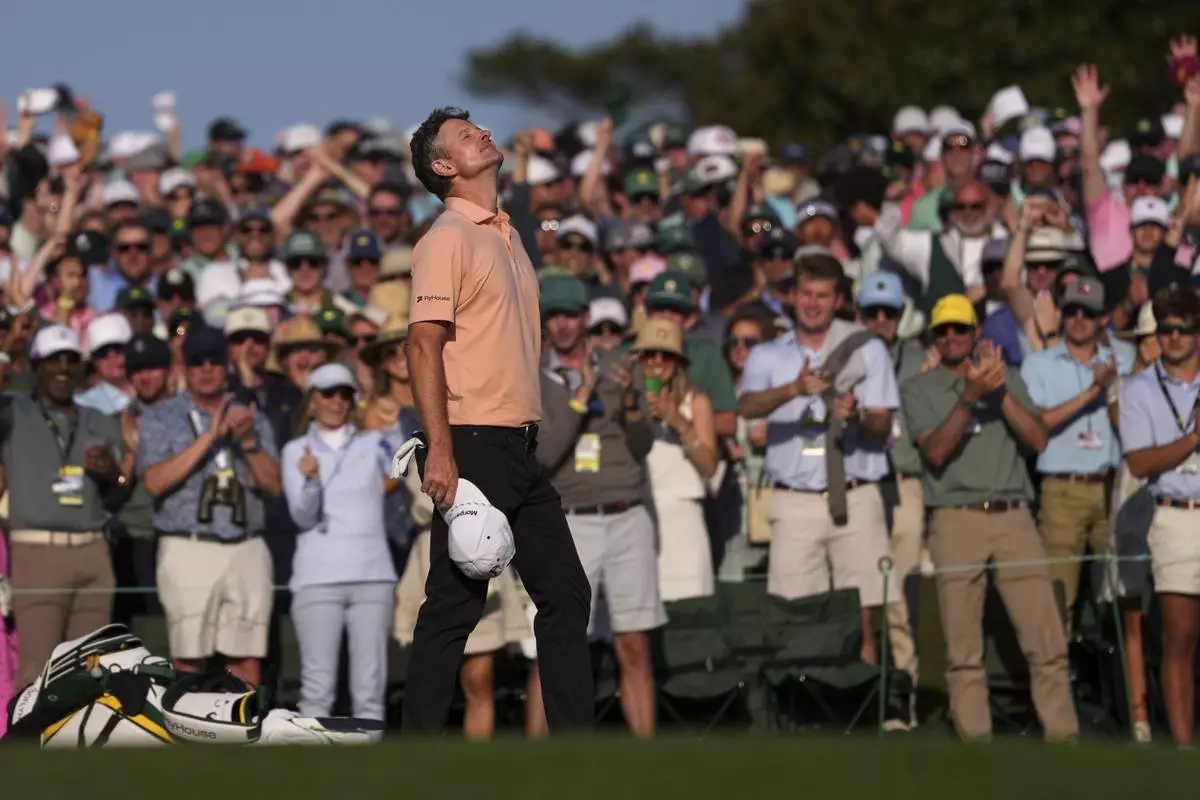
Justin Rose celebrates after a birdie on the 18th hole during the final round at the Masters golf tournament, Sunday, April 13, 2025, in Augusta, Ga. (AP Photo/Matt Slocum)
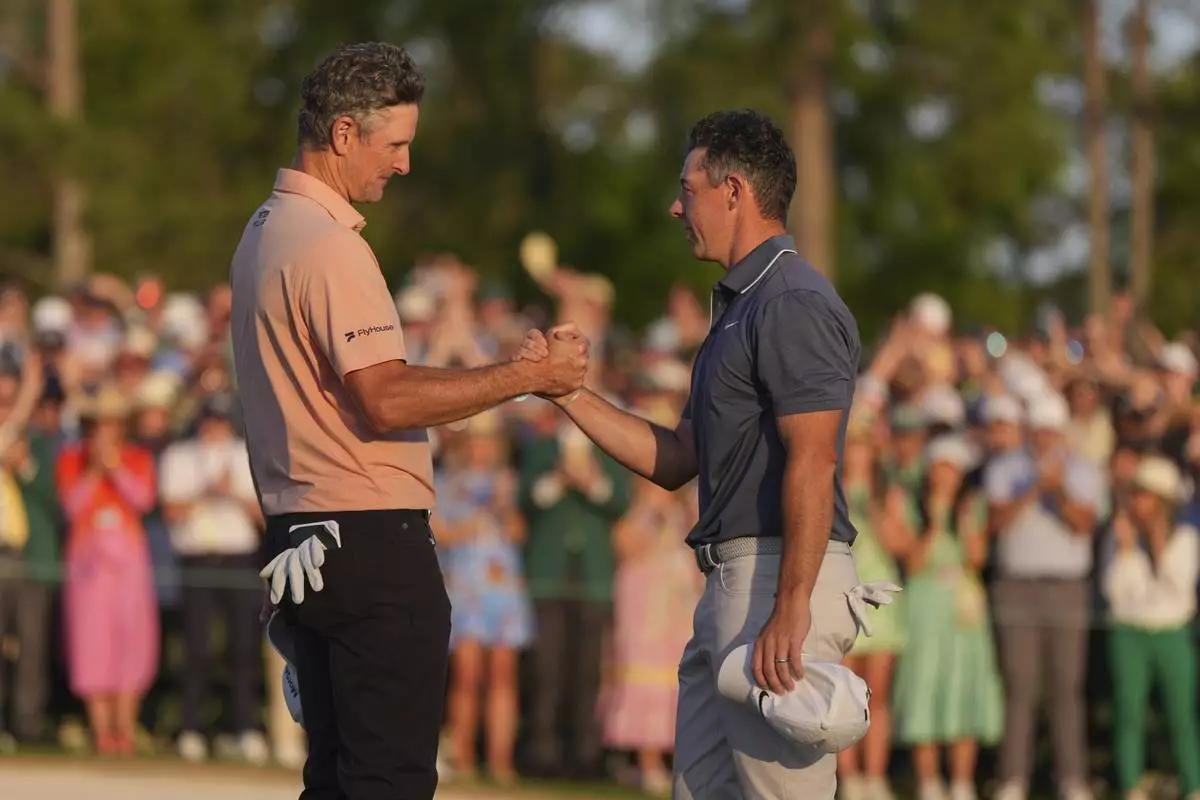
Rory McIlroy, of Northern Ireland, right, greets Justin Rose, of England, after winning in a playoff after the final round the Masters golf tournament, Sunday, April 13, 2025, in Augusta, Ga. (AP Photo/Matt Slocum)
LOS GATOS, Calif. (AP) — Like many retirement communities, The Terraces serves as a tranquil refuge for a nucleus of older people who no longer can travel to faraway places or engaging in bold adventures.
But they can still be thrust back to their days of wanderlust and thrill-seeking whenever caretakers at the community in Los Gatos, California, schedule a date for residents — many of whom are in their 80s and 90s — to take turns donning virtual reality headsets.
Within a matter of minutes, the headsets can transport them to Europe, immerse them in the ocean depths or soar them on breathtaking hang-gliding expeditions while they sit by each other. The selection of VR programming was curated by Rendever, a company that has turned a sometimes isolating form of technology into a catalyst for better cognition and social connections in 800 retirement communities in the United States and Canada.
A group of The Terraces residents who participated in a VR session earlier this year found themselves paddling their arms alongside their chairs as they swam with a pod of dolphins while watching one of Rendever's 3D programs. “We got to go underwater and didn't even have to hold our breath!” exclaimed 81-year-old Ginny Baird following the virtual submersion.
During a session featuring a virtual ride in a hot-air balloon, one resident gasped, “Oh my God!” Another shuddered, “It's hard to watch!”
The Rendever technology can also be used to virtually take older adults back to the places where they grew up as children. For some, it will be the first time they've seen their hometowns in decades.
A virtual trip to her childhood neighborhood in New York City's Queens borough helped sell Sue Livingstone, 84, on the merits of the VR technology even though she still is able to get out more often than many residents of The Terraces, which is located in Silicon Valley about 55 miles south of San Francisco.
“It isn't just about being able to see it again, it's about all the memories that it brings back,” Livingstone said. “There are a few people living here who never really leave their comfort zones. But if you could entice them to come down to try out a headset, they might find that they really enjoy it.”
Adrian Marshall, The Terraces' community life director, said that once word about a VR experience spreads from one resident to another, more of the uninitiated typically become curious enough to try it out — even if it means missing out on playing Mexican Train, a dominoes-like board game that's popular in the community.
“It turns into a conversation starter for them. It really does connect people,” Marshall said of Rendever's VR programming. “It helps create a human bridge that makes them realize they share certain similarities and interests. It turns the artificial world into reality.”
Rendever, a privately owned company based in Somerville, Massachusetts, hopes to build upon its senior living platform with a recent grant from the National Institutes of Health that will provide nearly $4.5 million to study ways to reduce social isolation among seniors living at home and their caregivers.
Some studies have found VR programming presented in a limited viewing format can help older people maintain and improve cognitive functions, burnish memories and foster social connections with their families and fellow residents of care facilities. Experts say the technology may be useful as an addition to and not a replacement for other activities.
“There is always a risk of too much screen time," Katherine “Kate” Dupuis, a neuropsychologist and professor who studies aging issues at Sheridan College in Canada, said. “But if you use it cautiously, with meaning and purpose, it can be very helpful. It can be an opportunity for the elderly to engage with someone and share a sense of wonder.”
VR headsets may be an easier way for older people to interact with technology instead of fumbling around with a smartphone or another device that requires navigating buttons or other mechanisms, said Pallabi Bhowmick, a researcher at the University of Illinois Urbana-Champaign who is examining the use of VR with older adults.
“The stereotypes that older adults aren’t willing to try new technology needs to change because they are willing and want to adapt to technologies that are meaningful to them,” Bhowmick said. "Besides helping them to relieve stress, be entertained and connect with other people, there is an intergenerational aspect that might help them build their relationships with younger people who find out they use VR and say, ‘Grandpa is cool!’"
Rendever CEO Kyle Rand's interest in helping his own grandmother deal with the emotional and mental challenges of aging pushed him down a path that led him to cofound the company in 2016 after studying neuroengineering at Duke University.
“What really fascinates me about humans is just how much our brain depends on social connection and how much we learn from others,” Rand said. “A group of elderly residents who don't really know each other that well can come together, spend 30 minutes in a VR experience together and then find themselves sitting down to have lunch together while continuing a conversation about the experience.”
It's a large enough market that another VR specialist, Dallas-based Mynd Immersive, competes against Rendever with services tailored for senior living communities.
Besides helping create social connections, the VR programming from both Rendever and Mynd has been employed as a possible tool for potentially slowing down the deleterious effects of dementia. That's how another Silicon Valley retirement village, the Forum, sometimes uses the technology.
Bob Rogallo, a Forum resident with dementia that has rendered him speechless, seemed to be enjoying taking a virtual hike through Glacier National Park in Montana as he nodded and smiled while celebrating his 83rd birthday with his wife of 61 years.
Sallie Rogallo, who doesn't have dementia, said the experience brought back fond memories of the couple's visits to the same park during the more than 30 years they spent cruising around the U.S. in their recreational vehicle.
“It made me wish I was 30 years younger so I could do it again,” she said of the virtual visit to Glacier. “This lets you get out of the same environment and either go to a new place or visit places where you have been.”
In another session at the Forum, 93-year-old Almut Schultz laughed with delight while viewing a virtual classical music performance at the Red Rocks Amphitheatre in Colorado and later seemed to want to play with a puppy frolicking around in her VR headset.
“That was quite a session we had there,” Schultz said with a big grin after she took off her headset and returned to reality.
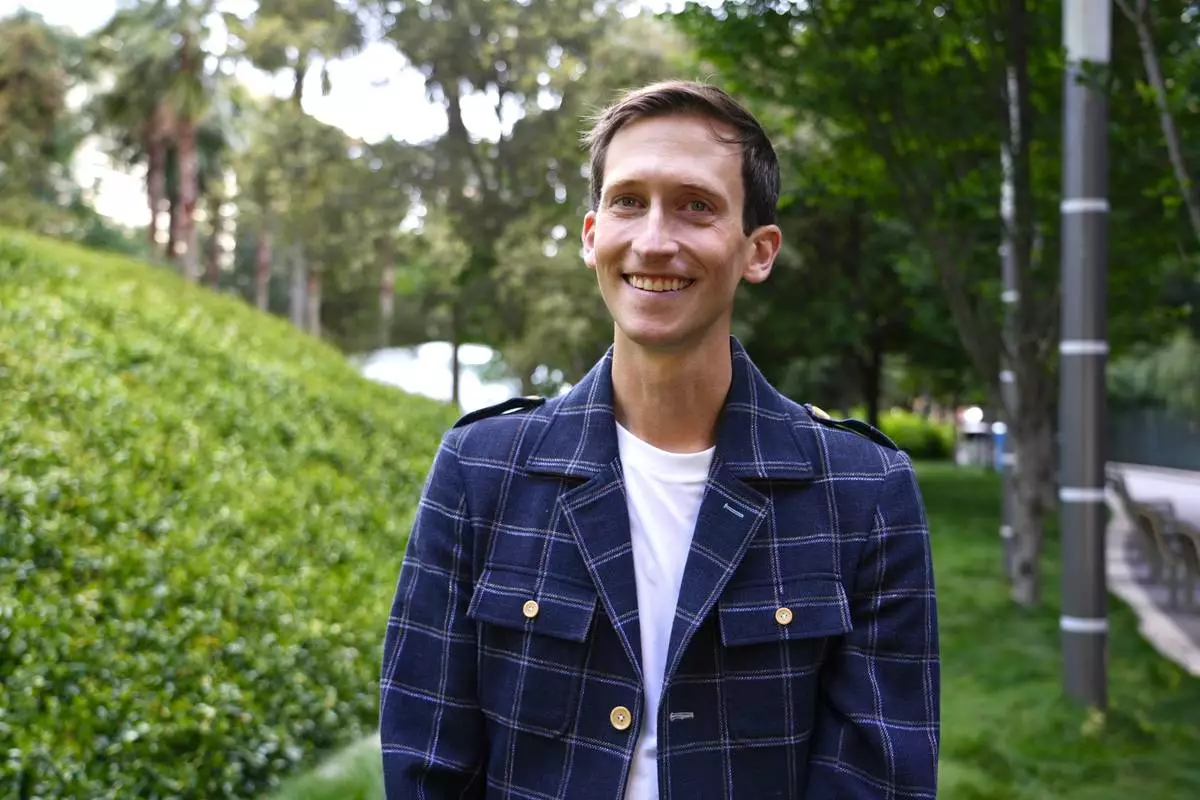
Rendever CEO Kyle Rand is pictured at Salesforce Park in San Francisco on June 27, 2025. (AP Photo/Terry Chea)
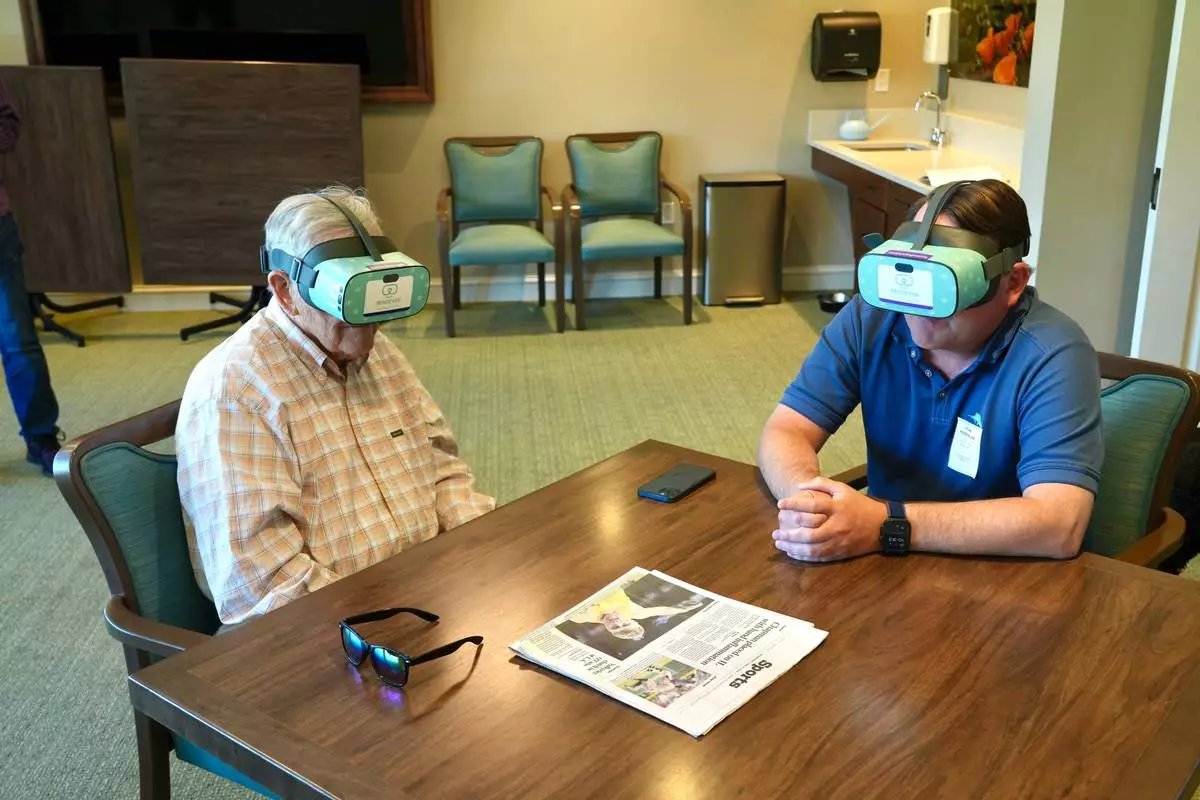
Jim Holtshouse and his son, Mike Holtshouse, watch video through Rendever virtual-reality headsets at the Forum at Rancho San Antonio retirement community in Cupertino, Calif. on June 11, 2025. (AP Photo/Terry Chea)
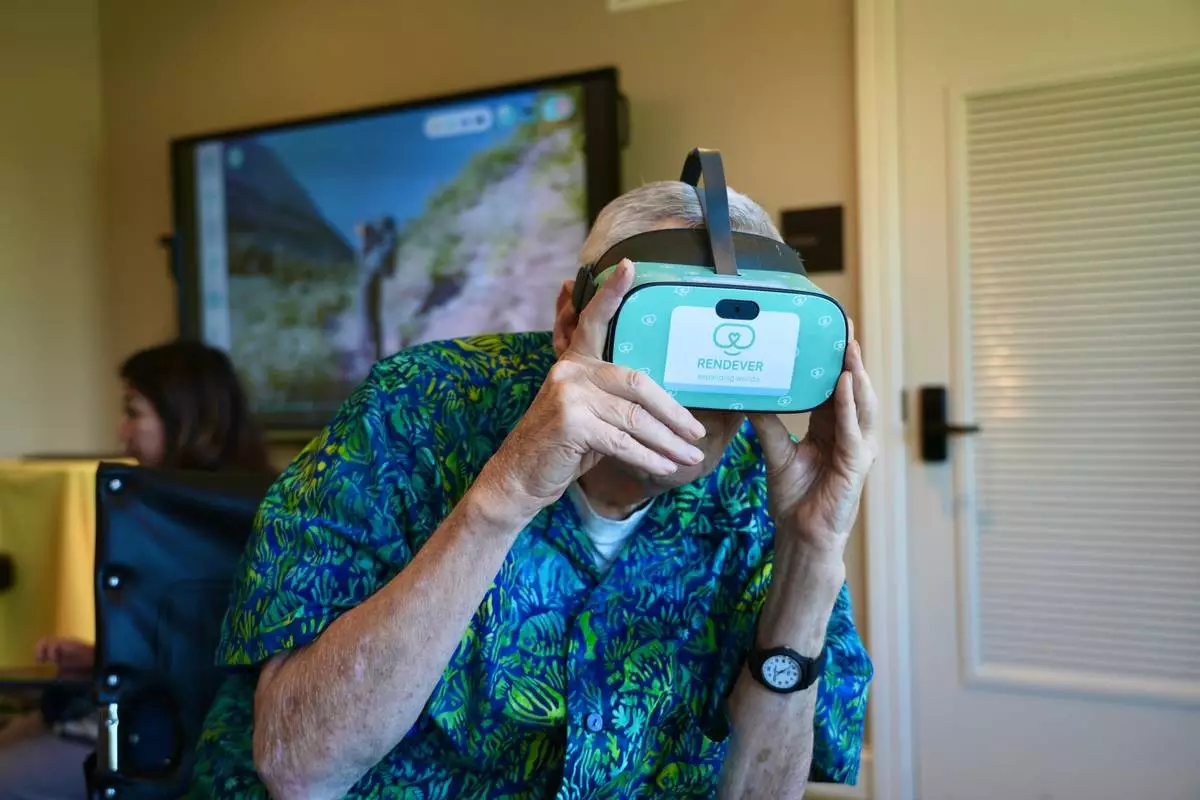
Bob Rogallo watches video through a Rendever virtual-reality headset at the Forum at Rancho San Antonio retirement community in Cupertino, Calif. on June 11, 2025. (AP Photo/Terry Chea)
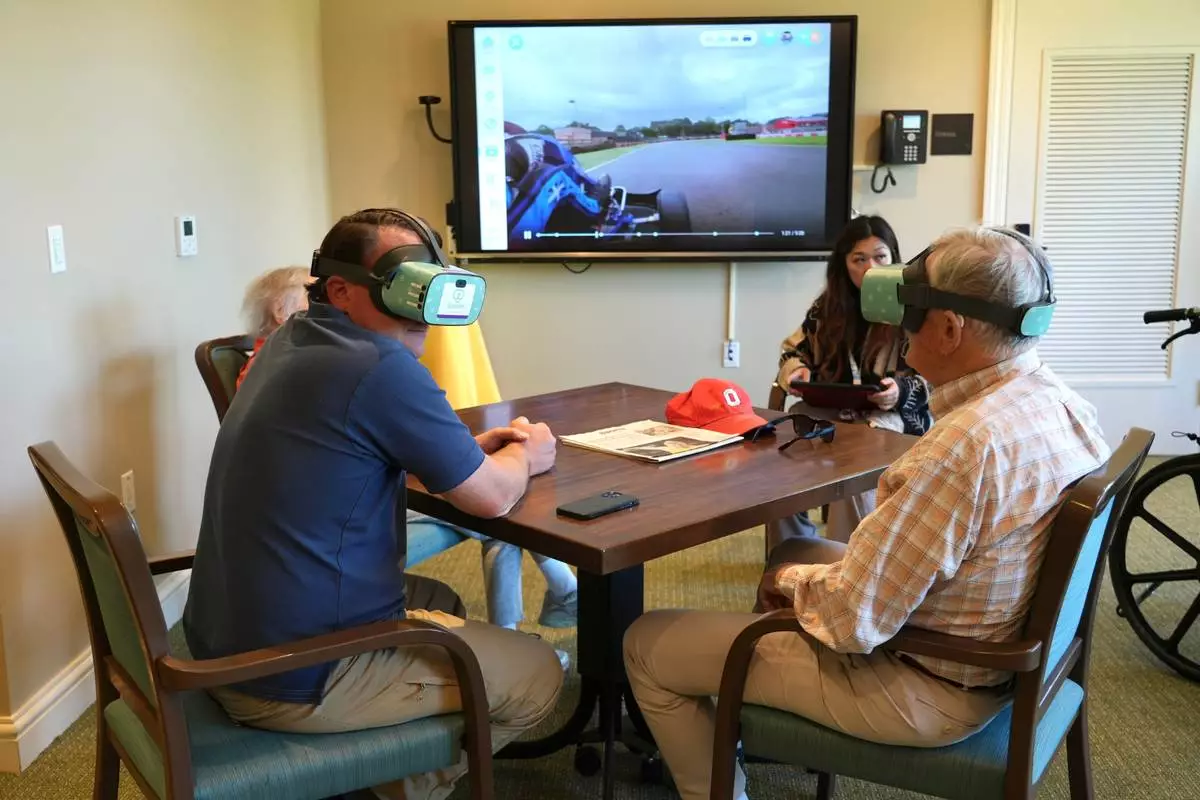
Mike Holtshouse and his father, Jim Holtshouse, watch video through Rendever virtual-reality headsets at the Forum at Rancho San Antonio retirement community in Cupertino, Calif. on June 11, 2025. (AP Photo/Terry Chea)
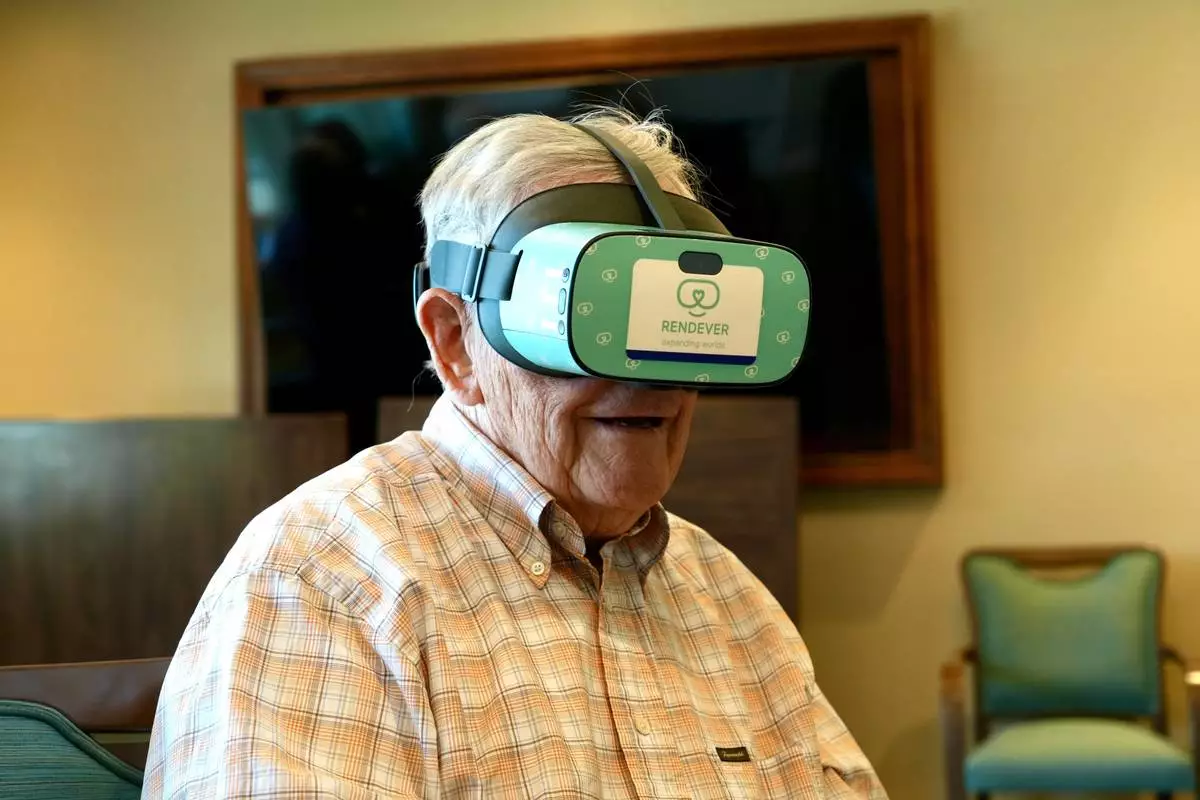
Jim Holtshouse watches video through a Rendever virtual-reality headset at the Forum at Rancho San Antonio retirement community in Cupertino, Calif. on June 11, 2025. (AP Photo/Terry Chea)