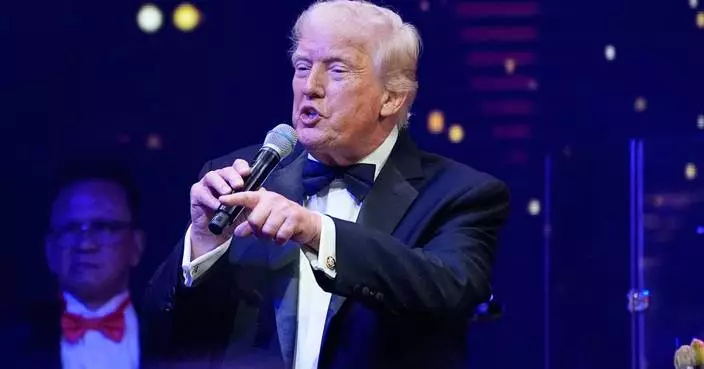
WASHINGTON (AP) — Meta CEO Mark Zuckerberg emphasized in federal court on Wednesday that he bought Instagram and WhatsApp because he saw value in the companies — not to take out competitors, as the Federal Trade Commission alleges in a historic antitrust trial.
Zuckerberg took the stand for the third day in the trial, wrapping up his testimony as the first witness Wednesday afternoon. He took questions from Meta attorney Mark Hansen, who has argued that his client hardly has a monopoly in social media, as the FTC claims, and still faces stiff global competition.
Hansen focused some of his questioning on emails sent by Zuckerberg and his associates that the FTC cited in earlier testimony to illustrate the Facebook founder's alarm over the growth of Instagram and his sense that he needed to neutralize its threat.
Zuckerberg said he’s very focused on inventing new things, and understanding what other people are creating is a big part of the process. At any given point in his company’s history, he said, similar tones of concern could be found in emails about what other companies were doing better than his.
“This is my job," Zuckerberg said. "I need to understand what is going on, and I need to push our teams to move quickly” to learn about what is going on in a very competitive market.
Hansen questioned Zuckerberg about competition, particularly from TikTok, the popular social media site owned by Beijing-based company ByteDance, and the the growth of the video-sharing platform YouTube, which is owned by Alphabet.
Zuckerberg testified that people spend more time on YouTube than on Facebook and Instagram combined.
While Hansen noted that the FTC doesn't consider YouTube to be a Meta competitor — because it doesn't have the same friend-sharing technology as Facebook — Zuckerberg said YouTube has built in ways to share videos.
The FTC contends Meta has used a monopoly in its technology that facilitates connecting with friends and family to generate enormous profits as consumer satisfaction has dropped. The case could force the tech giant to break off Instagram and WhatsApp, startups it bought more than a decade ago that have since grown into social media powerhouses.
Daniel Matheson, the FTC's attorney who questioned Zuckerberg, has repeatedly brought up his own words in emails to associates before and after the acquisition of Instagram to try to show Zuckerberg was more interested halting Instagram's alarming growth than improving the product.
Under questioning by Hansen, Zuckerberg insisted that he had no intention of acquiring Instagram only to slow its development and end a threat. He said the focus was on "having it run as an independent brand.”
Hansen noted that the FTC is making similar claims about the acquisition of the messaging app WhatsApp: that Zuckerberg was afraid of the company's potential.
“It’s something I thought about," Zuckerberg said, noting the app's formidable capabilities, but he added that he later learned not to be worried because the owners didn't share the same vision or direction.
He said his interest in buying it was “the usage of it.”
“I thought the app was important and valuable,” Zuckerberg said.
The trial, which is slated to last weeks, will feature other Big-Tech figures. After Zuckerberg, Sheryl Sandberg, Facebook's former chief operating officer, took the stand.
The trial is one of the first big tests of President Donald Trump’s FTC’s ability to challenge Big Tech. The lawsuit was filed against Meta — then called Facebook — in 2020, during Trump’s first term. It claims the company bought Instagram and WhatsApp to squash competition and establish an illegal monopoly in the social media market.
Facebook bought Instagram — which was a photo-sharing app with no ads — for $1 billion in 2012.
Instagram was the first company Facebook bought and kept running as a separate app. Until then, Facebook was known for smaller “acqui-hires” — a popular Silicon Valley deal in which a company purchases a startup as a way to hire its talented workers, then shuts the acquired company down. Two years later, it did it again with the messaging app WhatsApp, which it purchased for $22 billion.
WhatsApp and Instagram helped Facebook move its business from desktop computers to mobile devices, and to remain popular with younger generations as rivals like Snapchat (which it also tried, but failed, to buy) and TikTok emerged.
U.S. District Judge James Boasberg is presiding over the case. Late last year, he denied Meta’s request for a summary judgment and ruled that the case must go to trial.
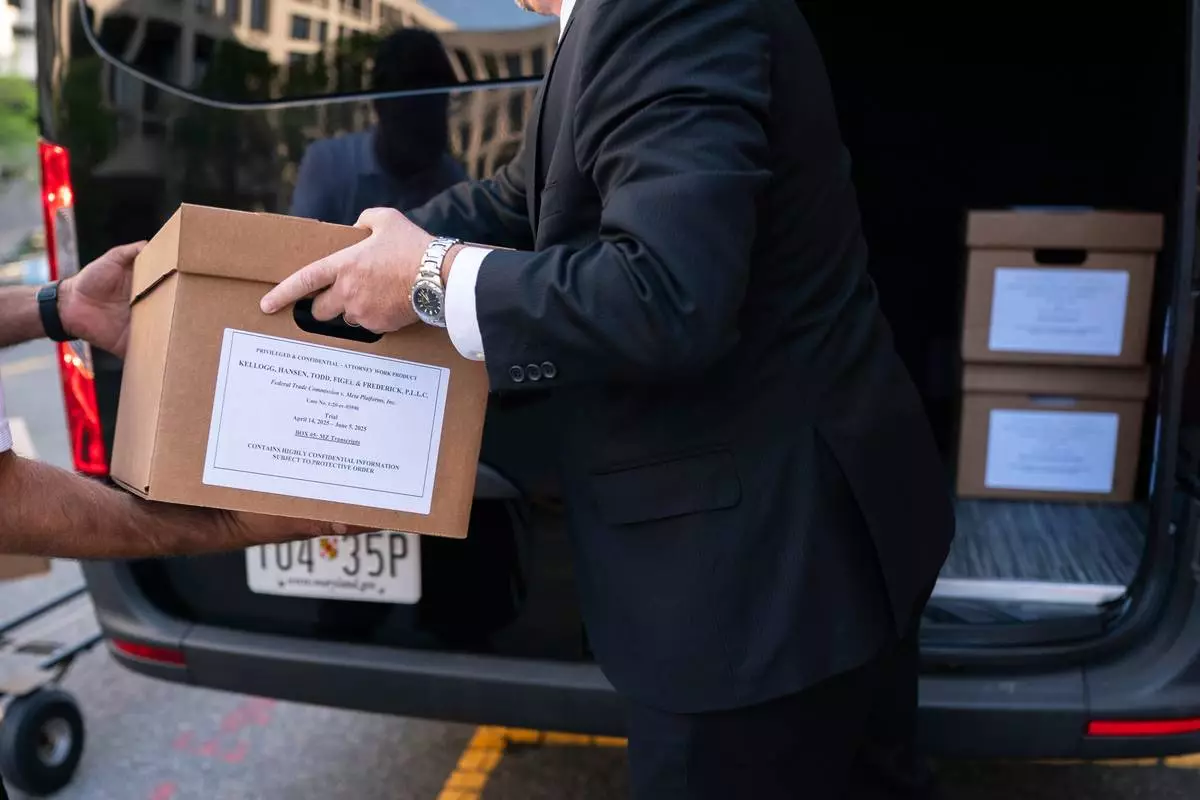
Workers load boxes of documents into a vehicle following the first day of a historic antitrust trial about Meta CEO Mark Zuckerberg's intentions in acquiring Instagram, at Barrett Prettyman United States Court House in Washington, Monday, April 14, 2025. (AP Photo/Nathan Howard)
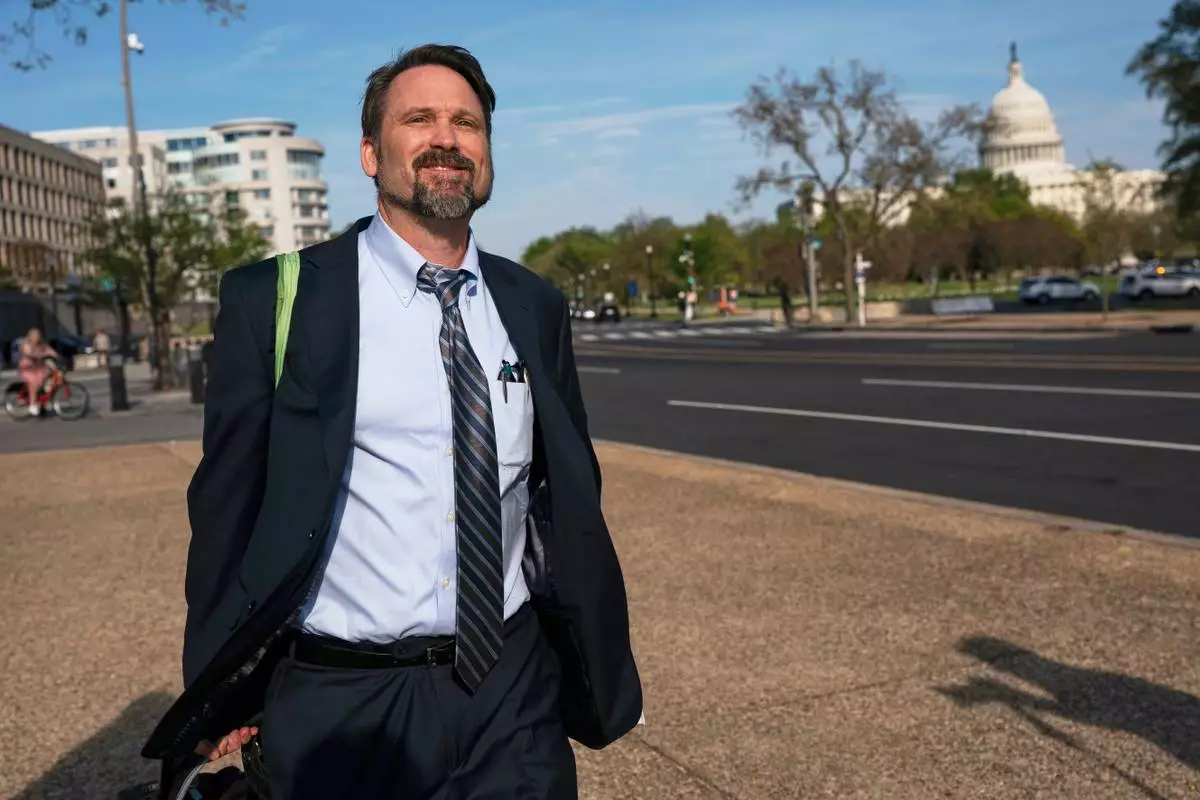
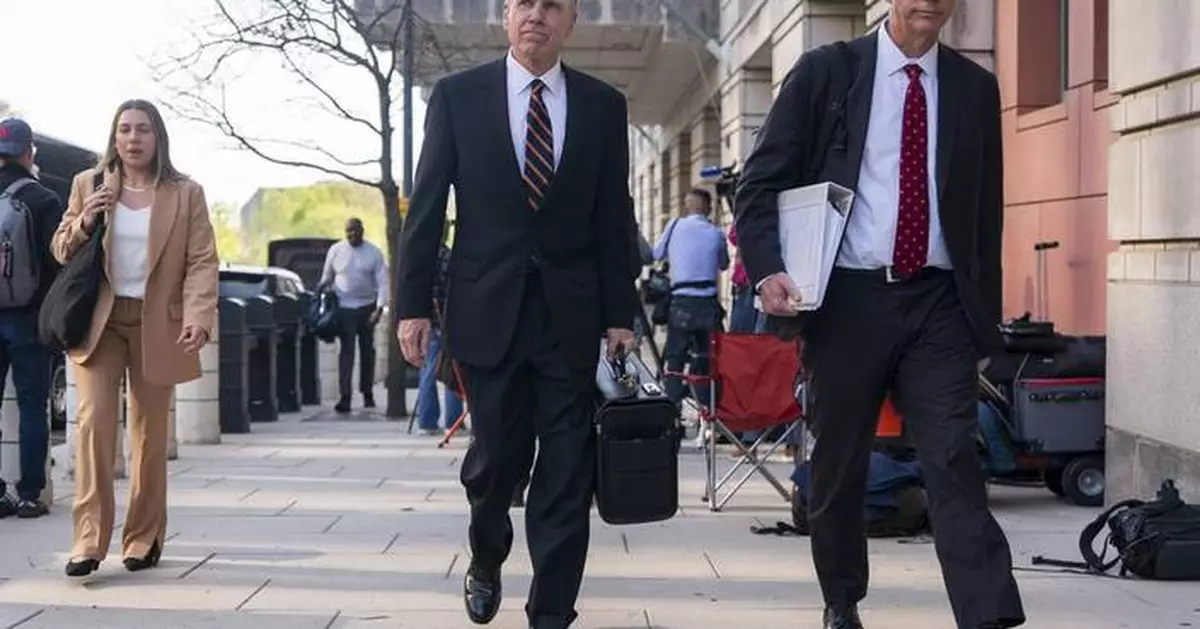
Daniel Matheson, a lawyer for the Federal Trade Commission, departs following the first day of a historic antitrust trial about Meta CEO Mark Zuckerberg's intentions in acquiring Instagram, at Barrett Prettyman United States Court House in Washington, Monday, April 14, 2025. (AP Photo/Nathan Howard)
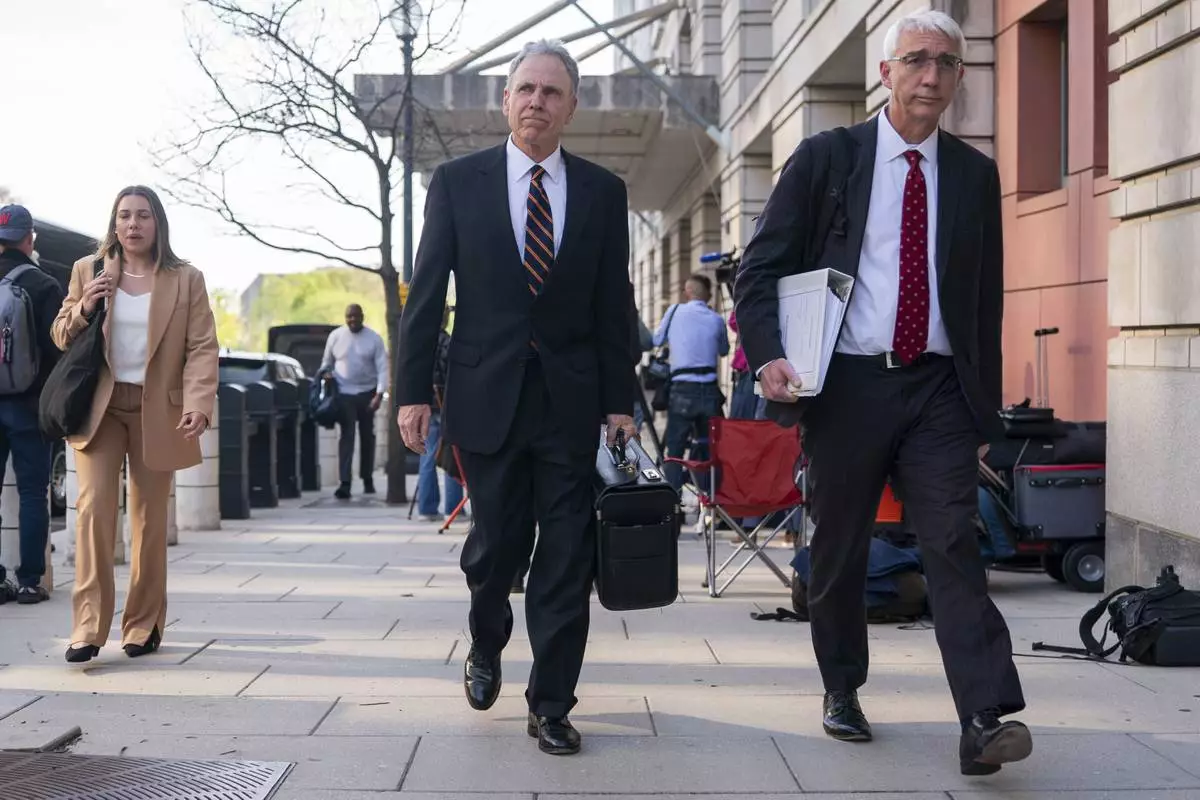
Mark Hansen, center, a lawyer for Meta, departs following the first day of a historic antitrust trial about Meta CEO Mark Zuckerberg intentions in acquiring Instagram, at Barrett Prettyman United States Court House in Washington, Monday, April 14, 2025. (AP Photo/Nathan Howard)
NEW YORK (AP) — Incoming Mayor Zohran Mamdani took his midnight oath of office on a centuries-old Quran, marking the first time a mayor of New York City uses Islam’s holy text to be sworn in and underscoring a series of historic firsts for the city.
The 34-year-old Democrat became mayor in a long-closed subway station beneath City Hall, the first Muslim, first South Asian and first African-born person to hold that position.
These milestones — as well as the historical Quran — reflect the longstanding and vibrant Muslim residents of the nation's most populous city, according to a scholar who helped Mamdani’s wife, Rama Duwaji, select one of the books.
Most of Mamdani's predecessors were sworn in on a Bible, although the oath to uphold the federal, state and city constitutions does not require the use of any religious text.
And while he has focused heavily on the issue of affordability during his campaign, Mamdani was outspoken about his Muslim faith. He frequently appeared at mosques across the five boroughs as he built a base of support that included many first-time South Asian and Muslim voters.
Two Qurans were to be used during the subway ceremony: his grandfather's Quran and a pocket-sized version that dates back to the late 18th or early 19th century. It is part of the collection at the New York Public Library’s Schomburg Center for Research in Black Culture.
That copy of the Quran symbolizes the diversity and reach of the city's Muslims, said Hiba Abid, the library's curator for Middle Eastern and Islamic Studies.
“It’s a small Quran, but it brings together elements of faith and identity in New York City history,” Abid said.
For a subsequent swearing-in ceremony at City Hall on the first day of the year, Mamdani will use both his grandfather's and grandmother's Qurans. The campaign hasn't offered more details on those heirlooms.
The manuscript was acquired by Arturo Schomburg, a Black Puerto Rican historian whose collection documented the global contributions of people of African descent. While it is unclear how Schomburg came into possession of the Quran, scholars believe it reflected his interest in the historical relationship between Islam and Black cultures in the United States and across Africa.
Unlike ornate religious manuscripts associated with royalty or elites, the copy of the Quran that Mamdani will use is modest in design. It has a deep red binding with a simple floral medallion and is written in black and red ink. The script is plain and readable, suggesting it was created for everyday use rather than ceremonial display.
Those features indicate the manuscript was intended for ordinary readers, Abid said, a quality she described as central to its meaning.
“The importance of this Quran lies not in luxury, but in accessibility,” she said.
Because the manuscript is undated and unsigned, scholars relied on its binding and script to estimate when it was produced, placing it sometime in the late 18th or early 19th century during the Ottoman period in a region that includes what is now Syria, Lebanon, Israel, the Palestinian territories and Jordan.
Abid said the manuscript’s journey to New York mirrors Mamdani’s own layered background. Mamdani is a South Asian New Yorker who was born in Uganda, while Duwaji is American-Syrian.
The meteoric rise of a Muslim democratic socialist also brought a surge of Islamophobic rhetoric, amplified by national attention on the race.
In an emotional speech days before the election, Mamdani said the hostility had only strengthened his resolve to be visible about his faith.
“I will not change who I am, how I eat, or the faith that I’m proud to call my own,” he said. “I will no longer look for myself in the shadows. I will find myself in the light.”
The decision to use a Quran has drawn fresh criticism from some conservatives. U.S. Sen. Tommy Tuberville of Alabama wrote on social media, “The enemy is inside the gates,” in response to a news article about Mamdani’s inauguration. The Council on American-Islamic Relations, a civil-rights group, has designated Tuberville as an anti-Muslim extremist based on past statements.
Such backlash is not new. In 2006, Keith Ellison, the first Muslim elected to Congress, faced condemnation from conservatives after he chose to use a Quran for his ceremonial oath.
Following the inauguration, the Quran will go on public display at the New York Public Library. Abid said she hopes attention surrounding the ceremony — whether supportive or critical — will prompt more people to explore the library’s collections documenting Islamic life in New York, ranging from early 20th century Armenian and Arabic music recorded in the city to firsthand accounts of Islamophobia after the Sept. 11 attacks.
“This manuscript was meant to be used by ordinary readers when it was produced,” Abid said. “Today it lives in a public library where anyone can encounter it.”
Associated Press writers Jake Offenhartz in New York and Kim Chandler in Montgomery, Alabama, contributed.
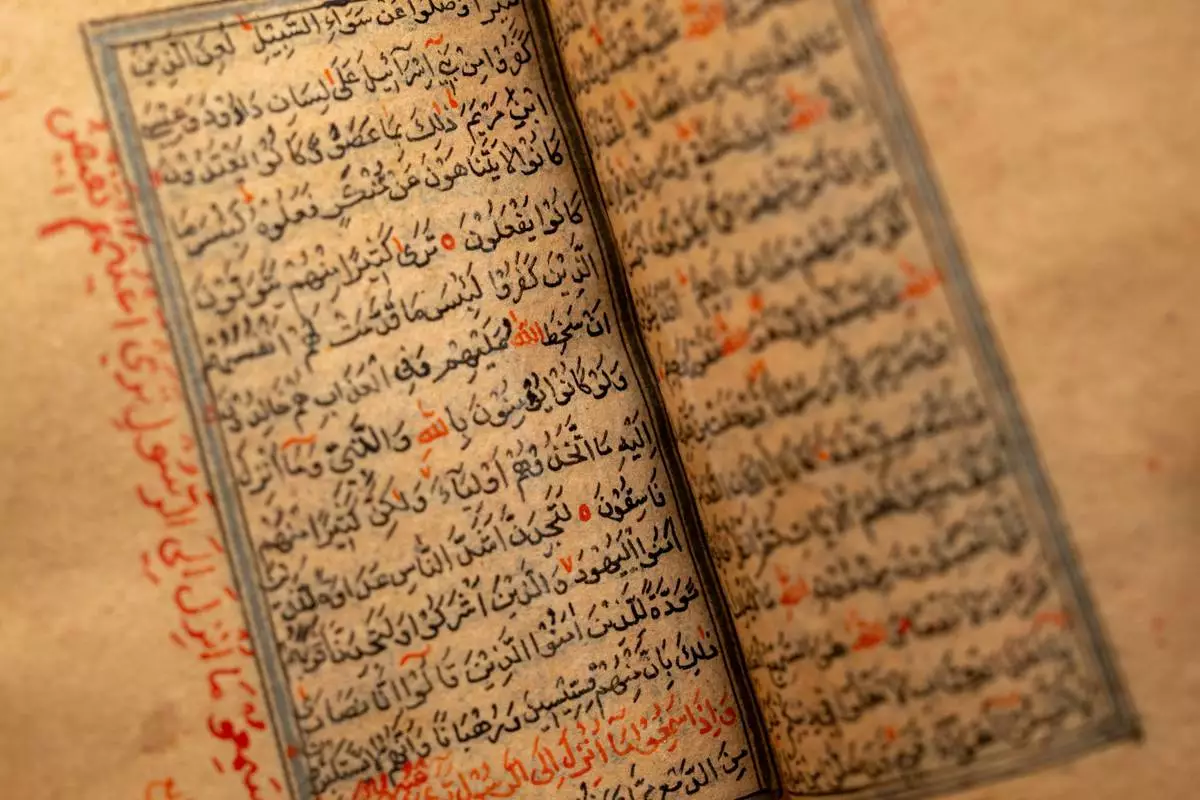
This photo provided by The New York Public Library shows the Schomburg Quran on Dec. 16, 2025 in New York. (Jonathan Blanc/The New York Public Library via AP)
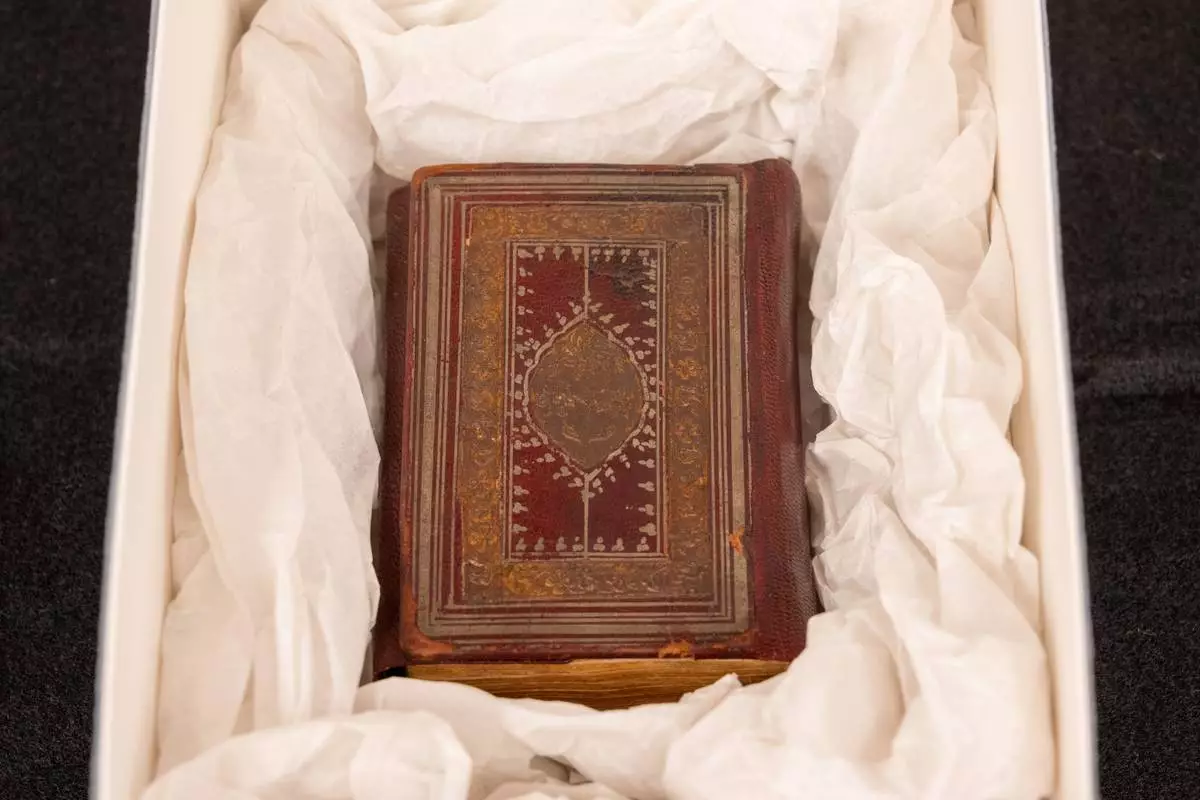
This photo provided by The New York Public Library shows the Schomburg Quran on Dec. 16, 2025 in New York. (Jonathan Blanc/The New York Public Library via AP)
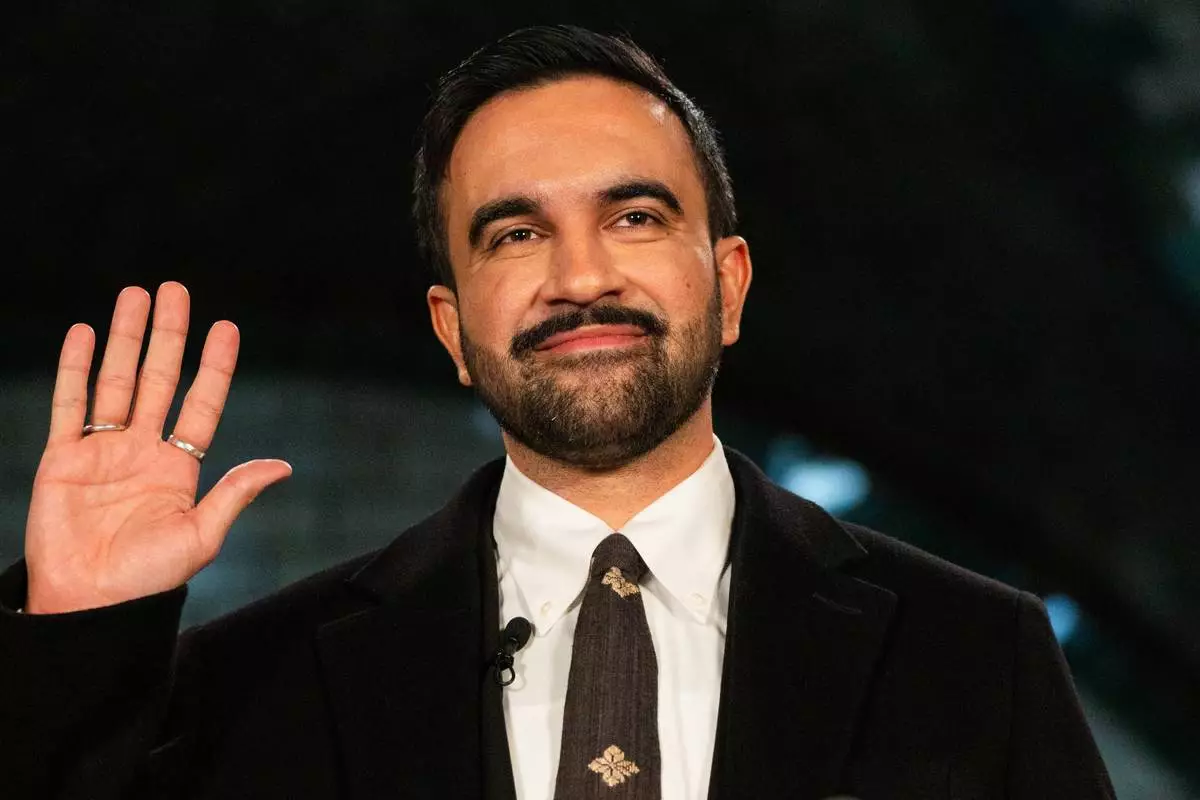
Zohran Mamdani is sworn in as mayor of New York City at Old City Hall Station, New York, Thursday, Jan. 1, 2026. (Amir Hamja/The New York Times via AP, Pool)

Zohran Mamdani hugs his wife Rama Duwaji after he is sworn in as mayor of New York City at Old City Hall Station, New York, Thursday, Jan. 1, 2026. (Amir Hamja/The New York Times via AP, Pool)
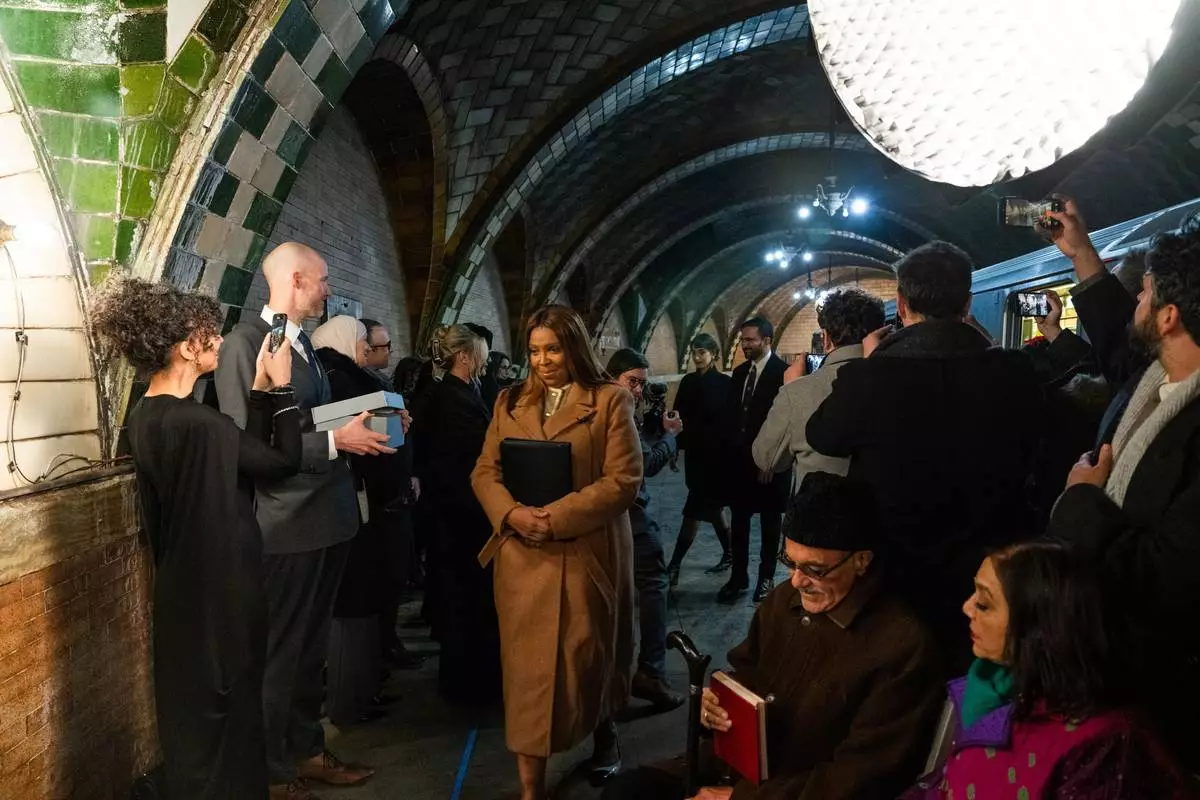
Attorney General Letitia James, center, arrives for Mayor-elect Zohran Mamdani's swearing-in ceremony, Wednesday, Dec. 31, 2025, in New York. (Amir Hamja/The New York Times via AP, Pool)