CRANS-MONTANA, Switzerland (AP) — Swiss investigators believe sparklers on Champagne bottles started a fire in a bar at an Alpine ski resort that left 40 people dead and another 119 injured during a New Year’s celebration.
Most injuries, many of them serious, occurred when the blaze swept through the crowded bar in southwestern Switzerland in the early hours of Thursday.
Click to Gallery
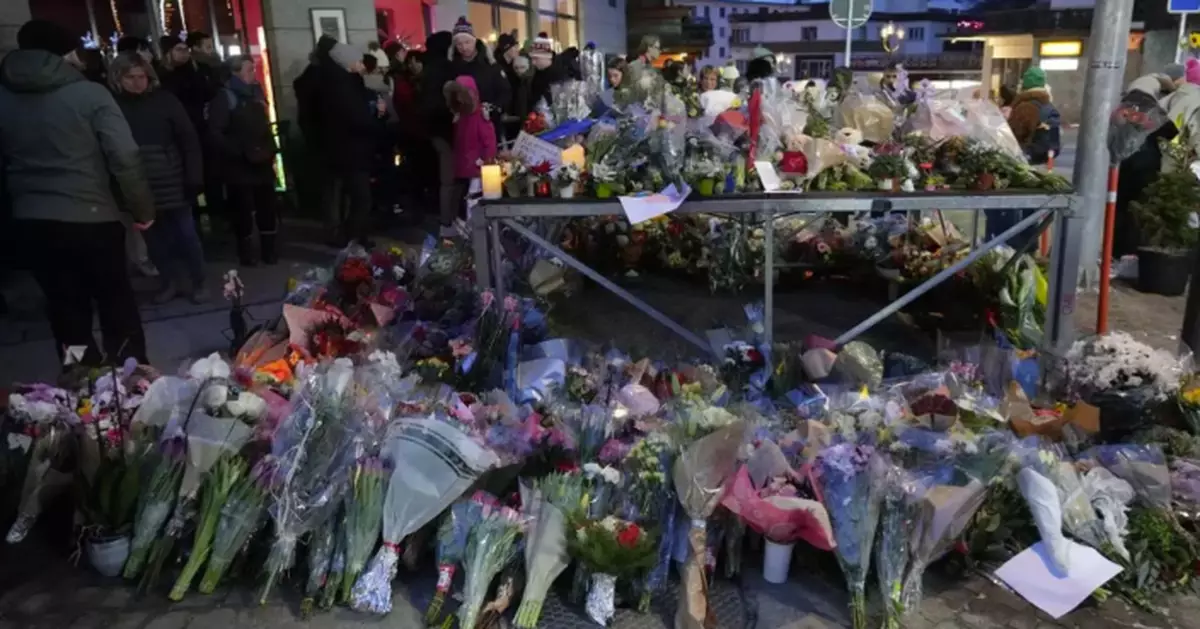
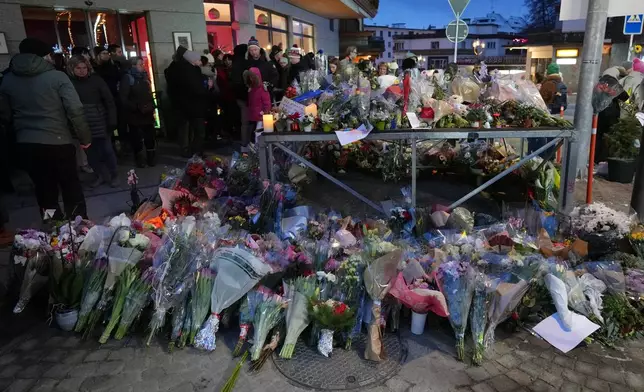
People lay flowers near the sealed off Le Constellation bar in Crans-Montana, Swiss Alps, Switzerland, Friday, Jan. 2, 2026, where a devastating fire left dead and injured during the New Year's celebrations. (AP Photo/ Antonio Calanni)
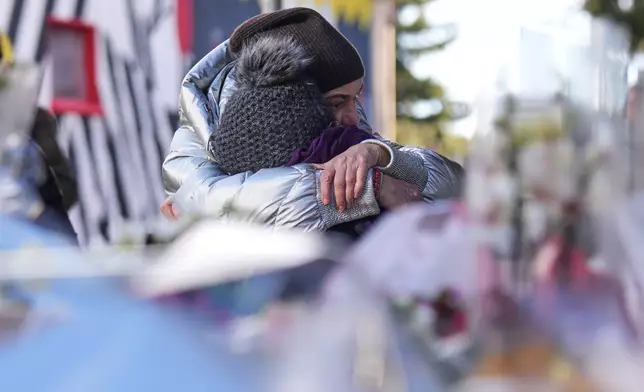
People mourn behind flowers and letters near the sealed off Le Constellation bar, where a devastating fire left dead and injured during the New Year's celebrations in Crans-Montana, Swiss Alps, Switzerland, Friday, Jan. 2, 2026. (AP Photo/ Antonio Calanni)
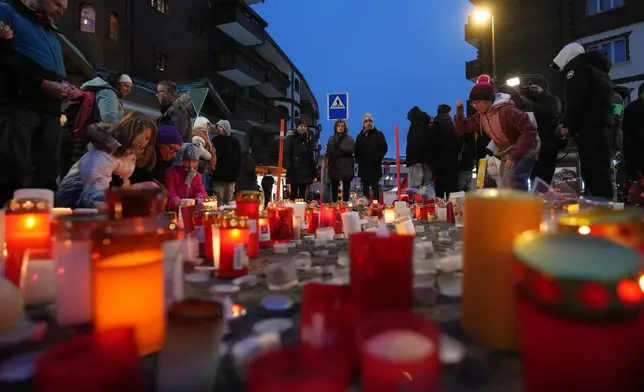
People light candles near the sealed off Le Constellation bar in Crans-Montana, Swiss Alps, Switzerland, Friday, Jan. 2, 2026, where a devastating fire left dead and injured during the New Year's celebrations. (AP Photo/ Antonio Calanni)
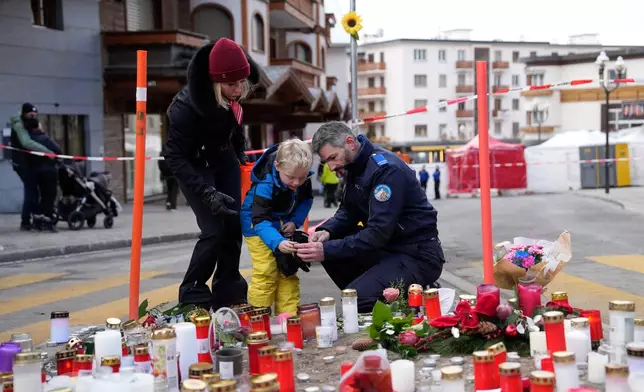
A police officer helps a boy to light a candle near the sealed off Le Constellation bar in Crans-Montana, Swiss Alps, Switzerland, Friday, Jan. 2, 2026, where a devastating fire left dead and injured during the New Year's celebrations. (AP Photo/Baz Ratner)
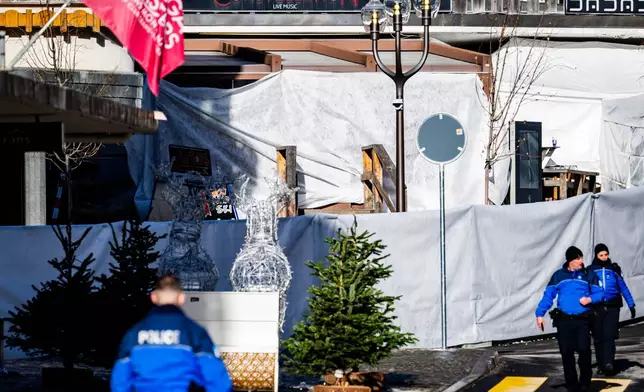
Police officers inspect the area where a fire broke out at the Le Constellation bar and lounge leaving people dead and injured, during New Year’s celebration, in Crans-Montana, Swiss Alps, Switzerland, Thursday, Jan. 1, 2026. (Jean-Christophe Bott/Keystone via AP)
Officials believe the sparklers, which shot upward, ignited the blaze when they came too close to the bar's ceiling. Authorities planned to look into whether the material on the ceiling that was designed to muffle sound conformed with regulations.
The Crans-Montana resort is best known as an international ski and golf venue. Overnight, the Le Constellation bar morphed from a scene of revelry into the site of one of Switzerland’s worst tragedies.
Here’s what we know:
The fire broke out about 1:30 a.m. Thursday during a holiday celebration inside the Le Constellation bar.
Two women told French broadcaster BFMTV they were inside when they saw a male bartender lifting a female colleague on his shoulders as she held a lit sparkler on a bottle. The flames spread, collapsing the wooden ceiling, they told the broadcaster.
People tried to escape from a nightclub area in the basement, up a flight of stairs and through a narrow door, causing a crowd surge, one of the women said.
A young man at the scene said that people smashed windows to escape, BFMTV reported.
Gianni Campolo, a Swiss 19-year-old on vacation, rushed to help first responders. He described a scene of people trapped on the ground, severely injured and burned.
“I have seen horror and I don’t know what else would be worse than this,” Campolo told French broadcaster TF1.
Marc-Antoine Chavanon, 14, also hurried to join the rescue effort.
“People were collapsing. We were doing everything we could to save them,” he told The Associated Press. “There was one of our friends: She was struggling to get out. She was all burnt. You can’t imagine the pain I saw.”
Investigators will examine whether sparklers were permitted for use in the bar. They will also look at the safety measures on the premises, including fire extinguishers, escape routes, and compliance with regulations, Valais canton Attorney General Béatrice Pilloud said Friday.
She also warned of possible prosecutions if there was any criminal liability involving individuals.
Swiss officials described the blaze as a likely flashover, meaning that it triggered the release of combustible gases that can ignite violently.
The injured suffered from serious burns and smoke inhalation. Some were flown to specialist hospitals across the country and elsewhere in Europe.
Of the 119 injured, 113 have been identified, officials said Friday.
The injured include 71 Swiss nationals, 14 French and 11 Italians, along with citizens of Serbia, Bosnia, Luxembourg, Belgium, Portugal and Poland, Valais Canton police commander Frédéric Gisler said Friday. The nationalities of 14 people remain unclear.
The severity of the burns has made it very difficult to identify bodies, bringing more agony for families who now must hand over DNA samples to authorities.
Arthur Brodard, 16, from Lausanne is among the missing. He went to the bar with friends to celebrate the new year, and on Friday evening his mother, Laetitia, was in Crans-Montana and frantic to find him. She held out “a glimmer of hope” that he might be one of the six injured people who had yet to be identified.
“I’m looking everywhere. The body of my son is somewhere,” she told reporters. “I want to know, where is my child, and be by his side. Wherever that may be, be it in the intensive care unit or the morgue.”
Emanuele Galeppini, a promising teenage golfer who competed internationally, is officially listed as one of Italy’s missing nationals. His uncle, Sebastiano Galeppini, told Italian news agency ANSA that their family is awaiting DNA checks, though the Italian Golf Federation announced on its website that he had died.
On Instagram, an account filled up with photos of people who remained unaccounted for, with their friends and relatives begging for tips about the whereabouts of the missing.
The nearby regional hospital in Sion took numerous victims from the fire. Its general director, Eric Bonvin, recounted how staff scrambled to determine the extent of people’s injuries.
The hospital, which is about 10 kilometers (6 miles) from the resort by air, quickly hit full capacity, authorities said.
By Friday afternoon, most had transferred to other hospitals in medical evacuation flights, while others had been discharged, Bonvin said.
With high-altitude ski runs rising around 3,000 meters (nearly 9,850 feet) in the heart of the Valais region’s snowy peaks and pine forests, Crans-Montana is one of the top venues on the World Cup circuit.
The resort will host the best men’s and women’s downhill racers, including Lindsey Vonn, for their final events before the Milan Cortina Olympics in February.
The town’s Crans-sur-Sierre golf club, down the street from the bar, stages the European Masters each August on a picturesque course.
Dazio reported from Berlin. Associated Press journalists Kostya Manenkov in Crans-Montana, Geir Moulson in Berlin, Graham Dunbar in Geneva, and Nicole Winfield in Rome, contributed to this report.

People lay flowers near the sealed off Le Constellation bar in Crans-Montana, Swiss Alps, Switzerland, Friday, Jan. 2, 2026, where a devastating fire left dead and injured during the New Year's celebrations. (AP Photo/ Antonio Calanni)
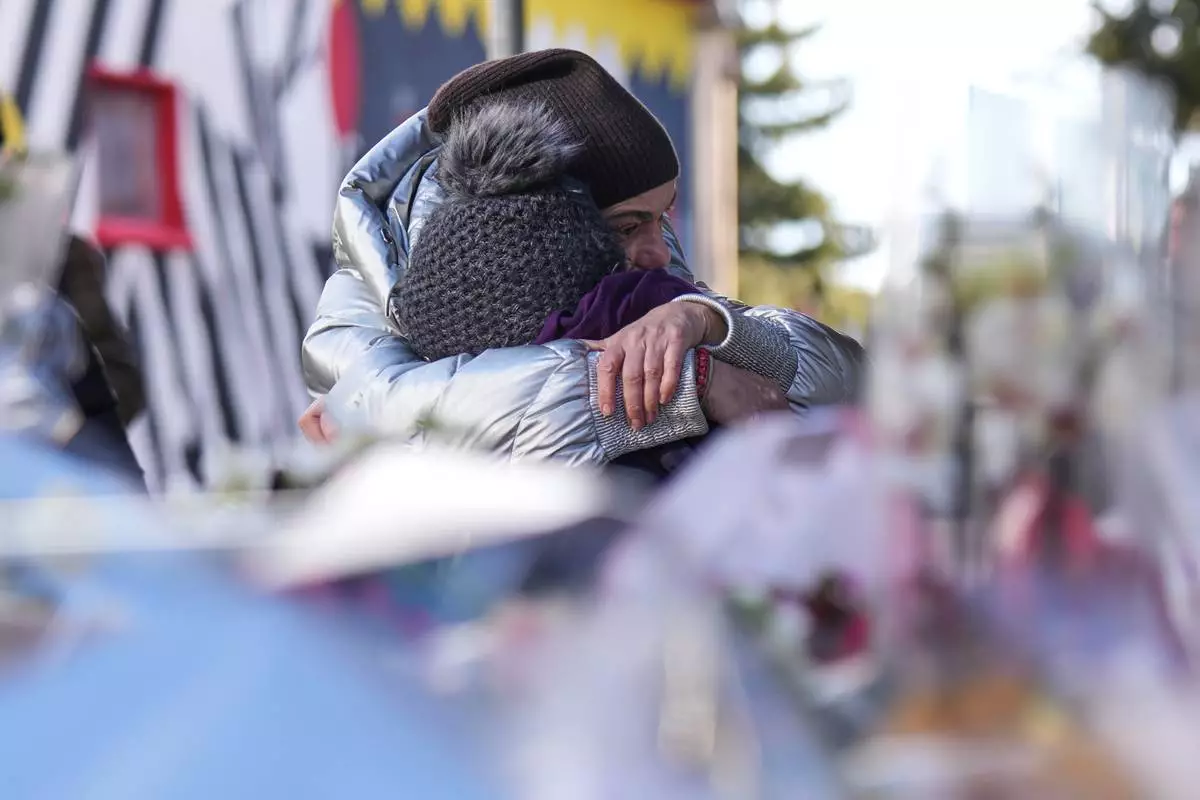
People mourn behind flowers and letters near the sealed off Le Constellation bar, where a devastating fire left dead and injured during the New Year's celebrations in Crans-Montana, Swiss Alps, Switzerland, Friday, Jan. 2, 2026. (AP Photo/ Antonio Calanni)
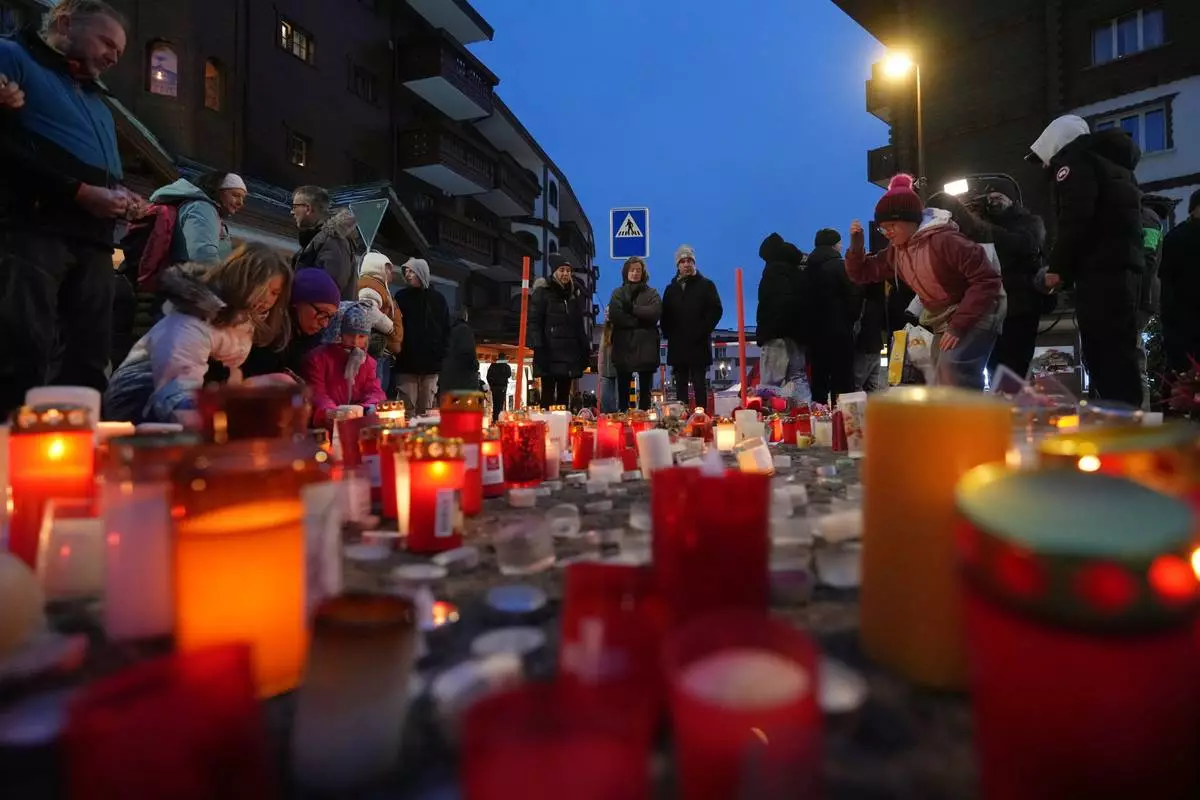
People light candles near the sealed off Le Constellation bar in Crans-Montana, Swiss Alps, Switzerland, Friday, Jan. 2, 2026, where a devastating fire left dead and injured during the New Year's celebrations. (AP Photo/ Antonio Calanni)

A police officer helps a boy to light a candle near the sealed off Le Constellation bar in Crans-Montana, Swiss Alps, Switzerland, Friday, Jan. 2, 2026, where a devastating fire left dead and injured during the New Year's celebrations. (AP Photo/Baz Ratner)
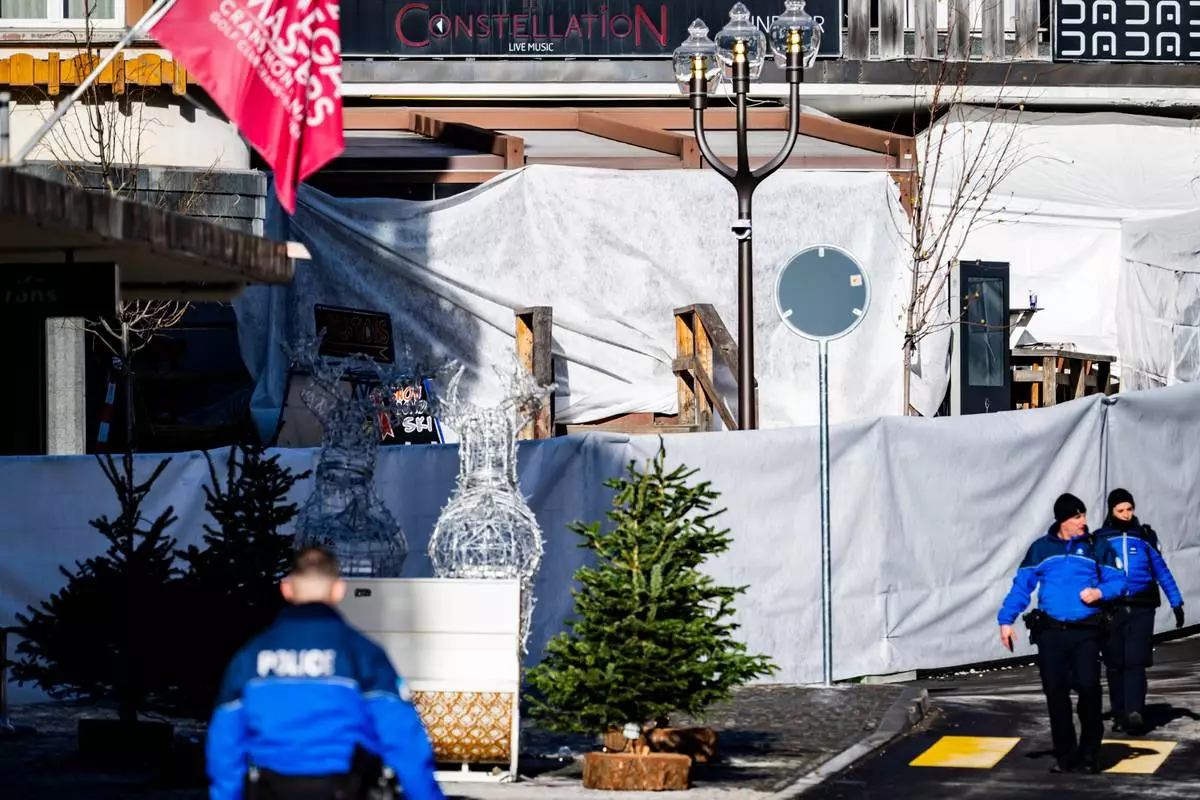
Police officers inspect the area where a fire broke out at the Le Constellation bar and lounge leaving people dead and injured, during New Year’s celebration, in Crans-Montana, Swiss Alps, Switzerland, Thursday, Jan. 1, 2026. (Jean-Christophe Bott/Keystone via AP)
DUBAI, United Arab Emirates (AP) — Iran fired more missiles at Israel and Gulf Arab states Thursday, demonstrating Tehran’s continued ability to strike its neighbors even as U.S. President Donald Trump claimed the threat from the country was nearly eliminated.
Iran’s attacks on Gulf states along with its chokehold on the Strait of Hormuz have disrupted the world’s energy supplies with effects far beyond the Middle East. That has proved to be Iran’s greatest strategic advantage in the war. Britain held a call with nearly three dozen countries about how to reopen the strait once the fighting is over.
Trump has insisted the strait can be taken by force — but said it is not up to the U.S. to do that. In an address to the American people Wednesday night, he encouraged countries that depend on oil from Hormuz to “build some delayed courage” and go “take it.”
Before the U.S. and Israel started the war on Feb. 28 with strikes on Iran, the waterway was open to traffic and 20% of all traded oil passed through it.
Iran responded defiantly to Trump’s speech, in which the American president claimed U.S. military action had been so decisive that “one of the most powerful countries” is “really no longer a threat.”
A spokesman for Iran’s military, Lt. Col. Ebrahim Zolfaghari, insisted Thursday that Tehran maintains hidden stockpiles of arms, munitions and production facilities. He said facilities targeted so far by U.S. strikes are “insignificant.”
Just before Trump began his address — in which he said U.S. “core strategic objectives are nearing completion” — explosions were heard in Dubai as air defenses worked to intercept an Iranian missile barrage.
Less than a half-hour after the president was done, Israel said its military was also working to intercept incoming missiles. Sirens sounded in Bahrain, home to the U.S. Navy’s 5th Fleet, immediately after the speech.
Attacks continued across Iran on Thursday, with strikes reported in multiple cities.
Trump posted footage on social media showing what he said was the collapse of Iran's biggest bridge and threatening, “Much more to follow.”
Earlier Thursday, Iran state media reported that the B1 bridge, which was still under construction, was attacked. Two semiofficial news agencies reported that two people were killed. It was not immediately clear if the footage Trump shared was the B1 bridge, reportedly the tallest in the Middle East.
In a post on X that included a picture of what appeared to be the same bridge, Iran’s Foreign Minister Abbas Araghchi wrote, “Striking civilian infrastructure only conveys the defeat and moral collapse of an enemy in disarray.”
Even amid the conflict, families went to a park in Tehran to play games and grill food to mark the last day of Iranian New Year, or Nowruz.
In Lebanon — where Israel has launched a ground invasion against Iran-backed Hezbollah militants — Israeli strikes have killed 27 people in the past 24 hours, the Health Ministry said.
More than 1,900 people have been killed in Iran during the war, while 19 have been reported dead in Israel. More than two dozen people have died in Gulf states and the occupied West Bank, while 13 U.S. service members have been killed.
More than 1,300 people have been killed and more than 1 million displaced in Lebanon. Ten Israeli soldiers have also died there.
Iranian attacks on about two dozen commercial ships, and the threat of more, have halted nearly all traffic in the waterway that connects the Persian Gulf to the open ocean.
Since March 1, traffic through the strait has dropped 94% over the same period last year, according to the Lloyds List Intelligence shipping data firm. Two ships are confirmed to have paid a fee, the firm said, while others were allowed through based on agreements with their home governments.
Saudi Arabia piped about 1 billion barrels of oil away from the Strait of Hormuz in March, according to maritime data firm Kpler, while Iraq said Thursday that it had started to truck oil across Syria to avoid the strait.
The 35 countries that spoke Thursday, including all G7 industrialized democracies except the U.S., as well as the United Arab Emirates and Bahrain, signed a declaration last month demanding Iran stop blocking the strait.
Thursday’s talks were focused on political and diplomatic measures, but British Foreign Secretary Yvette Cooper said military planners from an unspecified number of countries will also plot ways to ensure security once fighting ends, including potential mine-clearing work and “reassurance” for commercial shipping.
No country appears willing to try to open the strait by force while the war is raging. French President Emmanuel Macron, while on a visit to South Korea, called a military operation to secure the waterway “unrealistic.”
But there is a concern that Iran might limit traffic through the waterway even after U.S. and Israeli attacks cease.
The conflict is driving up prices for oil and natural gas, roiling stock markets, pushing up the cost of gasoline and threatening to make a range of goods, including food, more expensive.
On Thursday, Brent crude, the international standard, rose again and was around $108, up about 50% from Feb. 28.
Though the oil and gas that typically transits the strait is primarily sold to Asian nations, Japan and South Korea were the only two countries from the region joining Thursday's call about the strait. The supply of jet fuel has also been interrupted, with consequences for travel worldwide.
Rising from Bangkok and Corder reported from The Hague, Netherlands. Associated Press writers Will Weissert in Washington and David McHugh in Frankfurt, Germany, and Toqa Ezzidin in Cairo contributed to this story.
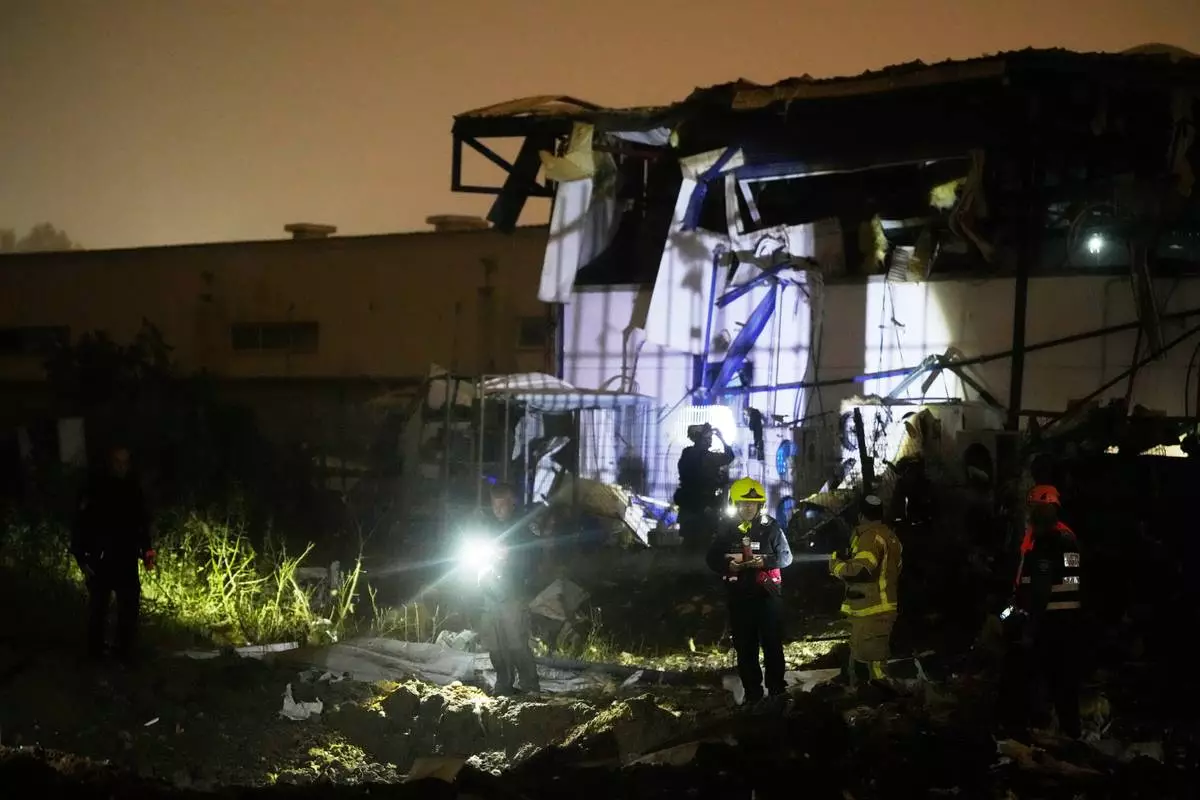
Israeli security forces and rescue teams inspect a site struck by an Iranian missile in Petah Tikva, Israel,Thursday, April 2, 2026. (AP Photo/Ohad Zwigenberg)
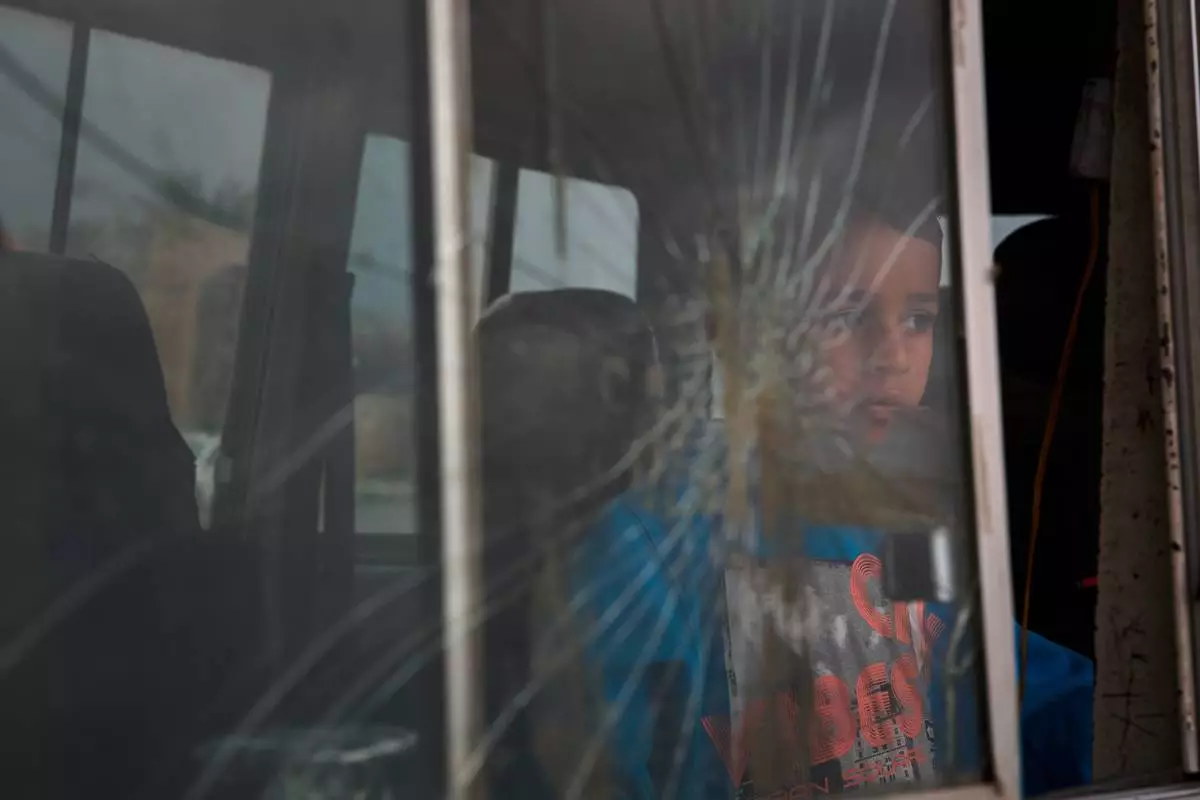
A boy who fled with his family following Israeli strikes in southern Lebanon sits inside the van they are using as shelter in Sidon, Lebanon, Thursday, April 2, 2026. (AP Photo/Emilio Morenatti)
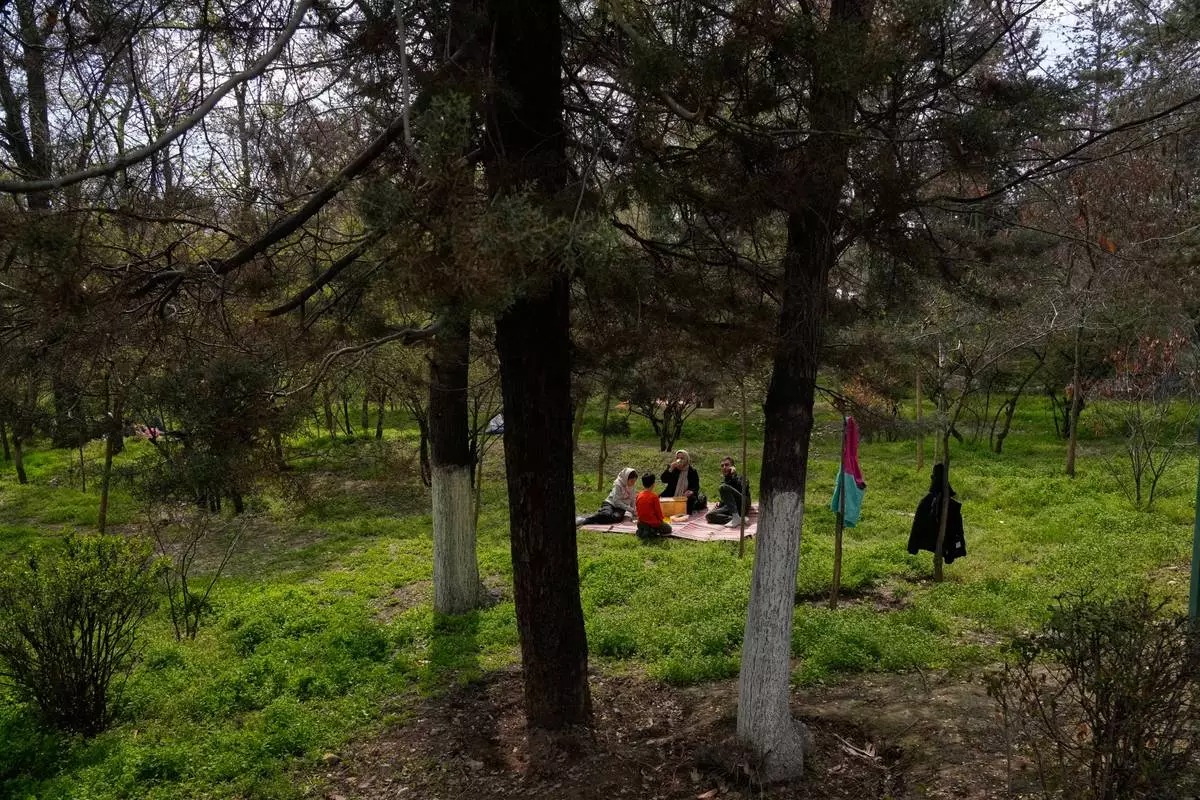
A family enjoys their time during the annual public picnic day, known as Sizdeh Bedar, an ancient tradition, marking the 13th and last day of Iranian New Year, or Nowruz, holidays, at Mellat park in Tehran, Iran, Thursday, April 2, 2026. (AP Photo/Vahid Salemi)
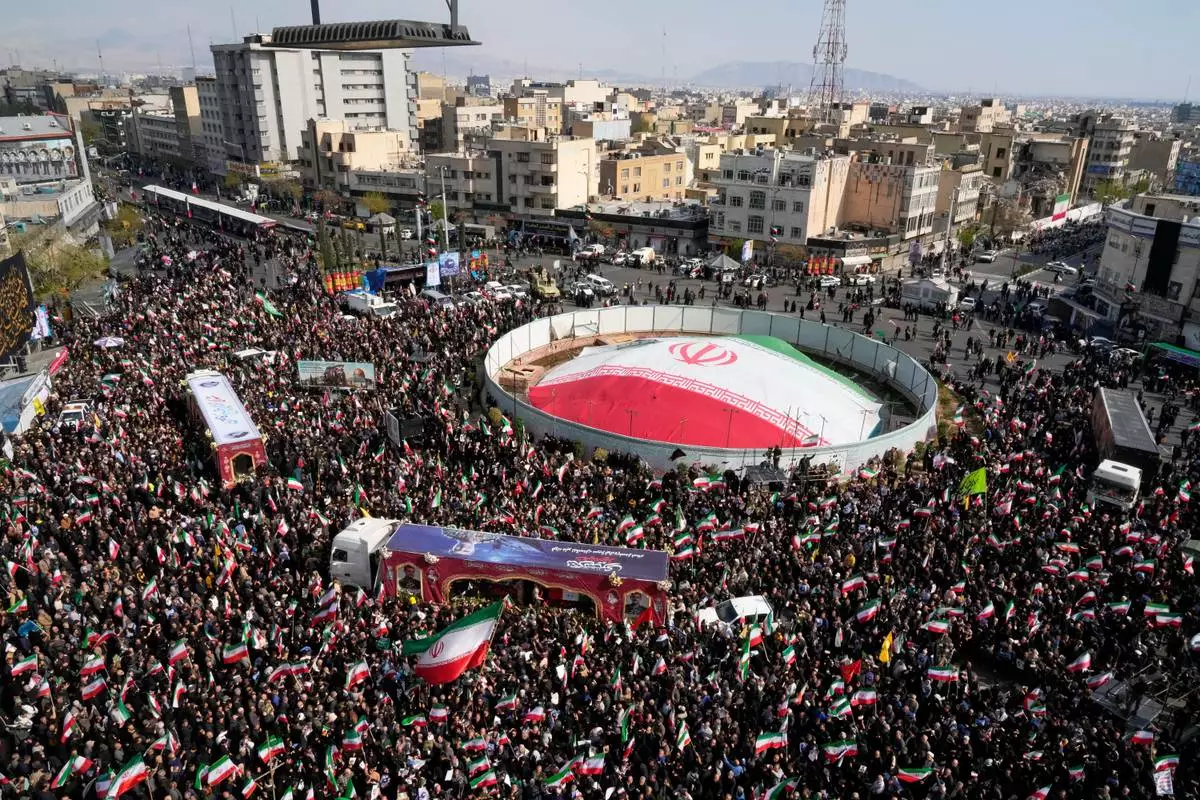
Mourners gather during a funeral procession for Alireza Tangsiri, head of Iran's Islamic Revolutionary Guard Corps Navy, and others killed in Israeli strikes in late March, in Tehran, Iran, Wednesday, April 1, 2026. (AP Photo/Vahid Salemi)
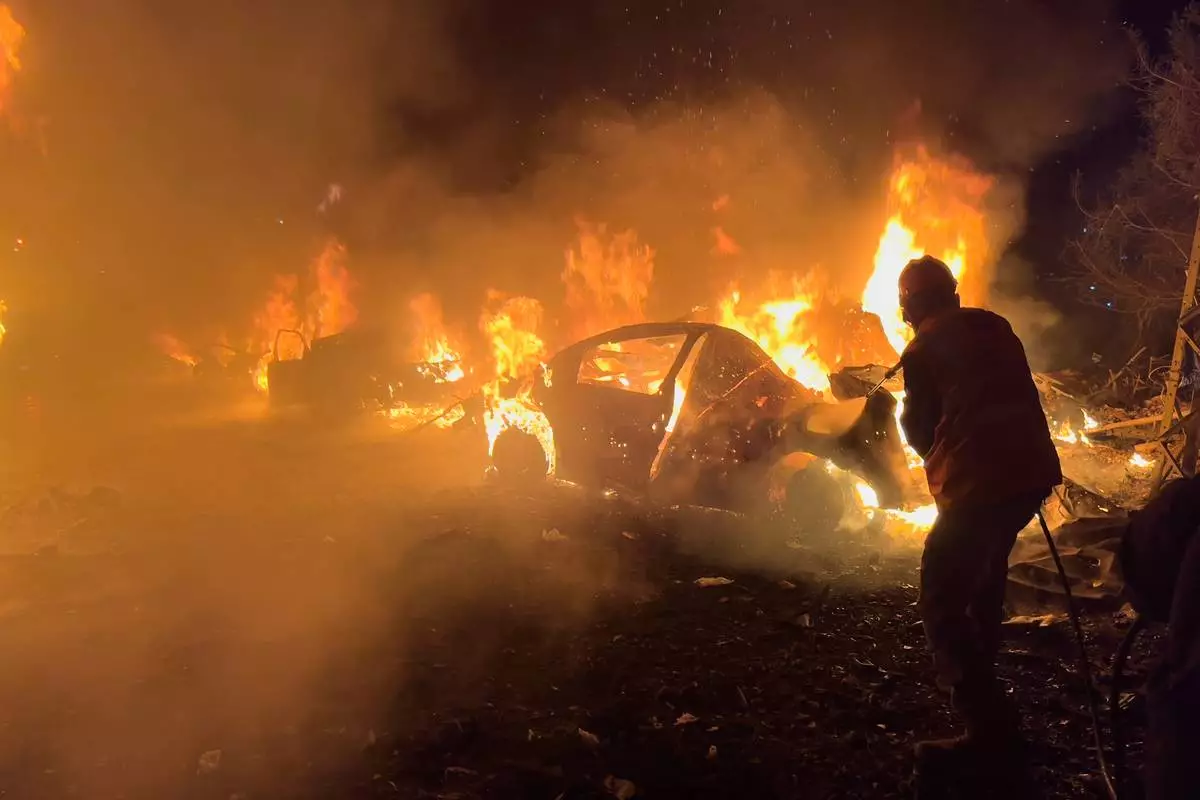
A firefighter extinguishes a car at the site of Israeli airstrikes, in Beirut, Lebanon, Wednesday, April 1, 2026. (AP Photo/Hussein Malla)
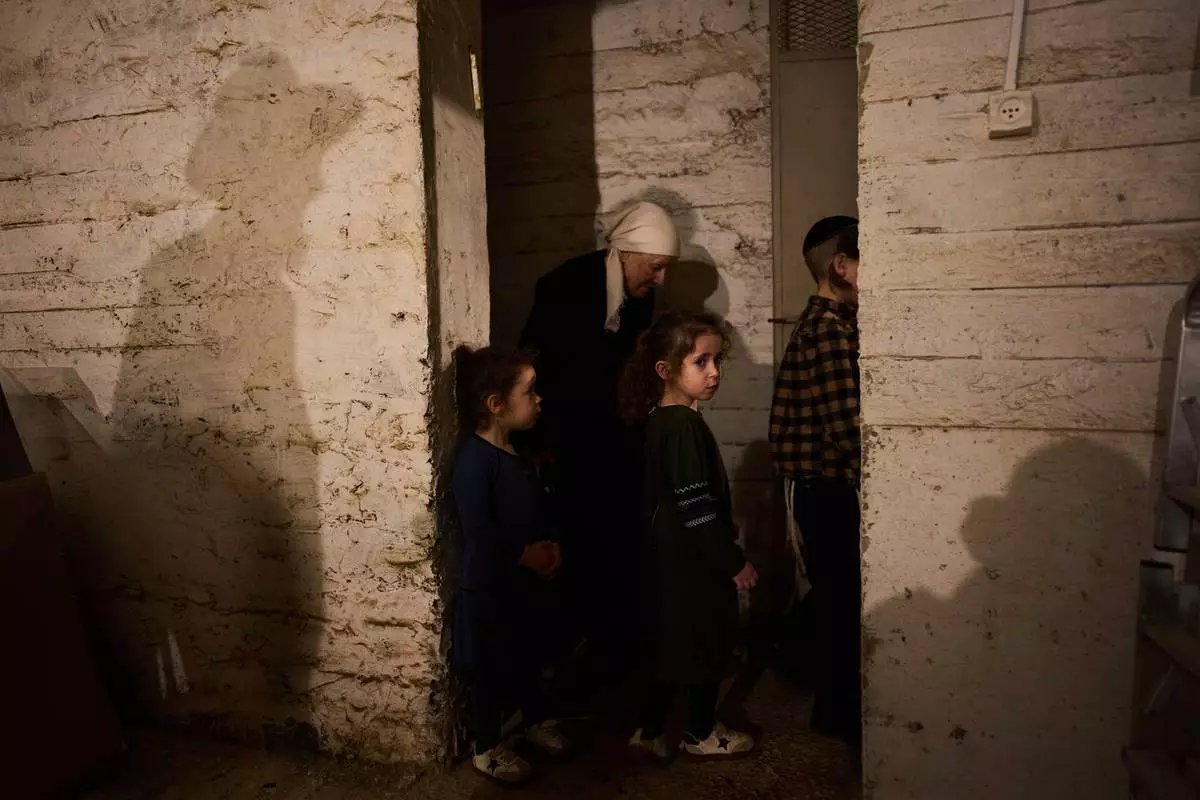
People take cover in a bomb shelter as air raid sirens warn of incoming Iranian missile strikes in Bnei Brak, Israel, Wednesday, April 1, 2026. (AP Photo/Oded Balilty)
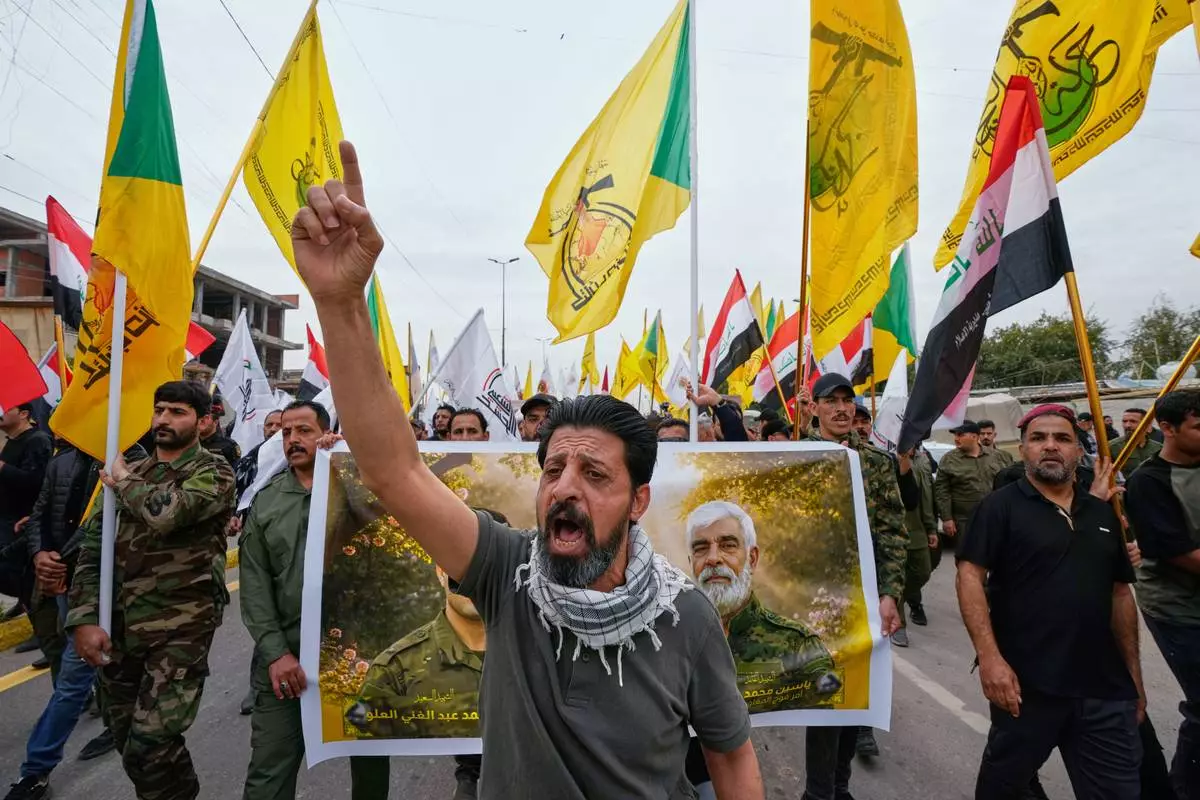
Members from the Popular Mobilization Forces attend a funeral of fighters who were killed in a U.S. airstrike, in Tal Afar, Nineveh province, north of Baghdad, Iraq, Thursday, April 2, 2026. (AP Photo/Hadi Mizban)
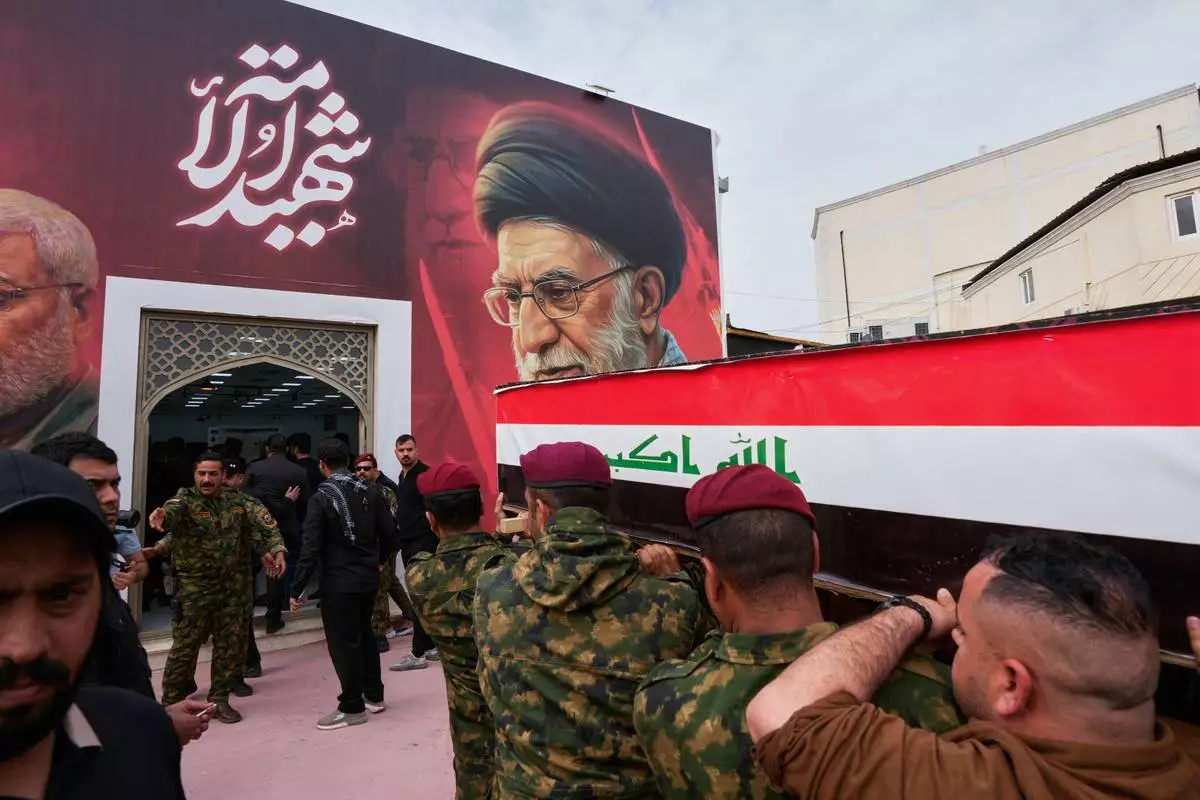
Members from the Popular Mobilization Forces attend a funeral of fighters who were killed in a U.S. airstrike, in Tal Afar, Nineveh province, north of Baghdad, Iraq, Thursday, April 2, 2026. (AP Photo/Hadi Mizban)
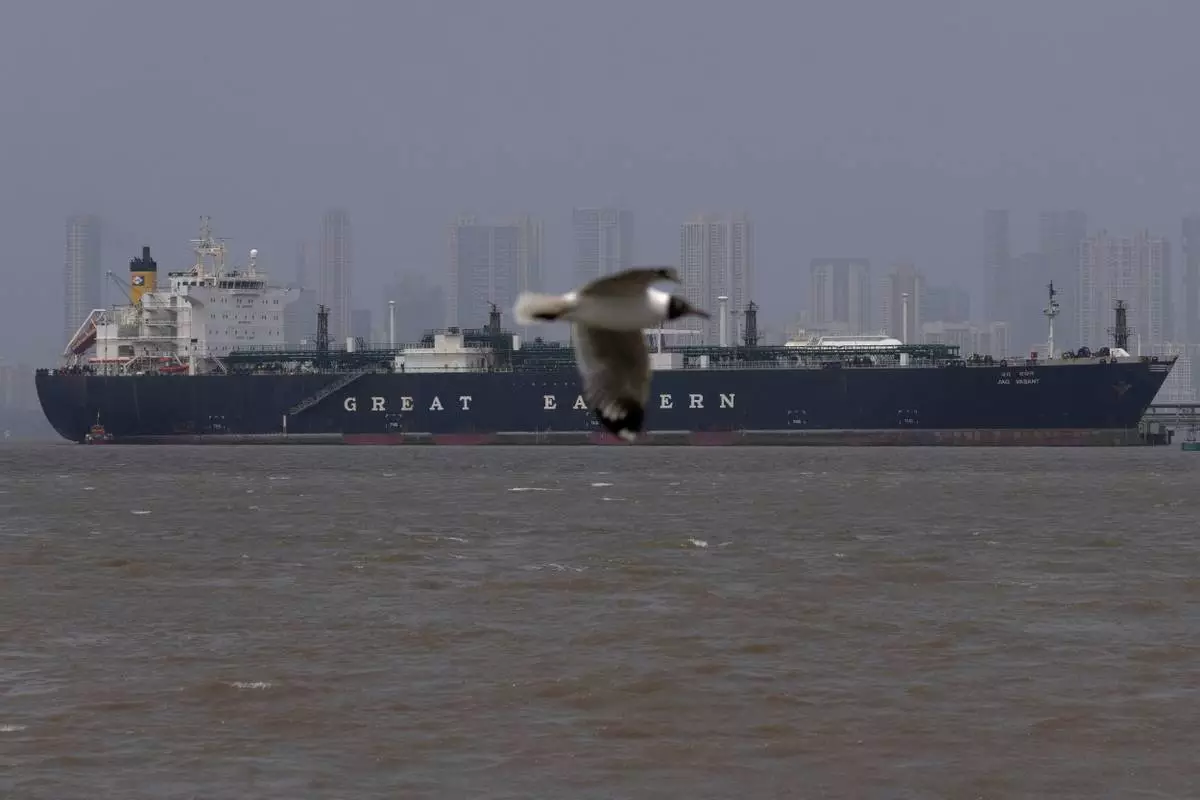
The Indian flagged LPG carrier Jag Vasant transporting liquefied petroleum gas, is seen at the Mumbai Port in Mumbai, India, after it arrived clearing the Strait of Hormuz, Wednesday, April 1, 2026. (AP Photo/Rafiq Maqbool)

President Donald Trump speaks about the Iran war from the Cross Hall of the White House on Wednesday, April 1, 2026, in Washington. (AP Photo/Alex Brandon, Pool)
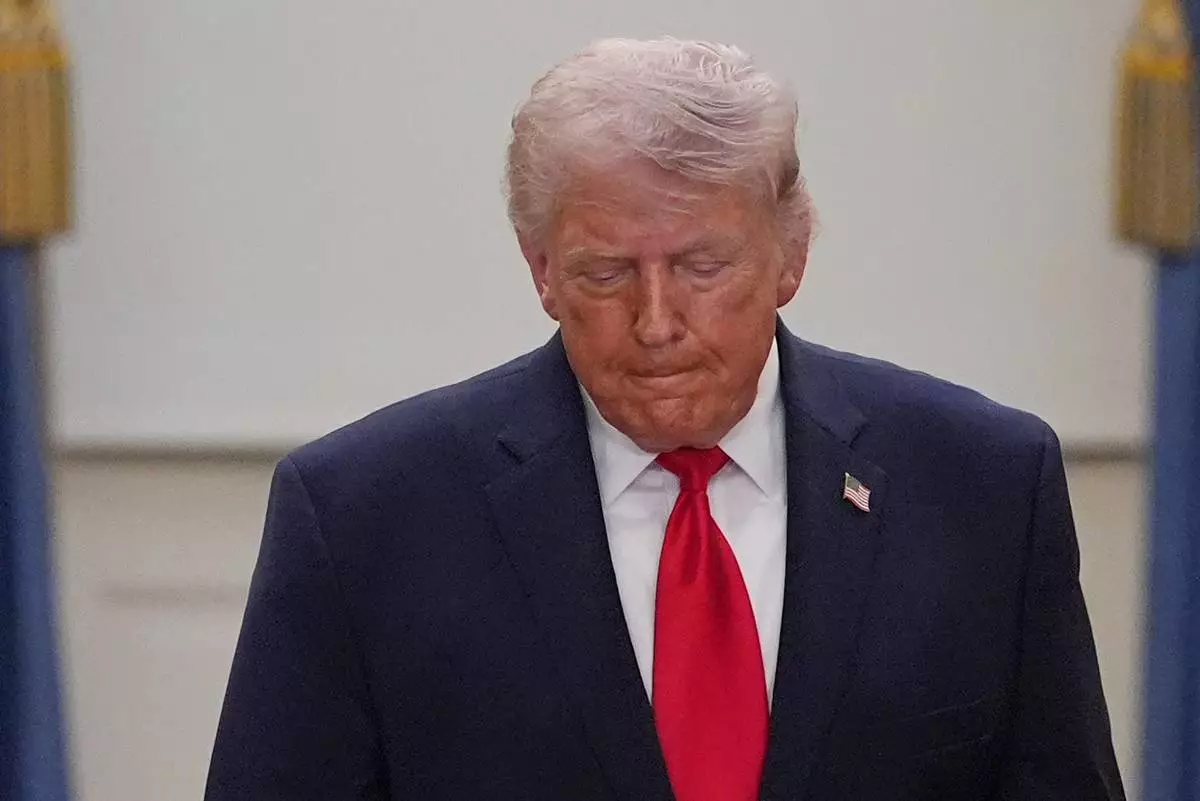
President Donald Trump walks from the Blue Room to speak about the Iran war from the Cross Hall of the White House on Wednesday, April 1, 2026, in Washington. (AP Photo/Alex Brandon, Pool)
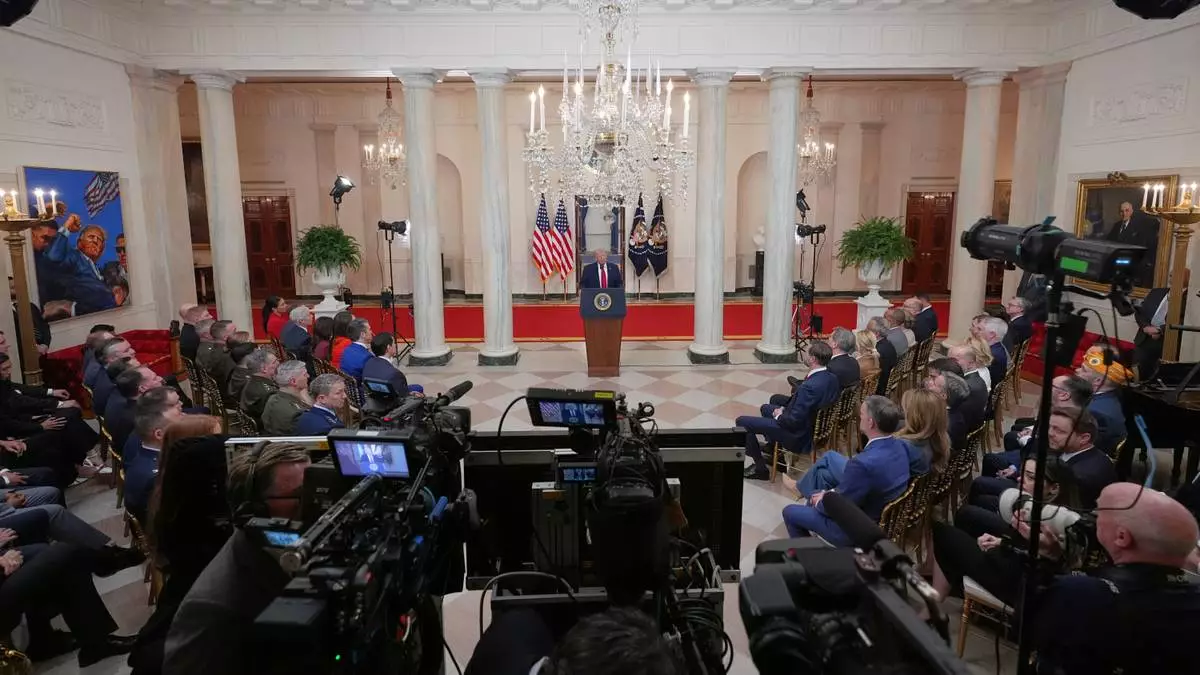
President Donald Trump speaks about the Iran war from the Cross Hall of the White House on Wednesday, April 1, 2026, in Washington. (AP Photo/Alex Brandon, Pool)

President Donald Trump speaks about the Iran war from the Cross Hall of the White House on Wednesday, April 1, 2026, in Washington. (AP Photo/Alex Brandon, Pool)