Skip to Content Facebook Feature Image

Rapper Pooh Shiesty charged with kidnapping over alleged dispute involving rapper Gucci Mane's label

ENT

Rapper Pooh Shiesty charged with kidnapping over alleged dispute involving rapper Gucci Mane's label
ENT

ENT

Rapper Pooh Shiesty charged with kidnapping over alleged dispute involving rapper Gucci Mane's label

2026-04-03 04:45 Last Updated At:04:51

DALLAS (AP) — Federal prosecutors on Thursday accused rapper Pooh Shiesty and eight others of robbing three men at gunpoint and kidnapping them earlier this year in Texas following a contract dispute involving rapper Gucci Mane 's record label.

The U.S. Attorney's Office in Dallas declined to name the victims and an indictment only refers to them by their initials. One victim, R.D., is described as the owner of 1017 Records, the label belonging to Gucci Mane, whose legal name is Radric Delantic Davis.

“The victims in this case came to Dallas to conduct legitimate business and they were met with firearms and violence,” Ryan Raybould, the U.S. attorney for the Northern District of Texas, said at a news conference Thursday.

Publicists for Gucci Mane didn’t immediately respond to emailed requests for comment.

The alleged confrontation happened Jan. 10 after the three victims flew to Dallas for what they thought was a business meeting, according to the federal indictment filed in the Northern District of Texas. Prosecutors said Pooh Shiesty, whose legal is name Lontrell Williams Jr., arranged the meeting, allegedly to discuss the terms of his contract with 1017 Records.

“Once these three men were inside the recording studio, Williams Jr. and eight co-conspirators — several of whom traveled from Memphis, Tennessee — executed a coordinated, armed takeover,” said Raybould, who described Pooh Shiesty as the “ringleader of the conspiracy.”

He said eight of the nine were arrested Wednesday. In Tennessee, the FBI in Memphis said Wednesday that it went to a home in the suburb of Cordova to serve court-ordered warrants. Property records show it is owned by Pooh Shiesty.

Once the three victims were inside the studio, Pooh Shiesty allegedly produced an AK-style pistol and forced one of them to sign a release from the recording contract. The other defendants then displayed firearms and robbed the victims of watches, jewelry, cash and other items. One victim was choked to near unconsciousness, prosecutors said.

Another defendant barricaded the door with his body to stop the victims from leaving.

“Within hours of leaving the Dallas studio, a number of the defendants were on social media displaying some of the items that appeared to be the jewelry that had been robbed from the victims,” Raybould said.

Pooh Shiesty did not immediately return an emailed request for comment. He was on home confinement for a prior firearms conspiracy conviction out of Florida at the time of the alleged confrontation in Texas.

Bradford Cohen, an attorney for Pooh Shiesty during that firearms case, did not immediately reply to an email and phone call for comment from The Associated Press.

As of Thursday, Pooh Sheisty was still prominently advertised as an artist on the record label's site.

Gucci Mane is widely regarded as one of the pioneers of trap music alongside fellow Atlanta rappers T.I. and Jeezy. He emerged in the mid-2000s with his breakout single “Icy” and went on to build a vast catalog through a steady stream of mixtapes and albums. He has also helped launch or develop artists including Young Thug and earned a Grammy nomination for his appearing on Lizzo’s song “Exactly How I Feel.”

Gucci Mane has remained active with new music and business ventures, including his 2025 album “Episodes” and his 2017 memoir, “The Autobiography of Gucci Mane,” which reflects on his evolution as a music artist and personal struggles such as being diagnosed with schizophrenia and bipolar disorder. In recent years, he has also publicly emphasized sobriety and stability.

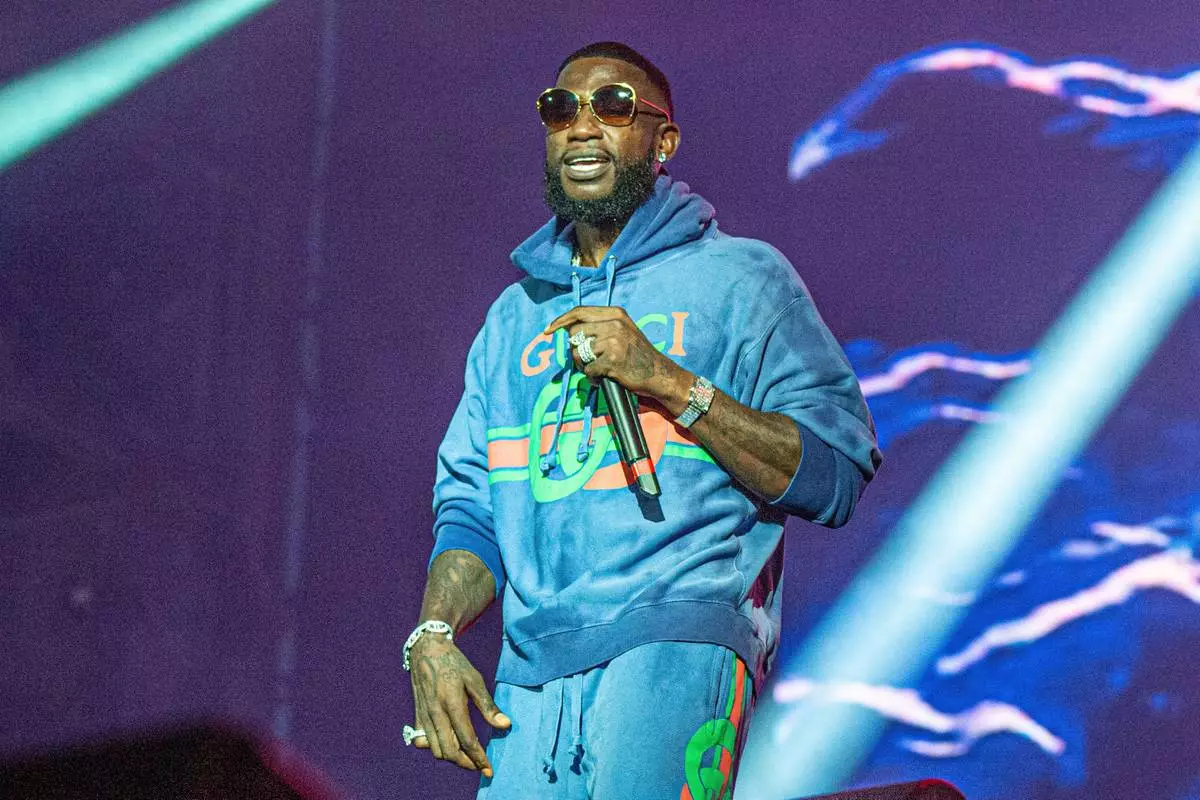
FILE - Gucci Mane performs during the Festival d'ete de Quebec in Quebec City, Canada on July 12, 2019. (Photo by Amy Harris/Invision/AP, File)
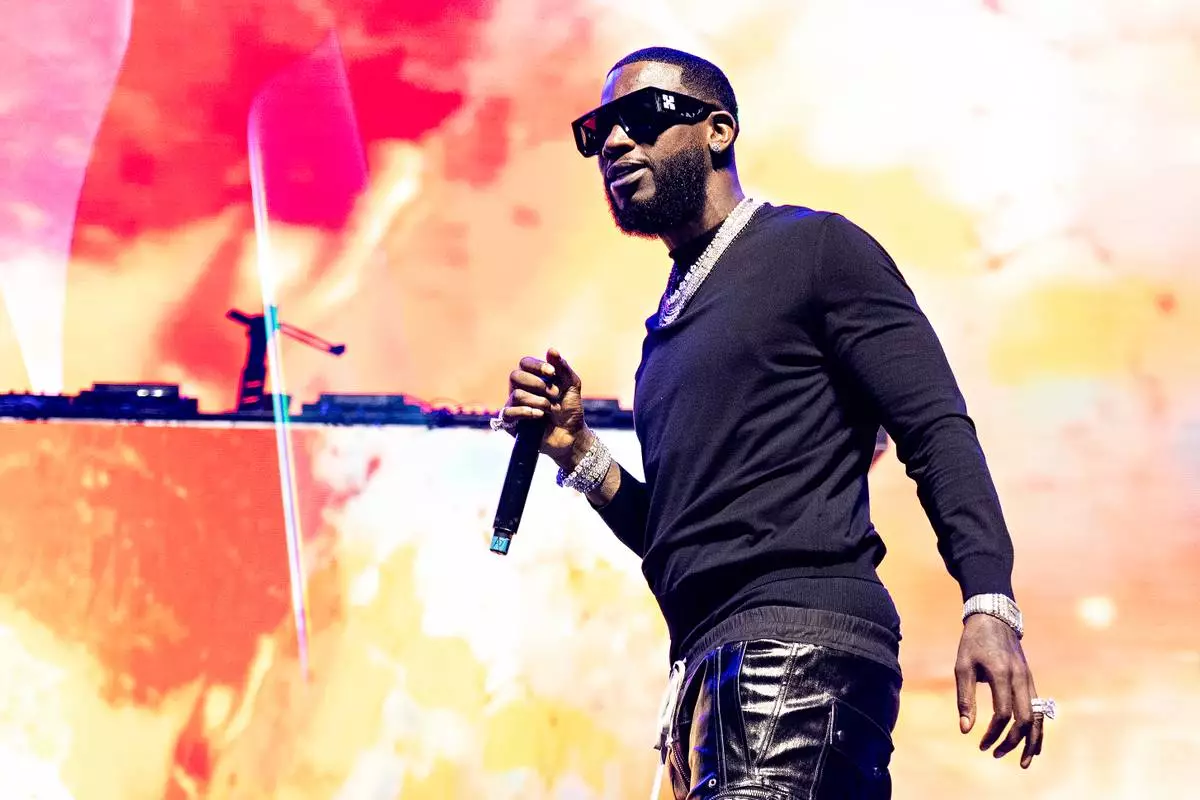
FILE - Gucci Mane performs during the Festival d'ete de Quebec in Quebec City, Canada on July 12, 2019. (Photo by Amy Harris/Invision/AP, File)

FILE - Gucci Mane performs at the Essence Festival in New Orleans on July 1, 2023. (Photo by Amy Harris/Invision/AP, File)


FILE - Gucci Mane performs at the Essence Festival in New Orleans on July 1, 2023. (Photo by Amy Harris/Invision/AP, File)

NEW YORK (AP) — Stocks shook off an early stumble to finish with slim gains on Wall Street Thursday and close out their first winning week since the start of the Iran war.

The early decline for stocks was driven by a surge in oil prices following a national address late Wednesday from President Donald Trump. He vowed the U.S. will continue to attack Iran and failed to offer a clear timetable for ending the conflict in the Middle East. Oil prices eased slightly during the day, but still remain elevated well above $100 per barrel.

The S&P 500 rose 7.37 points, or 0.1%, to 6,582.69. Several days of solid gains this week helped the benchmark index notch a 3.4% gain for the week. That’s the first weekly gain since the conflict started for index at the heart of many 401(k) accounts. Stock markets will be closed for Good Friday.

The Dow Jones Industrial Average fell 61.07 points, or 0.1%, to 46,504.67. The Nasdaq composite rose 38.23 points, or 0.2%, to 21,879.18. Both indexes also notched weekly gains.

A barrel of U.S. crude oil rose 11.3% to $111.54, though prices rose close to $114 at one point during the day. The price of Brent crude, the international standard, jumped 7.8% to $109.03 per barrel. Crude oil prices have been the main force behind the sharp swings for stocks globally. Shipping traffic has been severely curtailed in the Strait of Hormuz, where a fifth of the world’s traded oil passes through during peacetime.

Crude oil prices had been sliding back toward $100 per barrel prior to Trump’s address on Wednesday. The U.S. only relies on the Persian Gulf for a fraction of the oil it imports, but oil is a commodity and prices are set in a global market. A disruption anywhere affects prices everywhere.

Stocks have been broadly sliding since the war began, with indexes often rising and falling sharply along with statements from Trump about the direction of the war. Just on Monday, the S&P 500 briefly neared a 10% drop from its record, a steep-enough fall that professional investors have a name for it: a “correction. The index gained ground Tuesday and Wednesday on hope that the war could end soon.

“For markets, a prolonged conflict increases the risk of sustained pressures on inflation, global growth, interest rates, and equity valuations,” wrote Adam Turnquist, chief technical strategist for LPL Financial, in a note to investors.

Airlines and other travel-related companies were among the biggest losers on Thursday. United Airlines fell 3% and Carnival shed 3.5%.

Tesla fell 5.4% after a report showing that sales over the past three months fell short of analysts' expectations.

Several big technology stocks gained ground to help counter losses elsewhere in the market. Intel jumped 4.9% and Advanced Micro Devices rose 3.5%.

Treasury yields remained relatively steady in the bond market. The yield on the 10-year Treasury fell to to 4.30% from 4.32%.

Wall Street is worried that higher energy prices are adding to already stubbornly high inflation. Rising fuel prices take a bigger chunk out of consumers' wallets in several ways. Directly, gasoline prices in the U.S. have surged 36 percent from a month ago to average $4.08 per gallon, according to the auto club AAA.

Indirectly, rising fuel prices tend to make a wide range of services and goods more expensive. Flights become more expensive as airlines raise ticket prices to offset rising fuel costs. Consumer goods become more expensive as shipping and transportation costs rise.

Inflation has been stubbornly above the Federal Reserve's 2% target. The war and its corresponding surge in energy prices effectively pushes inflation higher and that has dashed hopes for the Fed to cut interest rates. Wall Street had hoped for the central bank to cut rates in order to help offset a weakening job market. Lower interest rates could help stimulate the economy by lowering borrowing costs, but they also risk worsening inflation.

Traders came into 2026 forecasting several cuts to the Fed's benchmark interest rate, which influences rates for mortgages and other loans. They are now expecting the benchmark rate to remain steady this year.

The war has also caused an anomaly of sorts in the oil market. Brent crude oil futures are typically priced higher than those for U.S. crude oil, but the war flipped that on its head. Because of the supply constraints, the sooner a buyer needs a barrel of oil, the more they’ll have to pay. Right now, the most actively traded futures contract for U.S. crude oil is for delivery in May, while the Brent futures contract is for delivery in June. That shorter timeframe is why U.S. crude is trading for more than Brent.

Tom Kloza, chief energy adviser at Gulf Oil, points out that a buyer who needs oil immediately will pay about $3 to $5 a barrel above the futures price for U.S. crude and an even steeper premium for Brent.

Associated Press journalists Chan Ho-Him and Matt Ott contributed to this report.

Fishing boats dot the sea as cargo ships, in the background, sail through the Arabian Gulf toward the Strait of Hormuz off the United Arab Emirates, Friday, March 27, 2026. (AP Photo)

Fishing boats dot the sea as cargo ships, in the background, sail through the Arabian Gulf toward the Strait of Hormuz off the United Arab Emirates, Friday, March 27, 2026. (AP Photo)

Perople walk in front of an electronic stock board showing Japan's Nikkei index at a securities firm Thursday, April 2, 2026, in Tokyo. (AP Photo/Eugene Hoshiko)

Perople walk in front of an electronic stock board showing Japan's Nikkei index at a securities firm Thursday, April 2, 2026, in Tokyo. (AP Photo/Eugene Hoshiko)

President Donald Trump speaks about the Iran war from the Cross Hall of the White House on Wednesday, April 1, 2026, in Washington. (Doug Mills/The New York Times via AP Pool)

President Donald Trump speaks about the Iran war from the Cross Hall of the White House on Wednesday, April 1, 2026, in Washington. (Doug Mills/The New York Times via AP Pool)

Persons walk in front of an electronic stock board showing Japan's Nikkei index at a securities firm Thursday, April 2, 2026, in Tokyo. (AP Photo/Eugene Hoshiko)

Persons walk in front of an electronic stock board showing Japan's Nikkei index at a securities firm Thursday, April 2, 2026, in Tokyo. (AP Photo/Eugene Hoshiko)

Recommended Articles