NEW YORK (AP) — The showdown between the Trump administration and Harvard University is spotlighting bare-knuckled politics and big dollar figures. But in the battle of the moment, it’s easy to lose sight of a decades-long alliance between the U.S. government and the nation’s most prominent universities, forged to fight a world war.
For more than 80 years, that interdependence has been prized by academic leaders and politicians of both parties as a paragon for American discovery and innovation.
“In some ways I think it’s a core part of the story of contemporary America,” said Jason Owen-Smith, a University of Michigan professor who studies the scope of research on the nation’s campuses. “Harvard’s an exemplar, but it’s not the only one.”
That explains the more than $2 billion in multi-year grants and contracts to Harvard frozen this week by administration officials after the school defied their demands to limit activism on campus.
The grants are testament to a system that has its roots in the early 1940s, when the U.S. government began securing cutting edge research through a singular partnership. Federal officials provided money and oversight; institutions, led by big state and private universities, used those billions of dollars to plumb the unknowns of science and technology, while training new generations of researchers.
The partnership delivered wartime innovations including the development of radar at the Massachusetts Institute of Technology and, decades later, the birth at Stanford University of what became Google.
Now the Trump administration is trying something many other chief executives have avoided: imposing ideology on a partnership that has long balanced accountability with independence.
“A lot of Americans are wondering why their tax dollars are going to these universities when they are not only indoctrinating our nation’s students, but also allowing such egregious illegal behavior to occur,” White House press secretary Karoline Leavitt said during a briefing with reporters this week.
But longtime observers of the partnership between government and universities see the administration's actions very differently.
“It’s never been politicized the way the Trump administration is doing it because it’s always had bipartisan support,” says Roger Geiger, a historian of higher education who is retired from Penn State. “It’s unusual that we don’t see that support now.”
Cutting off Harvard follows similar moves at Columbia and other prominent universities to force compliance. At the same time, Johns Hopkins University surrendered more than $800 million in federal grants for health and medical programs after the administration began dismantling the U.S. Agency for International Development and cut funding by the National Institutes of Health.
The dollar figures for use in domestic laboratories and programs overseas might seem surprising to a public most familiar with big universities as centers of teaching and student life.
But to make sense of the current battle, it helps to understand how government and universities came to be so interdependent.
A century ago, a much smaller community of research universities relied largely on private funding. But as U.S. officials scrambled to prepare for entry into World War II in 1940, a former MIT dean, Vannevar Bush, pitched President Franklin D. Roosevelt on the critical need to marshal defense research by partnering government with scientists at universities and other institutions.
“Urgency in the 1940s was really the overriding motivation,” said G. Pascal Zachary, author of a biography of Bush. “But the structure proved durable.”
Bush’s agency oversaw the quest for the first nuclear weapons, developed at a laboratory administered by the University of California. And when fighting ended, he prevailed on Roosevelt to expand the research partnership to ensure national security, foster scientific and medical discovery, and grow the economy.
“It is only the colleges, universities, and a few research institutes that devote most of their research efforts to expanding the frontiers of knowledge,” Bush wrote in a 1945 report to Roosevelt, laying out his plan.
Federal funding for research remained limited, however, until the Soviet Union launched the first artificial satellite in 1957. Determined to catch up, U.S. lawmakers approved a stream of funding for university research and training of new scientists.
“We were locked into the Cold War, this battle with the Soviet Union, that was in many ways a scientific and technological battle,” said Jonathan Zimmerman, an education historian at the University of Pennsylvania.
Research schools, which number between 150 and 200, used the inflow of federal dollars to build labs and other infrastructure. That growth came as enrollment climbed, with the government’s paying for veterans to attend college through the G.I. Bill and measures in the 1960s to help poorer students.
The partnership between government and universities has always come with a built-in tension.
Federal officials are at the helm, awarding money to projects that meet their priorities and tracking the results. But it is explicit that government officials do not control the work itself, allowing researchers to independently pursue answers to questions and problems, even if they don’t always find them.
“The government gets to basically treat a generally decentralized national system of universities as a pay-as-you-go resource to get problems solved,” Michigan’s Owen-Smith said.
With that understanding, universities have become the recipient of about 90 percent of all federal research spending, taking in $59.6 billion in 2023, according to the National Center for Science and Engineering Statistics.
That accounts for more than half the $109 billion spent on research at universities, with most of the rest coming from the schools themselves, state and local governments and nonprofits.
Johns Hopkins has been the single largest grantee, accounting for $3.3 billion in federal spending in 2023. Federal dollars for research at the University of Washington, Georgia Institute of Technology, UC San Diego and Michigan also exceeded more than $1 billion each. Harvard received about $640 million.
Moves by the Trump administration to close agencies and impose changes on campuses present universities with an unprecedented threat.
“Generations of Hopkins researchers have brought the benefits of discovery to the world,” the school’s president, Ronald J. Daniels, wrote recently. “However, a fast and far-reaching cascade of cuts to federal research funding across higher education is badly fraying this long-standing compact.”
The partnership is supposed to be protected by guardrails. Rules specify that officials who believe a school is violating the law can’t just cut funding but must instead present details of alleged violations to Congress.
But the Trump administration, bent on making schools change policies designed to encourage diversity on campuses and crack down on protests, is ignoring those rules, Zimmerman said.
Funding cuts will likely put pressure on schools’ remaining resources, leaving them with less money for things like financial aid to students of modest means, he said. But the bigger danger is to academic freedom of schools to teach and do research as they see fit.
“Let’s remember that in the past three months we’ve seen people" at universities "scrubbing their websites for references to certain words,” he said. “That’s what happens in authoritarian countries.”
Associated Press writer Zeke Miller in Washington contributed to this report.
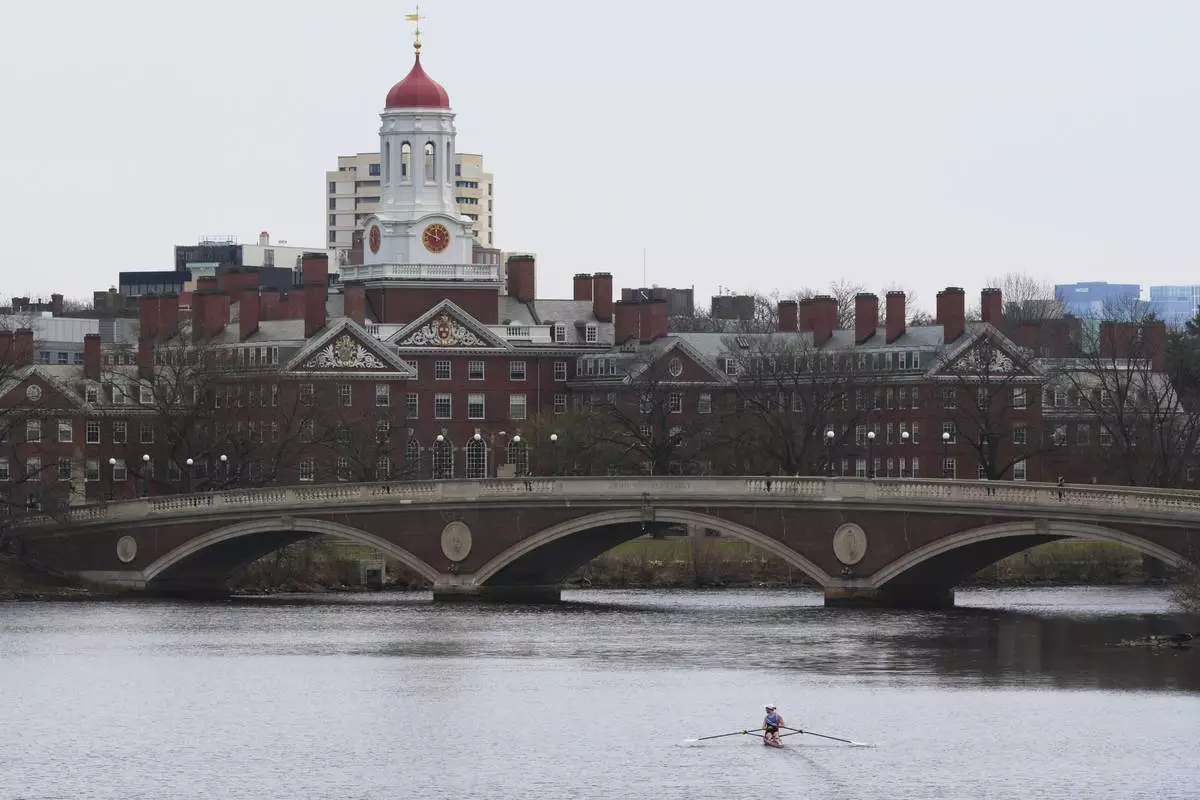
A sculler rows down the Charles River near Harvard University, at rear, Tuesday, April 15, 2025, in Cambridge, Mass. (AP Photo/Charles Krupa)
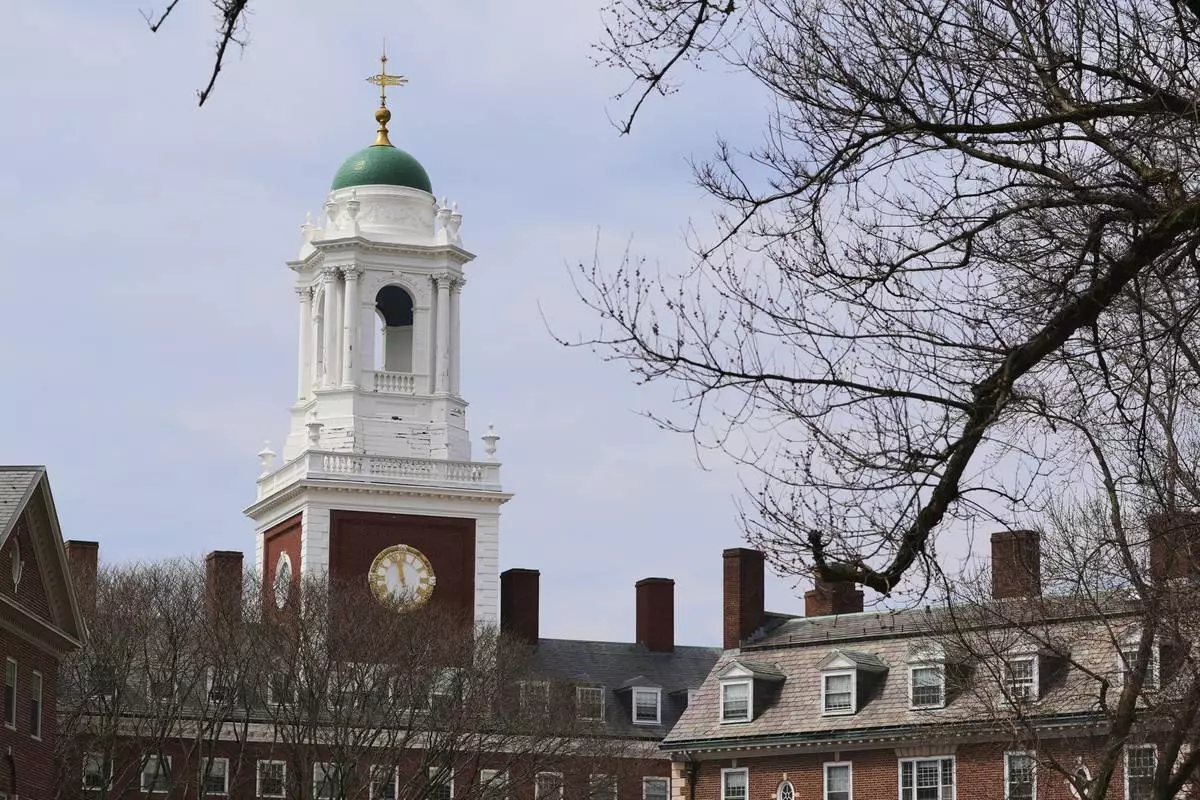
Spring buds appear on a tree near Eliot House, rear, at Harvard University, Tuesday, April 15, 2025, in Cambridge, Mass. (AP Photo/Charles Krupa)
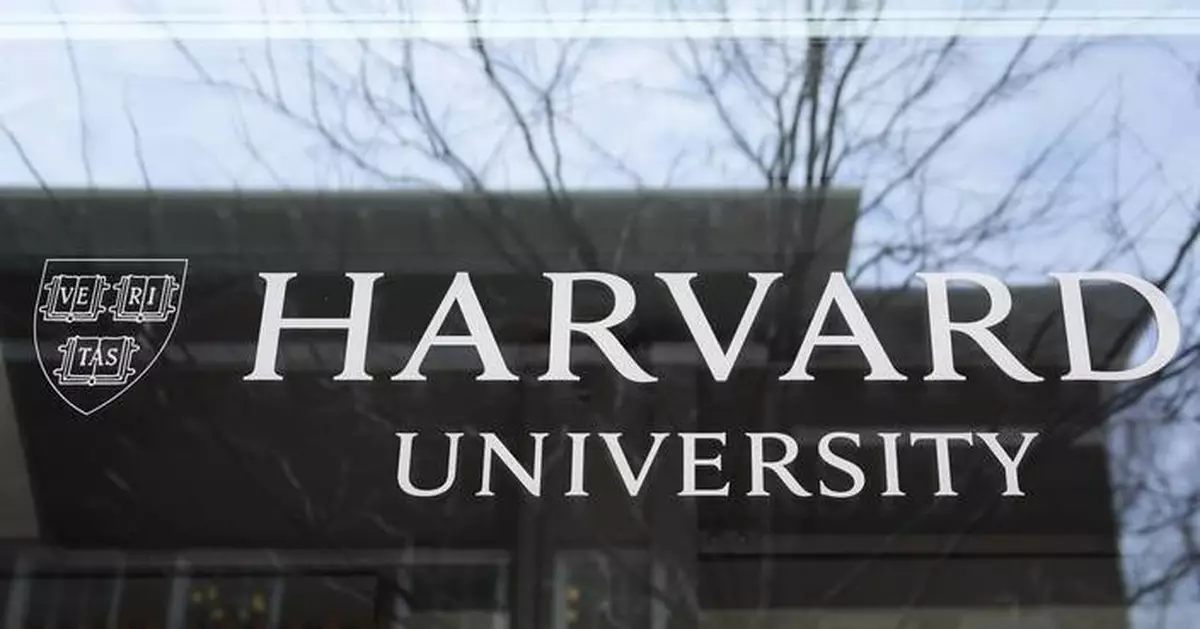
The Harvard University logo is displayed on a building at the school, Tuesday, April 15, 2025, in Cambridge, Mass. (AP Photo/Charles Krupa)
Iran eased some restrictions on its people and, for the first time in days, allowed them to make phone calls abroad via their mobile phones on Tuesday. It did not ease restrictions on the internet or permit texting services to be restored as the death toll from days of bloody protests against the state rose to at least 2,000 people, according to activists.
Although Iranians were able to call abroad, people outside the country could not call them, several people in the capital told The Associated Press.
The witnesses, who spoke on condition of anonymity for fear of reprisal, said SMS text messaging still was down and internet users inside Iran could not access anything abroad, although there were local connections to government-approved websites.
It was unclear if restrictions would ease further after authorities cut off all communications inside the country and to the outside world late Thursday.
Here is the latest:
The U.S.-based Human Rights Activists News Agency, which has been accurate in previous unrest in recent years, gave the latest death toll on Tuesday.
It said 1,847 of the dead were protesters and 135 were government-affiliated.
This came a day after the European Parliament announced it would ban Iranian diplomats and representatives.
“Iran does not seek enmity with the EU, but will reciprocate any restriction,” Foreign Minister Abbas Araghchi wrote on X on Tuesday.
He also criticized the European Parliament for not taking any significant action against Israel for the more than two-year war in Gaza that has killed more than 71,400 Palestinians, while banning Iranian diplomats after just “a few days of violent riots.”
Dutch Foreign Minister David van Weel said he summoned Iran’s ambassador to the Netherlands “to formally protest the excessive violence against peaceful protesters, large-scale arbitrary arrests, and internet shutdowns, calling for immediate restoration of internet access inside the Islamic Republic.
In a post on X, Weel also said the Dutch government supports EU sanctions against “human rights violators in Iran.”
The United Nations human rights chief is calling on Iranian authorities to immediately halt violence and repression against peaceful protesters, citing reports of hundreds killed and thousands arrested in a wave of demonstrations in recent weeks.
“The killing of peaceful demonstrators must stop, and the labelling of protesters as ‘terrorists’ to justify violence against them is unacceptable,” U.N. High Commissioner for Human Rights Volker Türk said in a statement Tuesday.
Alluding to a wave of protests in Iran in 2022, Türk said demonstrators have sought “fundamental changes” to governance in the country, “and once again, the authorities’ reaction is to inflict brutal force to repress legitimate demands for change.”
“This cycle of horrific violence cannot continue,” he added.
It was also “extremely worrying” to hear some public statements from judicial officials mentioning the prospect of the use of the death penalty against protesters through expedited judicial proceedings, Türk said.
“Iranians have the right to demonstrate peacefully. Their grievances need to be heard and addressed, and not instrumentalized by anyone,” Türk said.
Finland’s foreign minister says she is summoning the Iranian ambassador after authorities in Tehran restricted internet access.
“Iran’s regime has shut down the internet to be able to kill and oppress in silence," Elina Valtonen wrote in a social media post Tuesday, adding, “this will not be tolerated. We stand with the people of Iran — women and men alike.”
Finland is “exploring measures to help restore freedom to the Iranian people” together with the European Union, Valtonen said.
Separately, Finnish police said they believe at least two people entered the courtyard of the Iranian embassy in Helsinki without permission Monday afternoon and tore down the Iranian flag. The embassy’s outer wall was also daubed with paint.
Iranian security forces arrested what a state television report described as terrorist groups linked to Israel in the southeastern city of Zahedan.
The report, without providing additional details, said the group entered through Iran’s eastern borders and carried U.S.-made guns and explosives that the group had planned to use in assassinations and acts of sabotage.
The Israeli military did not immediately comment on the allegations.
The Nobel Peace Prize laureate hailed people who have “long warned about this repression, at great personal risk.”
“The protests in Iran cannot be separated from the long-standing, state-imposed restrictions on girls’ and women’s autonomy, in all aspects of public life including education. Iranian girls, like girls everywhere, demand a life with dignity,” Yousafzai wrote on X.
“(Iran’s) future must be driven by the Iranian people, and include the leadership of Iranian women and girls — not external forces or oppressive regimes,” she added.
Yousafzai was awarded the peace prize in 2014 at the age of 17 for her fight for girls’ education in her home country, Pakistan. She is the youngest Nobel laureate.
The French Foreign Ministry said it has “reconfigured” its embassy in Tehran after reports that the facility's nonessential staff left Iran earlier this week.
The embassy's nonessential staff left the country Sunday and Monday, French news agency Agence France-Presse reported.
The ambassador remained on site and the embassy continued to function, the ministry said late Monday night.
Associated Press writer Angela Charlton contributed from Paris.
German Chancellor Friedrich Merz said he believes the Iranian government is in its “final days and weeks,” as he renewed a call for Iranian authorities to end violence against demonstrators immediately.
“If a regime can only keep itself in power by force, then it’s effectively at the end,” Merz said Tuesday during a visit to Bengaluru, India. “I believe we are now seeing the final days and weeks of this regime. In any case, it has no legitimacy through elections in the population. The population is now rising up against this regime.”
Merz said he hoped there is “a possibility to end this conflict peacefully," adding that Germany is in close contact with the U.S. and European governments.
The Israeli military said it continues to be “on alert for surprise scenarios” due to the ongoing protests in Iran, but has not made any changes to guidelines for civilians, as it does prior to a concrete threat.
“The protests in Iran are an internal matter,” Israeli military spokesperson Brig. Gen. Effie Defrin wrote on X.
Israel attacked Iran’s nuclear program over the summer, resulting in a 12-day war that killed nearly 1,200 Iranians and almost 30 Israelis. Over the past week, Iran has threatened to attack Israel if Israel or the U.S. attacks.
Mobile phones in Iran were able to call abroad Tuesday after a crackdown on nationwide protests in which the internet and international calls were cut. Several people in Tehran were able to call The Associated Press.
The AP bureau in Dubai, United Arab Emirates, was unable to call those numbers back.
Witnesses said the internet remained cut off from the outside world. Iran cut off the internet and calls on Thursday as protests intensified.
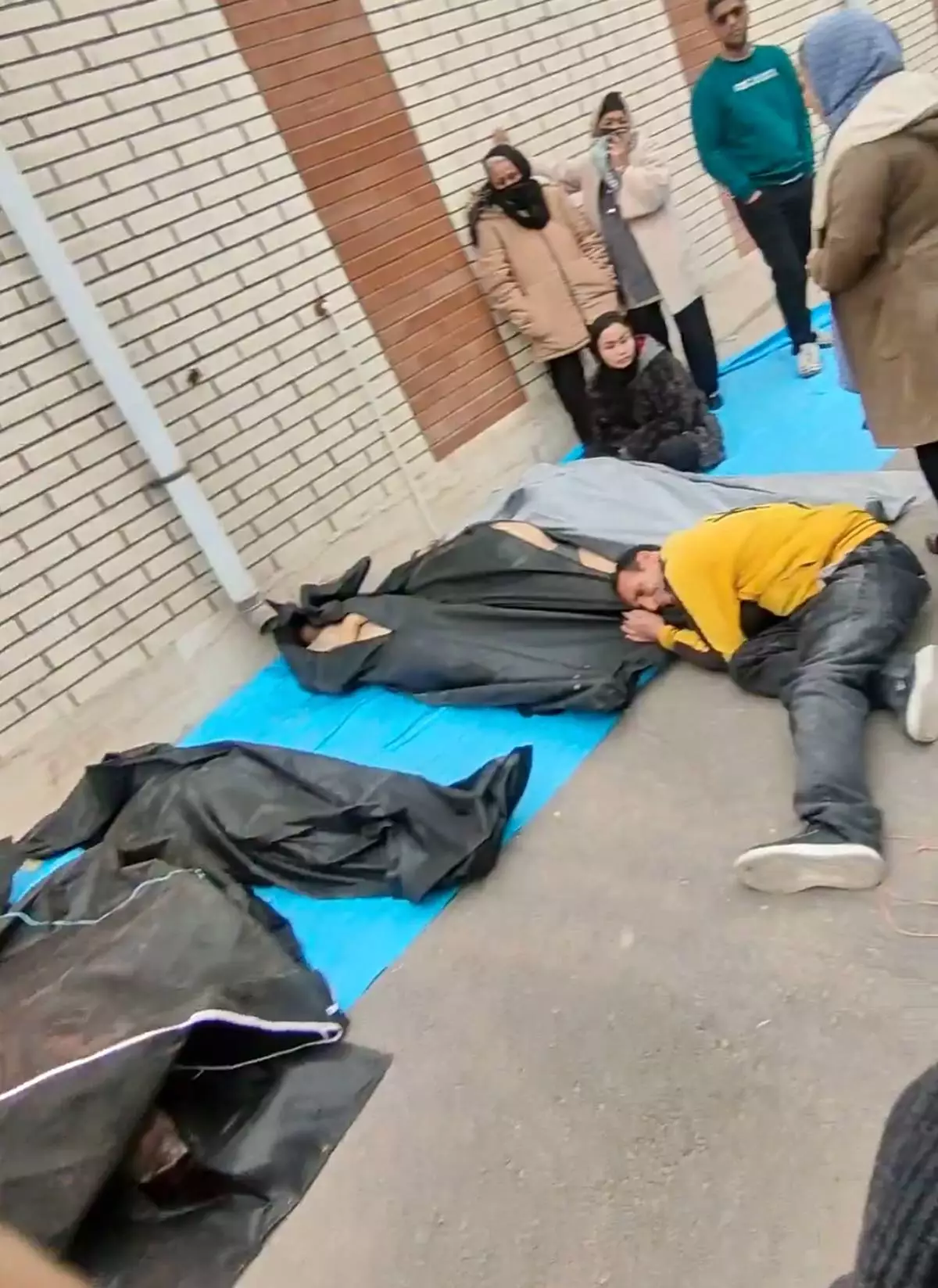
This frame grab from videos taken between Jan. 9 and Jan. 11, 2026, and circulating on social media purportedly shows images from a morgue with dozens of bodies and mourners after crackdownon the outskirts of Iran's capital, in Kahrizak, Tehran Province. (UGC via AP)
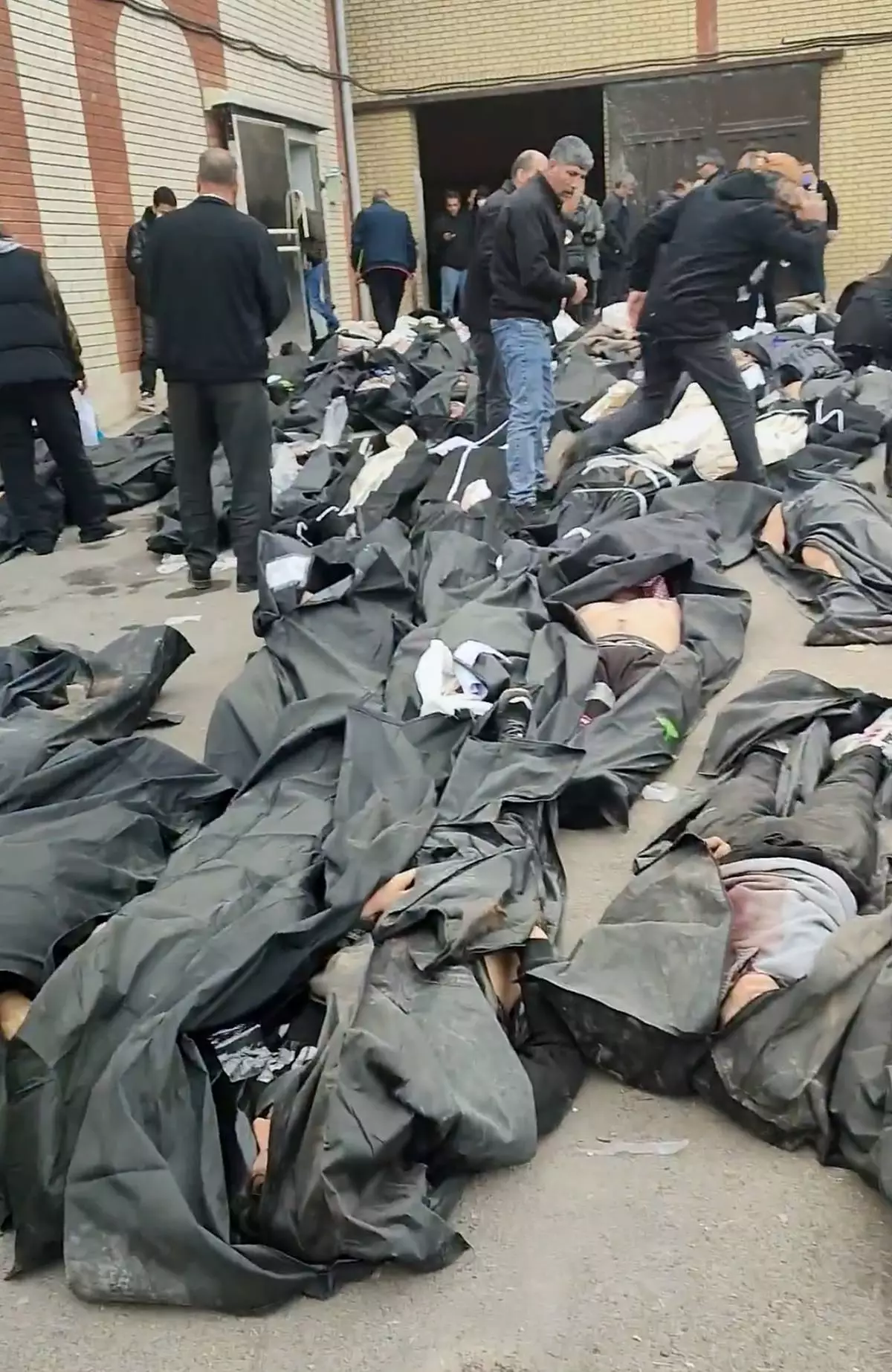
This frame grab from videos taken between Jan. 9 and Jan. 11, 2026, and circulating on social media purportedly shows images from a morgue with dozens of bodies and mourners after crackdown on the outskirts of Iran's capital, in Kahrizak, Tehran Province. (UGC via AP)
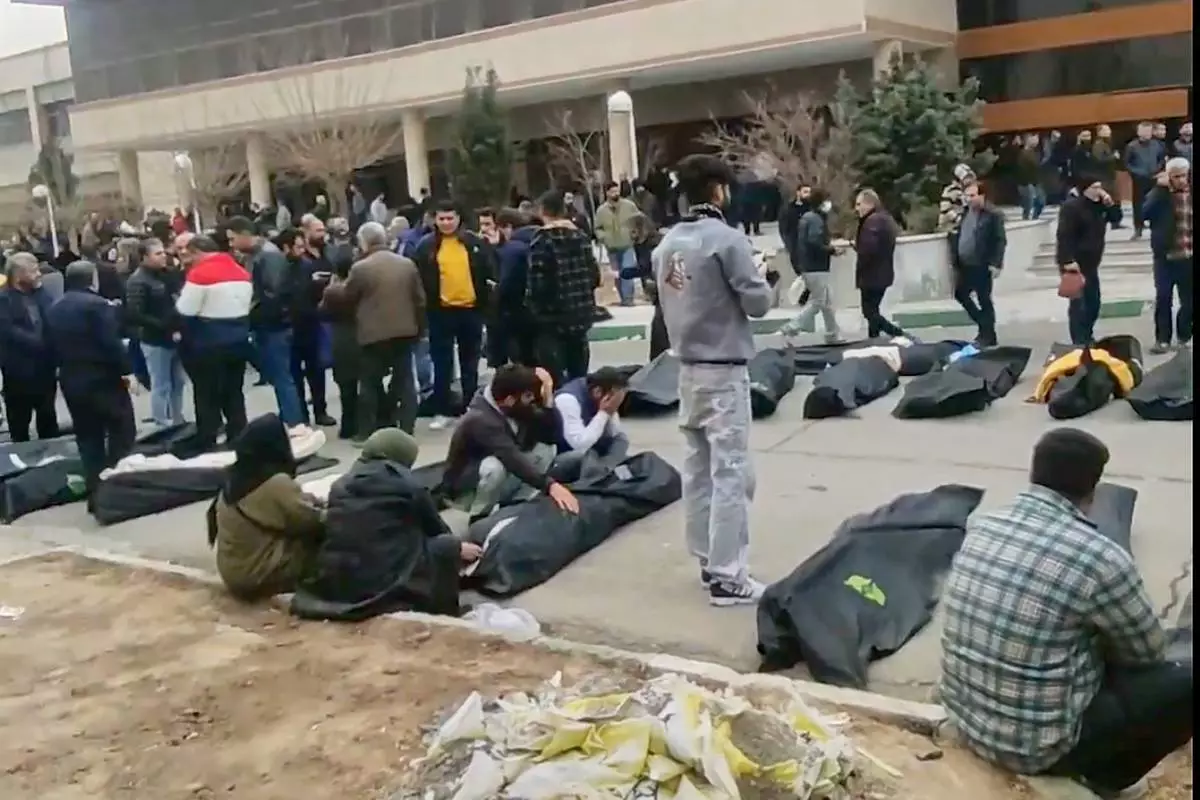
This frame grab from videos taken between Jan. 9 and Jan. 11, 2026, and circulating on social media purportedly shows images from a morgue with dozens of bodies and mourners after crackdown on the outskirts of Iran's capital, in Kahrizak, Tehran Province. (UGC via AP)
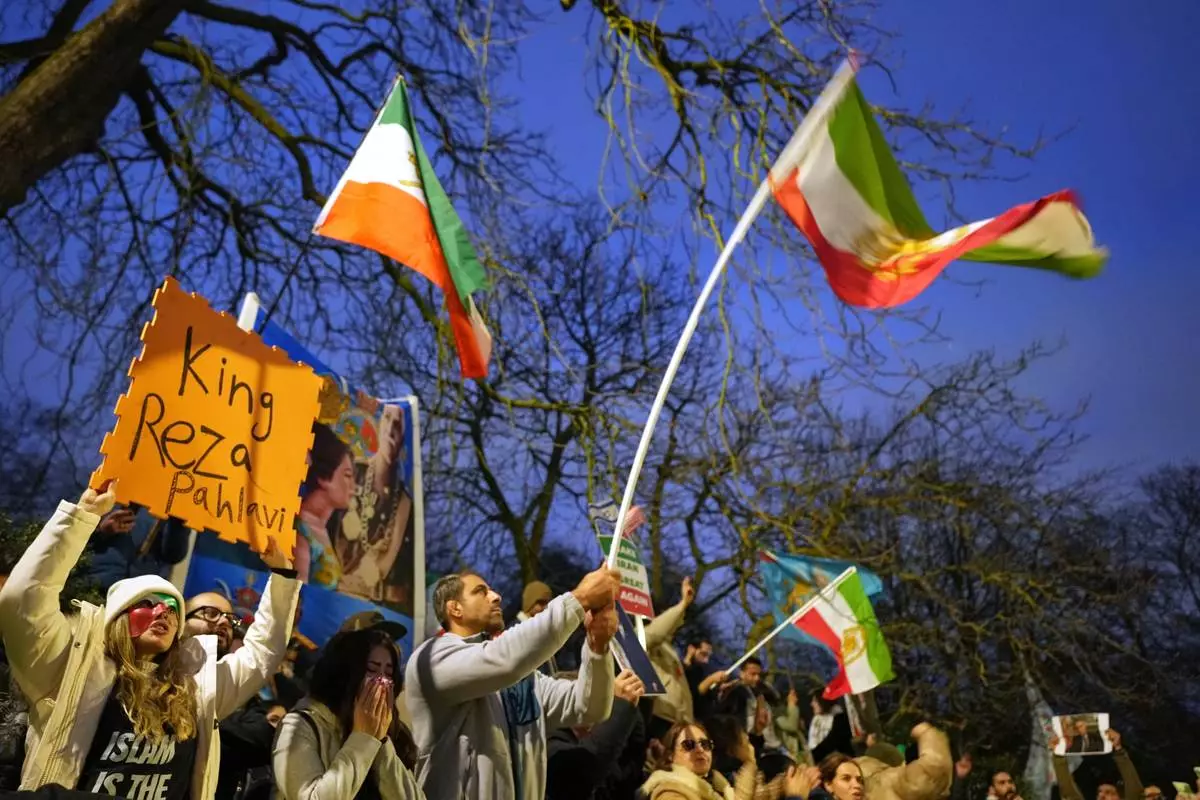
Protesters hold up placards and flags as they demonstrate outside the Iranian Embassy in London, Monday, Jan. 12, 2026. (AP Photo/Alastair Grant)
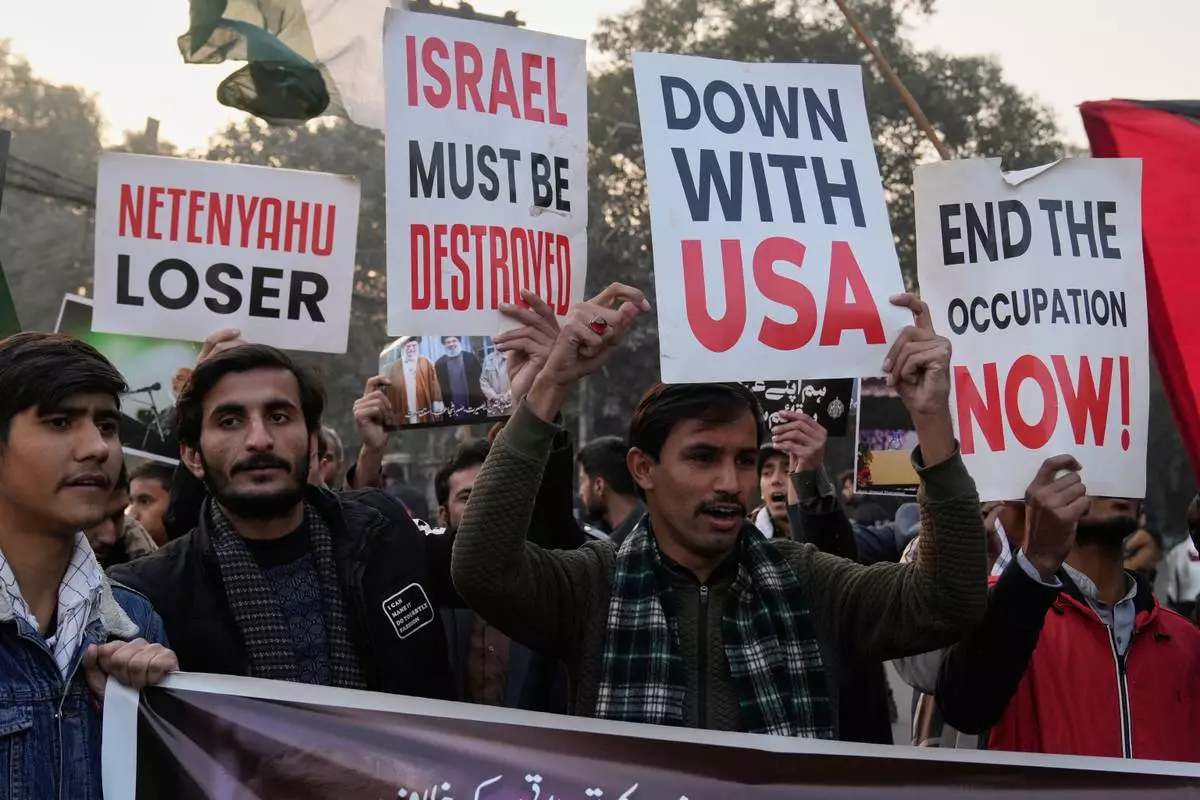
Shiite Muslims hold placards and chant slogans during a protest against the U.S. and show solidarity with Iran in Lahore, Pakistan, Sunday, Jan. 11, 2026. (AP Photo/K.M. Chaudary)
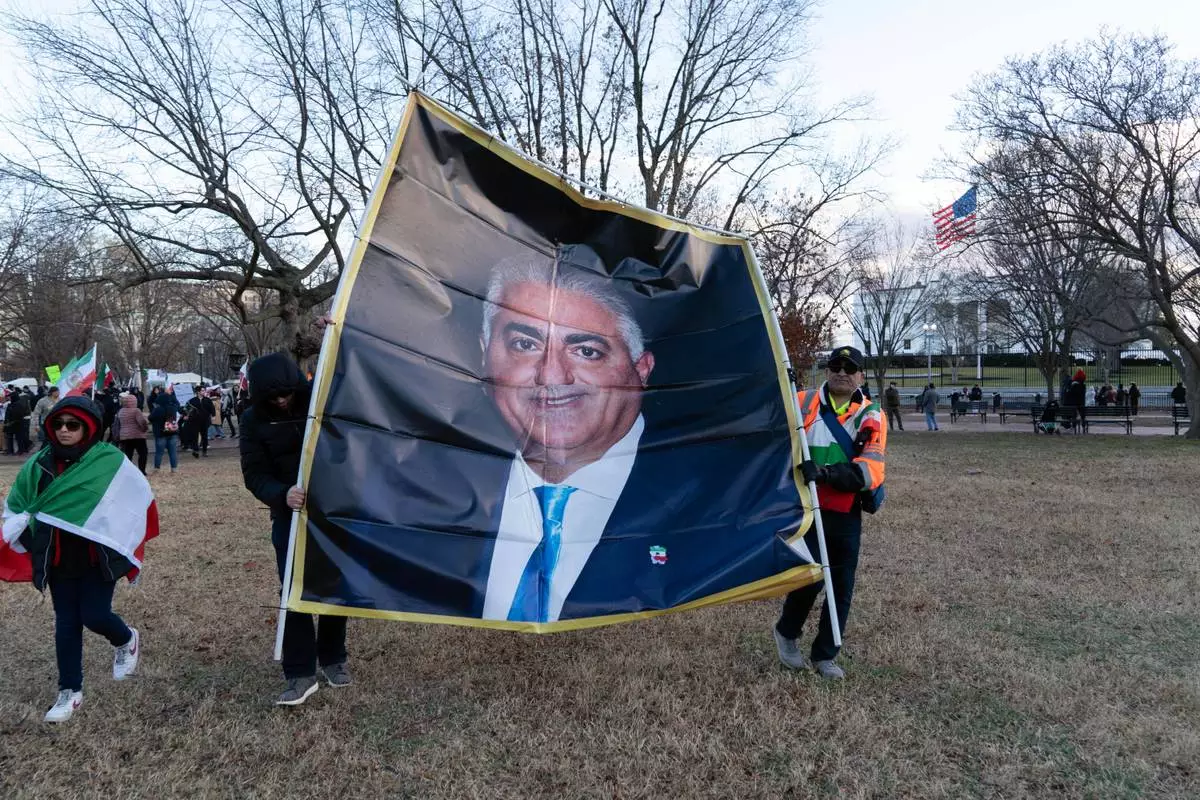
Activists carrying a photograph of Reza Pahlavi take part in a rally supporting protesters in Iran at Lafayette Park, across from the White House, in Washington, Sunday, Jan. 11, 2026. (AP Photo/Jose Luis Magana)
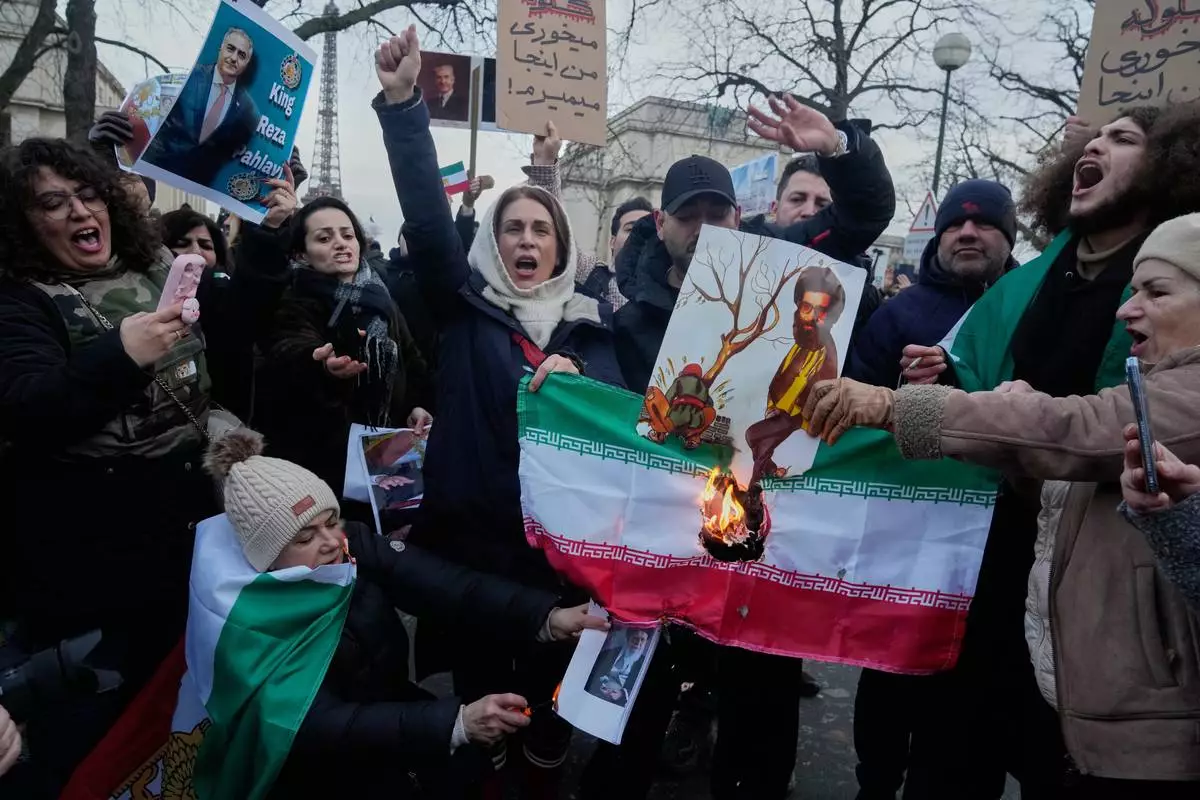
Protesters burn the Iranian national flag during a rally in support of the nationwide mass demonstrations in Iran against the government in Paris, Sunday, Jan. 11, 2026. (AP Photo/Michel Euler)
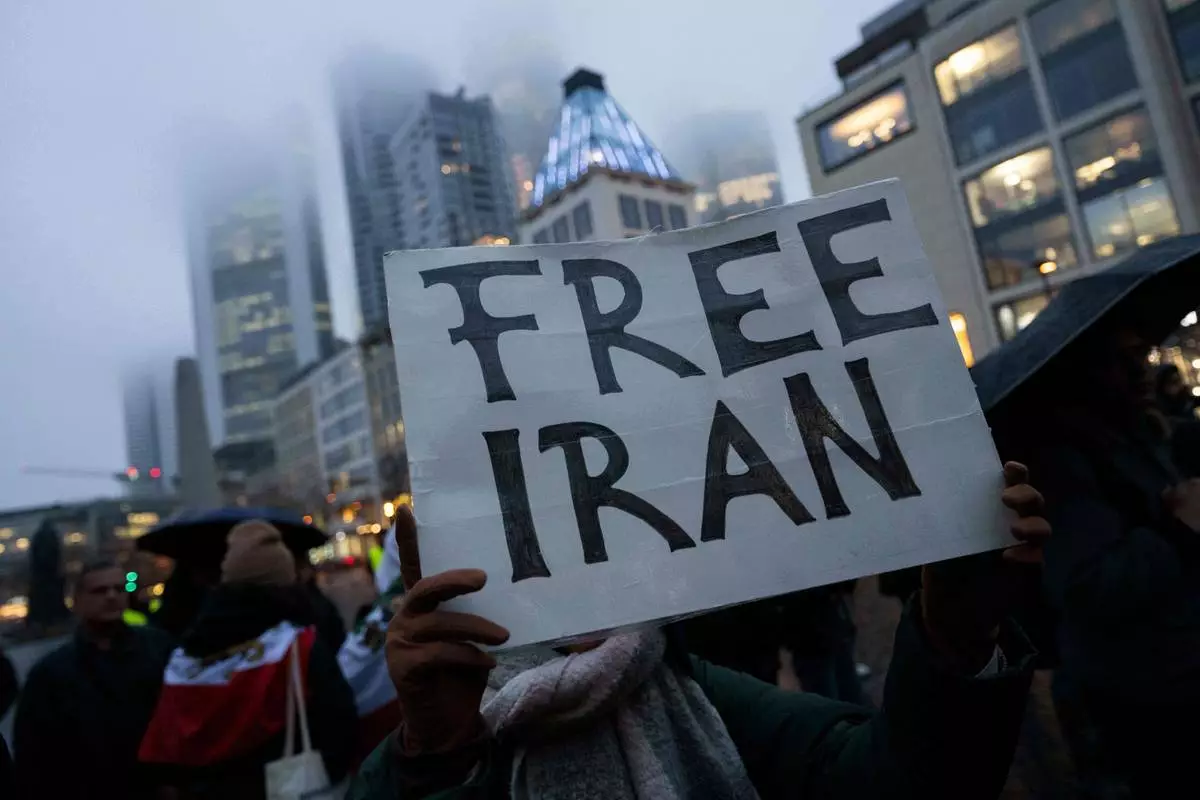
People attend a rally in Frankfurt, Germany, Monday, Jan. 12, 2026. (Boris Roessler/dpa via AP)
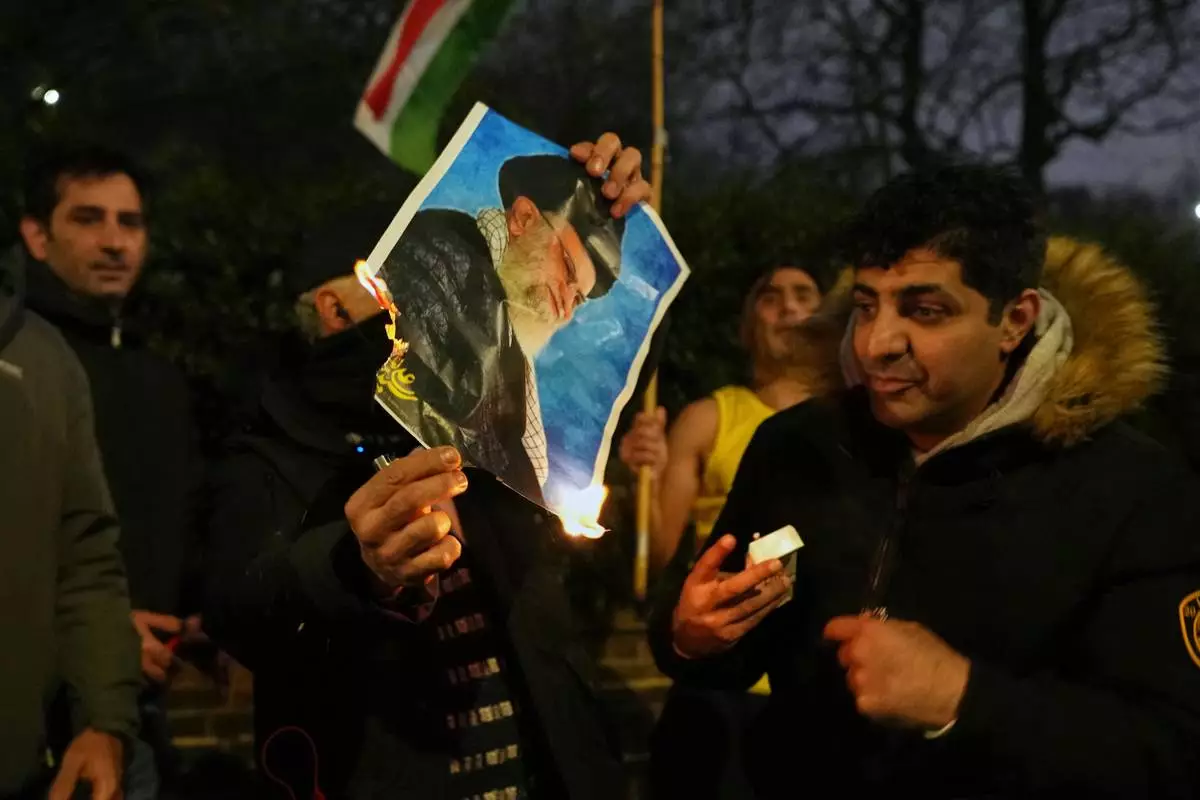
A picture of Ayatollah Ali Khamenei is set alight by protesters outside the Iranian Embassy in London, Monday, Jan. 12, 2026. (AP Photo/Alastair Grant)