MUSCAT, Oman (AP) — Iran and the United States will hold talks Saturday in Oman, their third round of negotiations over Tehran’s rapidly advancing nuclear program.
The talks follow a first round held in Muscat, Oman, where the two sides spoke face to face. They then met again in Rome last weekend before this scheduled meeting again in Muscat.
Trump has imposed new sanctions on Iran as part of his “maximum pressure” campaign targeting the country. He has repeatedly suggested military action against Iran remained a possibility, while emphasizing he still believed a new deal could be reached by writing a letter to Iran’s 85-year-old Supreme Leader Ayatollah Ali Khamenei to jump start these talks.
Khamenei has warned Iran would respond to any attack with an attack of its own.
Here’s what to know about the letter, Iran’s nuclear program and the tensions that have stalked relations between Tehran and Washington since the 1979 Islamic Revolution.
Trump dispatched the letter to Khamenei on March 5, then gave a television interview the next day in which he acknowledged sending it. He said: “I’ve written them a letter saying, ‘I hope you’re going to negotiate because if we have to go in militarily, it’s going to be a terrible thing.’”
Since returning to the White House, the president has been pushing for talks while ratcheting up sanctions and suggesting a military strike by Israel or the U.S. could target Iranian nuclear sites.
A previous letter from Trump during his first term drew an angry retort from the supreme leader.
But Trump’s letters to North Korean leader Kim Jong Un in his first term led to face-to-face meetings, though no deals to limit Pyongyang’s atomic bombs and a missile program capable of reaching the continental U.S.
Oman, a sultanate on the eastern edge of the Arabian Peninsula, hosted the first round of talks between Iranian Foreign Minister Abbas Araghchi and U.S. Mideast envoy Steve Witkoff. The two men met face to face after indirect talks and immediately agreed to this second round in Rome.
Witkoff later made a television appearance in which he suggested 3.67% enrichment for Iran could be something the countries could agree on. But that’s exactly the terms set by the 2015 nuclear deal struck under U.S. President Barack Obama, from which Trump unilaterally withdrew America.
Witkoff hours later issued a statement underlining something: “A deal with Iran will only be completed if it is a Trump deal.” Araghchi and Iranian officials have latched onto Witkoff’s comments in recent days as a sign that America was sending it mixed signals about the negotiations.
Yet the Rome talks ended up with the two sides agreeing to starting expert-level talks this Saturday. Analysts described that as a positive sign, though much likely remains to be agreed before reaching a tentative deal.
Iran has insisted for decades that its nuclear program is peaceful. However, its officials increasingly threaten to pursue a nuclear weapon. Iran now enriches uranium to near weapons-grade levels of 60%, the only country in the world without a nuclear weapons program to do so.
Under the original 2015 nuclear deal, Iran was allowed to enrich uranium up to 3.67% purity and to maintain a uranium stockpile of 300 kilograms (661 pounds). The last report by the International Atomic Energy Agency on Iran’s program put its stockpile at 8,294.4 kilograms (18,286 pounds) as it enriches a fraction of it to 60% purity.
U.S. intelligence agencies assess that Iran has yet to begin a weapons program, but has “undertaken activities that better position it to produce a nuclear device, if it chooses to do so.”
Ali Larijani, an adviser to Iran’s supreme leader, has warned in a televised interview that his country has the capability to build nuclear weapons, but it is not pursuing it and has no problem with the International Atomic Energy Agency’s inspections. However, he said if the U.S. or Israel were to attack Iran over the issue, the country would have no choice but to move toward nuclear weapon development.
“If you make a mistake regarding Iran’s nuclear issue, you will force Iran to take that path, because it must defend itself,” he said.
Iran was once one of the U.S.’s top allies in the Mideast under Shah Mohammad Reza Pahlavi, who purchased American military weapons and allowed CIA technicians to run secret listening posts monitoring the neighboring Soviet Union. The CIA had fomented a 1953 coup that cemented the shah’s rule.
But in January 1979, the shah, fatally ill with cancer, fled Iran as mass demonstrations swelled against his rule. The Islamic Revolution followed, led by Grand Ayatollah Ruhollah Khomeini, and created Iran’s theocratic government.
Later that year, university students overran the U.S. Embassy in Tehran, seeking the shah’s extradition and sparking the 444-day hostage crisis that saw diplomatic relations between Iran and the U.S. severed. The Iran-Iraq war of the 1980s saw the U.S. back Saddam Hussein. The “Tanker War” during that conflict saw the U.S. launch a one-day assault that crippled Iran at sea, while the U.S. later shot down an Iranian commercial airliner that the American military said it mistook for a warplane.
Iran and the U.S. have see-sawed between enmity and grudging diplomacy in the years since, with relations peaking when Tehran made the 2015 nuclear deal with world powers. But Trump unilaterally withdrew America from the accord in 2018, sparking tensions in the Mideast that persist today.
Associated Press writer Amir Vahdat in Tehran, Iran, contributed to this report.
The Associated Press receives support for nuclear security coverage from the Carnegie Corporation of New York and Outrider Foundation. The AP is solely responsible for all content.
Additional AP coverage of the nuclear landscape: https://apnews.com/projects/the-new-nuclear-landscape/
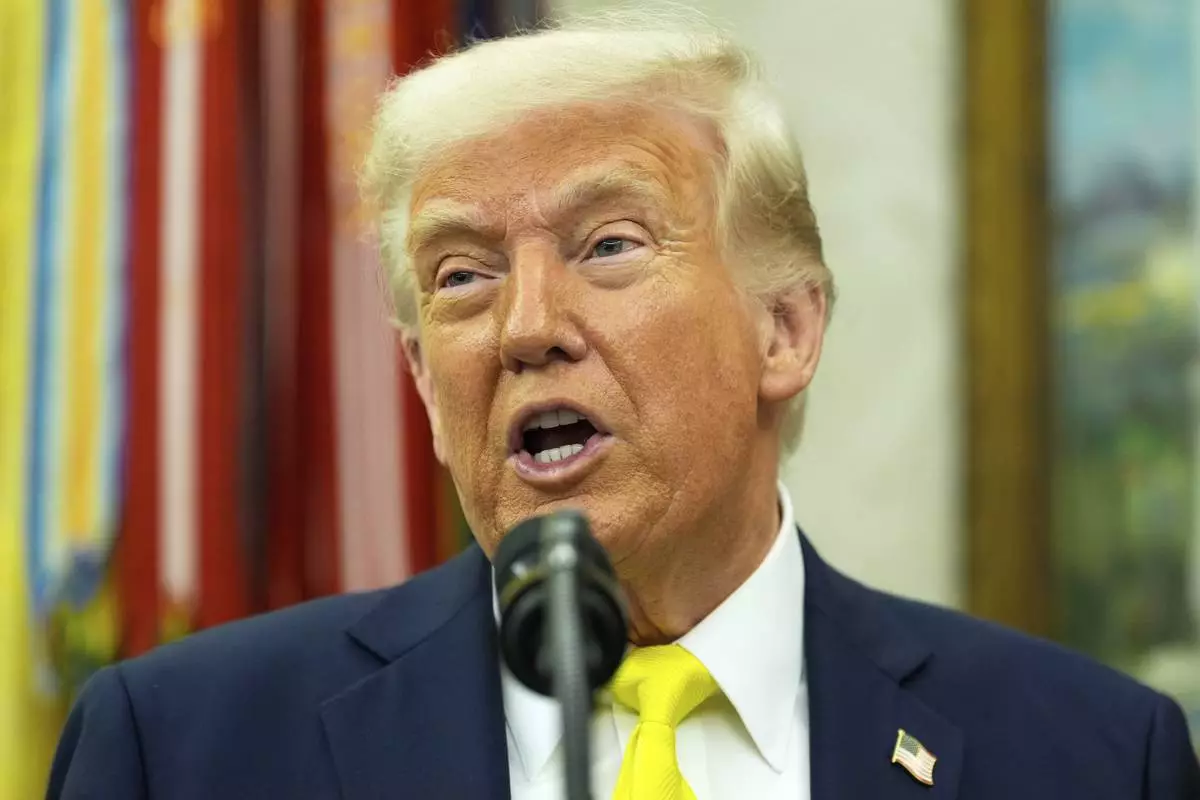
President Donald Trump speaks with reporters during a swearing in ceremony for Dr. Mehmet Oz to be Administrator of the Centers for Medicare and Medicaid Services, in the Oval Office of the White House, Friday, April 18, 2025, in Washington. (AP Photo/Alex Brandon)
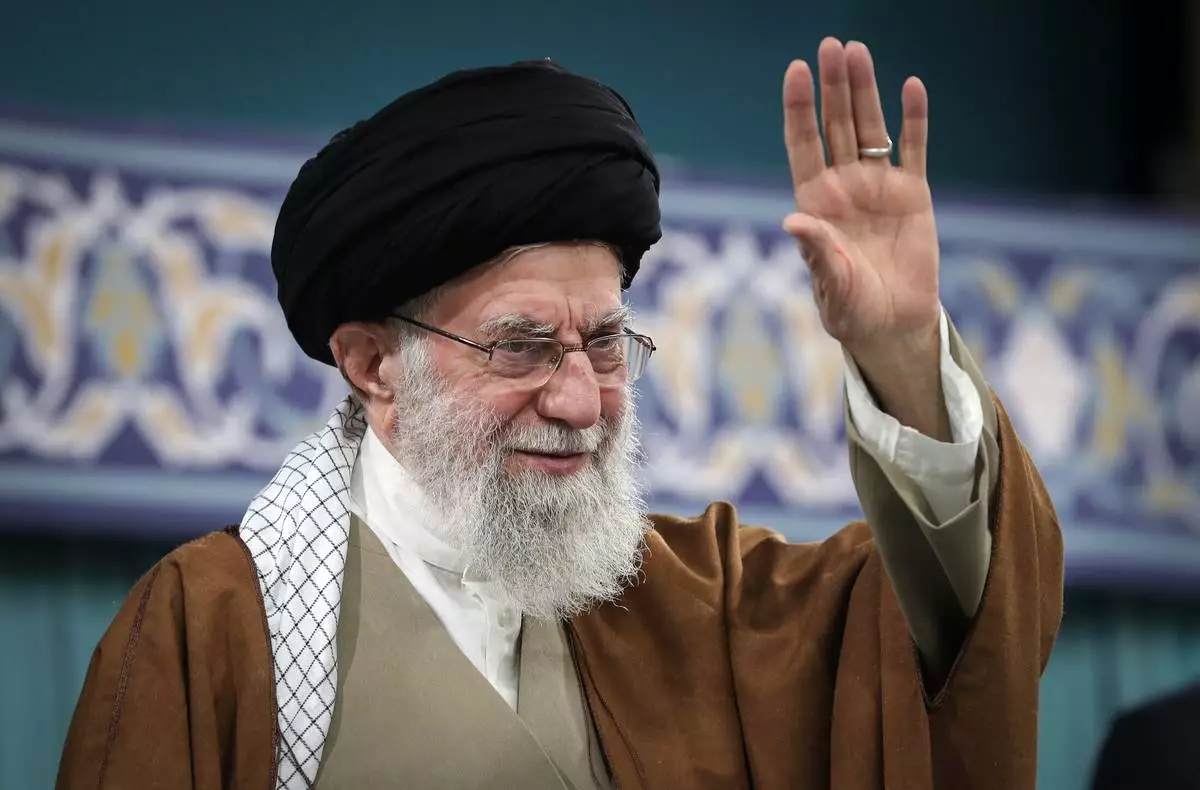
FILE - In this photo released by the office of the Iranian supreme leader, Supreme Leader Ayatollah Ali Khamenei waves to the crowd during a meeting with officials, Islamic countries' ambassador to Iran and a group of people in Tehran, Iran, March 31, 2025. (Office of the Iranian Supreme Leader via AP, File)
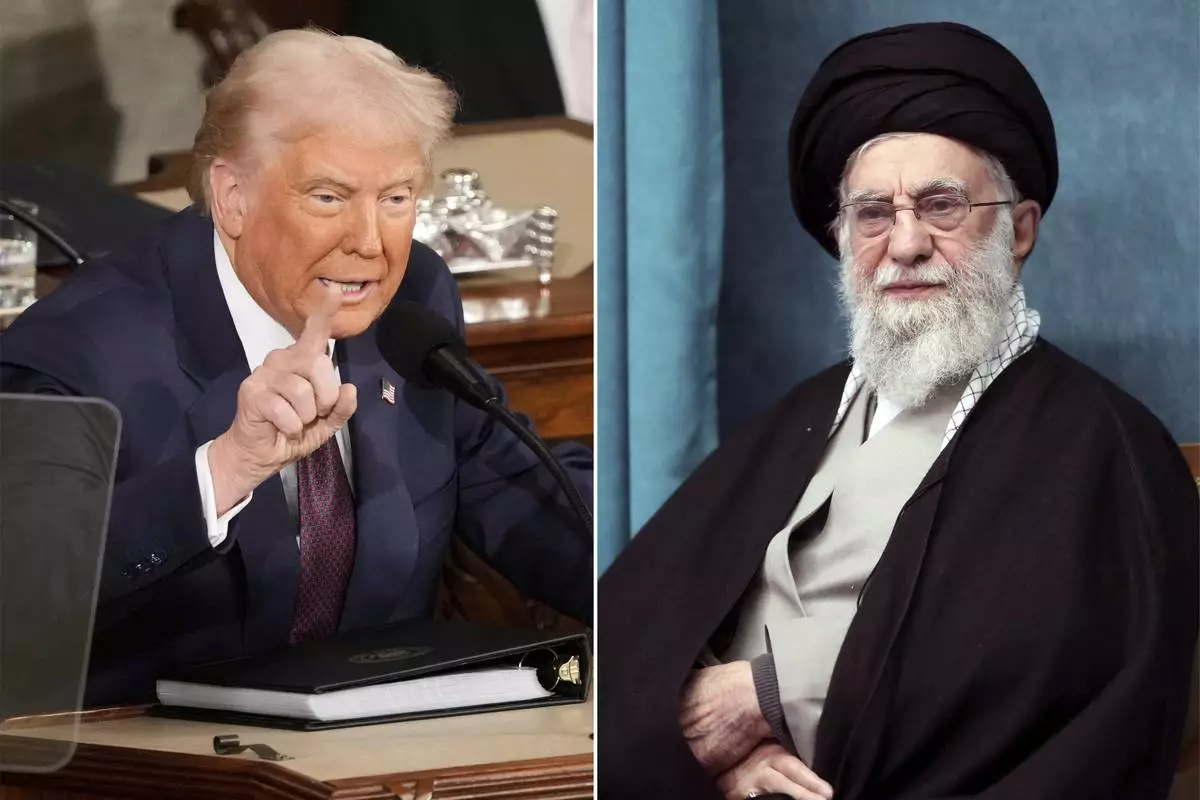
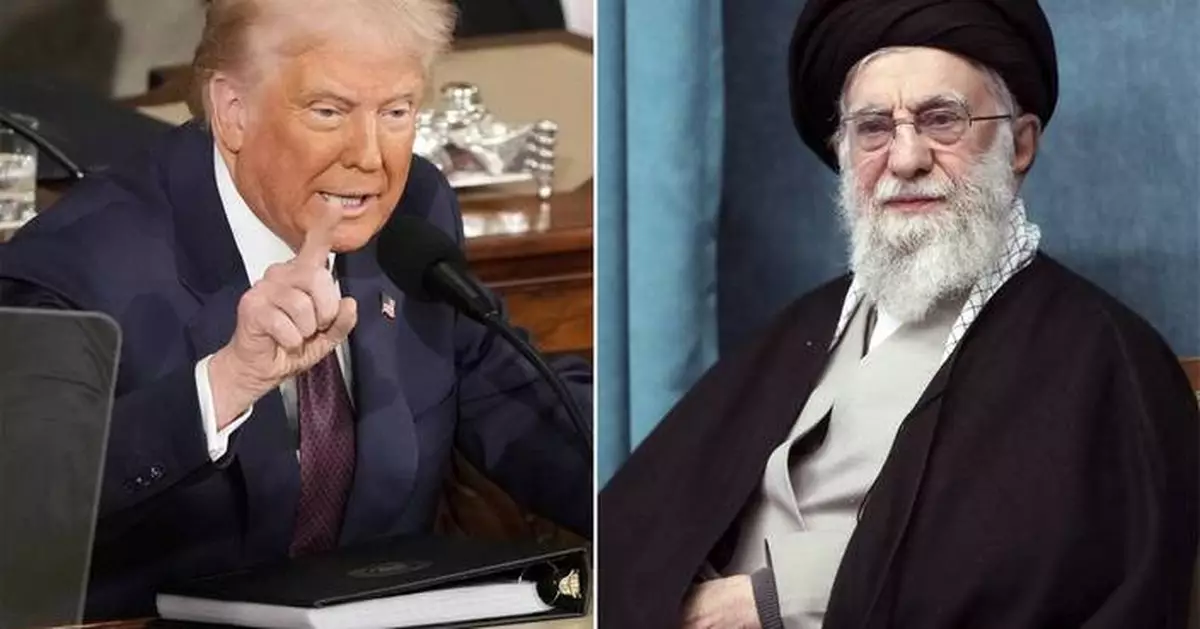
FILE - This combination image of pictures show President Donald Trump, left, addressing a joint session of Congress at the Capitol in Washington, March 4, 2025, and a handout of Supreme Leader Ayatollah Ali Khamenei attending a ceremony in Tehran, Iran, March 8, 2025. (AP Photo/Ben Curtis - Office of the Iranian Supreme Leader via AP, File)