Skip to Content Facebook Feature Image

Nigerian expert sees key role of infrastructure after gov't declaration of national emergency on food security

China

China

China

Nigerian expert sees key role of infrastructure after gov't declaration of national emergency on food security

2025-04-20 18:19 Last Updated At:04-21 14:17

A Nigerian agricultural economist has stressed that food security relies on robust production paired with improved infrastructure, as he urged better logistics and storage to drive sustainable growth and regional impact.

Economist Kamaaldeen Raji made the comment days after Nigerian President Bola Tinubu on Monday declared a national emergency on food security while opening the 6th African Regional Conference on Irrigation and Drainage in Abuja, urging expanded irrigation infrastructure nationwide.

This call comes as Nigeria grapples with a food security crisis, with 33 million people facing acute food insecurity in 2025, a number projected to nearly double, according to the United Nations World Food Programme.

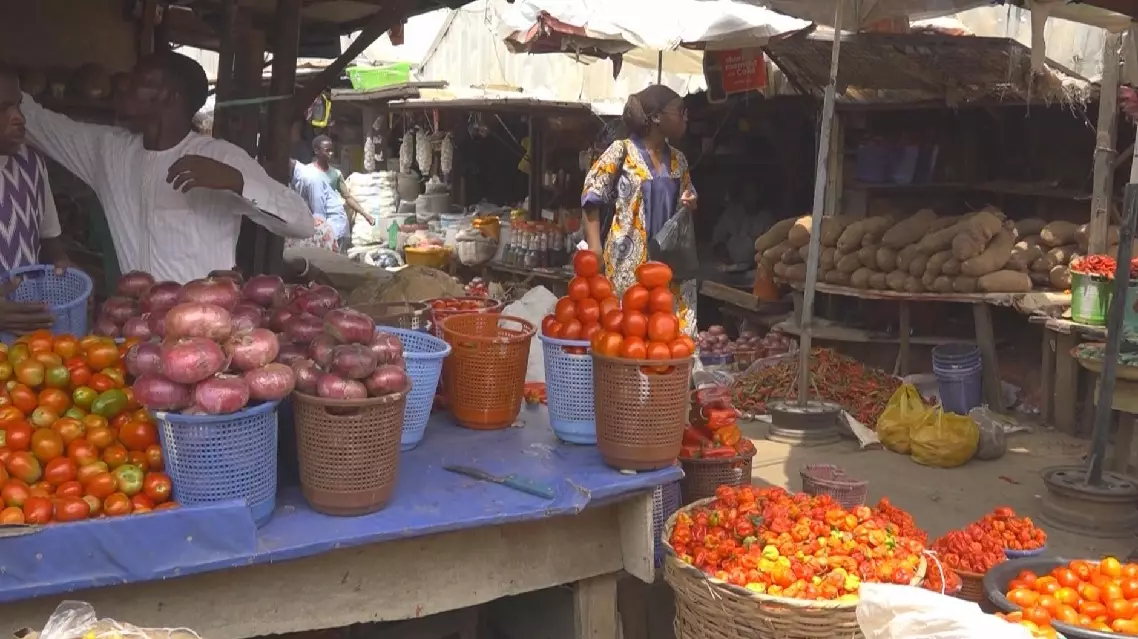
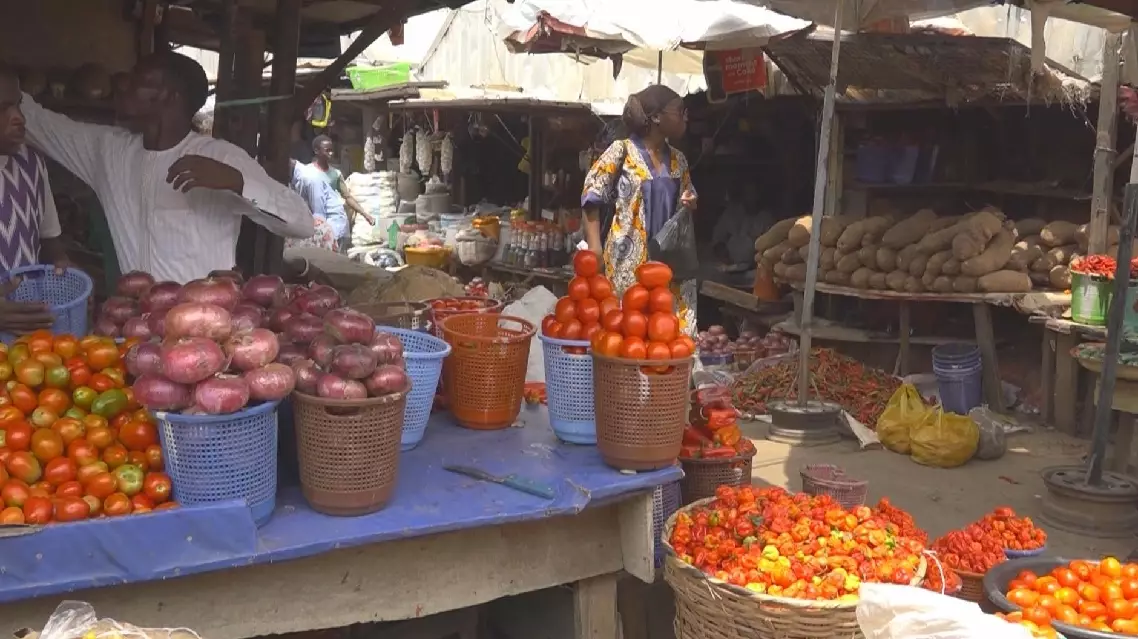
In the capital Abuja, soaring food prices have further crippled local businesses, highlighting the urgent need for systemic solutions.

"The price has really gone up compared to before. I used to buy like half trailers of beans before, and each bag for 45,000, and I would sell them in less than two weeks. Now I can't even buy up to 50 bags and each bag of bean is now 105,000. With the increase in price now most people don't even buy like before," said Mohammed Sunusi, a beans trader with nearly 20 years of experience.

Raji attributes the country's food security challenges to deep-rooted structural issues.

"Food security is beyond production. It is ensuring that there is a balanced table for both production and consumption. So if we get it right at the right time, then we make it a system that we continue to grow over the years, we should be full sufficient as a nation," he said.

Economic hardship, record-high inflation, climate change, and ongoing violence in the northeastern states are seen as key factors exacerbating the crisis. Experts are urging long-term investment in storage, transportation, and collaborations with the private sector to address these challenges in a sustainable manner.

"We need to check infrastructure. And if we want to say the truth without mincing words, we'll say that there is a lot of [gaps] in infrastructure. And if I say infrastructure, I'm talking to storage and logistic wise. If all of these are matched together, and the government is playing their role very well, then we will be able to be food secure, and not just being food secure, we'll be able to even affect positively all the nations across our borders in Africa today," Raji added.
Nigerian expert sees key role of infrastructure after gov't declaration of national emergency on food security
Nigerian expert sees key role of infrastructure after gov't declaration of national emergency on food security

Strong infrastructure key to lasting food security: Nigerian expert

Strong infrastructure key to lasting food security: Nigerian expert
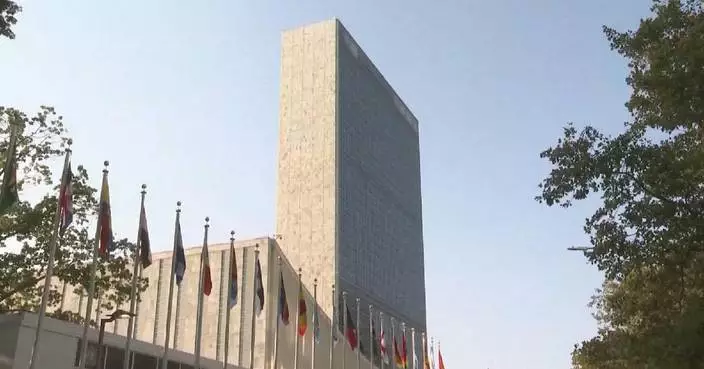
The United States cannot legitimize an operation that attacked Venezuela and captured its president, a Chinese scholar said Sunday.

On Saturday, the United States launched a large-scale strike on Venezuela, during which Venezuelan President Nicolas Maduro and his wife were 'captured and flown out of Venezuela' according to a post by U.S. President Donald Trump on his Truth Social account.

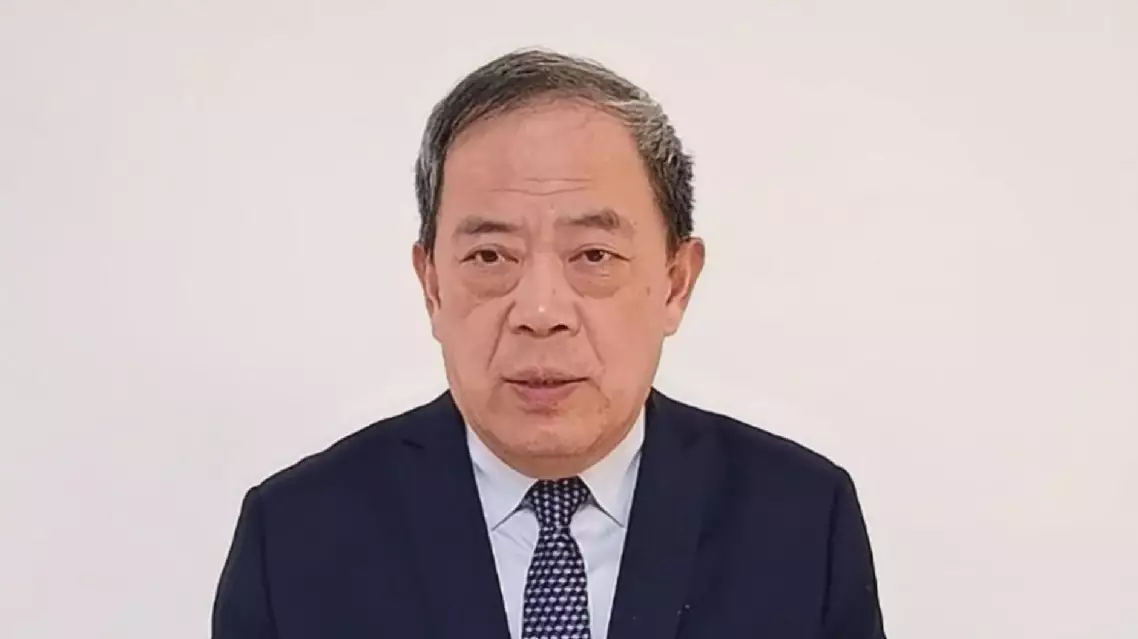
Teng Jianqun, director of the Center for Diplomatic Studies at Hunan Normal University, said in an interview with China Global Television Network (CGTN) that the aim of this operation is to take full control of Venezuela’s natural resources.

"I don't think the United States can legitimize this operation to take custody of the president of Venezuela. And also I don't think the United States can legitimize its any action in taking the oil reserves of that country. This is actually a very dangerous game played by the Trump administration. And of course, the United States would like to take full control of that country and to take full control of the natural resources, especially the large reserve of oil in Venezuela," said Teng.

Teng said Venezuela is not an isolated case but a common practice by the United States. The United States launched an invasion of Panama on Dec. 20, 1989, which continued until January 1990, with the stated objective of capturing Panamanian strongman Manuel Noriega on charges of drug trafficking and organized crime.

"We still remember the so-called sentence of the former president of Panama in the late 1980s. And this time, the president of Venezuela will be under some judicial condition (judicial proceedings) for the so-called drug trafficking and some other crimes. So I think this is not a single case for the Venezuela country, but also this is actually a practice by the United States -- to use force, to use so-called justice under law against any leaders in Latin America and the Caribbean waters," he said.

US cannot legitimize operation against Venezuela: Chinese scholar

US cannot legitimize operation against Venezuela: Chinese scholar

Recommended Articles