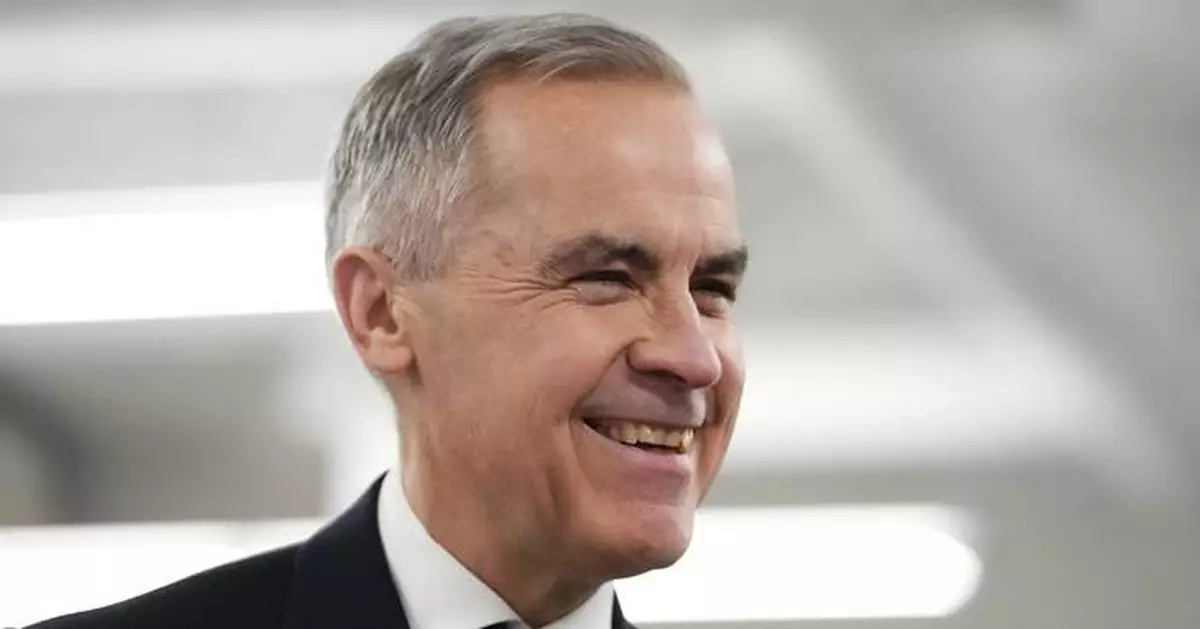
TORONTO (AP) — Mark Carney's political career is only months old, and it's already been a roller-coaster ride. The former central banker appeared destined to become one of Canada's shortest-serving prime ministers until U.S. President Donald Trump picked a fight with the neighboring country.
Carney, who was sworn in on March 14 following Justin Trudeau's resignation and a Liberal Party leadership race, now leads in the polls heading into the April 28 parliamentary election, marking a dramatic turnaround for a party that seemed destined for a crushing defeat until Trump started attacking Canada's economy and sovereignty almost daily.
Click to Gallery
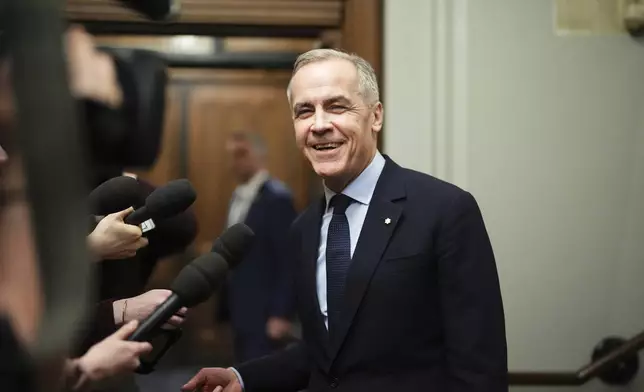
FILE - Canada Liberal Leader Mark Carney talks to the media as he leaves the prime minister's office and makes his way to a caucus meeting in Ottawa on March 10, 2025. (Sean Kilpatrick/The Canadian Press via AP, File)
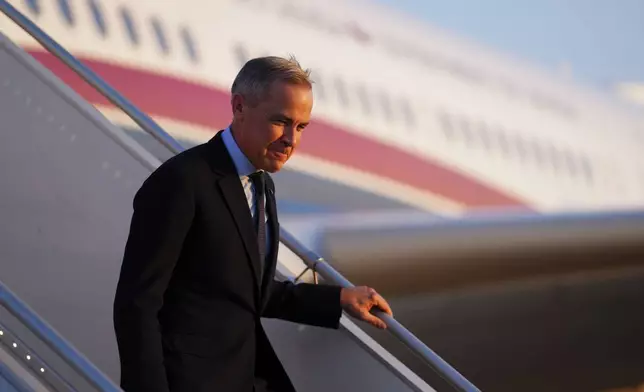
FILE - Canada's Prime Minister Mark Carney arrives in Paris on March 17, 2025. (Sean Kilpatrick/The Canadian Press via AP, File)
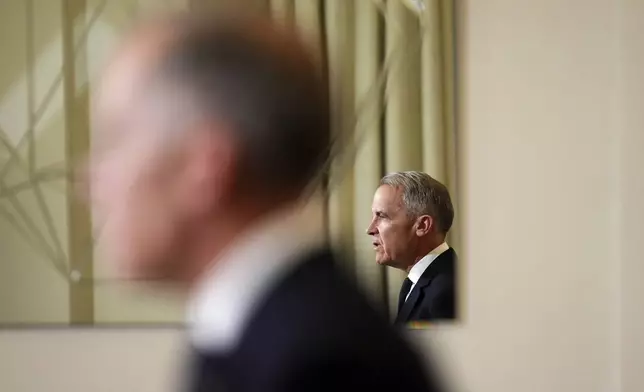
FILE - Canada's Prime Minister Mark Carney, reflected in a mirror, speaks to media during a press conference at Canada House in London on March 17, 2025. (Sean Kilpatrick/The Canadian Press via AP, File)
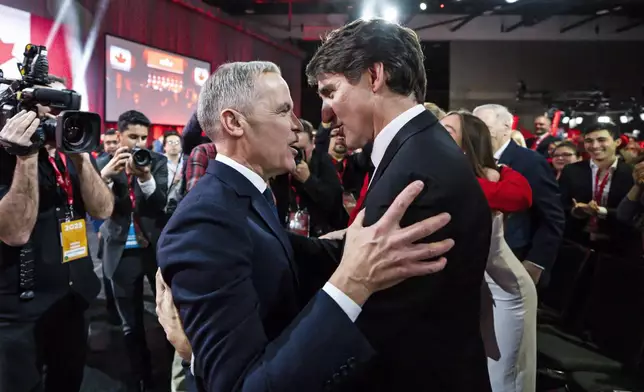
FILE - Mark Carney, Leader of the Liberal Party of Canada, embraces Prime Minister Justin Trudeau after being announced the winner at the Liberal Leadership Event in Ottawa, Ontario, March 9, 2025. (Justin Tang/The Canadian Press via AP, File)
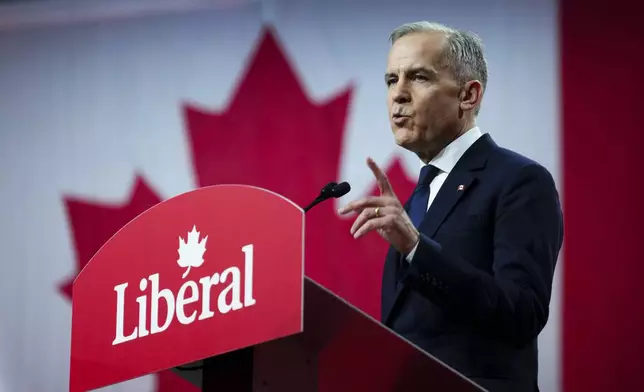
FILE - Liberal Party of Canada Leader Mark Carney delivers his speech after being announced as the winner of the party leadership in Ottawa, Ontario, March 9, 2025. (Sean Kilpatrick/The Canadian Press via AP, File)
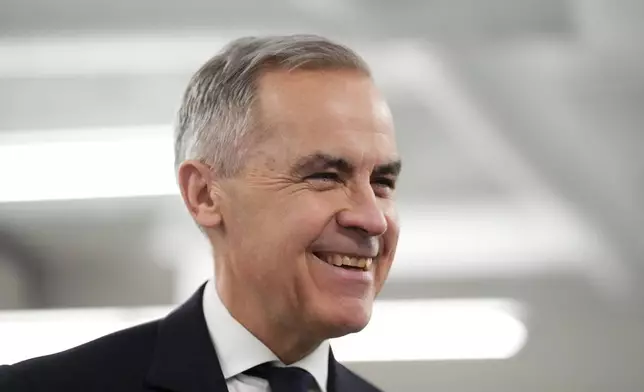
FILE - Canada Liberal Leader Mark Carney visits the Sheridan College Police Foundations department in Brampton, Ontario, Canada, April 10, 2025. (Sean Kilpatrick/The Canadian Press via AP, File)
Trump’s trade war and threats to make Canada the 51st U.S. state have infuriated Canadians and led to a surge in nationalism that has helped the Liberals flip the election narrative.
In a mid-January poll by Nanos, Liberals trailed the Conservative Party by 47% to 20%. In the latest Nanos poll, which was conducted during a three-day period that ended April 20, the Liberals led by eight percentage points. The January poll had a margin of error 3.1 points, while the latest poll had a 2.7-point error margin.
“Timing is everything in politics, and Carney entered the political arena at a most favorable time,” said Daniel Béland, a political science professor at McGill University in Montreal.
Carney's opponent is Conservative leader Pierre Poilievre, a career politician and firebrand populist who has campaigned with Trump-like swagger, even taking a page from the “America First” president by adopting the slogan “Canada First.”
“This election is a test about whether Canada will embrace or reject populism," Béland said, suggesting many voters view Carney as reassuring because of his experience and calm.
“Without the Trump effect, the Conservatives would probably be in a much stronger position in the polls right now," he said. "If Trump wasn’t currently in the White House, it would be hard to imagine the Liberals being the favorites in this federal race, considering how unpopular they were just a few months ago.”
Carney navigated crises when he ran Canada’s central bank and when he later became the first non-U.K. citizen to run the Bank of England since its founding in 1694.
His Bank of England appointment won bipartisan praise in the United Kingdom, after Canada recovered from the 2008 financial crisis faster than many other countries.
Former U.S. Treasury Secretary Henry Paulson called it “extraordinary” that a country would choose a foreigner to head its central bank, and that it's a mark of how admired Carney is.
"He is calm and cool in a crisis,” Paulson said. “He’s a clear thinker and he understands finance cold. He’s very well prepared.”
Carney, 60, is credited with keeping money flowing through the Canadian economy by acting quickly in cutting interest rates to their lowest level ever, working with bankers to sustain lending through the financial crisis and, critically, letting the public know that rates would remain low so they would keep borrowing.
He was the first central banker to commit to keeping them at a historic-low level for a definite time — a step the U.S. Federal Reserve would follow.
Carney also helped manage the worst impacts of Brexit in the U.K. Paulson said that Carney has the “perfect background” for these challenging times.
“Everything he’s done, he’s excelled at. Every job — the Bank of Canada, the Bank of England,” Paulson said. “I don’t know anyone who has dealt with him that doesn’t respect him. Whether they agree or disagree with him, they respect him. He’s got a very, very nice manner.”
Both Conservative and Liberal prime ministers tried to make Carney their finance minister, the second-most powerful position in Canada's government. Former Conservative Prime Minister Stephen Harper named Carney the Bank of Canada governor and later offered to make him finance minister. Trudeau, Carney's Liberal predecessor, long wanted him as his finance minister.
Carney is a former Goldman Sachs executive. He worked for 13 years in London, Tokyo, New York and Toronto before being appointed deputy governor of the Bank of Canada in 2003.
He was born in Fort Smith, in Canada’s remote Northwest Territories. When he was 6, his family moved to Edmonton, where his mother taught school and his father became a professor of education history at the University of Alberta.
Carney earned a partial scholarship to Harvard University, where he was the backup goalie on the hockey team. Influenced by John Kenneth Galbraith, who pioneered the popular notion that economics should be accessible to the masses, Carney took up economics.
A married father of four, Carney earned a bachelor’s degree in economics from Harvard in 1988, and master’s and doctoral degrees in economics from Oxford University.
Carney has said that Canada's close friendship with the U.S. has ended, and he squarely blamed Trump.
Trump mocked Carney’s predecessor by calling him Governor Trudeau. He hasn't trolled Carney. But White House Press Secretary Karoline Leavitt said this month that Trump hadn't changed his position that Canada “would benefit greatly by becoming the 51st state.”
Carney said that the 80-year period when the U.S. embraced the mantle of global economic leadership and forged alliances rooted in trust and mutual respect is over.
“There is no going back. We in Canada will have to build a new relationship with the United States,” he said.
If elected, Carney said that he would accelerate renegotiations of the free trade deal with the U.S. in an effort to end the uncertainty hurting both economies.
“President Trump is trying to fundamentally restructure the international trading system and in the process he’s rupturing the global economy,” Carney said.
“The core question is who is going to be at the table for Canada,” he said.
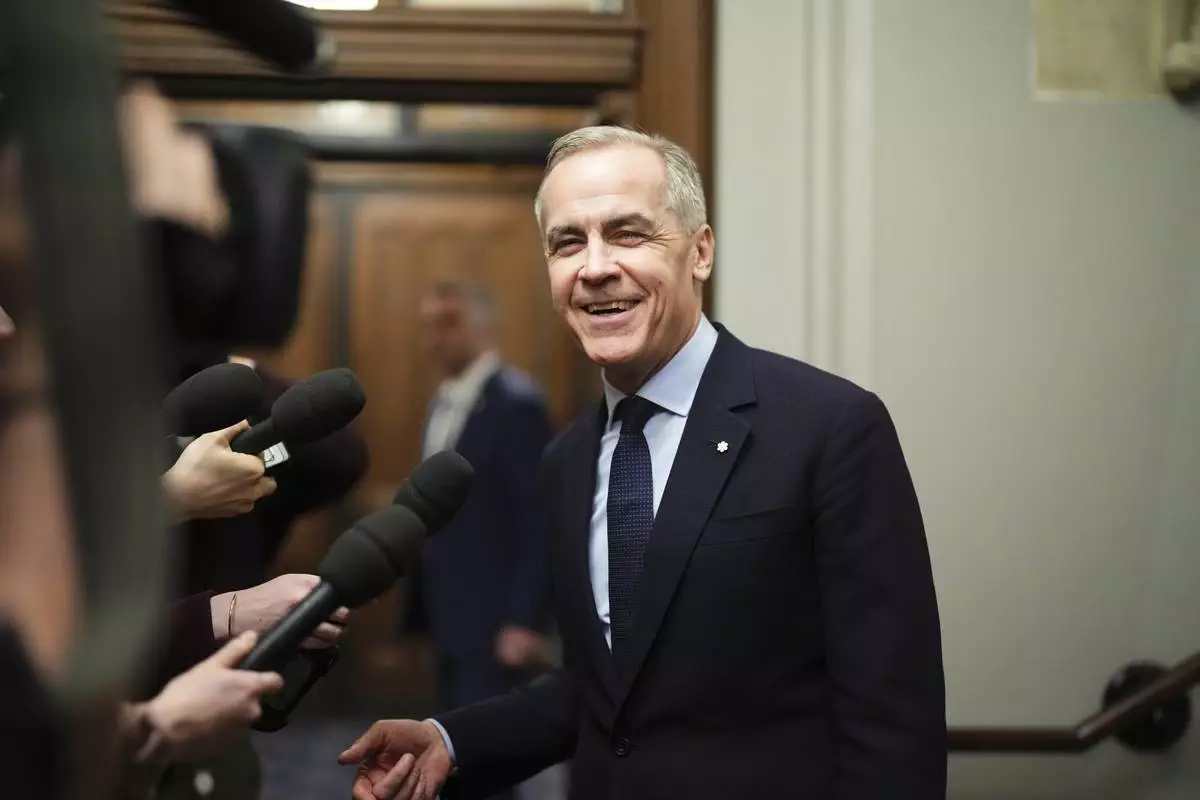
FILE - Canada Liberal Leader Mark Carney talks to the media as he leaves the prime minister's office and makes his way to a caucus meeting in Ottawa on March 10, 2025. (Sean Kilpatrick/The Canadian Press via AP, File)
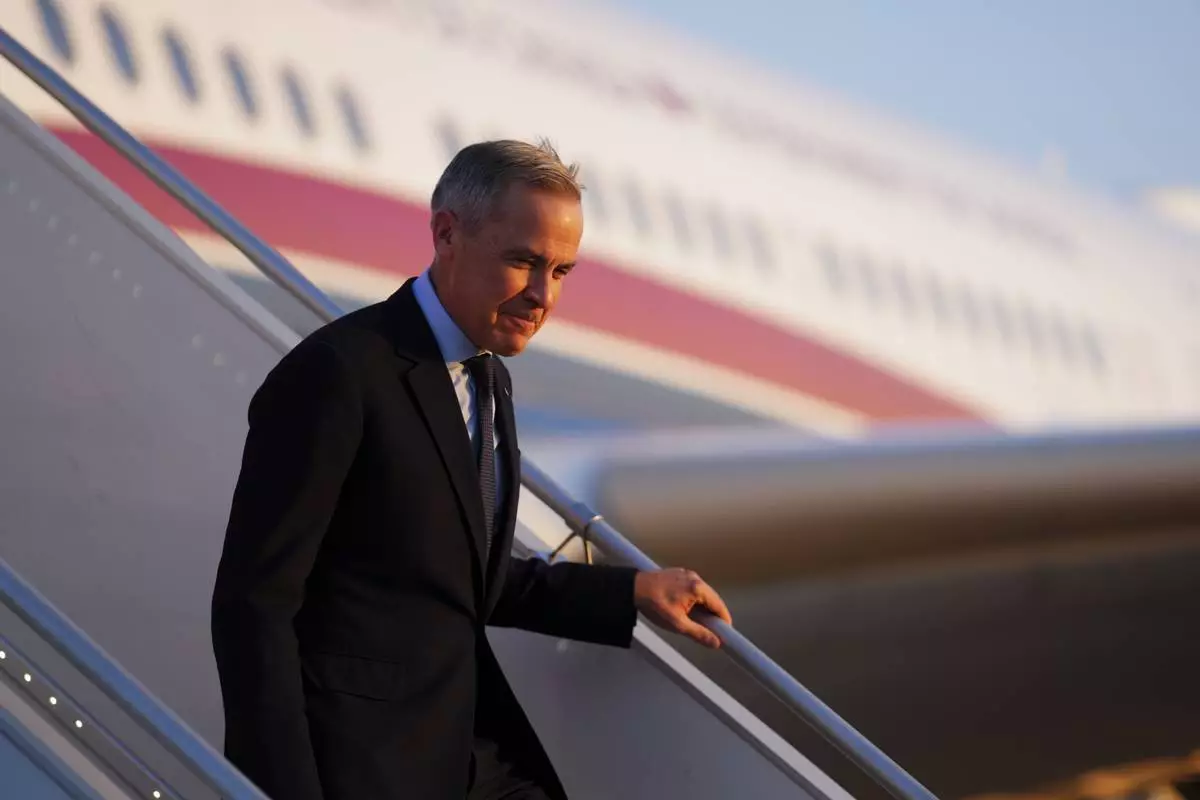
FILE - Canada's Prime Minister Mark Carney arrives in Paris on March 17, 2025. (Sean Kilpatrick/The Canadian Press via AP, File)
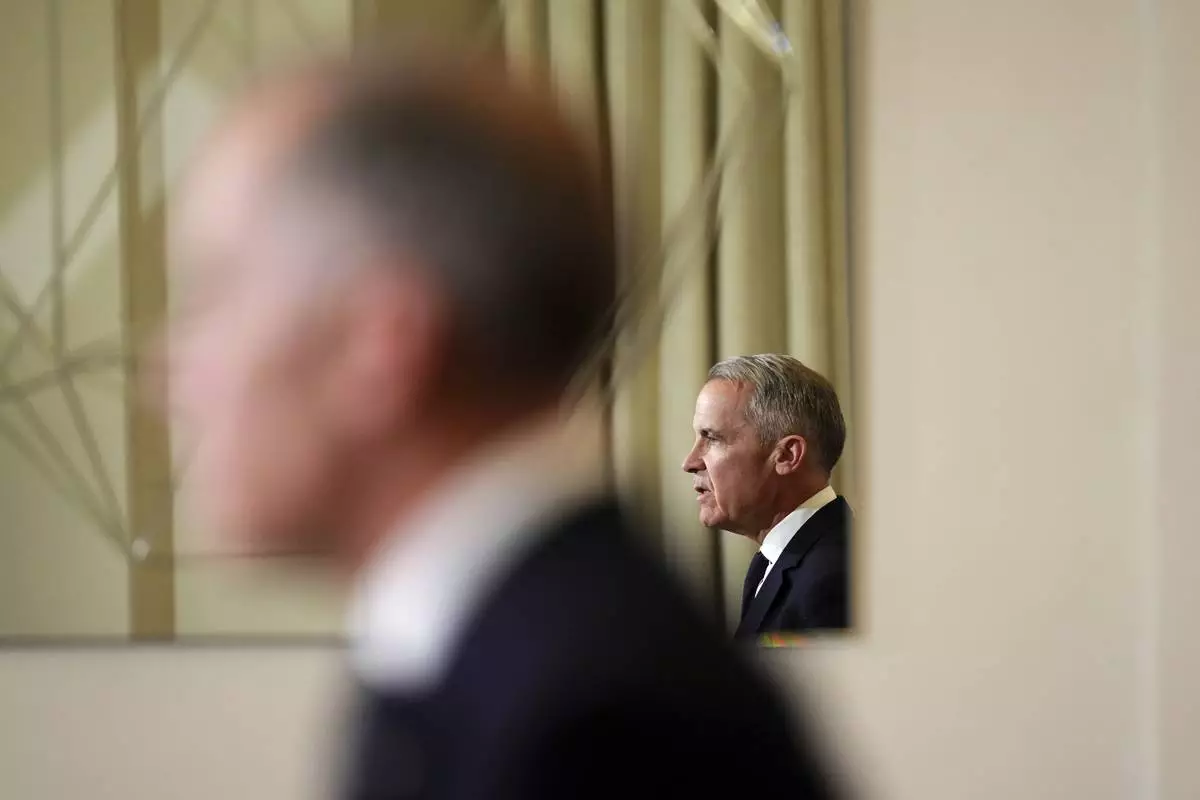
FILE - Canada's Prime Minister Mark Carney, reflected in a mirror, speaks to media during a press conference at Canada House in London on March 17, 2025. (Sean Kilpatrick/The Canadian Press via AP, File)
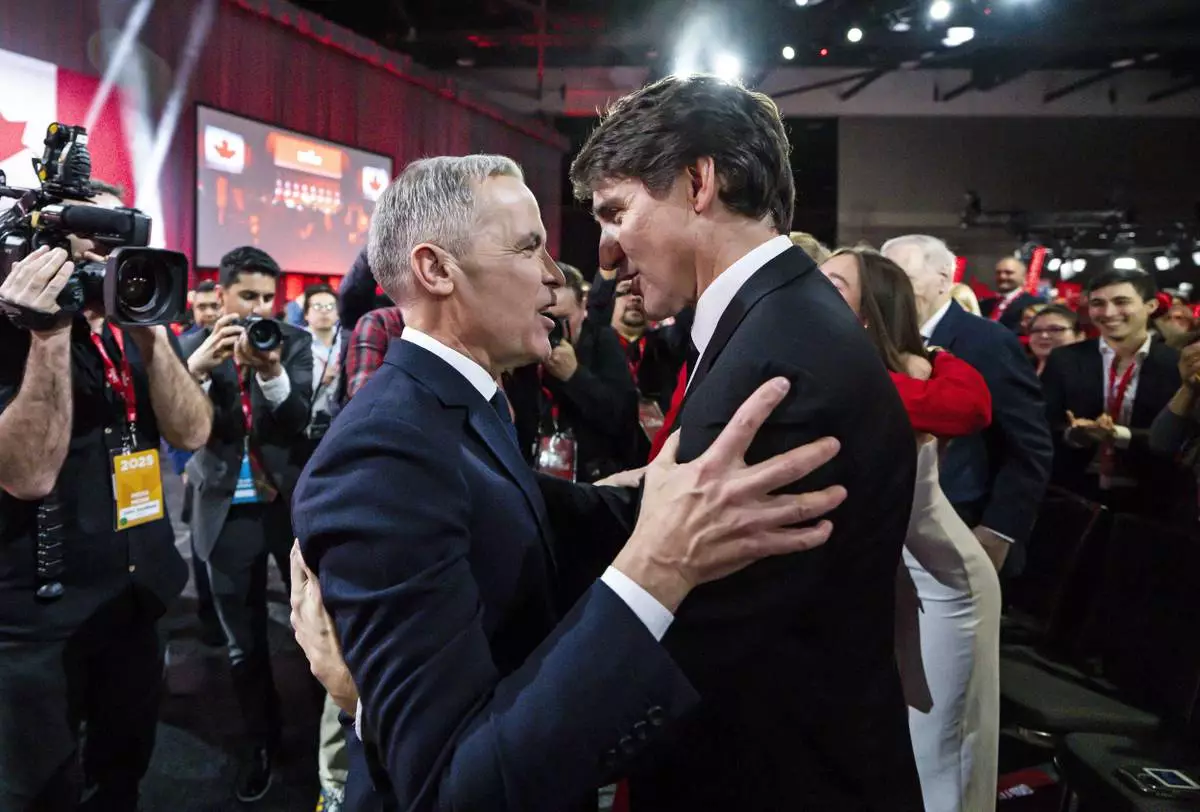
FILE - Mark Carney, Leader of the Liberal Party of Canada, embraces Prime Minister Justin Trudeau after being announced the winner at the Liberal Leadership Event in Ottawa, Ontario, March 9, 2025. (Justin Tang/The Canadian Press via AP, File)
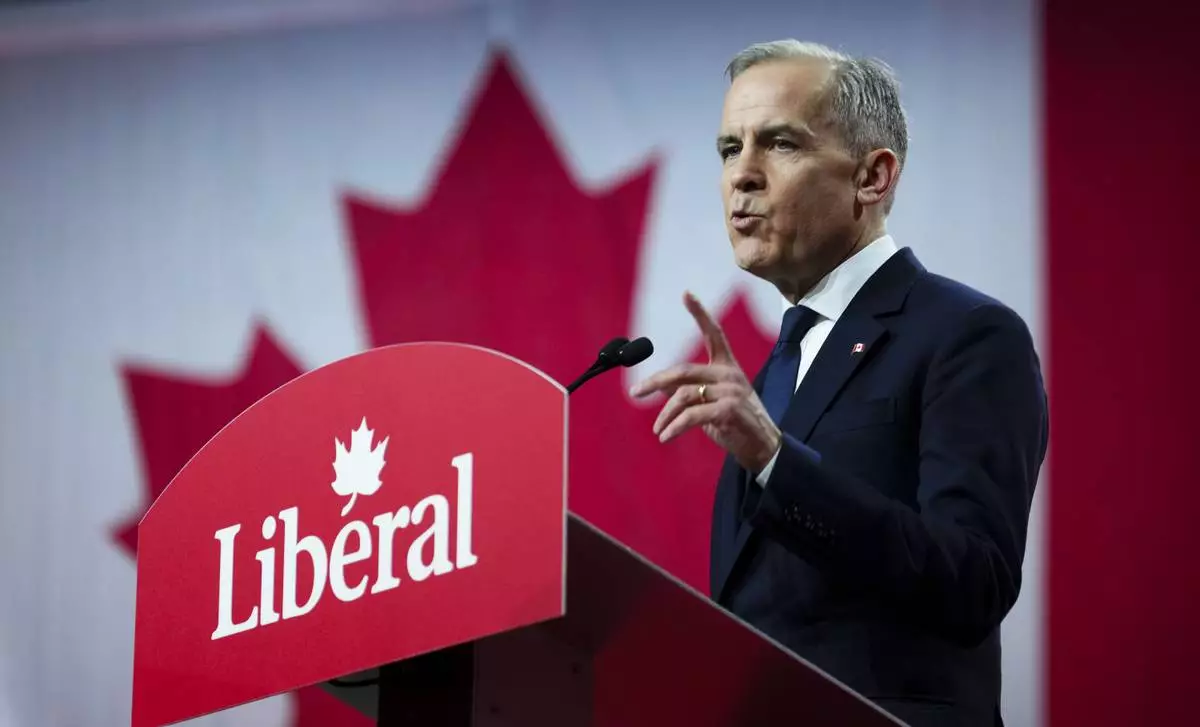
FILE - Liberal Party of Canada Leader Mark Carney delivers his speech after being announced as the winner of the party leadership in Ottawa, Ontario, March 9, 2025. (Sean Kilpatrick/The Canadian Press via AP, File)
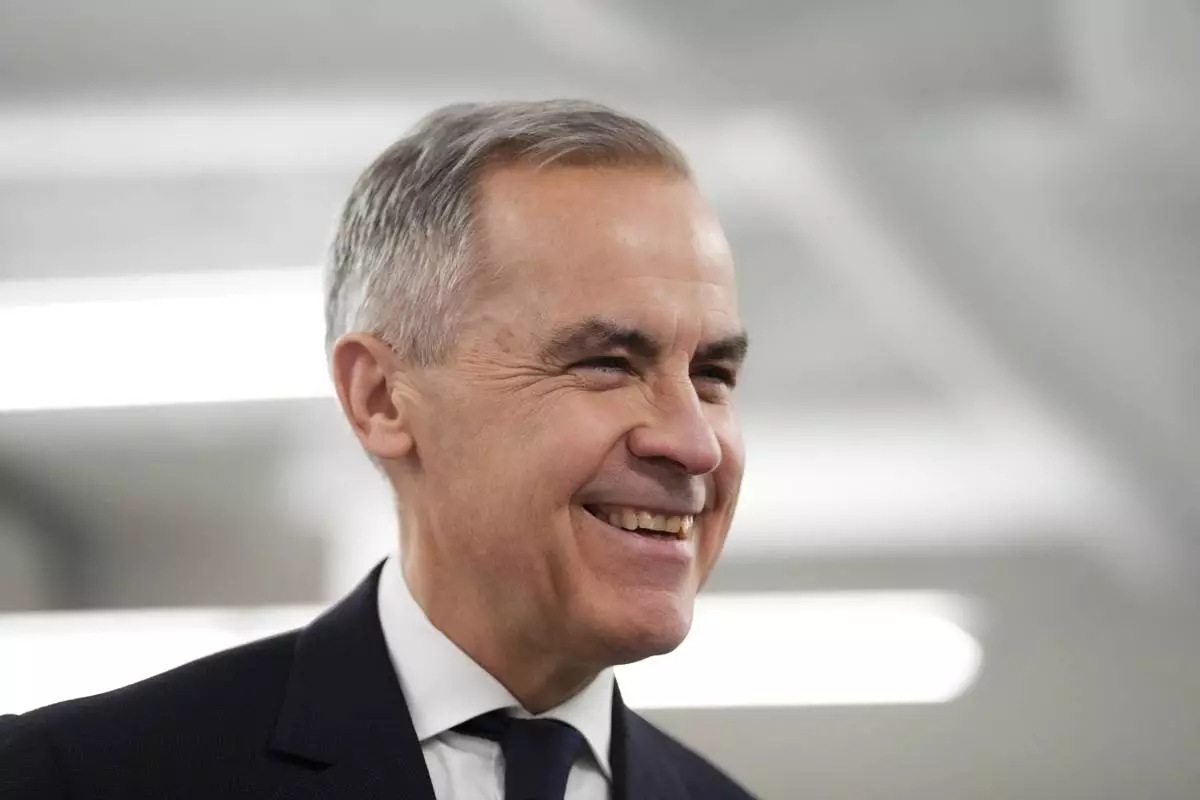
FILE - Canada Liberal Leader Mark Carney visits the Sheridan College Police Foundations department in Brampton, Ontario, Canada, April 10, 2025. (Sean Kilpatrick/The Canadian Press via AP, File)