Skip to Content Facebook Feature Image

Trump calls on Tehran to show protesters humanity amid reports of rising death toll in crackdown

News

Trump calls on Tehran to show protesters humanity amid reports of rising death toll in crackdown
News

News

Trump calls on Tehran to show protesters humanity amid reports of rising death toll in crackdown

2026-01-14 10:33 Last Updated At:10:40

WASHINGTON (AP) — President Donald Trump was consulting with his national security team Tuesday about next steps with Iran as he looked to get a better understanding of the number of Iranian citizens who have been killed and arrested in more than two weeks of unrest throughout the country.

Trump said he believes that the killing is “significant” and that his administration would “act accordingly.” He added that he believed the Iranian government was “badly misbehaving.”

But the president said he has yet to receive a confirmed number of Iranians killed in the protests that began late last month, saying he has heard “five different sets of numbers” about the death toll.

Since the protests began Dec. 28, 16,700 people have been arrested and more than 2,500 have been killed, the vast majority protesters, according to the Human Rights Activists News Agency. The organization relies on a network of activists inside Iran that confirms all reported fatalities.

“The message is they’ve got to show humanity,” Trump said of the Iranian government. “They’ve got a big problem. And I hope they’re not going to be killing people.”

The comments came after Trump earlier in the day announced he was cutting off the prospect of talks with Iranian officials amid a protest crackdown, telling Iranian citizens “help is on its way.”

Trump did not offer any details about what the help would entail, but his remarks come just two days after the Republican president said Iran wants to negotiate with Washington after his threat to strike the Islamic Republic.

But Trump appeared to make an abrupt shift about his willingness to engage with the Iranian government.

“Iranian Patriots, keep protesting and take over your institutions if you can,” Trump said in speech Tuesday at an auto factory in Michigan. “Save the names of the killers and abusers that are abusing you. You are being very badly abused."

Iran's chief envoy to the United Nations, Ambassador Amir Saeid Iravani, denounced Trump's latest comments in a letter to U.N. officials as “interventionist rhetoric.”

“This reckless statement explicitly encourages political destabilization, incites and invites violence and threatens the sovereignty, territorial integrity and national security of the Islamic Republic of Iran,” Iravani wrote.

Iranian state media has aired at least 97 confessions from protesters, many expressing remorse for their actions, since the protests began, according to a rights group that is tracking the videos.

Iran alleges these confessions, which often include references to Israel or America, are proof of foreign plots behind Iran’s nationwide protests. Activists say they are coerced confessions, long a staple of Iran’s hard-line state television, the only broadcaster in the country. And these videos are coming at an unprecedented clip.

Trump, in an exchange with reporters during the factory visit, demurred when asked what kind of help he would provide.

“You’re going to have to figure that one out,” he said.

The U.S. president has repeatedly threatened Tehran with military action if his administration found the Islamic Republic was using deadly force against antigovernment protesters. Trump on Sunday told reporters he believed Iran is “starting to cross” that line and has left him and his national security team weighing “very strong options” even as he said the Iranians had made outreach efforts to the U.S.

Trump announced Monday he would slap 25% tariffs on countries doing business with Tehran “effective immediately,” but the White House has not provided details on that move. China, the United Arab Emirates, Turkey, Brazil and Russia are among economies that do business with Tehran.

Vice President JD Vance, Secretary of State Marco Rubio and key White House National Security Council officials began meeting Friday to develop options for Trump, ranging from a diplomatic approach to military strikes.

“We don’t want to see people killed and we want to see a little bit of freedom for these people," Trump said. "These people have been living in hell for a long time.”

Iran, through the country’s parliamentary speaker, has warned that the U.S. military and Israel would be “legitimate targets” if Washington uses force to protect demonstrators.

Trump said he was undeterred by threats of Iranian retaliation.

“Iran said that the last time I blew them up,” said Trump, referring to threats from the government ahead of U.S. military strikes in June on key Iranian nuclear facilities. “They better behave.”

More than 600 protests have taken place across all of Iran’s 31 provinces, the Human Rights Activists News Agency reported Tuesday.

Understanding the scale of the protests has been difficult. Iranian state media has provided little information about the demonstrations. Online videos offer only brief, shaky glimpses of people in the streets or the sound of gunfire.

Trump's push on the Iranian government to end the crackdown comes as he is dealing with a series of other foreign policy emergencies around the globe.

It’s been more than a week since the U.S. military launched a successful raid to arrest Venezuela’s Nicolás Maduro and remove him from power. The U.S. continues to mass an unusually large number of troops in the Caribbean Sea.

Trump is also focused on trying to get Israel and Hamas onto the second phase of a peace deal in Gaza and broker an agreement between Russia and Ukraine to end the nearly four-year war in Eastern Europe.

But advocates urging Trump to take strong action against Iran say this moment offers an opportunity to further diminish the theocratic government that’s ruled the country since the Islamic revolution in 1979.

The demonstrations are the biggest Iran has seen in years — protests spurred by the collapse of Iranian currency that have morphed into a larger test of supreme leader Ayatollah Ali Khamenei’s repressive rule.

Associated Press reporter Michelle L. Price contributed to this report.
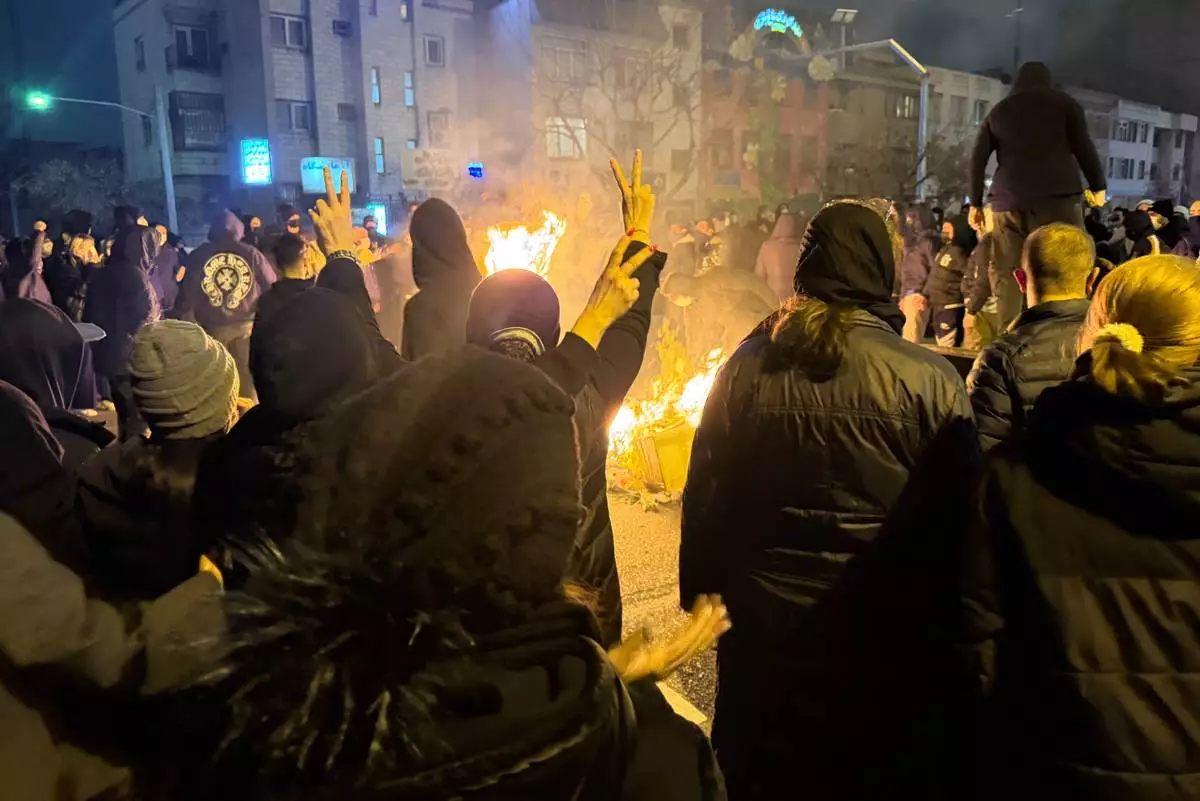
Iranians attend an anti-government protest in Tehran, Iran, Friday, Jan. 9, 2026. (AP Photo)
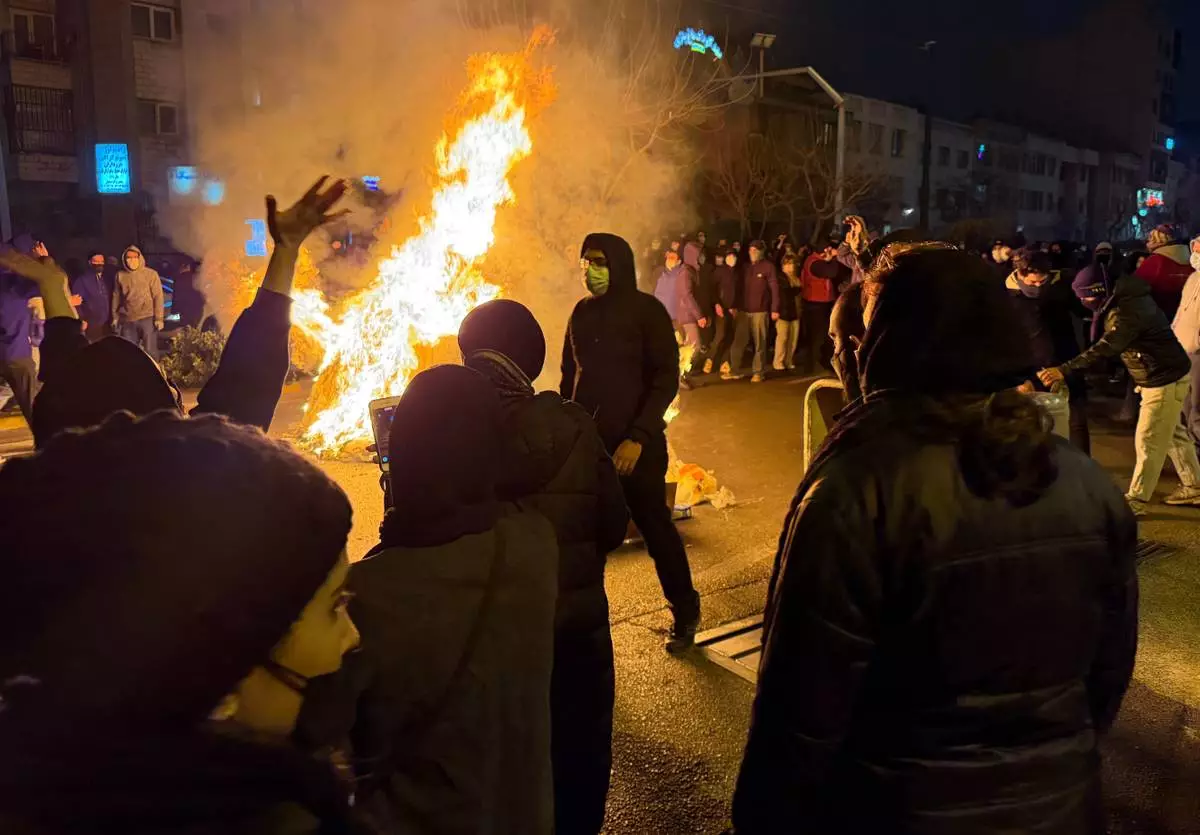
Iranians attend an anti-government protest in Tehran, Iran, Friday, Jan. 9, 2026. (AP Photo)
Iranians attend an anti-government protest in Tehran, Iran, Friday, Jan. 9, 2026. (AP Photo)

Iranians attend an anti-government protest in Tehran, Iran, Friday, Jan. 9, 2026. (AP Photo)

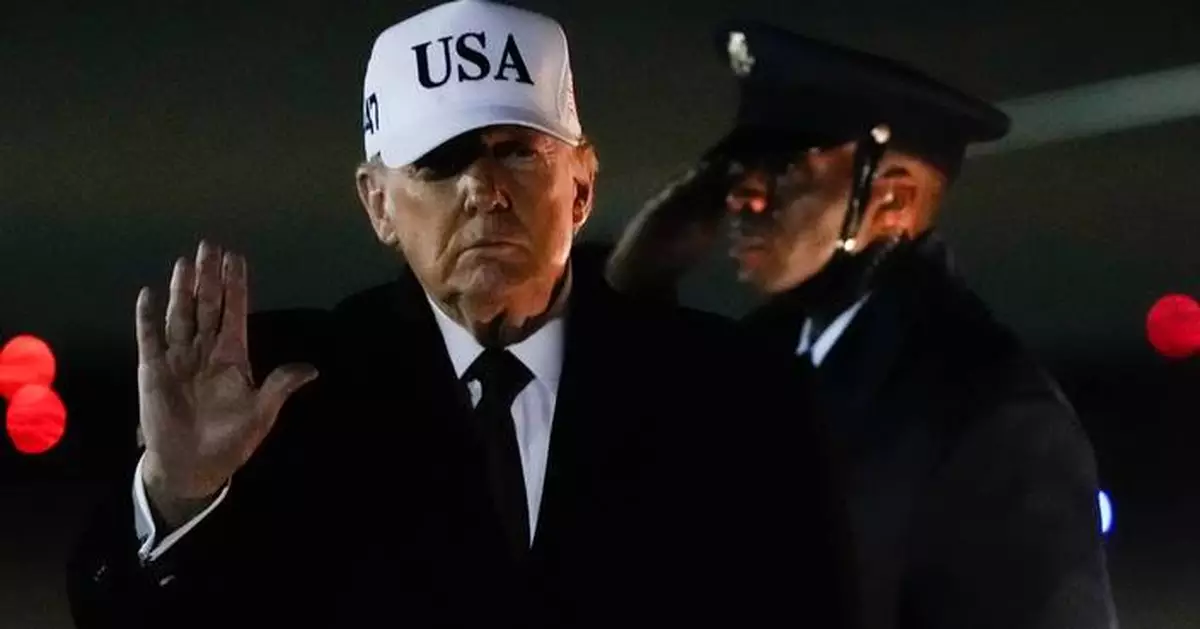
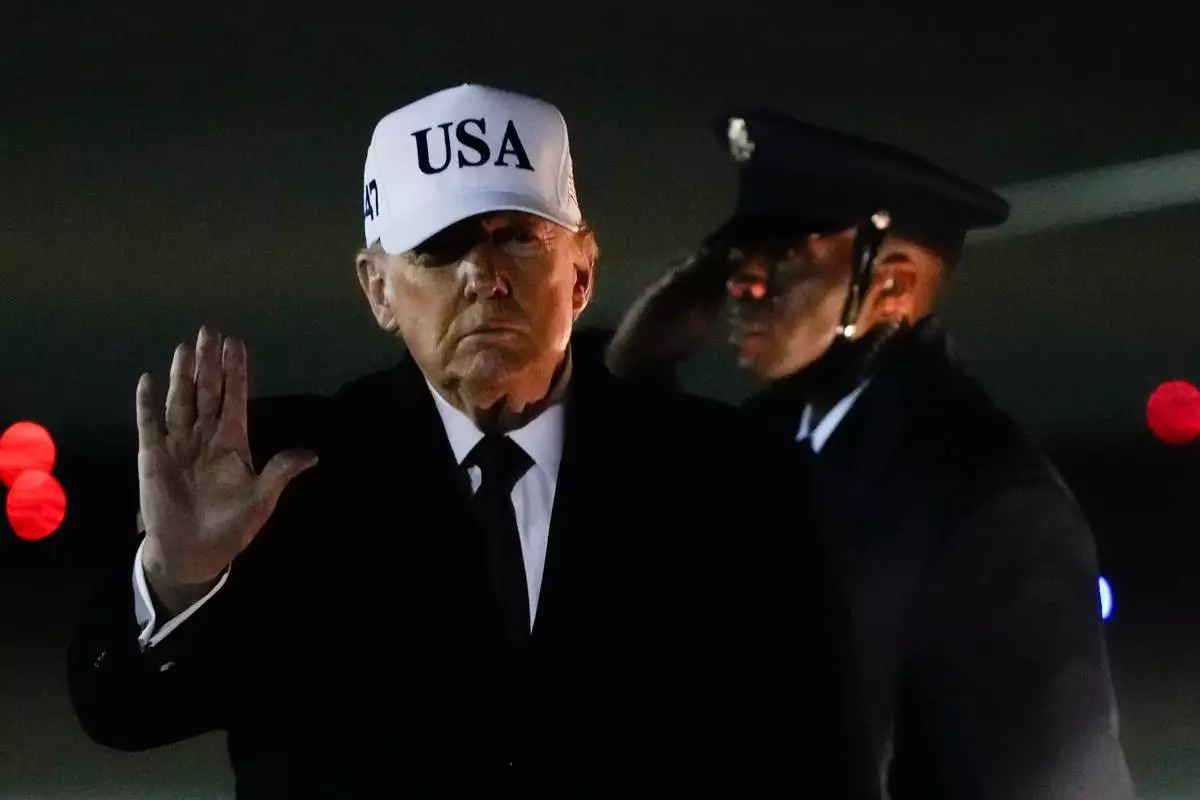
President Donald Trump waves after arriving on Air Force One from Florida, Sunday, Jan. 11, 2026, at Joint Base Andrews, Md. (AP Photo/Julia Demaree Nikhinson)
President Donald Trump waves after arriving on Air Force One from Florida, Sunday, Jan. 11, 2026, at Joint Base Andrews, Md. (AP Photo/Julia Demaree Nikhinson)
PHOENIX (AP) — Madison Booker has a midrange jumper that's almost unblockable, beats defenders off the dribble, plays in the post when she wants, shoots the 3 if she needs to.

The Texas junior has great court vision, is an adept passer and is a menace defensively, bullying smaller guards on the ball, jumping into passing lanes off it.

Had it been an earlier era in women's college basketball, Booker would have been a back-to-the-basket player.

But this is a new age, one where 6-footers are everywhere at this year's Final Four and Booker is a guard — at 6-foot-1.

“You look at Madison Booker and, I mean, she’s like a mini-KD (Kevin Durant),” Kentucky coach Kenny Brooks said after Booker had 17 points, eight rebounds and five assists against his team in the Sweet 16.

The average height for an American woman is 5-3, according to the CDC.

Women's college basketball has become the oversized outlier above the median, towering players spread across the Division I landscape, many of whom do more than just park under the basket.

This year's repeat Final Four has a large collection of large players, UConn, South Carolina, UCLA and Texas arriving with a combined 36 players 6-0 or taller — 55.6% of all the players in Phoenix.

UCLA's Lauren Betts is the tallest among the regular contributors at 6-7, anchoring a team with eight players at least 6-0.

The two-time AP All-American is a matchup nightmare, using her height and skill to score in a variety of ways — mainly shooting over smaller defenders. Betts is just as dominant on the defensive end, swatting shots, altering many more, deterring opponents from even thinking about going into the lane.

Betts averaged 18.5 points and 7.6 rebounds while shooting 60.1% from the field and leading the Bruins (35-1) with 71 blocked shots.

“It's just really hard to defend her an entire game,” Duke coach Kara Lawson said after Betts scored 15 of her 23 points in UCLA's 70-58 comeback win over the Blue Devils in the Elite Eight.

Betts and the Bruins will face pair of Texas bigs in Friday's second Final Four game.

Kyla Oldacre is 6-6, Breya Cunningham 6-4 and the pair helped shut down Betts when the teams met in November in Las Vegas.

They've been doing it all season on a team that features nine players 6-0 or taller.

Behind the towering presence of Oldacre and Cunningham, Texas (35-3) was one of the nation's best defensive teams, holding teams to 55.9 points per game and 38% shooting from the field.

The two biggest Longhorns are a handful on offense as well, both shooting at least 59% from the floor while combining to score 18.3 points and grab 11.8 rebounds per game.

“You can win a lot of games with just good guard play, no question, but you've got to have size to go with it,” Texas coach Vic Schaefer said.

The first Final Four game doesn't get any smaller.

Reigning national champion UConn (38-0) has two All-Americans in Azzi Fudd and Sarah Strong — also The Associated Press player of the year — as they've gone nearly untested through an undefeated season.

Fudd is 5-11, but Strong is a 6-2 forward who fits the mold of today's bigs on a team with 10 players 6-0 or taller.

Strong is a superb post player, yet can also beat defenders off the dribble and shoots 41% from 3. Like Booker, she also has great court vision and is a great passer.

Strong averaged 18.8 points on 60% shooting, 7.7 rebounds and 3.8 assists on a front line that includes 6-4 Serah Williams with 6-5 Jana El-Alfy coming off the bench.

“She is such a hard guard,” North Carolina coach Courtney Banghart said after Strong had 21 points and 10 rebounds and five steals against her team in the Sweet 16. “She's so unselfish. If she wants to score 40 the next game, she can.”

South Carolina (35-3) got manhandled by UConn in last year's title game, but coach Dawn Staley retooled her roster to add versatility.

Second-team All-American Joyce Edwards played for Staley last season, but took a big jump this season, boosting her scoring average seven points to 19.7 per game. The 6-3 sophomore can play inside or out, has a strong midrange game and can guard multiple positions.

Madina Okot is 6-6, but is far more than a back-to-the-basket big.

The Kenyan center is an elite finisher at the rim, was the SEC's leading rebounder at 10.8 per game and shot 48% from 3 (58% overall). Her size and timing combined to make her a super interior defender, leading the team with 55 blocks while altering many more.

The pair anchor a team that has nine players 6-0 or taller and held its first four NCAA Tournament opponents to 32% shooting.

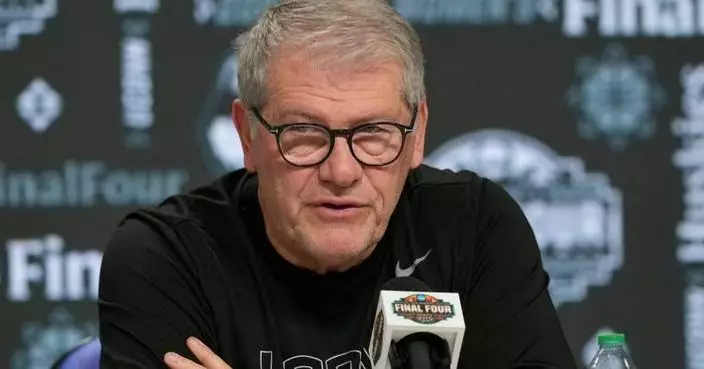
“They’re a much better team than they were last year, really hard to prepare for," UConn coach Geno Auriemma said. “They’ve shot the ball exceptionally well this year. They’ve added the size that is hard to match up with.”

Size can be found all across women's basketball these days, particularly at this year's Final Four.

AP March Madness bracket: https://apnews.com/hub/ncaa-womens-bracket and coverage: https://apnews.com/hub/march-madness

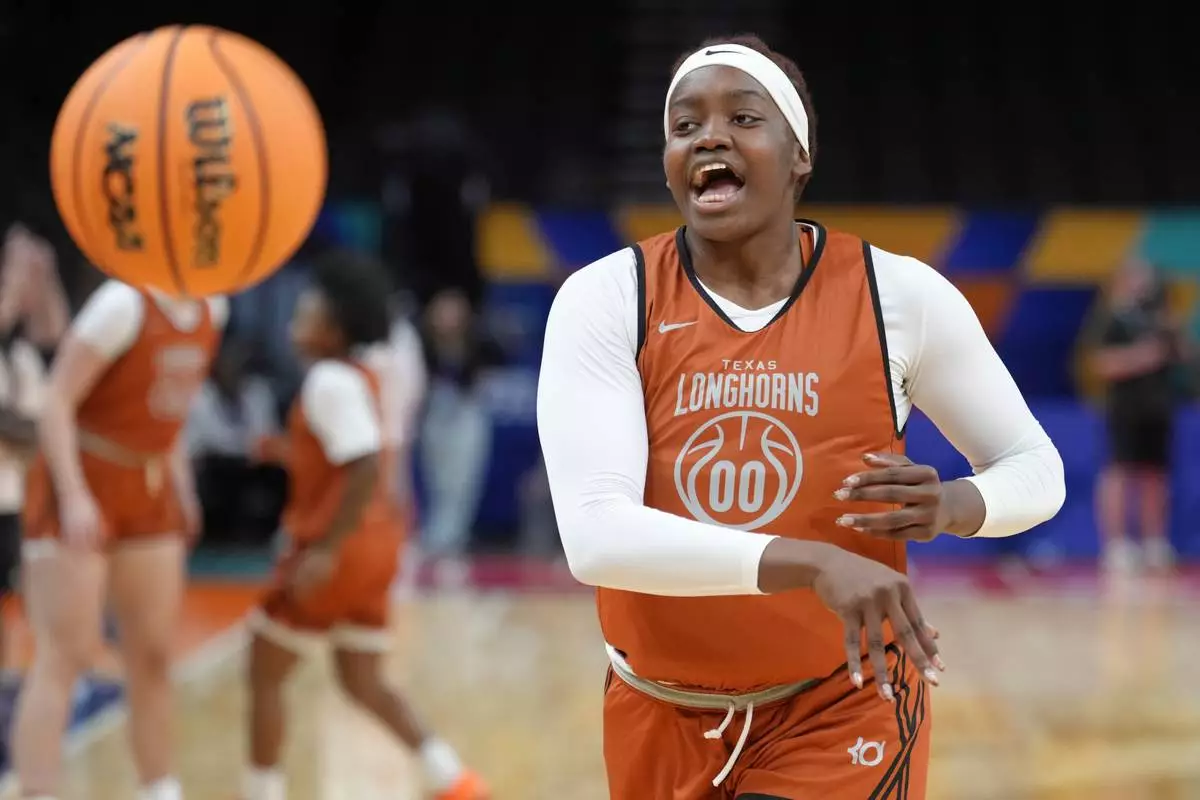
Texas center Kyla Oldacre passes the ball during practice prior to the national semifinals Women's Final Four of the NCAA college basketball tournament, Thursday, April 2, 2026, in Phoenix. (AP Photo/Ross D. Franklin)

Texas center Kyla Oldacre passes the ball during practice prior to the national semifinals Women's Final Four of the NCAA college basketball tournament, Thursday, April 2, 2026, in Phoenix. (AP Photo/Ross D. Franklin)

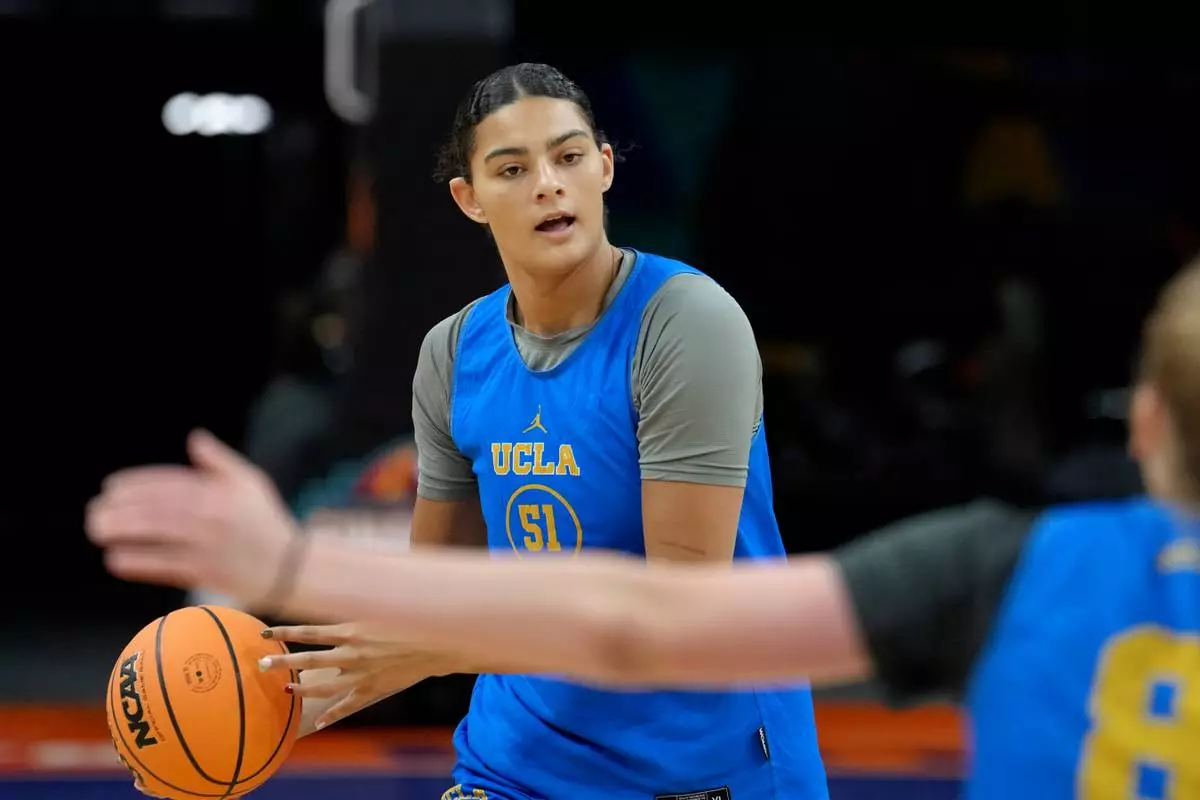
UCLA center Lauren Betts passes the ball during practice prior to the national semifinals at the Women's Final Four of the NCAA college basketball tournament, Thursday, April 2, 2026, in Phoenix. (AP Photo/Ross D. Franklin)

UCLA center Lauren Betts passes the ball during practice prior to the national semifinals at the Women's Final Four of the NCAA college basketball tournament, Thursday, April 2, 2026, in Phoenix. (AP Photo/Ross D. Franklin)

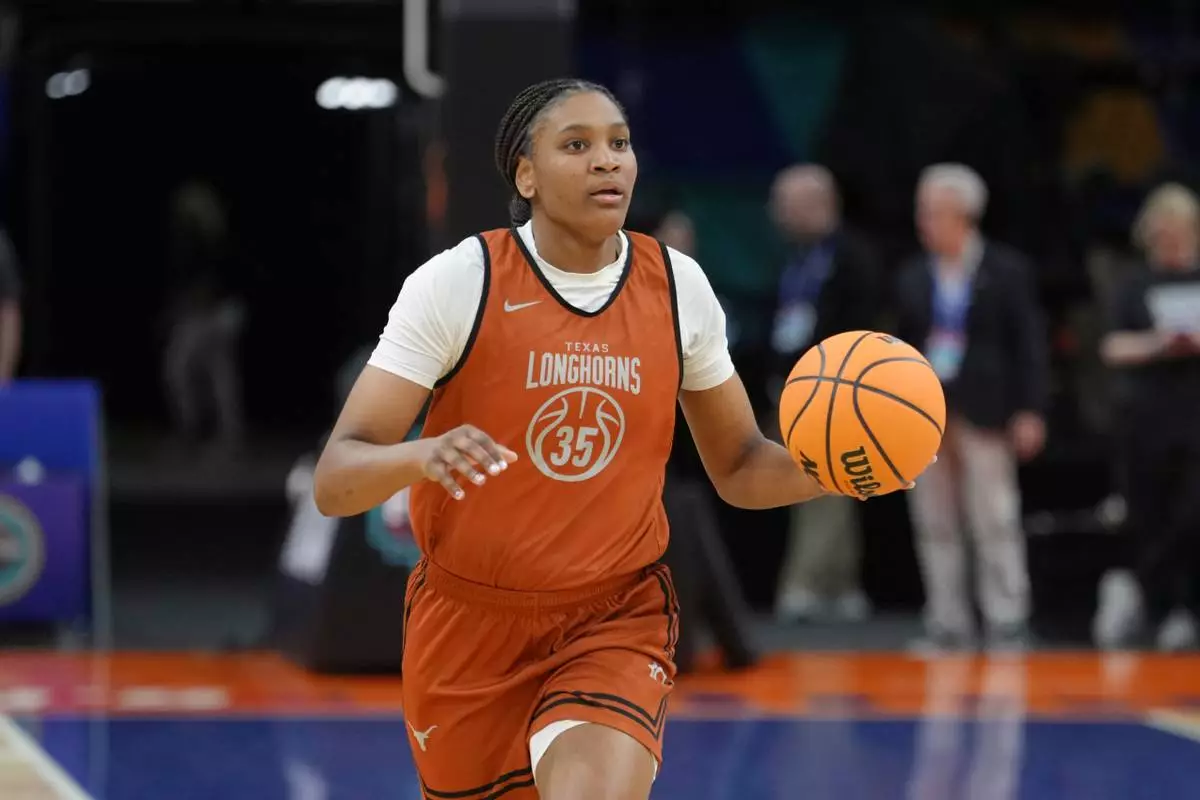
Texas forward Madison Booker dribbles the ball during practice prior to the national semifinals Women's Final Four of the NCAA college basketball tournament, Thursday, April 2, 2026, in Phoenix. (AP Photo/Ross D. Franklin)

Texas forward Madison Booker dribbles the ball during practice prior to the national semifinals Women's Final Four of the NCAA college basketball tournament, Thursday, April 2, 2026, in Phoenix. (AP Photo/Ross D. Franklin)

Recommended Articles