China's one-year loan prime rate (LPR), a market-based benchmark lending rate, came in at 3.1 percent Monday, unchanged from the previous month.
The over-five-year LPR, on which many lenders base their mortgage rates, also remained unchanged from the previous reading of 3.6 percent, according to the National Interbank Funding Center.
The LPRs reflect the level of financing costs for households and businesses, with lower rates meaning less burdens on borrowers and stronger support for economic activity.
In 2024, China made three cuts to the LPR, with the one-year LPR falling from 3.45 percent to 3.1 percent, and the over-five-year LPR dropping from 4.2 percent to 3.6 percent, representing reductions of 35 and 60 basis points, respectively.
In March this year, the Monetary Policy Committee of the People's Bank of China (PBOC) convened its first-quarter meeting of 2025. The meeting discussed the main directions for the next stage's monetary policy and recommended increasing the intensity of monetary policy adjustments. It also proposed enhancing the foresight, precision, and effectiveness of monetary policy adjustments, with potential cuts to the required reserve ratio and interest rates based on evolving domestic and international economic and financial conditions and financial market dynamics.
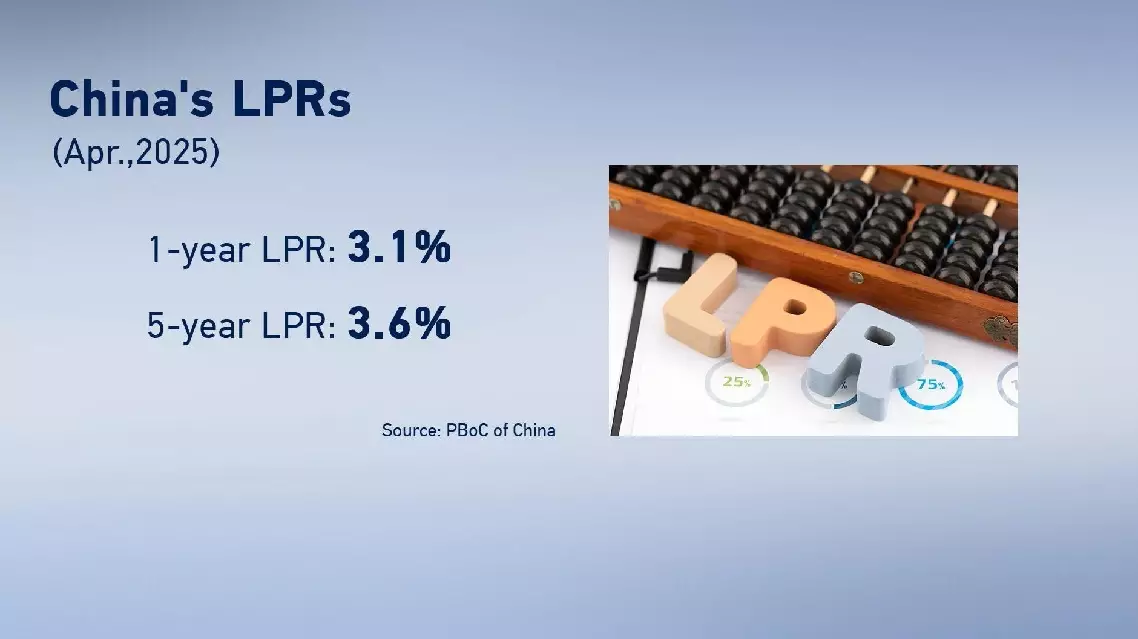
China's loan prime rates remain unchanged
China's loan prime rates remain unchanged
Commemorations honoring Chinese People's Volunteers (CPV) martyrs were held on the banks of the Yalu River in Dandong, Liaoning Province on Tuesday as part of ongoing tributes to those who fought in the War to Resist U.S. Aggression and Aid Korea (1950-1953).
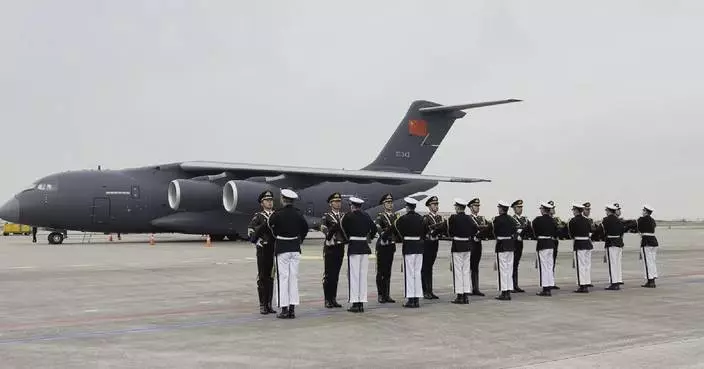
The event was held to mark the return of the remains of 12 CPV martyrs, who were killed in the war, from the Republic of Korea (ROK) on Wednesday.
This will be the 13th such repatriation of CPV remains following the handover agreement between the two countries. Since 2014, the remains of 1,011 soldiers have been returned to China from the ROK, according to China's Ministry of Veterans Affairs.
More than 170 representatives, including veteran CPV soldiers, relatives of the martyrs, active-duty personnel, students, and other from various sectors of society, attended the event.
People boarded a ferry which slowly sailed down the Yalu River. Inside the cabin, all present stood in solemn silence as the national anthem of the People's Republic of China was played, and observed a moment of silence in honor of the CPV martyrs.
Then, they walked to the ship's railings one by one and scattered flower petals into the river to pay tribute to the martyrs.
"We, the CPV, went abroad to fight to defend our motherland, the people, and our good life and to resist U.S. imperialist aggression against the Democratic People's Republic of Korea (DPRK). I hope that our young comrades and students today will study hard and make contributions to our motherland," said Hu Changzhe, a CPV veteran.
"I feel deeply moved as these veteran soldiers are heroes who once fought for our country. Now, standing by the Yalu River, looking back on their past and remembering their comrades, they must be deeply touched," said Hong Jialu, a student at a branch of Liaoning Province Shiyan High School.
At the event, 10 student representatives from primary and middle schools read aloud a letter to express their reverence and remembrance for the heroic martyrs through their sincere words and heartfelt recitation.
The Korean War broke out in June 1950, eight months after the People's Republic of China was founded. At the request of the Democratic People's Republic of Korea (DPRK), China sent 2.9 million CPV soldiers to assist the DPRK during the war, of whom more than 360,000 were killed or injured.
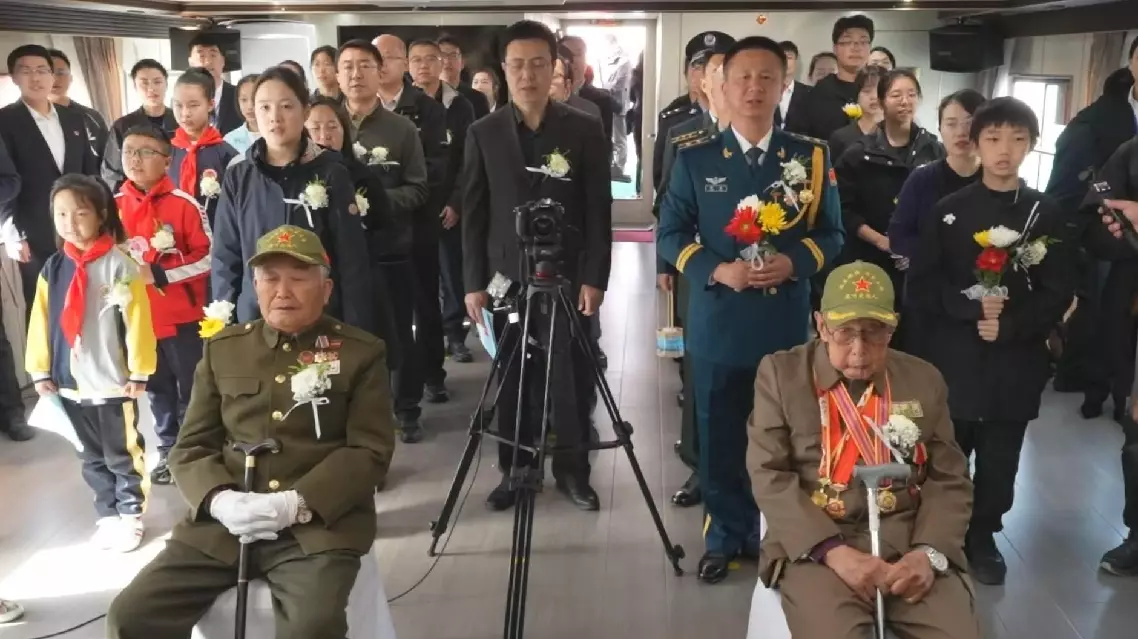
Commemorations held to pay tribute to CPV heroes in northeast China