China’s targeted efforts to boost consumption and domestic demand are expected to ease the impact of U.S. tariffs, according to a Chinese economist.
In response to the tariff challenges, China has introduced various measures to boost consumption, including a plan released in March to increase people's spending power by raising earnings and reducing financial burdens.
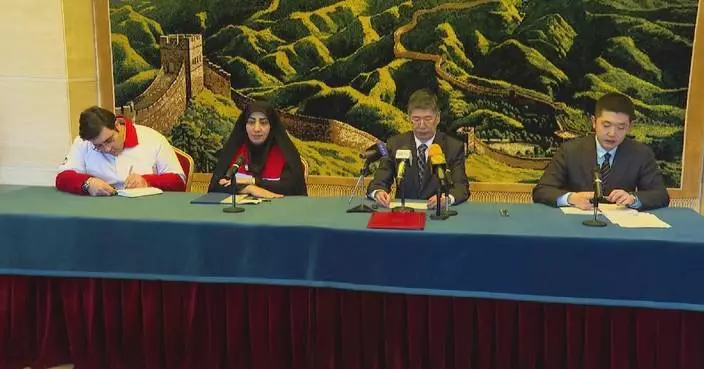
Increasing domestic demand can effectively counteract the U.S. tariff imposition and support affected businesses and workers, said Zhang Bin, deputy director of the Institute of World Economics and Politics at the Chinese Academy of Social Sciences, during a recent interview in Beijing.
"The tariff shock is fundamentally a demand shock, exacerbating the existing demand deficit. This means that the income of some companies and workers will be greatly affected. Therefore, the government's priority is on counter-cyclical policies, increasing income and creating job opportunities across society, which will help those affected," said Zhang.
According to a recent World Trade Organization report, the tariffs imposed by the U.S. and retaliated against by other countries mean that global trade prospects have "deteriorated sharply," with the volume of total merchandise trade expected to shrink 0.2 percent.
Although there is no winner in a tariff war, China possesses more tools to navigate the challenging times, according to Zhang.
"The [demand] issue can be solved by lowering interest rates and increasing government spending. It is a problem that can be solved with monetary measures. We have exports valued at 400 to 500 billion U.S. dollars to the U.S., therefore, we must not underestimate the impact of the tariff shock on Chinese companies and employment market. However, we have considerable policy flexibility, much greater than that of the U.S. As long as we implement policies to expand domestic demand, provide targeted support to specific industries and companies, and help companies in their transformations, we will be able to make changes and mitigate this impact," he said.
After years of trials and development, China has gained the experience and capability to respond to the tariff shock and minimize the negative effects of the trade war, according to Zhang.
"From a macro perspective, [it is important to] stabilize the overall employment. Some companies may have lost orders and halted production. But if the government can help the unemployed workers find new jobs, the overall GDP growth rate will be stabilized, so will the employment rates. As long as GDP and employment remain steady, the overall economy will stabilize as well. Moreover, we need to focus not only on the real economy sector, but also on the capital market, making great efforts to stabilize the stock market and exchange rates. The capital market is particularly sensitive, serving as a hub for confidence and expectations. If the government can stabilize this market, it can also help stabilize the entire macro economy, as well as people's confidence and expectations, and we will be able to navigate these challenges," he said.
China’s domestic demand strategy to offset U.S. tariff impact: economist