The U.S. Federal Trade Commission filed a lawsuit against Uber on Monday, alleging that it enrolled consumers in its Uber One subscription program without their consent and made it too difficult for them to cancel the service.
Uber One members pay $9.99 per month or $96 per year for a range of services, including fee-free Uber Eats food deliveries and cash back when they take Uber rides.
In its lawsuit, the FTC said multiple customers complained that Uber signed them up for Uber One without their permission or charged them for the service before a free trial period was over. In at least one case, a person was charged $9.99 per month even though they didn’t have an Uber account, the lawsuit said.
The FTC said Uber also made it extremely difficult for subscribers to cancel Uber One. The agency said Uber requires customers to take at least 12 different actions on at least seven screens to cancel the service. Cancellation gets even harder for consumers within 48 hours of their billing date, the FTC said, requiring them to navigate as many as 23 screens and still contact customer service.
“Americans are tired of getting signed up for unwanted subscriptions that seem impossible to cancel,” said FTC Chairman Andrew N. Ferguson, who has led the FTC since January after he was tapped as chairman by President Donald Trump.
In a statement, Uber said it was disappointed that the FTC chose to move forward with the lawsuit. Uber said its sign-up and cancellation process is clear, simple and lawful.
“Uber does not sign up or charge consumers without their consent and cancellations can now be done anytime in-app and take most people 20 seconds or less,” Uber said.
Uber said at one point it did require customers to contact a service representative if they wanted to cancel within 48 hours of a billing period, but that is no longer the case.

FILE - The Uber logo appears above a trading post on the floor of the New York Stock Exchange, Aug. 16, 2019. (AP Photo/Richard Drew, File)
The San Diego Padres have reached an agreement to sell control of the team to an investor group led by Kwanza Jones and José E. Feliciano.
The family of late owner Peter Seidler formally announced the deal Saturday. The sale must still be approved by Major League Baseball.
The deal with private equity billionaire Feliciano and his wife took shape last month at an MLB-record valuation of $3.9 billion. The Padres' announcement of the deal didn't give specifics on the members of the investor group or the purchase price.
“The Padres are more than a baseball team; they are a unifying force in San Diego, rooted in community, connection and belonging,” Jones and Feliciano said in a joint statement. “As life and business partners, and as a family, we are honored to lead this next chapter together. We have worked hard for everything we have achieved, and we have built it together. We see that same spirit in this team and its fans, and we know what it takes to win. We are committed to showing up, listening and earning the trust of this community while building on the strong foundation established by the Seidler family.
“This is about more than baseball — it’s about boosting the pride, energy, and connection that define the Padres, investing in community, deepening belonging and ensuring this team remains accessible and endures for generations. We are all in — with the goal of bringing a World Series championship to San Diego.”
Seidler’s family began to explore a sale of the Padres last November, two years after the death of the popular Peter Seidler, who became the Padres' primary owner in 2020. His brother, John Seidler, has served as the Padres’ chairman since his death.
“When I became control person, my goal was to continue building on our recent success in pursuit of a World Series championship for the city of San Diego and our faithful fans,” John Seidler said in a statement. "As I pass the baton to Kwanza and José, I do so with full confidence that they share that vision as well as the Padres' deep commitment to San Diego. It’s what the team, our fans and the community deserve. Our family loves this team.”
Peter Seidler joined the Padres' ownership group in 2012 when John Moores sold the team for $800 million to a group headed by Ron Fowler. Seidler took over and immediately endeared himself to San Diego's fans with his aggressive financial backing of general manager A.J. Preller, who built a team that has reached the playoffs in four of the past six years.
The Padres have been a hot ticket for several years as San Diego's only team in the four biggest North American sports leagues, ranking second in the majors in attendance last season. Preller's roster is off to another strong start this season, sitting second in the NL West at 19-12 heading into a home game against the Chicago White Sox on Saturday night.
Jones and Feliciano already got a start on their new endeavor last month when they traveled to Mexico City to watch the Padres' international series against the Arizona Diamondbacks. The couple was spotted sitting with Padres CEO Erik Greupner.
Feliciano will become the second Latino owner in baseball, joining Los Angeles Angels owner Arte Moreno. Latino and Hispanic players comprise roughly 30% of major league rosters.
AP MLB: https://apnews.com/MLB
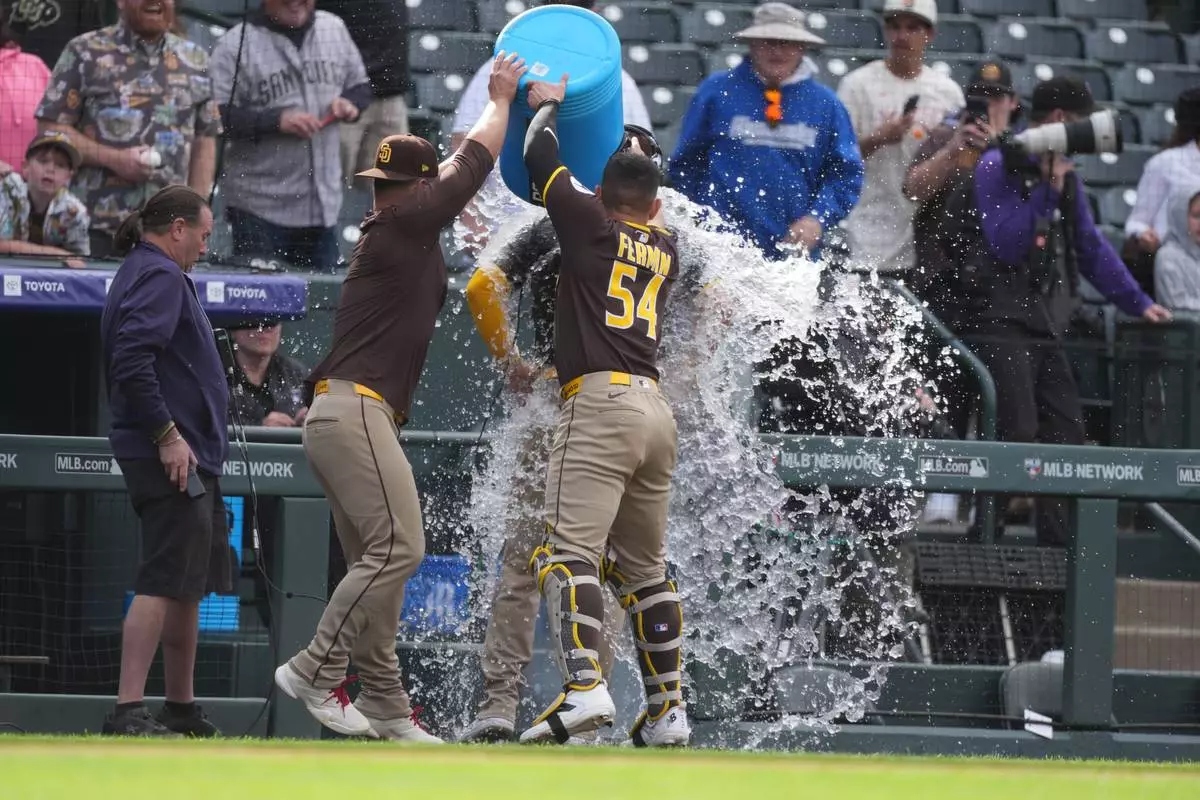
San Diego Padres first baseman Ty France, left, and catcher Freddy Fermin, right, douse Gavin Sheets as he does a television interview after leading the Padres to a victory over the Colorado Rockies in a baseball game Thursday, April 23, 2026, in Denver. (AP Photo/David Zalubowski)
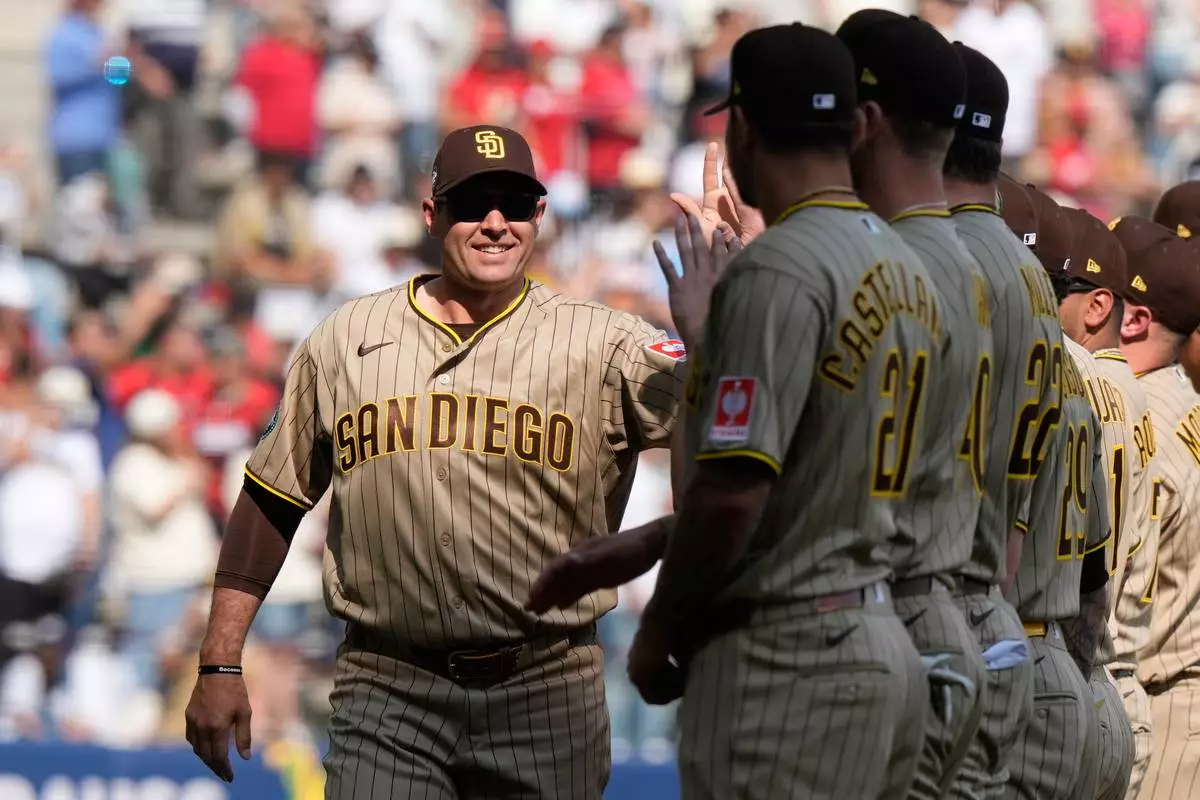
San Diego Padres' coach Craig Stammen, left, enters the field prior to a baseball game against Arizona Diamondbacks in Mexico City, Saturday, April 25, 2026. (AP Photo/Fernando Llano)
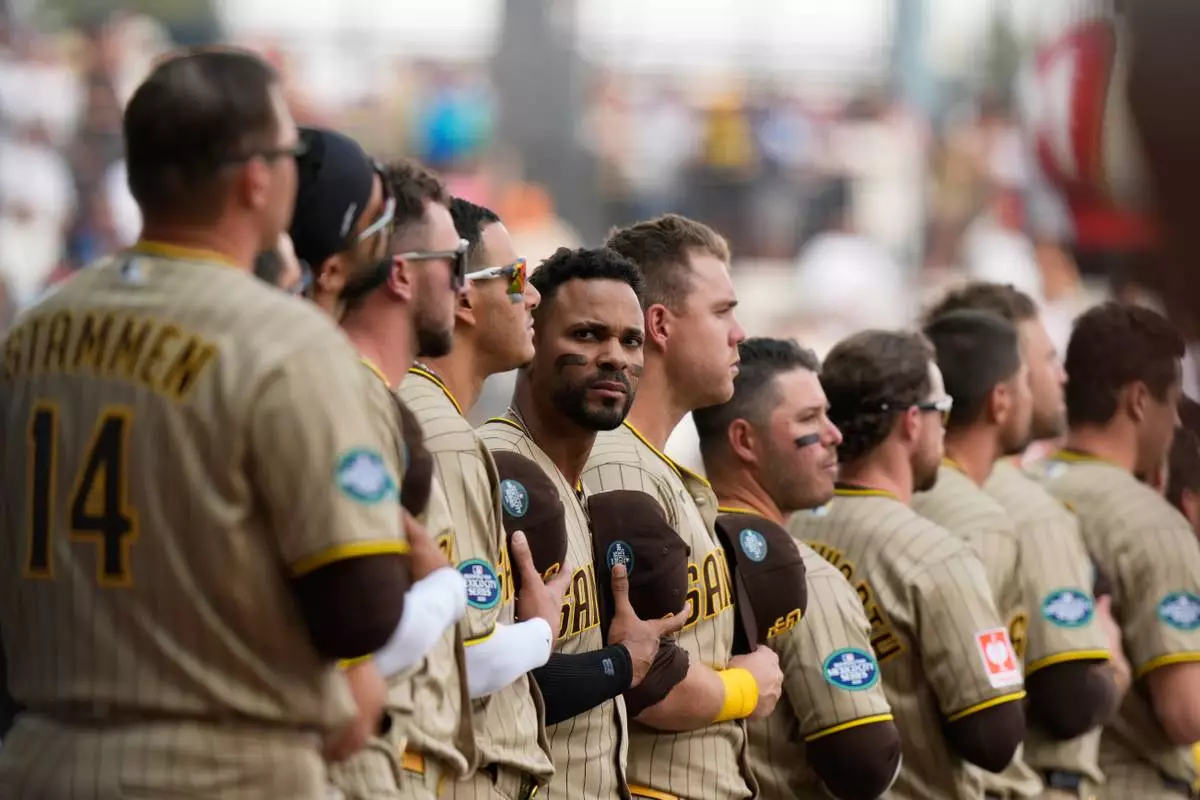
San Diego Padres' Xander Bogaerts, center, and teammate stand line prior to a baseball game against Arizona Diamondbacks in Mexico City, Saturday, April 25, 2026. (AP Photo/Fernando Llano)