DETROIT (AP) — Arborists are turning vacant land on Detroit's eastside into a small urban forest, not of elms, oaks and red maples indigenous to the city but giant sequoias, the world's largest trees that can live for thousands of years.
The project on four lots will not only replace long-standing blight with majestic trees, but could also improve air quality and help preserve the trees that are native to California’s Sierra Nevada, where they are threatened by ever-hotter wildfires.
Click to Gallery
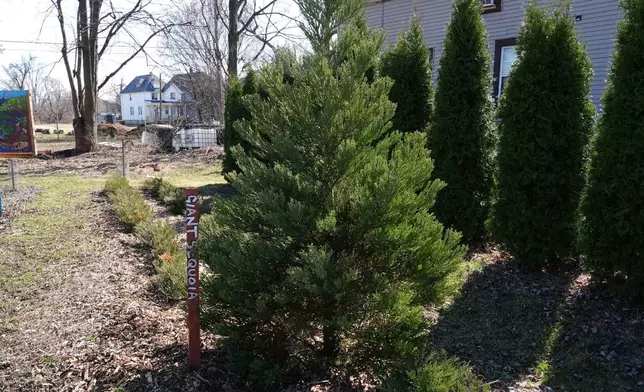
A giant sequoia tree is shown planted at an Arboretum Detroit parcel in Detroit, Friday, March 21, 2025. (AP Photo/Paul Sancya)
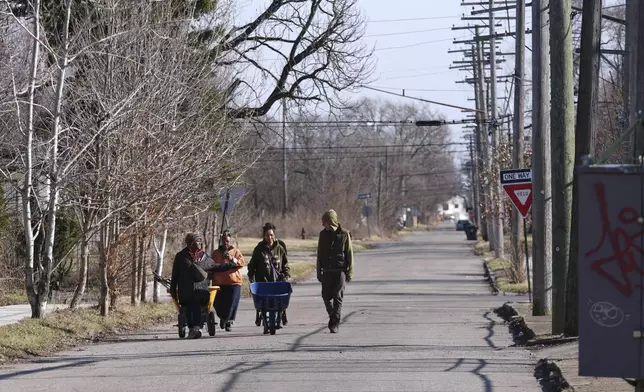
Robyn Redding, from left, Jozie Bullard, Gianna Holliday and Andrew "Birch" Kemp walk to a Arboretum Detroit parcel in Detroit, Friday, March 21, 2025. (AP Photo/Paul Sancya)
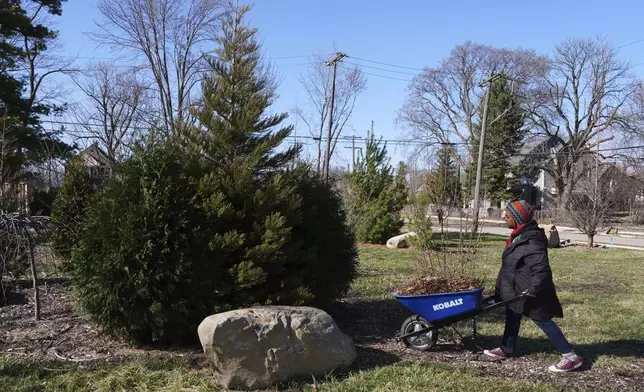
Robyn Redding carries mulch to a sequoia tree in Detroit, Friday, March 21, 2025. (AP Photo/Paul Sancya)
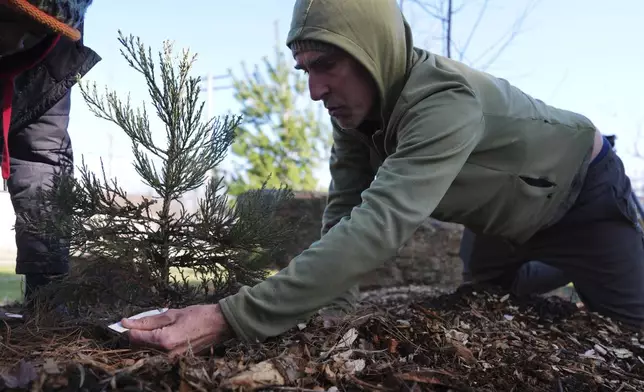
Andrew "Birch" Kemp checks a tag on a planted sequoia tree seedling in Detroit, Friday, March 21, 2025. (AP Photo/Paul Sancya)
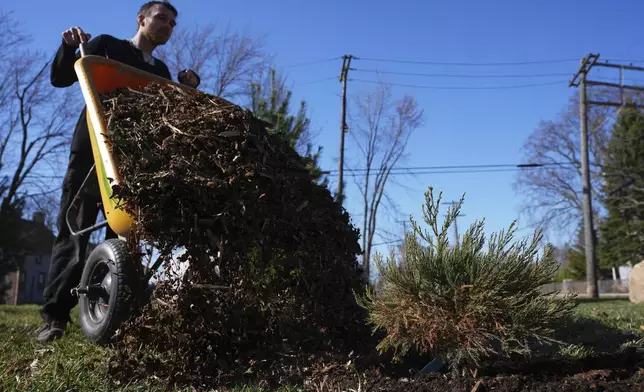
David McGuffie dumps mulch on a sequoia tree seedling in Detroit, Friday, March 21, 2025. (AP Photo/Paul Sancya)
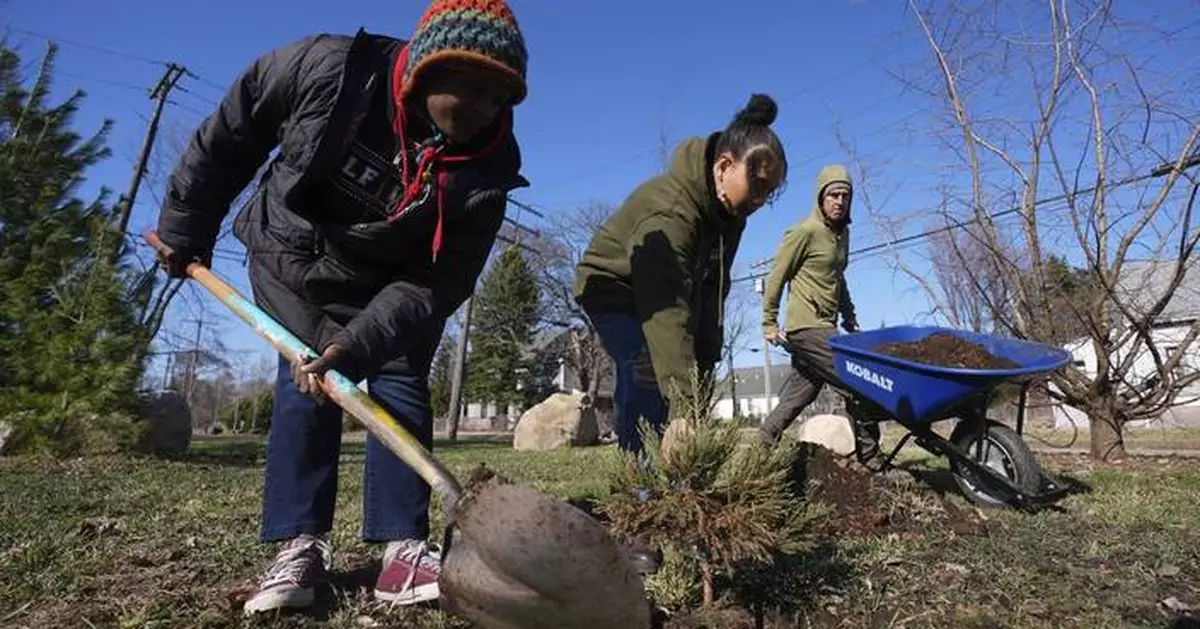
Robyn Redding plants a sequoia tree seedling in Detroit, Friday, March 21, 2025. (AP Photo/Paul Sancya)
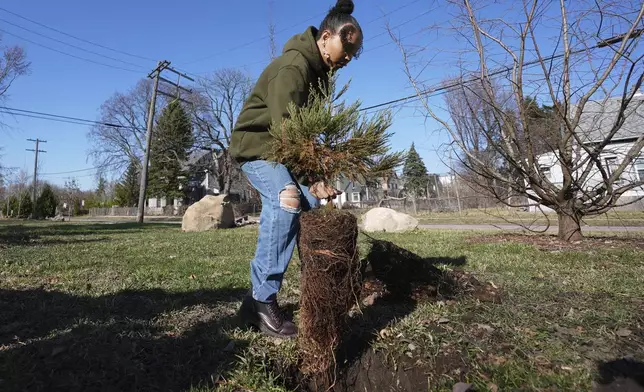
Gianna Holliday carries a sequoia tree seedling to plant in Detroit, Friday, March 21, 2025. (AP Photo/Paul Sancya)
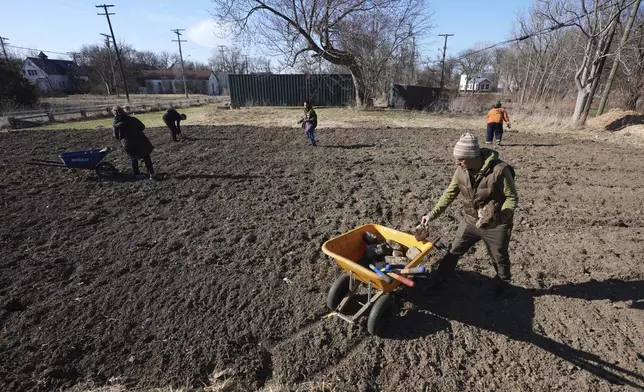
Andrew "Birch" Kemp helps clear debris from a Arboretum Detroit planting site in Detroit, Friday, March 21, 2025. (AP Photo/Paul Sancya)
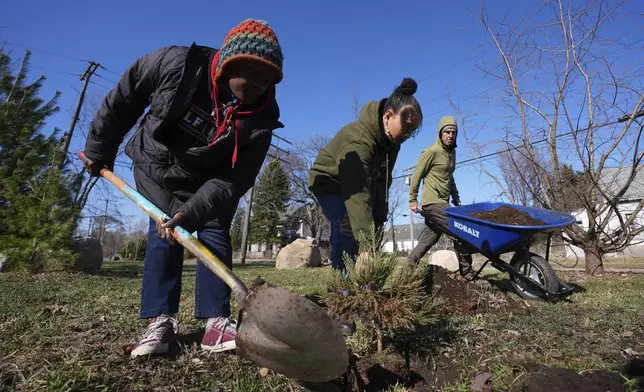
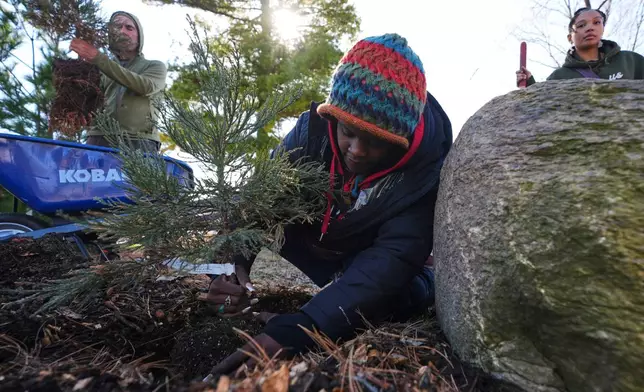
Robyn Redding, from left, and Gianna Holliday plant a sequoia tree seedling as Andrew "Birch" Kemp brings mulch in Detroit, Friday, March 21, 2025. (AP Photo/Paul Sancya)
Detroit is the pilot city for the Giant Sequoia Filter Forest. The nonprofit Archangel Ancient Tree Archive has donated dozens of sequoia saplings that were planted Tuesday by staff and volunteers from Arboretum Detroit, another nonprofit, to mark Earth Day.
For now, they're just saplings, about a foot (30 centimeters) tall. But they're expected to grow to about 15 feet (4.5 meters) tall in about 10 years
Within the last decade, 11 other sequoias had been planted on vacant lots owned by Arboretum Detroit and nine more on private properties around the neighborhood. Each now reaches 12 to 15 feet (3.6 to 4.5 meters) tall. Arboretum Detroit has another 200 saplings in its nursery.
Archangel Ancient Tree Archive co-founder David Milarch says his group also plans to plant sequoias in Los Angeles, Oakland, California, and London.
The massive conifers can grow to more than 300 feet (90 meters) tall with a more than 30-foot (9-meter) circumference at the base. They can live for more than 3,000 years.
“Here’s a tree that is bigger than your house when it’s mature, taller than your buildings, and lives longer than you can comprehend,” said Andrew “Birch” Kemp, Arboretum Detroit's executive director.
The sequoias will eventually provide a full canopy that protects everything beneath, he said.
“It may be sad to call these .5- and 1-acre treescapes forests,” Kemp said. “We are expanding on this and shading our neighborhood in the only way possible, planting lots of trees.”
Giant sequoias are resilient against disease and insects, and are usually well-adapted to fire. Thick bark protects their trunks and their canopies tend to be too high for flames to reach. But climate change is making the big trees more vulnerable to wildfires out West, Kemp said.
“The fires are getting so hot that its even threatening them,” he said.
Archangel, based in Copemish, Michigan, preserves the genetics of old-growth trees for research and reforestation.
The sequoia saplings destined for Detroit are clones of two giants known as Stagg — the world's fifth-largest tree — and Waterfall, of the Alder Creek grove, about 150 miles (240 kilometers) north of Los Angeles.
In 2010, Archangel began gathering cones and climbers scaled high into the trees to gather new-growth clippings from which they were able to develop and grow saplings.
A decade later, a wildfire burned through the grove. Waterfall was destroyed but Stagg survived. They will both live on in the Motor City.
Sequoias need space, and metropolitan Detroit has plenty of it.
In the 1950s, 1.8 million people called Detroit home, but the city's population has since shrunk to about one-third of that number. Tens of thousands of homes were left empty and neglected.
While the city has demolished at least 24,000 vacant structures since it emerged from bankruptcy in 2014, thousands of empty lots remain. Kemp estimates that only about 10-15% of the original houses remain in the neighborhood where the sequoias will grow.
“There’s not another urban area I know of that has the kind of potential that we do to reforest," he said. “We could all live in shady, fresh air beauty. It's like no reason we can’t be the greenest city in the world.”
“They’re safer here ... we don’t have wildfires like (California)," Birch continued. "The soil stays pretty moist, even in the summer. They like to have that winter irrigation, so when the snow melts they can get a good drink.”
Caring for the sequoias will fall to future generations, so Milarch has instigated what he calls “tree school” to teach Detroit’s youth how and why to look after the new trees.
“We empower our kids to teach them how to do this and give them the materials and the way to do this themselves,” Milarch said. “They take ownership. They grow them in the classrooms and plant them around the schools. They know we’re in environmental trouble.”
Some of them may never have even walked in a forest, Kemp said.
“How can we expect children who have never seen a forest to care about deforestation on the other side of the world?" Kemp said. "It is our responsibility to offer them their birthright.”
City residents are exposed to extreme air pollution and have high rates of asthma. The Detroit sequoias will grow near a heavily industrial area, a former incinerator and two interstates, he said.
Kemp’s nonprofit has already planted about 650 trees — comprising around 80 species — in some 40 lots in the area. But he believes the sequoias will have the greatest impact.
“Because these trees grow so fast, so large and they’re evergreen they’ll do amazing work filtering the air here,” Kemp said. “We live in pretty much a pollution hot spot. We’re trying to combat that. We’re trying to breathe clean air. We’re trying to create shade. We’re trying to soak up the stormwater, and I think sequoias — among all the trees we plant — may be the strongest, best candidates for that.”
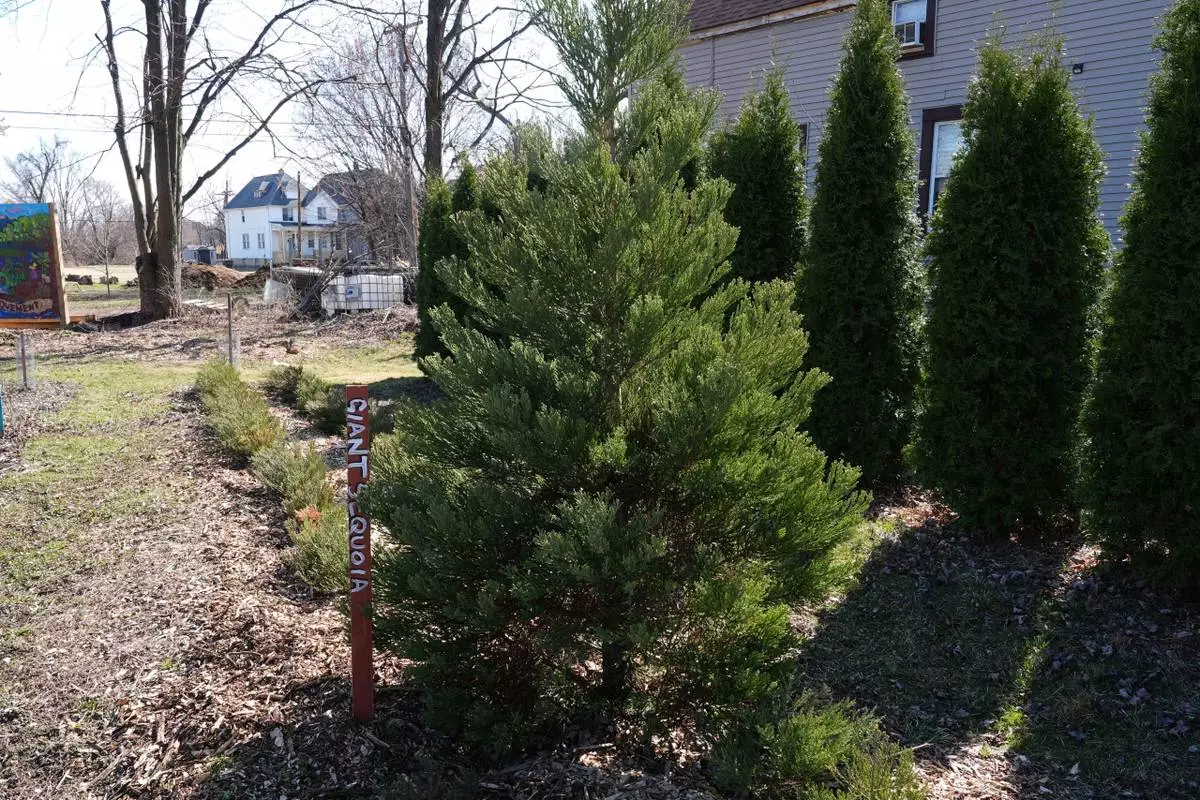
A giant sequoia tree is shown planted at an Arboretum Detroit parcel in Detroit, Friday, March 21, 2025. (AP Photo/Paul Sancya)
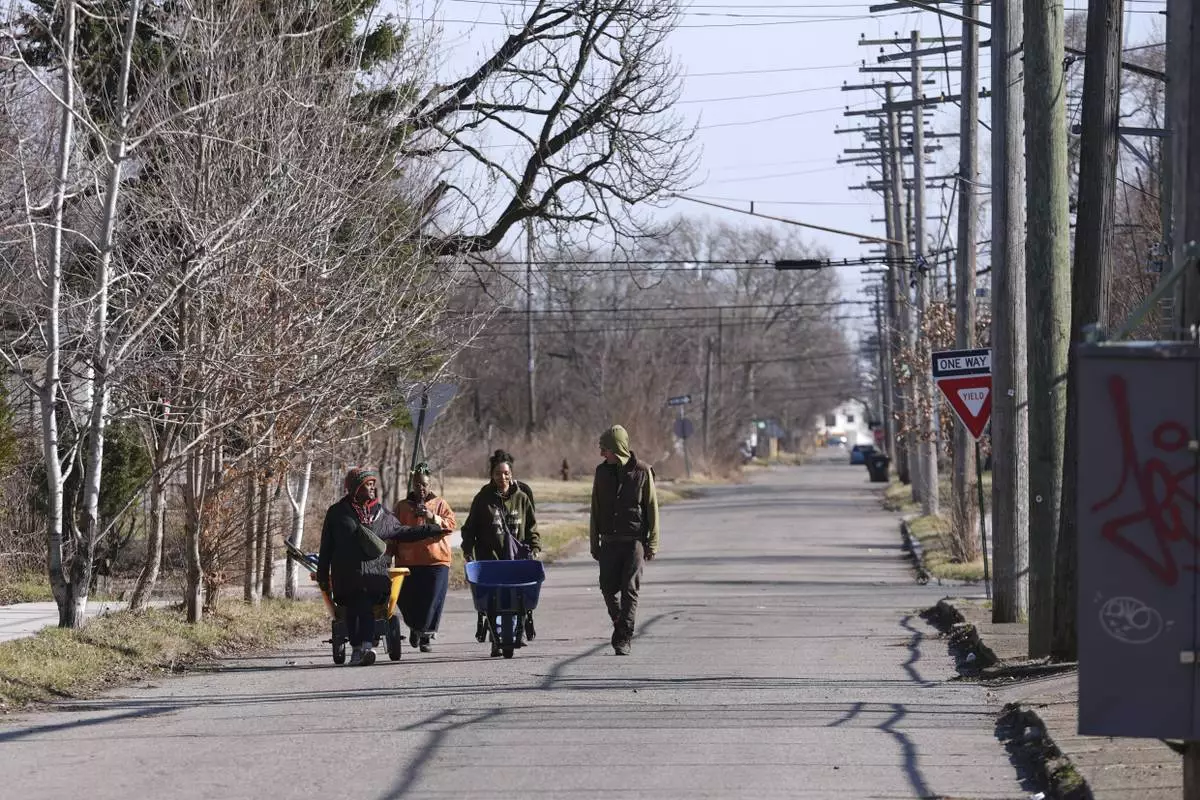
Robyn Redding, from left, Jozie Bullard, Gianna Holliday and Andrew "Birch" Kemp walk to a Arboretum Detroit parcel in Detroit, Friday, March 21, 2025. (AP Photo/Paul Sancya)
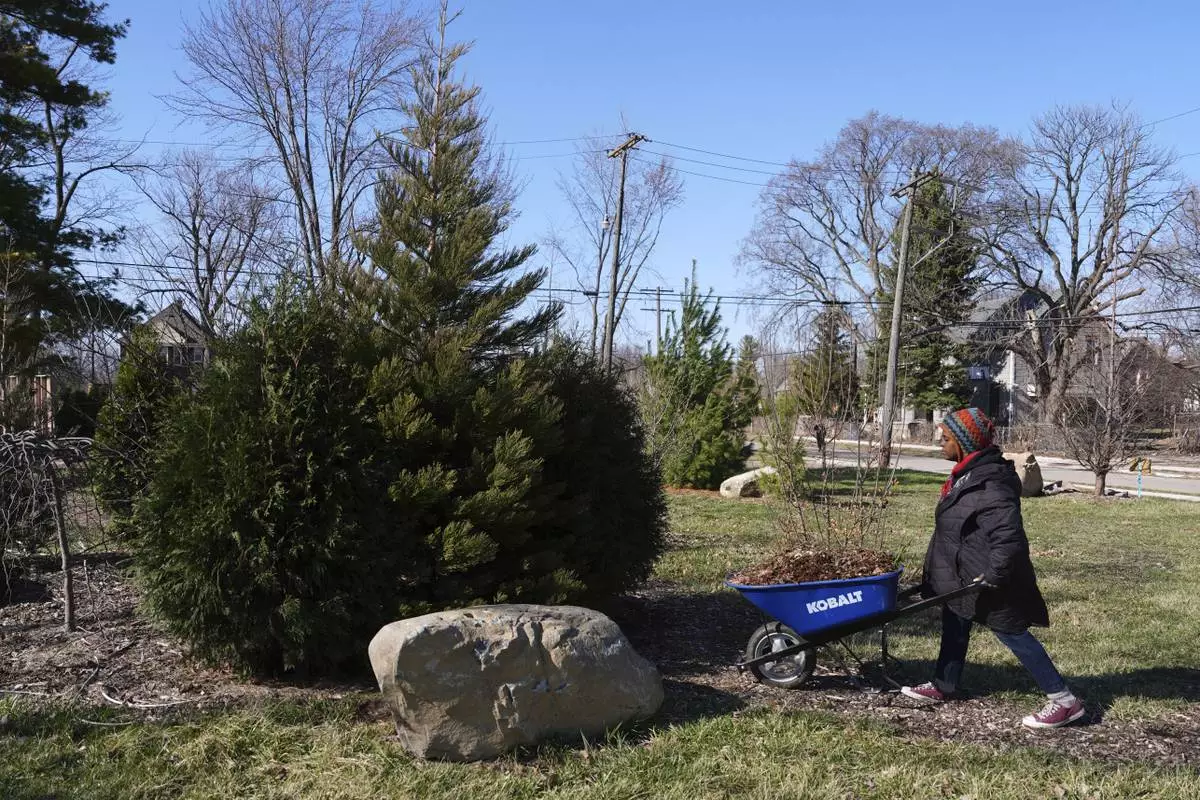
Robyn Redding carries mulch to a sequoia tree in Detroit, Friday, March 21, 2025. (AP Photo/Paul Sancya)
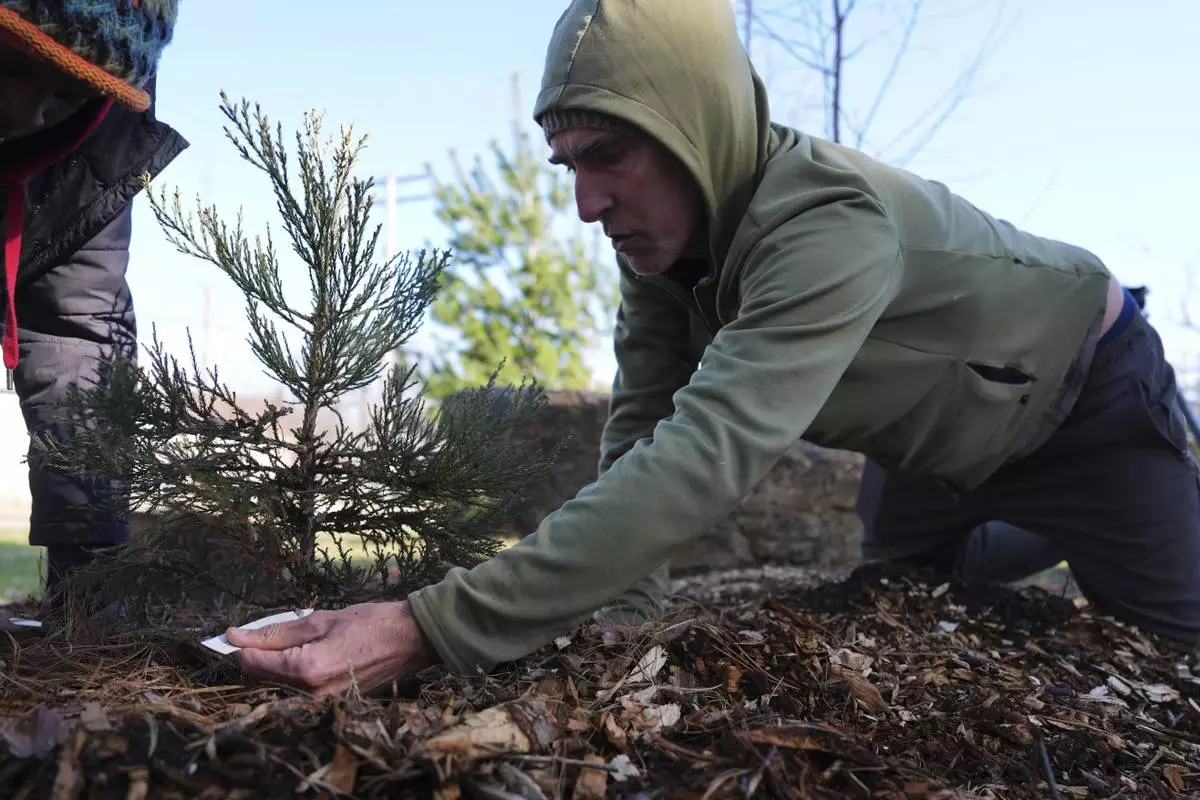
Andrew "Birch" Kemp checks a tag on a planted sequoia tree seedling in Detroit, Friday, March 21, 2025. (AP Photo/Paul Sancya)
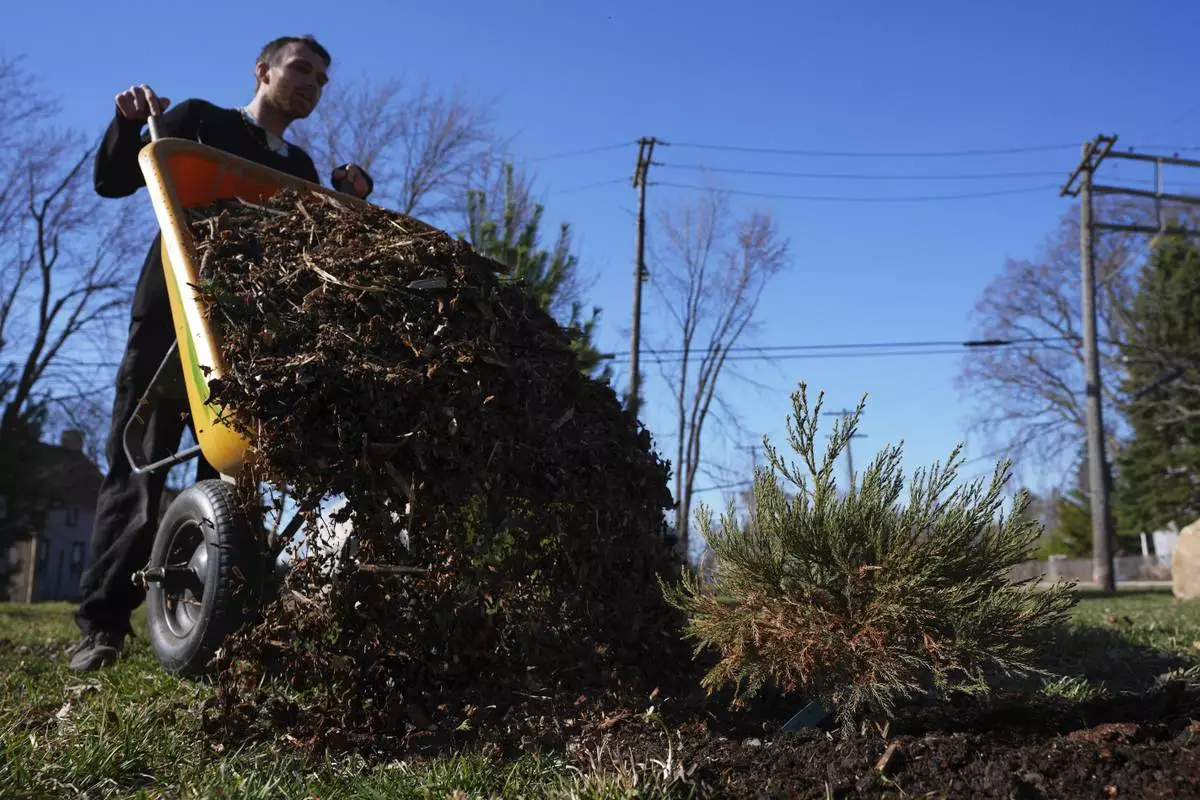
David McGuffie dumps mulch on a sequoia tree seedling in Detroit, Friday, March 21, 2025. (AP Photo/Paul Sancya)
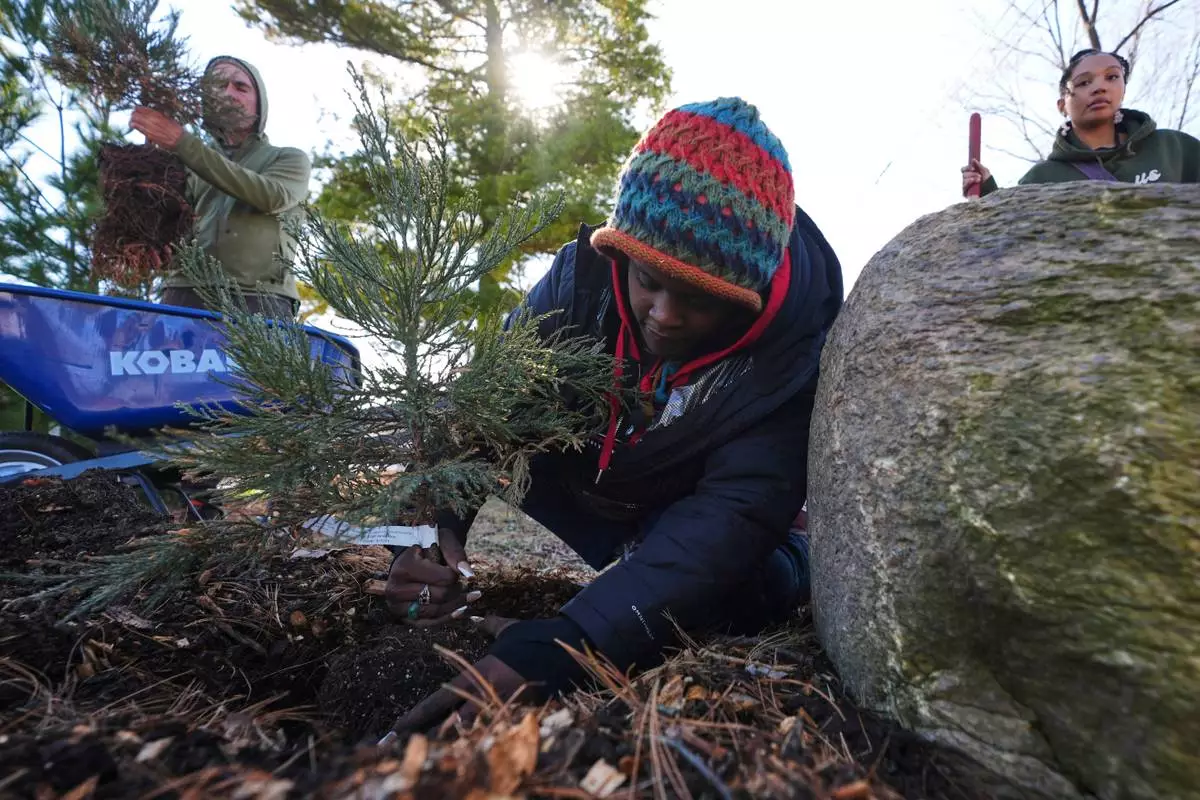
Robyn Redding plants a sequoia tree seedling in Detroit, Friday, March 21, 2025. (AP Photo/Paul Sancya)
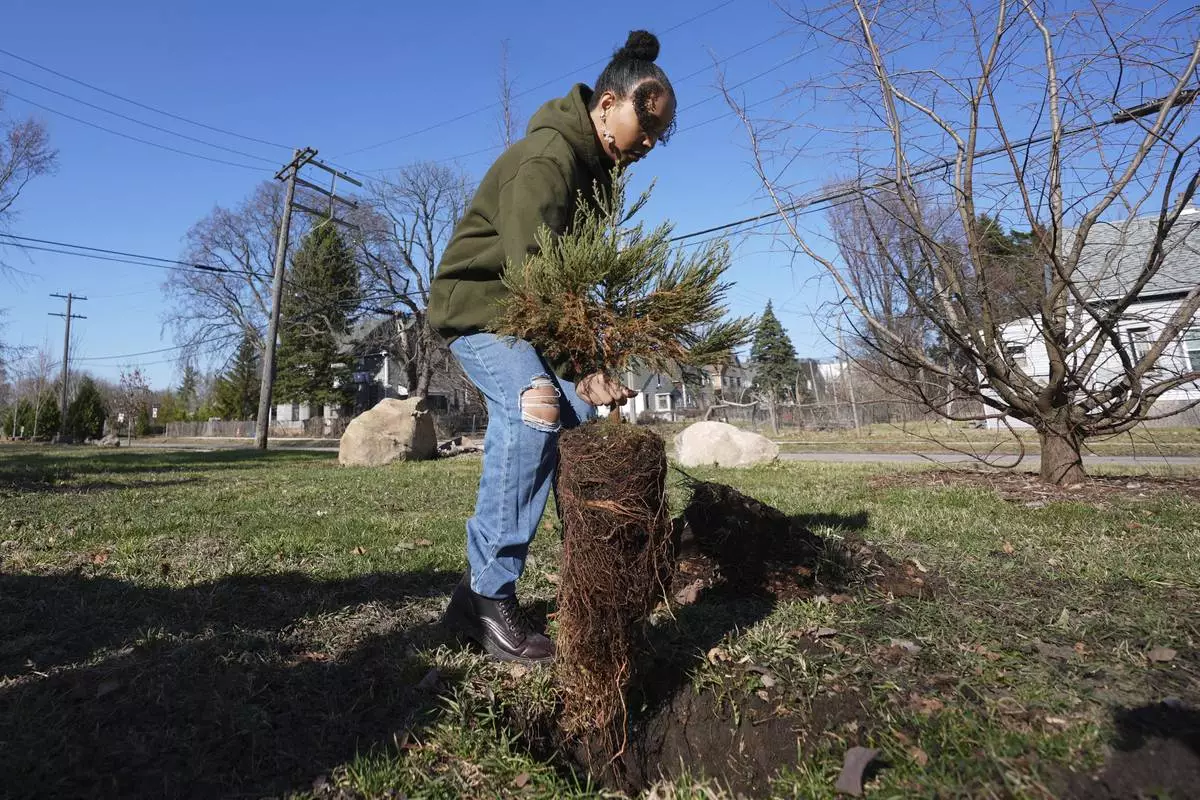
Gianna Holliday carries a sequoia tree seedling to plant in Detroit, Friday, March 21, 2025. (AP Photo/Paul Sancya)

Andrew "Birch" Kemp helps clear debris from a Arboretum Detroit planting site in Detroit, Friday, March 21, 2025. (AP Photo/Paul Sancya)
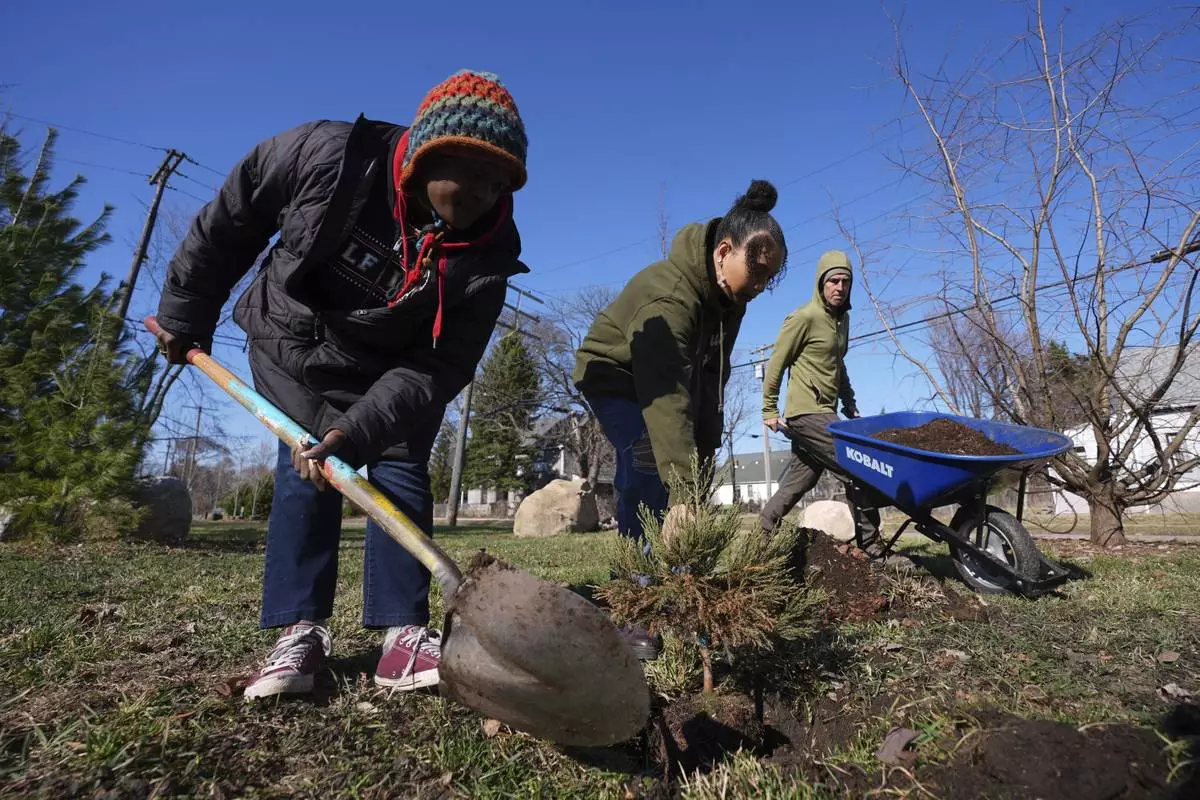
Robyn Redding, from left, and Gianna Holliday plant a sequoia tree seedling as Andrew "Birch" Kemp brings mulch in Detroit, Friday, March 21, 2025. (AP Photo/Paul Sancya)