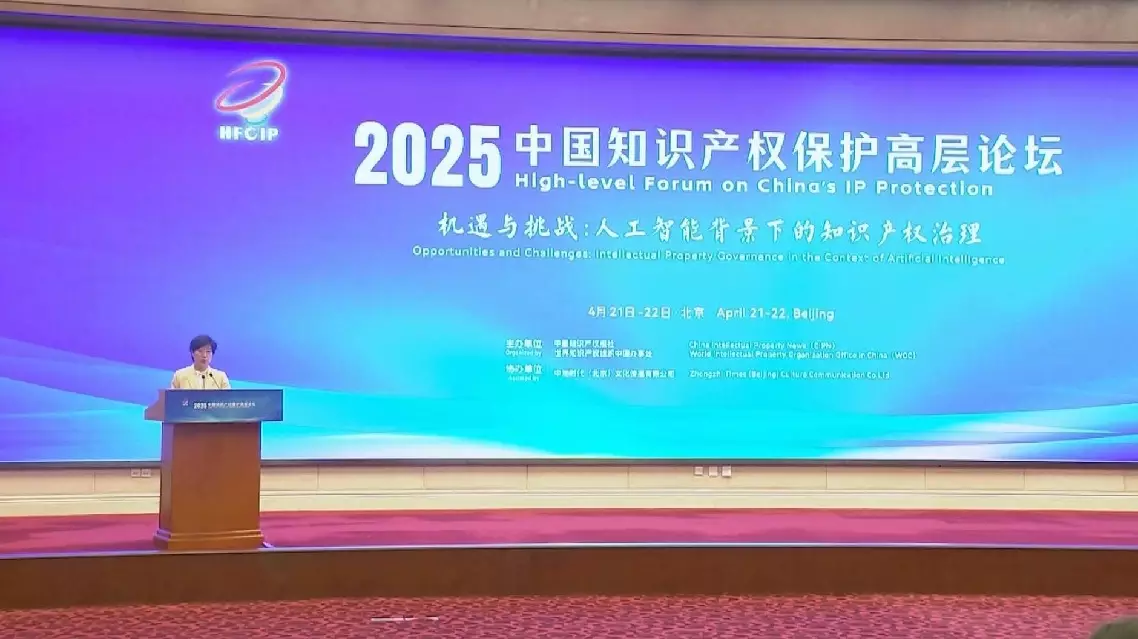
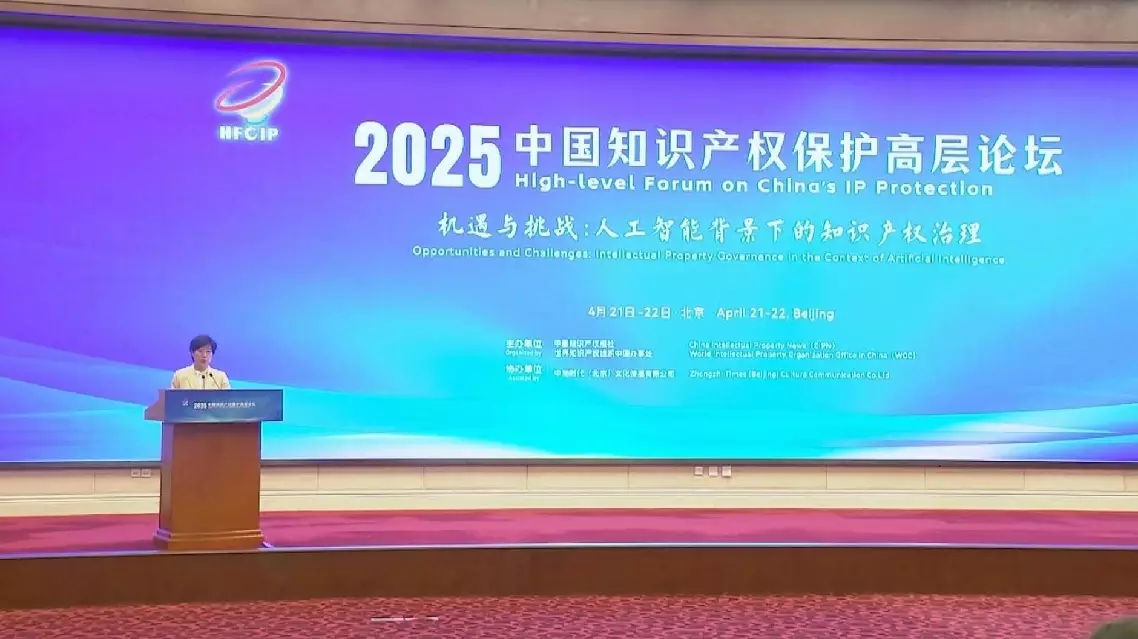
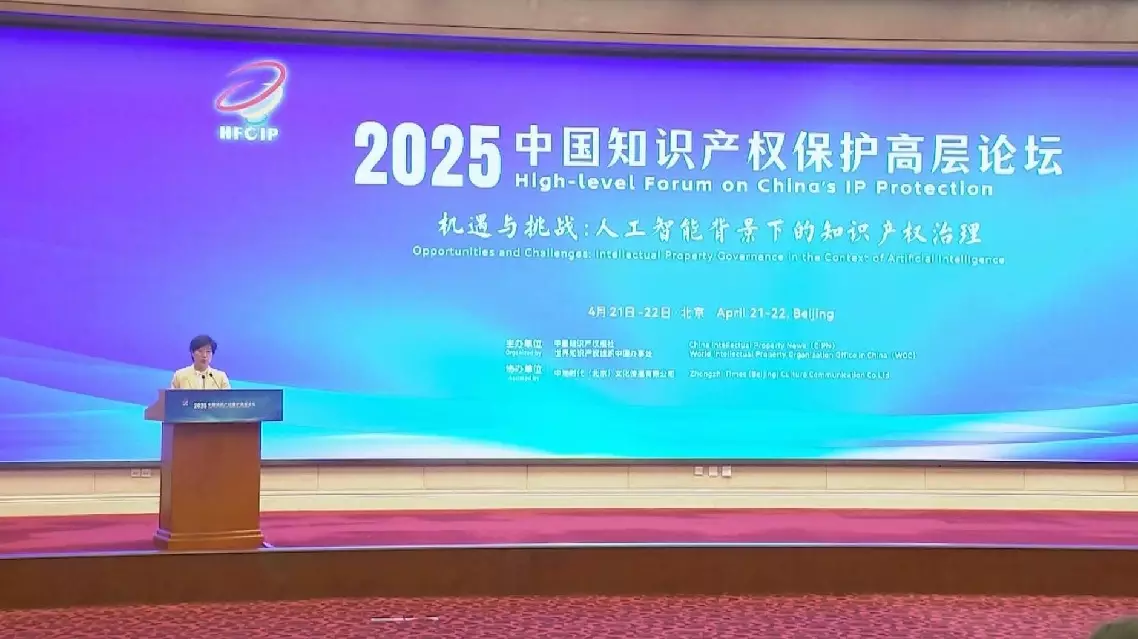
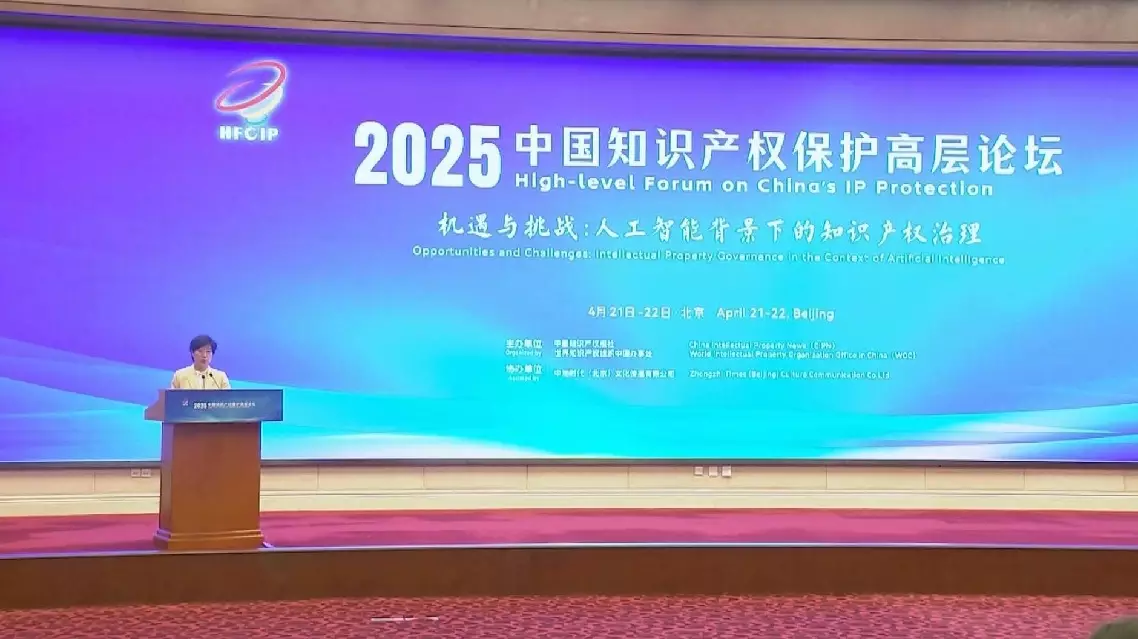
The High-level Forum on China IP Protection 2025 opened in Beijing on Monday, bringing together experts and industry leaders to discuss intellectual property governance amid AI-driven innovation.
Themed "Opportunity and Challenge: Intellectual Property Governance in the Context of Artificial Intelligence," the two-day event brings together leading voices from China and abroad to explore strategies for IP governance in an era of rapid technological advancement.
Click to Gallery
Beijing high-level forum aims to advance global IP governance
Beijing high-level forum aims to advance global IP governance
Beijing hosts 2025 High-Level Forum to advance global IP governance
Beijing hosts 2025 High-Level Forum to advance global IP governance
According to a report released by the World Intellectual Property Organization (WIPO), China currently holds the largest number of artificial intelligence patents in the world, accounting for 61 percent of the global total. This provides strong support for the development of China's AI industry.
"Digital tech patent applications have grown 172 percent faster on average than other technological fields in the past five years. And AI-related application growth was 700 percent faster. Among top patent owners in the field of generative AI, more than half of top ten are from China. China's stakeholders are significant players of IP in the generative AI field," said Kenichiro Natsume, Assistant Director General of WIPO.
Beijing high-level forum aims to advance global IP governance
Beijing high-level forum aims to advance global IP governance
Beijing hosts 2025 High-Level Forum to advance global IP governance
Beijing hosts 2025 High-Level Forum to advance global IP governance
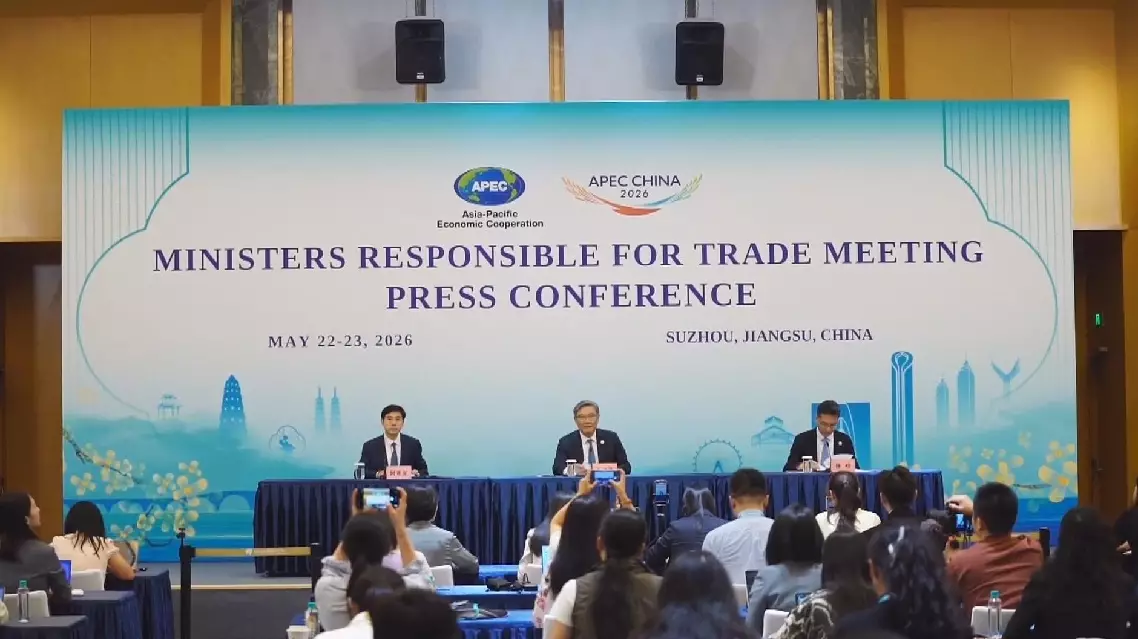
The 32nd Asia-Pacific Economic Cooperation (APEC) Ministers Responsible for Trade Meeting concluded in east China's Suzhou on Saturday, yielding fruitful results and laying significant groundwork for the APEC Economic Leaders' Meeting in November.
The trade ministers' meeting focused on "building an open and predictable regional and multilateral economic and trade order" and "fostering new engines of innovative and dynamic trade and investment cooperation."
Chinese Commerce Minister Wang Wentao briefed the media on the meeting's outcomes at a press conference.
Wang said the meeting issued a joint statement titled the Suzhou Statement, and approved the latest edition of the APEC Roadmap for Innovative, Competitive and Resilient Services.
All parties agreed to advance policy innovation and reform in services trade, build an open and predictable investment environment, improve regional trade facilitation and supply chain resilience, strengthen standards coordination, and enhance intellectual property protection, Wang told the media.
He also said that substantial progress was made on a framework document for regional digital trade cooperation and the ministers emphasized promoting inclusive AI development, strengthening AI-related trade, and bridging the digital divide to ensure shared benefits from digital transformation.
The minister noted that the outcomes of the meeting demonstrated strong cooperation willingness, highlighted an innovation-oriented approach, and reflected inclusiveness and shared benefits. "The fact that Asia-Pacific economies can come together, uphold the original aspiration of promoting trade and investment liberalization and facilitation while supporting economic growth and prosperity, and engage in in-depth discussions on the important issue of 'where multilateral and regional economic and trade cooperation is headed,' fully demonstrates that open regionalism and true multilateralism enjoy broad support, and that mutual success and shared development serve the fundamental interests of all economies," Wang said.
2026 APEC trade ministers' meeting concludes with fruitful results