Harvard University said Monday that it has filed a federal lawsuit against the Trump administration's funding freeze, calling the action "unlawful and beyond the government's authority."
In a lawsuit filed in the United States District Court for the District of Massachusetts, the university said that this case involves "the government's efforts to use the withholding of federal funding as leverage to gain control of academic decision making at Harvard."
Click to Gallery
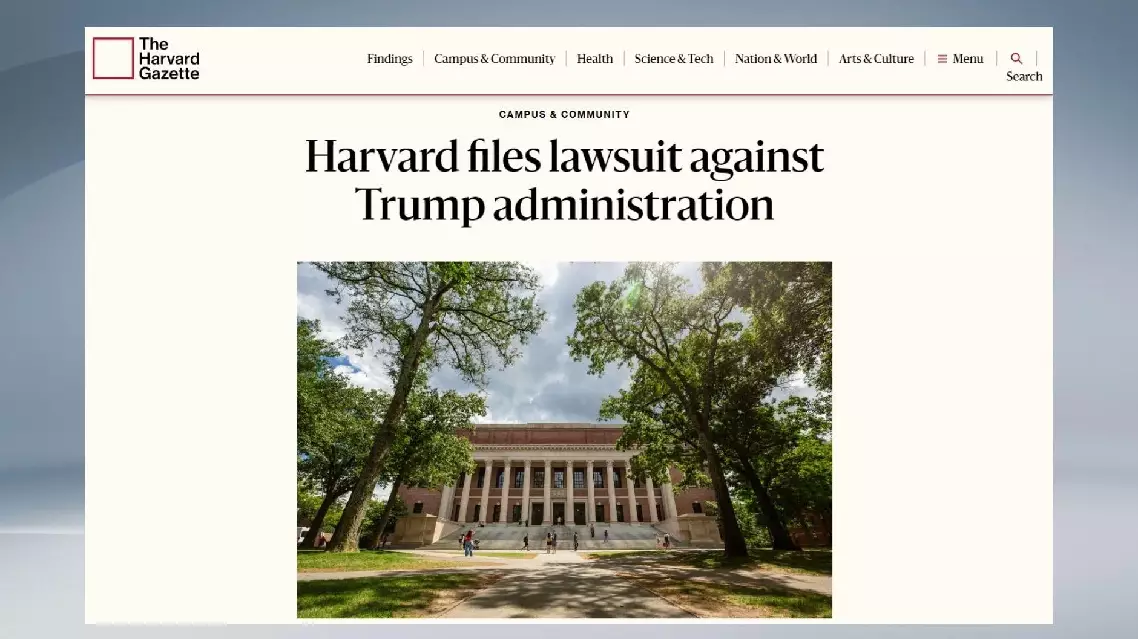
Harvard University sues Trump administration over funding freeze
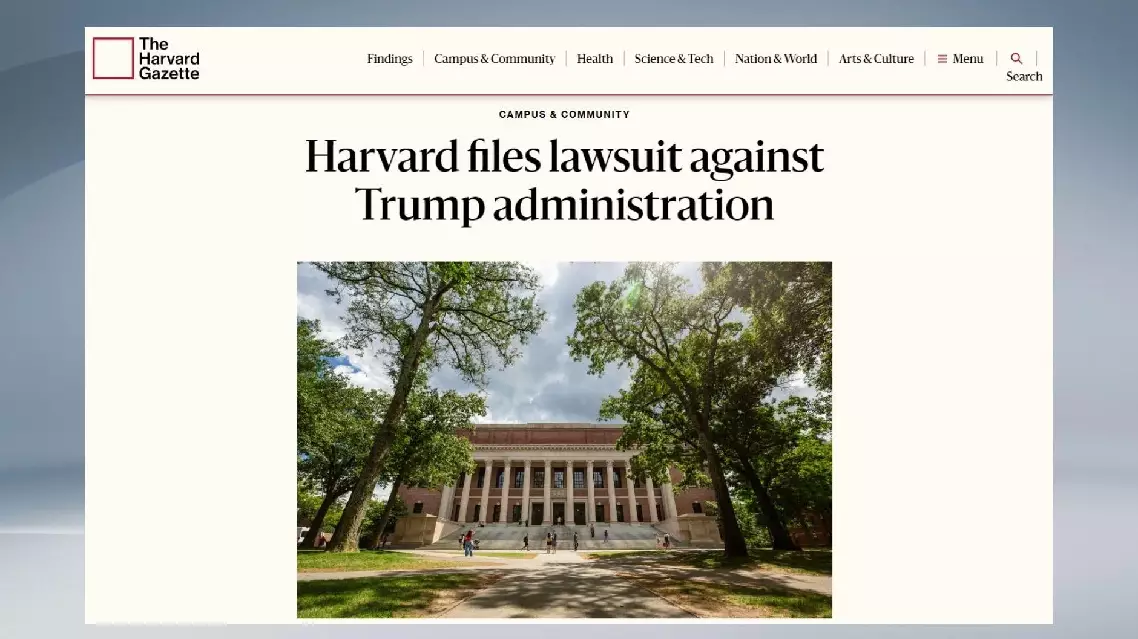
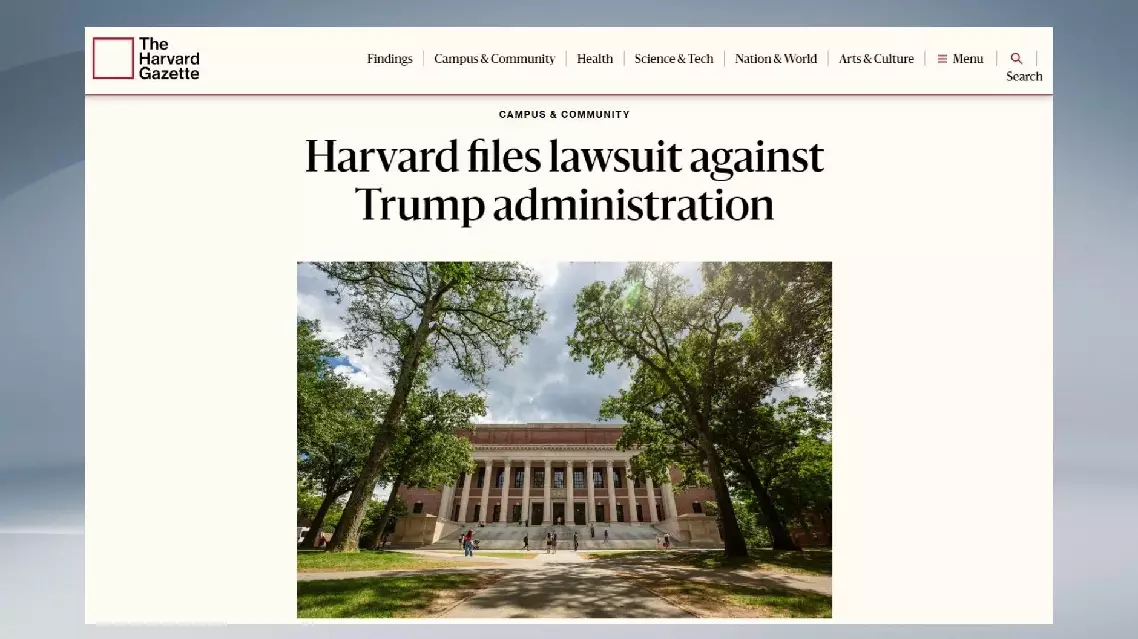
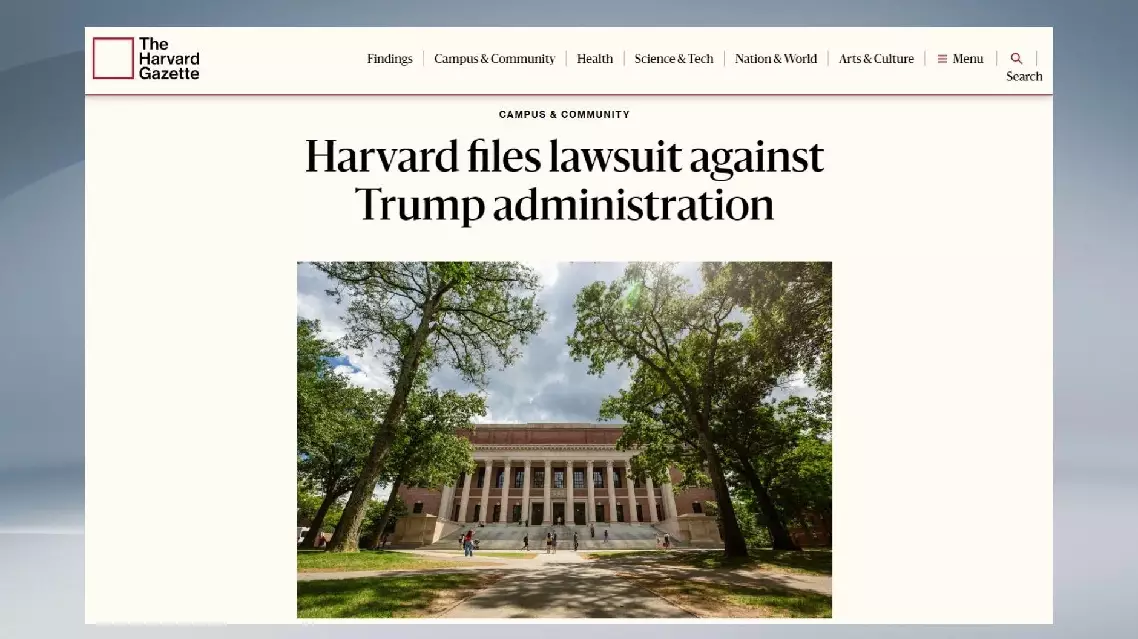
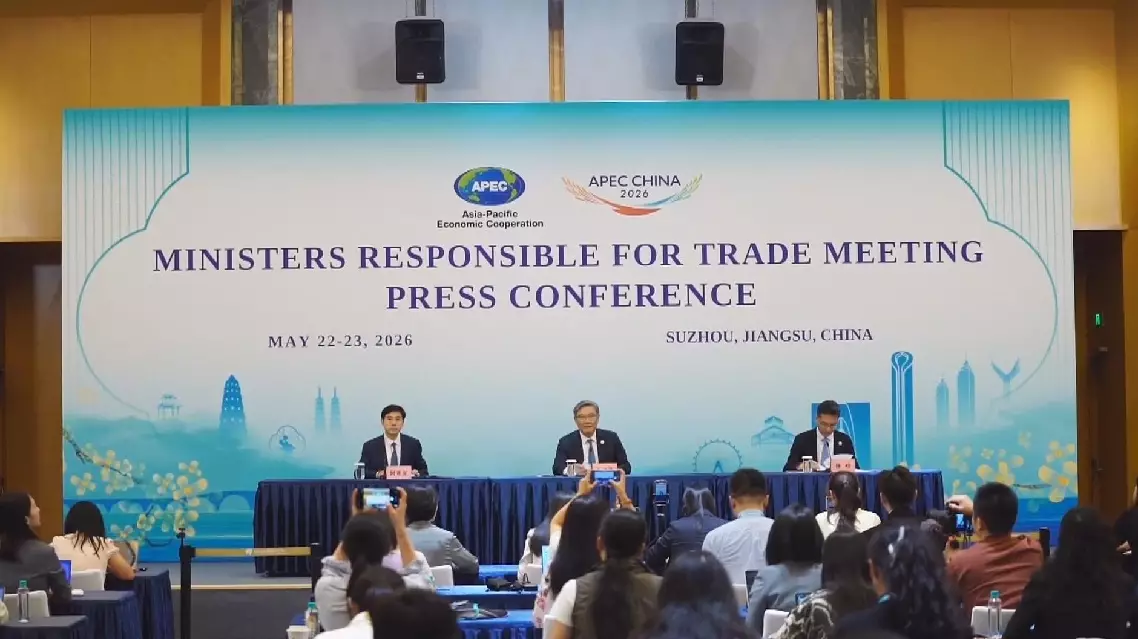
Over the course of the past week, the federal government has taken several actions following Harvard's refusal to comply with its illegal demands, Harvard University President Alan M. Garber wrote in a letter to members of the Harvard Community.
A report by The New York Times said that the lawsuit "signaled a major escalation" of the ongoing fight between higher education and Trump, who has vowed to "reclaim" elite universities.
The administration has cast its campaign as a fight against antisemitism, but has also targeted programs and teaching related to racial diversity and gender issues, according to the report.
On April 11, Trump administration officials sent a letter to Harvard, demanding that the university make "meaningful governance reform and restructuring," noting that "an investment is not an entitlement."
On April 14, Harvard University rejected the Trump administration's demands to make sweeping changes to its governance, hiring and admissions practices. Just a few hours later, the Trump administration announced a freeze on 2.2 billion dollars in multi-year grants and 60 million in multi-year contract value to the university.
On April 16, U.S. Homeland Security Secretary Kristi Noem demanded that Harvard University share information about the foreign student visa holders' illegal and violent activities by April 30, or risk losing its authorization to enroll international students.
Since taking office in January, the Trump administration has issued warnings to several top U.S. universities, stating that they could face funding cuts if they do not adjust their policies.
The administration's main demands include eliminating what it describes as antisemitism on campus and dismantling diversity initiatives that favor certain minority groups.
Against the backdrop of the Israel-Palestine conflict, many universities across the United States saw a wave of pro-Palestinian protests last year, drawing increased government attention to alleged antisemitic sentiments on campuses.
Harvard University sues Trump administration over funding freeze

Chinese Foreign Minister Wang Yi said on Tuesday that mediation efforts of the Pakistani side regarding the Middle East tensions are in the common interests of all parties.
Wang, also a member of the Political Bureau of the Communist Party of China Central Committee, made the remarks in his talks with Pakistani Deputy Prime Minister and Foreign Minister Mohammad Ishaq Dar in Beijing.
During their talks, the two sides exchanged views on current international issues and regional conflicts.
Wang welcomed the visit of the Pakistani side to Beijing for discussion on easing tensions in the Middle East, just after its holding of a quadrilateral foreign ministers' meeting in Islamabad.
He said China supports and looks forward to Pakistan playing a unique and important role in easing the situation and resuming peace talks. This process is no easy task, and Pakistan's mediation efforts are in line with the common interests of all parties, Wang added.
He noted China is willing to make joint efforts with Pakistan to end the hostilities as soon as possible, create opportunities for peace and open the window for peace talks.
On bilateral ties, Wang said this year marks the 75th anniversary of the establishment of diplomatic relations between China and Pakistan, calling on both sides to implement the important consensus reached by the leaders of the two countries and constantly advance the building of a China-Pakistan community with a shared future.
For his part, Dar said the Pakistan-China friendship is precious and deeply rooted in people's hearts, adding that Pakistan is willing to work with China to promote the continuous development of the all-weather strategic cooperative partnership between the two countries.
Dar thanked China for supporting Pakistan's mediation of the situation in Iran, adding that the current conflict has disrupted international energy supplies and caused heavy damage to developing countries.
Noting that solutions can only be found through negotiation, Dar said Pakistan is willing to strengthen communication and coordination with China to push all parties to start peace talks as soon as possible and restore regional peace.
The two sides also put forward a five-point initiative for restoring peace and stability in the Gulf and the Middle East region:
I. Immediate cessation of hostilities: China and Pakistan call for immediate cessation of hostilities and utmost efforts to prevent the conflict from spreading. Humanitarian assistance must be allowed to all war-affected areas.
II. Start of peace talks as soon as possible. Sovereignty, territorial integrity, national independence and security of Iran and the Gulf states should be safeguarded. Dialogue and diplomacy is the only viable option to resolve conflicts. China and Pakistan support the relevant parties in initiating talks, with all parties committing to peaceful resolution of disputes, and refraining from the use or the threat of use of force during peace talks.
III. Security of nonmilitary targets. The principle of protecting civilians in military conflict should be observed. China and Pakistan call on parties to the conflict to immediately stop attacks on civilians and nonmilitary targets, and fully adhere to International Humanitarian Law, and stop attacking important infrastructure, including energy, desalination and power facilities, and peaceful nuclear infrastructure, such as nuclear power plants.
IV. Security of shipping lanes. The Strait of Hormuz, together with its adjacent waters, is an important global shipping route for goods and energy. China and Pakistan call on the parties to protect the security of ships and crew members stranded in the Strait of Hormuz, allow the early and safe passage of civilian and commercial ships, and restore normal passage through the Strait as soon as possible.
V. Primacy of the United Nations Charter. China and Pakistan call for efforts to practice true multilateralism, to jointly strengthen the primacy of the United Nations, and to support the conclusion of an agreement for establishing a comprehensive peace framework and realizing lasting peace based on the purposes and principles of the UN Charter and international law.
Pakistan's mediation efforts in common interests of all parties: Chinese FM