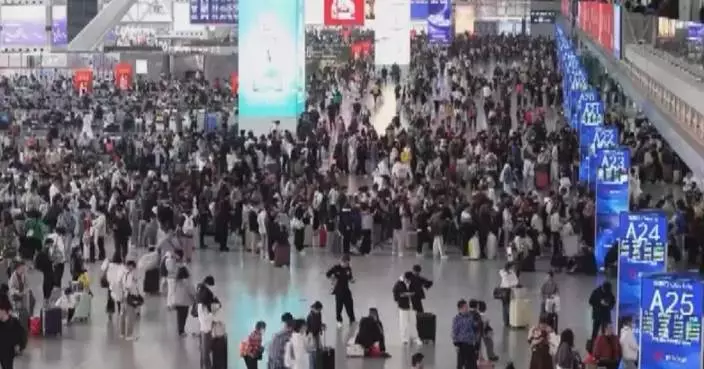
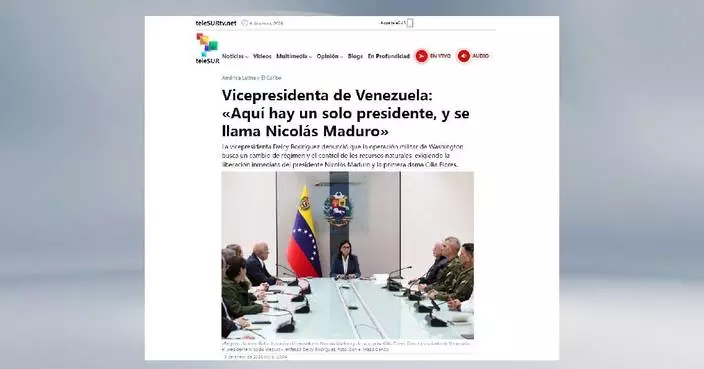
In the first quarter of this year, China's e-commerce platforms ramped up efforts to boost domestic demand and support foreign trade enterprises in expanding into the domestic market, said the Ministry of Commerce on Monday.
During the period, initiatives like the e-commerce cultivation program and the matchmaking between suppliers and buyers through e-commerce platforms are helping to drive domestic market demand.
From January to March, online sales of digital products in China grew by 7.4 percent year on year, driven by the trade-in consumer goods program. Boosted by the release of quality films and improved restaurant experience, online entertainment sales increased by 40 percent, while on-site dining saw a 29.2 percent rise, according to the ministry.
Additionally, in the first quarter, the government and enterprises have worked together to accelerate the integration of domestic and foreign trade to cope with external risks. More than 10 e-commerce platforms have taken swift measures to deliver quality foreign trade products to domestic households through e-commerce channels.
Various of business events focusing on connecting suppliers with potential buyers were organized to help high-quality foreign trade products to reach domestic consumers.
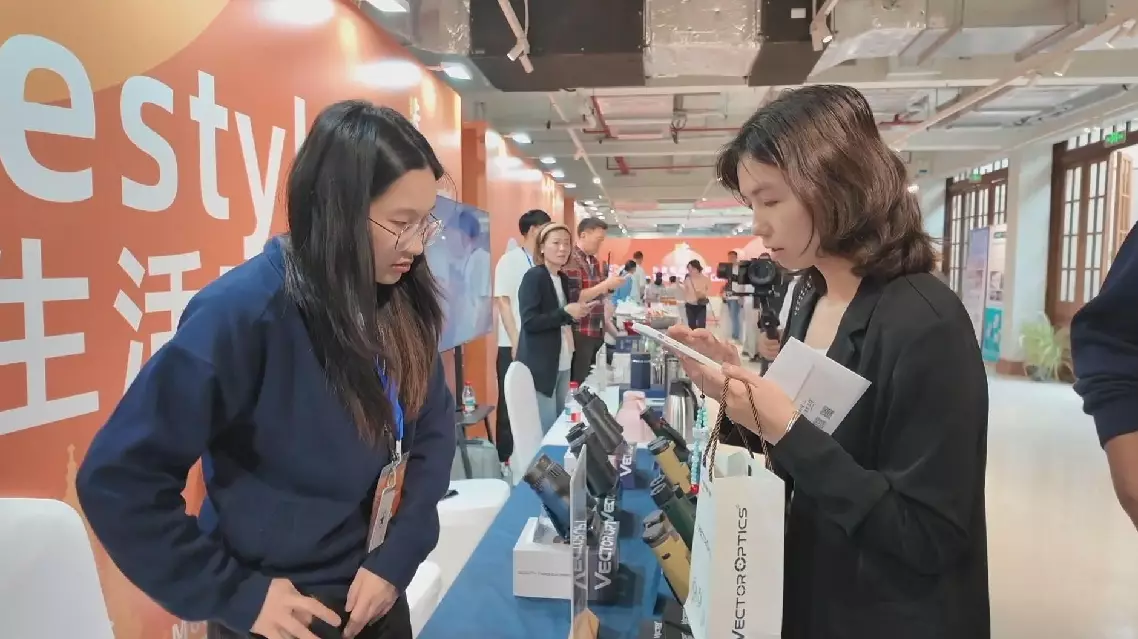
E-commerce platforms promote growth in China's domestic demand in Q1
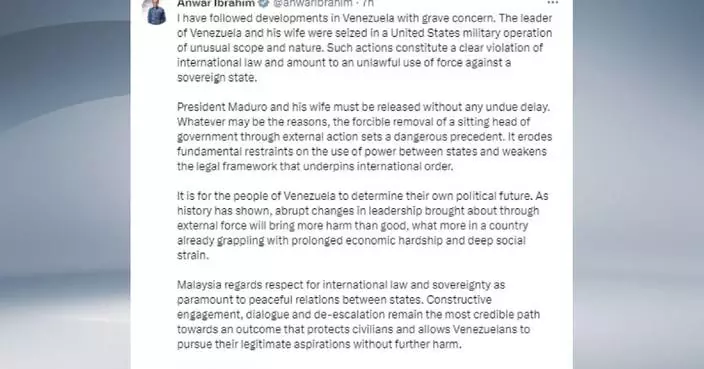
The United States cannot legitimize an operation that attacked Venezuela and captured its president, a Chinese scholar said Sunday.
On Saturday, the United States launched a large-scale strike on Venezuela, during which Venezuelan President Nicolas Maduro and his wife were 'captured and flown out of Venezuela' according to a post by U.S. President Donald Trump on his Truth Social account.
Teng Jianqun, director of the Center for Diplomatic Studies at Hunan Normal University, said in an interview with China Global Television Network (CGTN) that the aim of this operation is to take full control of Venezuela’s natural resources.
"I don't think the United States can legitimize this operation to take custody of the president of Venezuela. And also I don't think the United States can legitimize its any action in taking the oil reserves of that country. This is actually a very dangerous game played by the Trump administration. And of course, the United States would like to take full control of that country and to take full control of the natural resources, especially the large reserve of oil in Venezuela," said Teng.
Teng said Venezuela is not an isolated case but a common practice by the United States. The United States launched an invasion of Panama on Dec. 20, 1989, which continued until January 1990, with the stated objective of capturing Panamanian strongman Manuel Noriega on charges of drug trafficking and organized crime.
"We still remember the so-called sentence of the former president of Panama in the late 1980s. And this time, the president of Venezuela will be under some judicial condition (judicial proceedings) for the so-called drug trafficking and some other crimes. So I think this is not a single case for the Venezuela country, but also this is actually a practice by the United States -- to use force, to use so-called justice under law against any leaders in Latin America and the Caribbean waters," he said.
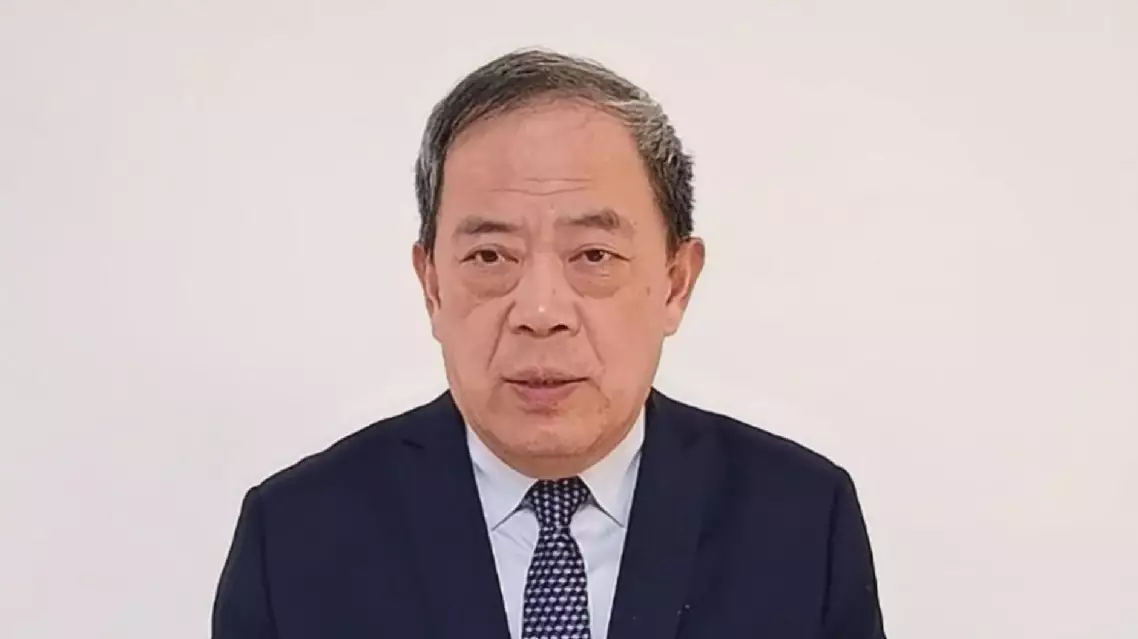
US cannot legitimize operation against Venezuela: Chinese scholar