Skip to Content Facebook Feature Image

Global religious leaders examine living Buddha reincarnation system in Beijing

China

China

China

Global religious leaders examine living Buddha reincarnation system in Beijing

2025-04-22 21:54 Last Updated At:04-23 00:27

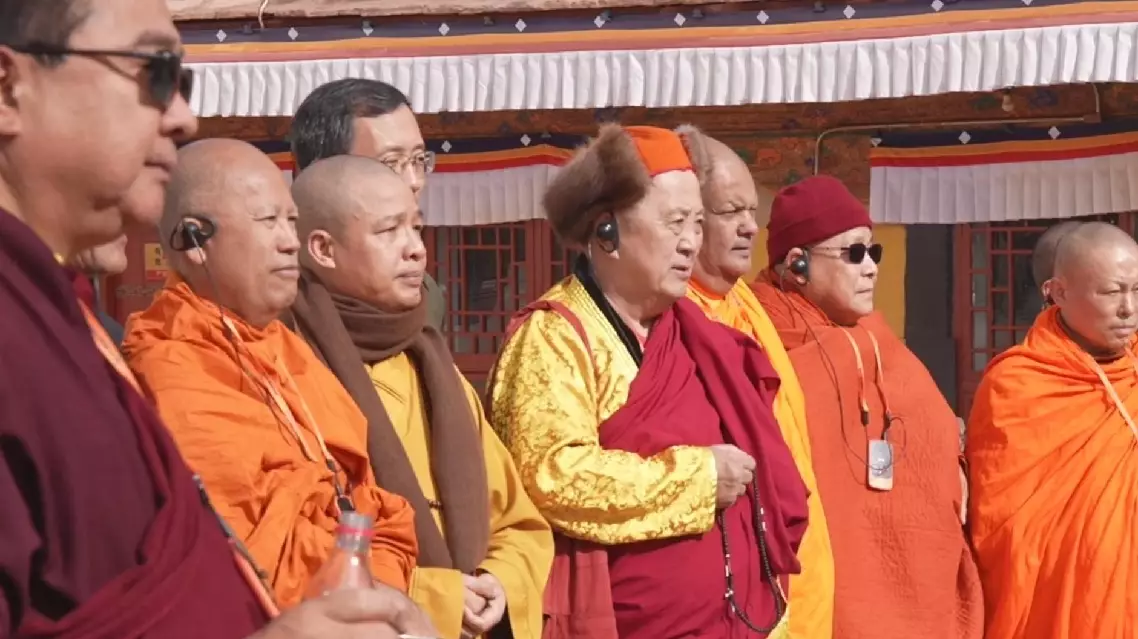
Religious leaders from 12 countries, including Thailand, Cambodia, Mongolia, and Sri Lanka, recently gathered in China to explore Tibetan Buddhism's unique Living Buddha reincarnation system.

They examined artifacts and engaged with Chinese Tibetology experts on Tibetan medicine, education, and reincarnation traditions.

In response to Cambodian religious leaders' questions about how reincarnated soul boys are identified, Li Decheng, director-general of the China Tibetology Research Center, discussed the living Buddha reincarnation tradition in Tibetan Buddhism with foreign guests.

"Finding the true reincarnation of a living Buddha is a complex religious process. Once a soul boy is identified, it's not the central government that determines his status. Instead, the recognition comes from wide acceptance within the religious community or through religious rituals and historical traditions. Whoever is identified through these processes is the reincarnated soul boy. The central government exercises the power of approval. In other words, religious groups use their own religious rituals to search for reincarnated living Buddhas, and the central government does not interfere. The government's role is to exercise legal management authority and approval authority over this process," he said.

Li explained that the Living Buddha reincarnation system was established in the 13th century to maintain monastery unity, but corruption later emerged. To ensure legitimacy, methods like Zamba divination were used to identify reincarnated boys. He then discussed Emperor Qianlong's (1711-1799) solution to the issue.

He then introduced the "drawing lots from the Golden Urn" system, a method implemented to eliminate selection chaos and corruption, ensuring a fair and reliable process for identifying reincarnated Living Buddhas.

"They said this is the people's selection, [choice] and they choose the Lama boy that they considered to be moral to be, highly respected," said Vibol Penh, a member of the Secretariat of Supreme Sangha Council of Cambodia, who was among the delegation of religious leaders.

The monks highlighted a common wish to have more translations of Tibetan Buddhism knowledge into the languages of Buddhist countries.

They commended the unique traditions of Tibetan Buddhism’s reincarnation system, including the "drawing lots from the Golden Urn" method, and expressed hope that more of its rich cultural heritage, from history to Tibetan language and medicine, would be translated, enabling wider exploration and connection.
Global religious leaders examine living Buddha reincarnation system in Beijing
Global religious leaders examine living Buddha reincarnation system in Beijing

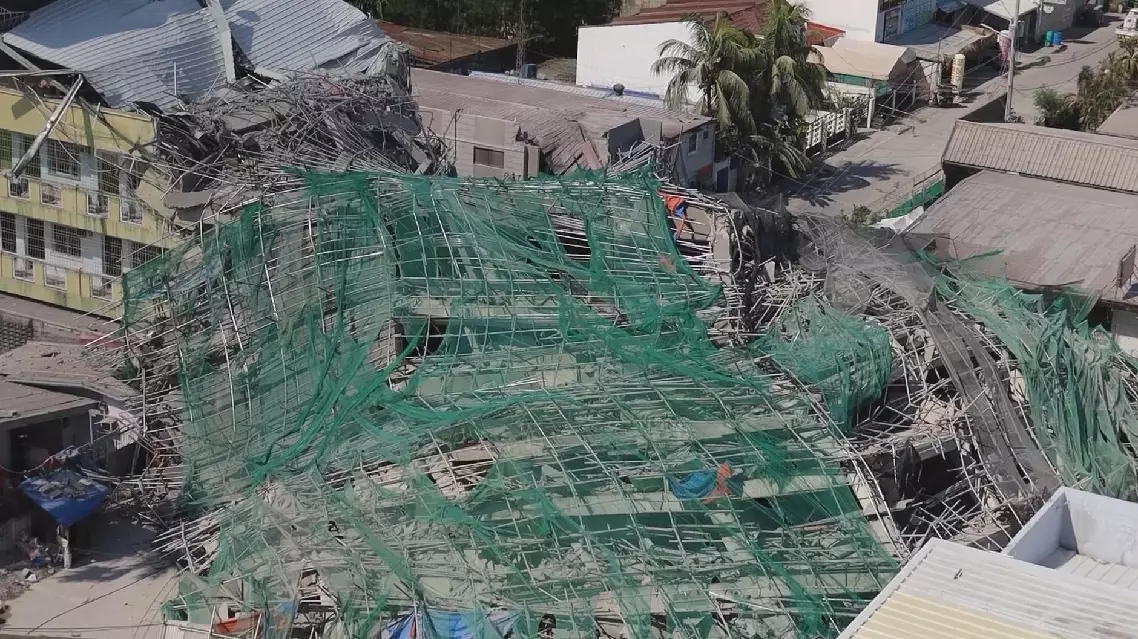
Twenty-six people have been rescued after a nine-story building under construction collapsed early Sunday in Angeles City in the northern Philippines, according to local government authorities.

The Disaster Risk Reduction and Management Office of Angeles said 24 people were pulled from the collapsed structure, while two others were rescued from a nearby aparthotel struck by the incident. Rescue teams are still searching for any individuals who may remain trapped.

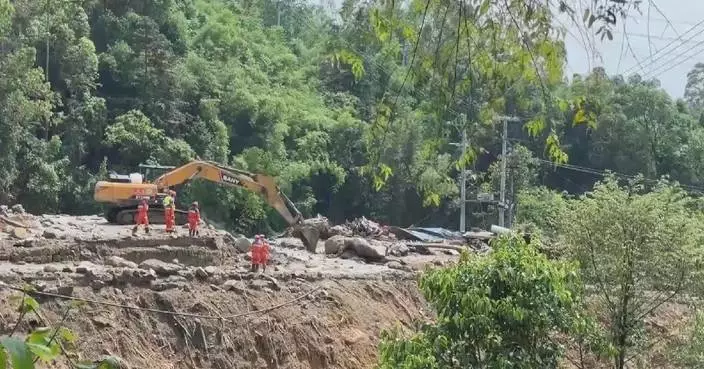
Emergency crews cut through layers of shattered concrete and twisted metal, pausing repeatedly to listen for signs of survivors beneath the wreckage.

"Our personnel from the search and rescue team who were conducting the initial assessment were the ones who heard the victims moaning in pain," said Maria Sajili, spokesperson of the Bureau of Fire Protection.

Earlier reports said at least 30 people had been trapped under the building.

The Angeles City Information Office said the accident occurred around 03:00 local time, turning much of the site into a mountain of rubble.

Heavy rains and strong winds preceded the collapse, with 44 millimeters of rainfall recorded between 19:00 and 20:00 on Saturday, according to local atmospheric services.

Several workers managed to escape during the initial collapse, while others nearby suffered minor injuries. Emergency personnel from multiple agencies have since been deployed, but the officials said the effort remained extremely challenging.

Rescue crews are navigating unstable concrete slabs, tight voids within the wreckage, and the constant risk of further collapse.

"Challenges, of course, (include) the heat of the sun, and plus it's a massive construction -- concrete, steel and scaffoldings are very heavy and challenging for our responders," said Jay Pelayo, information officer of Angeles City.

Heavy machinery has been deployed to clear parts of the collapse site, but much of the rescue work is still being carried out by hand, with crews moving cautiously through the unstable wreckage in search of survivors.

Investigators have yet to determine the cause of the collapse. Authorities are now examining whether structural weaknesses, construction issues, or other factors may have played a role in the collapse.

26 rescued from building collapse site in N. Philippines

26 rescued from building collapse site in N. Philippines

Recommended Articles