China's fourth batch of astronauts is currently undergoing training as planned and could join the candidate crew in the future, the China Manned Space Agency (CMSA) said on Wednesday.
"Since they joined the team in August 2024, the fourth batch of astronauts has undertaken the studies of basic space theory, multiple trainings on psychology and adaptability to space environment and some specialized trainings following the plan," CMSA spokesman Lin Xiqiang said at a press conference at the Jiuquan Satellite Launch Center, ahead of the launch of the Shenzhou-20 spacecraft scheduled for Thursday.
"We are carrying out the training on the fourth batch of astronauts in an orderly and organized way as planned. After qualifying for spaceflight, they will be included in the candidate crew. We believe that they will be seen in future flight crews successively soon," Lin said.
"After they joined the team, astronauts from Hong Kong and Macao quickly adapted themselves to the working and living environment and swiftly got integrated into the astronaut crew. They have worked very hard in trainings with all the work progressing smoothly. They are currently engaged in studies and trainings on professional space technologies. As payload experts, the Hong Kong and Macao astronauts are expected to carry out their first flight mission in 2026 at the earliest," he said.
China's Shenzhou-20 crewed spaceship is scheduled to be launched at 17:17 Thursday (Beijing Time) from the Jiuquan Satellite Launch Center in the country's northwest, the CMSA announced on Wednesday.
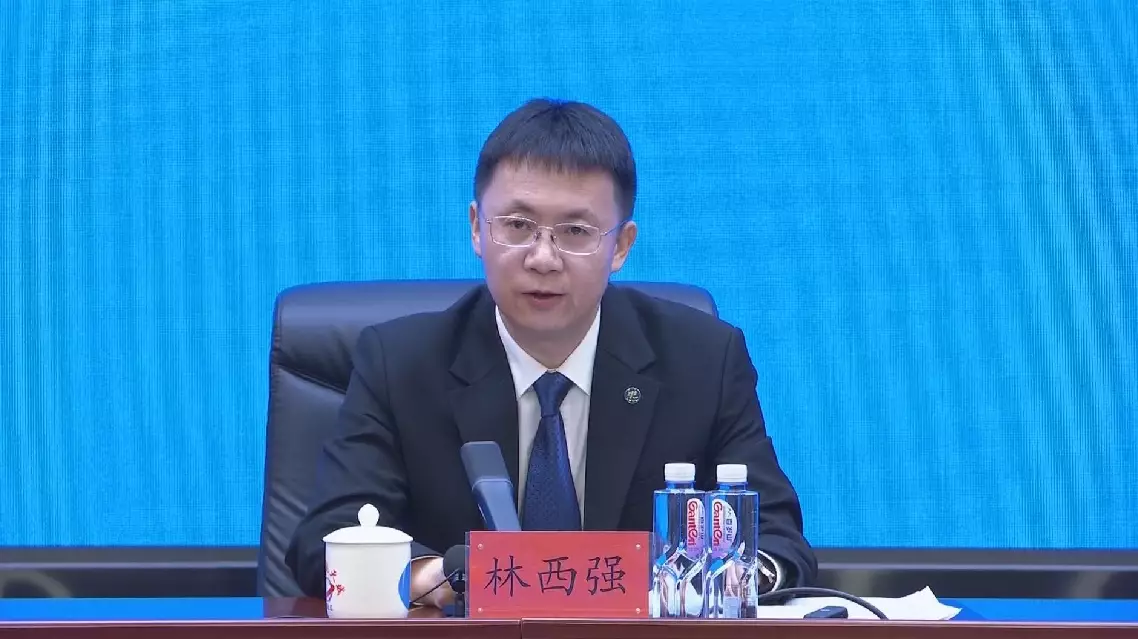
Spokesman on training of China's fourth batch of astronauts
China will roll out a series of targeted measures to stabilize investment and unlock greater space for private capital, an official said on Thursday.
Chen Changsheng, deputy director of the State Council Research Office who participated in the drafting of this year's Government Work Report, made the statement at a press briefing held in Beijing.
He noted that China will leverage the guiding role of government funding and the driving effect of major projects to shore up investment.
Total government investment this year is set to exceed five trillion yuan (about 725 billion U.S. dollars), which will come from central budget investment and local government special bonds for major national strategies and security capacity building projects and equipment upgrades. Meanwhile, 109 major projects have been planned in the draft outline of the 15th Five-Year Plan (2026-2030).
China will also stimulate investment by opening up more application scenarios for businesses.
On the traditional front, a long-term mechanism will be improved to encourage private enterprises to participate in major national projects. For emerging sectors, China will further open scenarios in biomedicine, aerospace, and the low-altitude economy.
"Low-altitude economy has developed rapidly in recent years, with sound applications seen in fields such as agriculture, forestry plant protection, as well as surveying and inspection. Going forward, we will accelerate the opening of airspace resources and streamline approval procedures for low-altitude flights. This will unlock new scenarios including low-altitude logistics and urban management. Similar new opportunities can also be found in service robots and other sectors, all of which will create new space for private investment," Chen said.
By deepening reforms to further unlock investment potential, China will ease market access in the service sector, speed up revisions to the Bidding Law and the Government Procurement Law, and advance price reforms to broaden investment access for more enterprises.
"We will see a new round of investment potential unleashed. Major projects including the national water network, a new round of power grid upgrades, new generation communication networks, and computing power networks will drive massive investment, including demand from urban development. In addition, the campaign this year to expand and upgrade the service sector and the development of emerging industries will further expand space for private investment," Chen noted.
China to take measures to boost investment, expand space for private investment in 2026: official