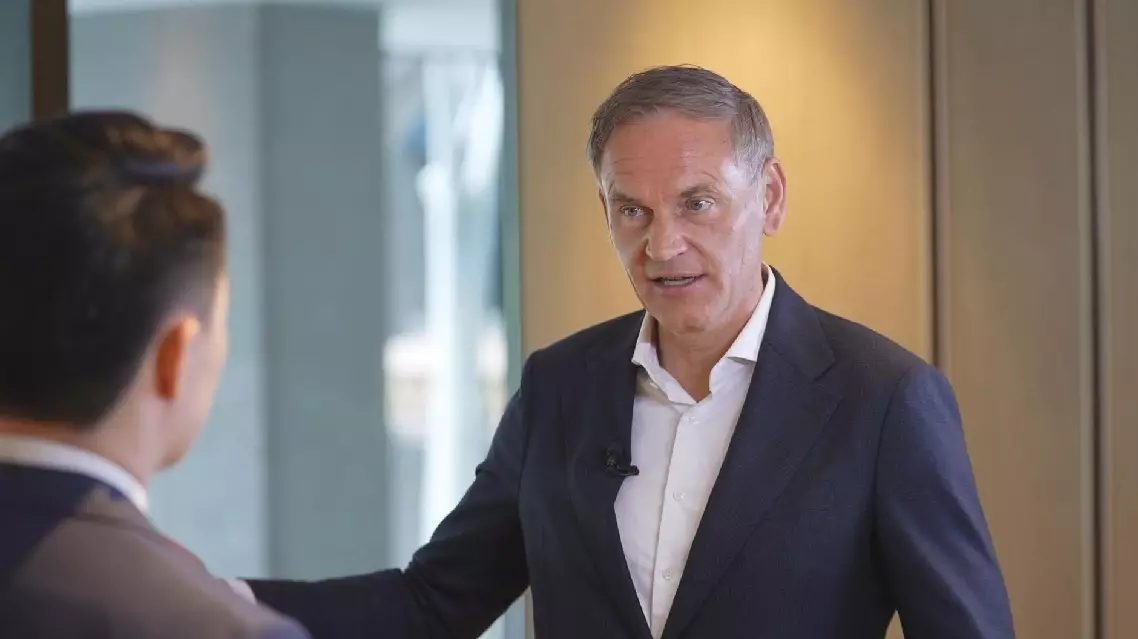
Volkswagen chief Oliver Blume emphasized the importance of healthy market competition, and said that the group wants to build its business in different parts of the globe to mitigate U.S. President Trump administration's sweeping tariffs.
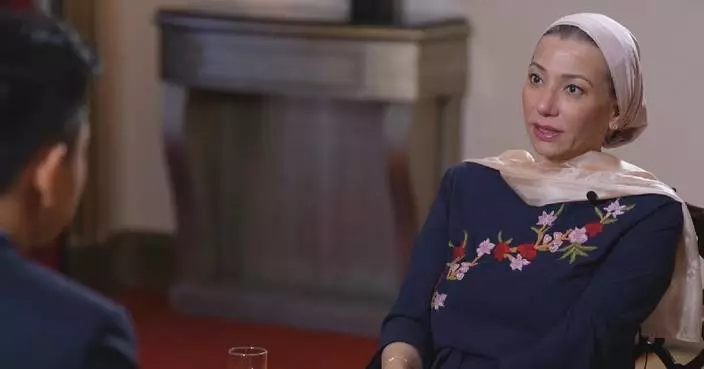
In an interview with China Global Television Network (CGTN) on the sidelines of the Auto Shanghai which opened on Wednesday, Blume, chairman of the Board of Management of Volkswagen AG said that competition is a catalyst for innovation which better serves customers.
"Competition is good for developing innovations, and innovations are, at the end, very positive for the customers. We use the Chinese speed also to improve our processes, like the engineering speed. Our new platforms are developed in only two years with the typical Volkswagen DNA and a very high standard of the technological level we are providing to our customers. So, we are benefiting a lot what we can learn here in China and bring also the process knowledge and in the experience to other regions of the world," he said.
The German automobile giant has been one of the best-selling car brands in China over the past decades. In 2024, the automaker delivered over 2.9 million vehicles to the Chinese market, nearly one third of its global sales.
As China continues its green transition, the country's leading electric vehicle (EV) manufacture, BYD, has emerged as one of Volkswagen's strongest competitors in the Chinese market.
Blume said that the presence of competitors such as BYD is a significant factor that compels Volkswagen to improve its business operations and strategies.
"Both of us [Volkswagen and BYD], we are deeply integrated in the value chain, in terms of engineering, in terms of software, in terms of battery technology. I feel very positive having competitors like BYD - it's challenging to make our business better and, at the end, it's very positive to have this for the customers to provide the best technologies," he said.
Volkswagen is deepening its electrification strategy and launching more high-quality electric vehicle products in China, Blume said, noting that the group has expanded cooperation with Chinese companies in the world's largest and fastest-growing EV market.
At the beginning of this year, Volkswagen and Chinese EV startup XPeng announced that they had signed a Memorandum of Understanding (MoU) for strategic collaboration on a super-fast charging network in China. The strategic collaboration represents another step in their long-term strategic partnership, following Volkswagen's acquisition of a 4.99 percent stake in XPeng for approximately 700 million U.S. dollars in 2023.
Blume said the partnership with XPeng could create opportunities for Volkswagen to tap into other regional markets, including Southeast Asia and the Middle East.
"First of all, we are focusing on China. And Xpeng is doing a great job, and I'm honoring what they are doing there. And therefore we have chosen this partnership. I'm very happy about it. Also the progress, the speed, the innovation level, we think step by step, first now bringing the first models to the market, also collaborating in terms of developing software architectures," he said.
Blume reaffirmed Volkswagen's advocacy for free trade in the face of the Trump administration's tariffs, adding that the company will continue to localize in the Chinese and American markets and strengthen the alignment of its products with the needs of customers in different regions.
"The whole automotive market globally is under pressure. And we, as a real global player, are analyzing the situation very, very deeply. For us, and that was our acting also in the past, it was very important to have a free and fair trade between the regions, but the current regulations brought us to do more local business as we decided already in China, doing more business here in China for China. The same in the U.S., also we are intending to invest heavily in the U.S. So, we can't influence on the situation coming from the politics or geopolitics. So, we have to prepare ourselves being attractive and having the opportunity to offer the right products to our local customers," he said.
Volkswagen chief on competition, localization in Chinese market