SEOUL, South Korea (AP) — South Korean prosecutors indicted former liberal President Moon Jae-in on bribery charges Thursday, saying that a budget airline gave his son-in-law a lucrative no-show job during Moon's term in office.
Moon's indictment adds him to a long list of South Korean leaders who have faced trials or scandals at the close of their terms or after leaving office.
Prosecutors allege that Moon, who served as president from 2017-2022, received bribes totaling 217 million won ($151,705) from Lee Sang-jik, founder of the budget carrier Thai Eastar Jet, in the form of wages, housing expenses and other financial assistance provided to Moon’s then-son-in-law from 2018-2020.
South Korean media reported that Moon's daughter and her husband were divorced in 2021.
The Jeonju District Prosecutors' Office said in a statement that Lee was also indicted on charges of paying bribes to Moon and committing breaches of trust.
The prosecutors’ office said Moon’s former son-in-law was hired as a director-level employee at Lee’s company in Thailand even though he had no work experience in the airline industry. The office said he spent only brief periods at the company's office in Thailand and carried out only minor duties while claiming to be working remotely from South Korea.
The prosecutors’ office said it had not found evidence that Moon directly performed political favors for Lee, but that Lee, who worked on Moon’s campaign, likely expected his assistance to be repaid.
Lee was later named the head of the state-funded Korea SME and Startups Agency and was nominated by Moon's party to run for parliament while Moon was in office. A former Moon aide on personnel affairs was earlier indicted over Lee's agency job appointment, but prosecutors said she refused to testify during questioning so they were unable to find any direct evidence that Moon helped Lee win that position.
Moon’s indictment comes before South Korea elects a new president on June 3 to succeed conservative President Yoon Suk Yeol, who was ousted over an ill-fated imposition of martial law in December. Yoon, a former top prosecutor, now stands a criminal trial on rebellion charges connection with his martial law decree.
It’s unclear if Moon’s indictment will influence prospects for liberals to win back the presidency. But observers say liberal presidential aspirant Lee Jae-myung is heavily favored to win the vote as conservatives remain in disarray over Yoon’s ouster, although Lee also faces criminal trials on allegations of corruption and other charges.
There was no immediate response from Moon. But his political allies at the main liberal opposition Democratic Party criticized the indictment, calling it a politically motivated attempt by Yoon supporters at the prosecution service to humiliate the former liberal leader ahead of the election.
Youn Kun-young, a Democratic Party lawmaker who worked at Moon's presidential office, accused prosecutors of trying to divert attention from Yoon's “tragic end” by putting Moon on trial to influence the election outcome. A Democratic Party committee separately warned it would hold the prosecution service to account for its indictment.
Most past South Korean presidents have been embroiled in scandal in the final months of their terms or after leaving office. In 2017, Park Geun-hye, South Korea's first female president, was removed from office and arrested over an explosive corruption scandal.
Park's conservative predecessor Lee Myung-bak was also arrested on a range of crimes, years after leaving office. Moon's friend and former liberal President Roh Moo-hyun jumped to his death in 2009 amid corruption investigations into his family.
Moon is best known for his push to reconcile with rival North Korea as he met North Korean leader Kim Jong Un three times and facilitated the start of the high-stakes nuclear diplomacy between Kim and President Donald Trump.
Moons’ supporters credit him with achieving now-stalled cooperation with North Korea and avoiding major armed clashes, but opponents say he was a naive North Korea sympathizer who ended up helping the North buy time to advance its nuclear program in the face of international sanctions and pressure.
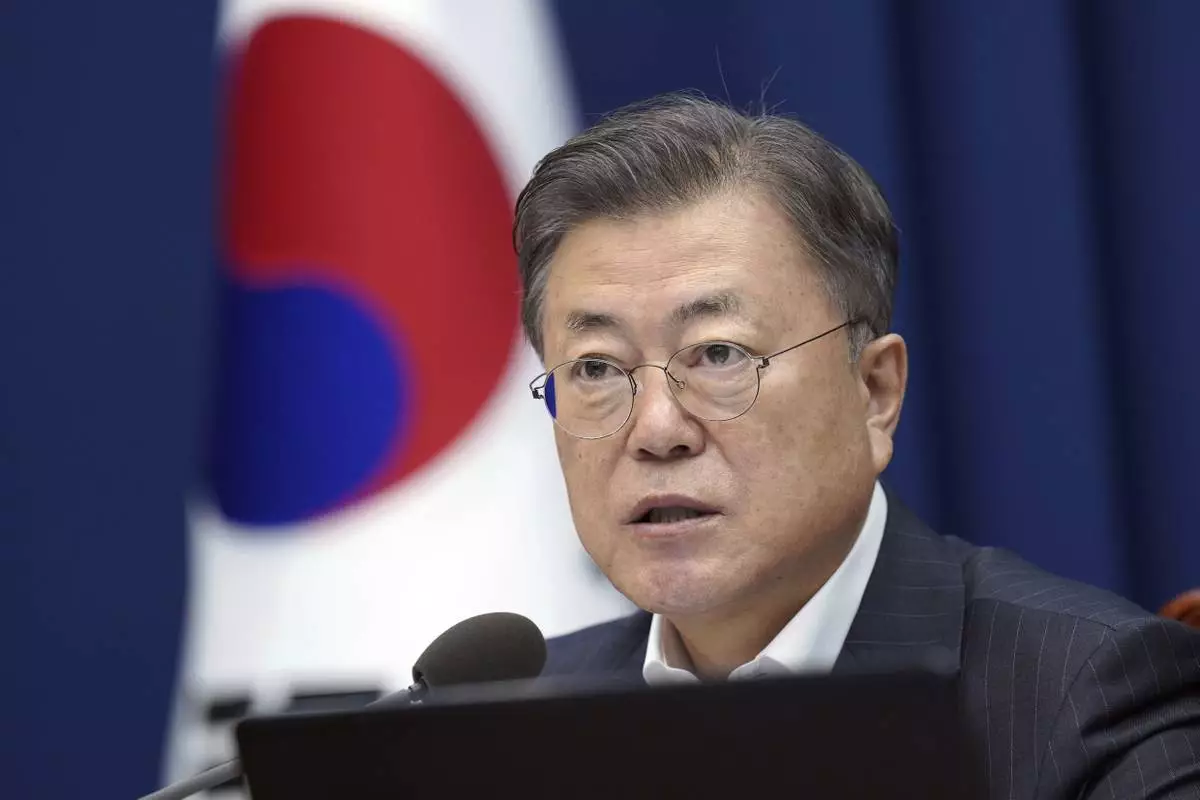
FILE - Then-South Korean President Moon Jae-in speaks during a meeting of the National Security Council at the presidential Blue House in Seoul, South Korea, on Feb. 22, 2022. (Ahn Jung-hwan/Yonhap via AP, File)
DEIR AL-BALAH, Gaza Strip (AP) — Strong winter winds collapsed walls onto flimsy tents for Palestinians displaced by war in Gaza, killing at least four, hospital authorities said Tuesday.
Dangerous living conditions persist in Gaza after more than two years of devastating Israeli bombardment and aid shortfalls. A ceasefire has been in effect since Oct. 10. But aid groups say that Palestinians broadly lack the shelter necessary to withstand frequent winter storms.
The dead include two women, a girl and a man, according to Shifa Hospital, Gaza City’s largest, which received the bodies.
Meanwhile, the child death toll in Gaza ticked up. The Gaza Health Ministry said Tuesday a 1-year-old boy died of hypothermia overnight, while the spokesman for the U.N.'s children agency said over 100 children and teenagers have been killed by “military means" since the ceasefire began.
Three members of the same family — 72-year-old Mohamed Hamouda, his 15-year-old granddaughter and his daughter-in-law — were killed when an 8-meter (26-foot)-high wall collapsed onto their tent in a coastal area along the Mediterranean shore of Gaza City, Shifa Hospital said. At least five others were injured.
Their relatives on Tuesday began removing the rubble that had buried their loved ones and rebuilding the tent shelters for survivors.
“The world has allowed us to witness death in all its forms,” Bassel Hamouda said after the funeral. “It’s true the bombing may have temporarily stopped, but we have witnessed every conceivable cause of death in the world in the Gaza Strip.”
A second woman was killed when a wall fell on her tent in the western part of the city, Shifa Hospital said.
The majority of Palestinians live in makeshift tents since their homes were reduced to rubble during the war. When storms strike the territory, Palestinian rescue workers warn people against seeking shelter inside damaged buildings for fears of collapse. Aid groups say not enough shelter materials are entering Gaza during the truce.
In the central town of Zawaida, Associated Press footage showed inundated tents Tuesday morning, with people trying to rebuild their shelters.
Yasmin Shalha, a displaced woman from the northern town of Beit Lahiya, stood against winds that lifted the tarps of tents around her as she stitched hers back together with needle and thread. She said it had fallen on top of her family the night before, as they slept.
“The winds were very, very strong. The tent collapsed over us,” the mother of five told the AP. “As you can see, our situation is dire.”
On the shore in southern Gaza, tents were swept away into the Mediterranean. Families pulled what was left from the sea, while some built sand barriers to hold back rising water.
“The sea took our mattresses, our tents, our food, and everything we owned," Shaban Abu Ishaq said, as he dragged part of his tent out of the sea in the Muwasi area of Khan Younis.
Mohamed al-Sawalha, a 72-year-old man from the northern refugee camp of Jabaliya, said the conditions most Palestinians in Gaza endure are barely livable.
“It doesn’t work neither in summer nor in winter,” he said of the tent. “We left behind houses and buildings (with) doors that could be opened and closed. Now we live in a tent. Even sheep don’t live like we do.”
Residents aren’t able to return to their homes in Israeli-controlled areas of the Gaza Strip.
Gaza's Health Ministry said the 1-year-old in the central town of Deir al-Balah was the seventh fatality due to the cold conditions since winter started. Others included a baby just seven days old and a 4-year-old girl, whose deaths were announced Monday.
The ministry, part of the Hamas-run government, says more than 440 people were killed by Israeli fire and their bodies brought to hospitals since the ceasefire went into effect. The ministry maintains detailed casualty records that are seen as generally reliable by U.N. agencies and independent experts.
UNICEF spokesman James Elder said Tuesday at least 100 children under the age of 18 — 60 boys and 40 girls — have been killed since the truce began due to military operations, including drone strikes, airstrikes, tank shelling and use of live ammunition. Those figures, he said, reflect incidents where enough details have been compiled to warrant recording, but the total toll is expected to be higher. He said hundreds of children have been wounded.
While “bombings and shootings have slowed” during the ceasefire, they have not stopped, Elder told reporters at a U.N. briefing in Geneva by video from Gaza City. “So what the world now calls calm would be considered a crisis anywhere else,” he said.
Gaza's population of more than 2 million people has been struggling to keep the cold weather and storms at bay while facing shortages of humanitarian aid and a lack of more substantial temporary housing, which is badly needed during the winter months. It's the third winter since the war between Israel and Hamas started on Oct. 7, 2023, when militants stormed into southern Israel and killed around 1,200 people and abducted 251 others into Gaza.
Gaza’s Health Ministry says more than 71,400 Palestinians have been killed in Israel's retaliatory offensive.
Samy Magdy reported from Cairo. Associated Press writers Toqa Ezzidin in Cairo, Jamey Keaten in Geneva and Julia Frankel in Jerusalem contributed to this report.
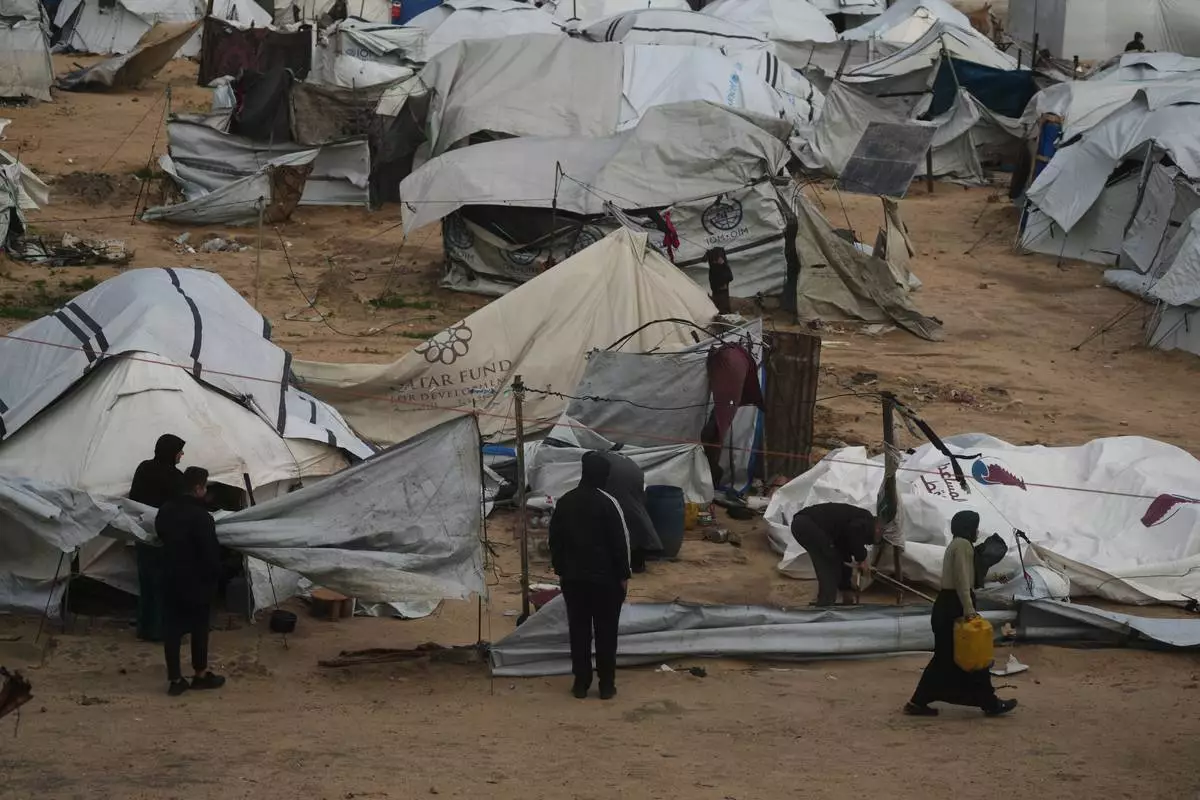
Palestinians repair their tents after they were damaged by a storm at a displacement camp in Gaza City, Tuesday, Jan. 13, 2026. (AP Photo/Jehad Alshrafi)
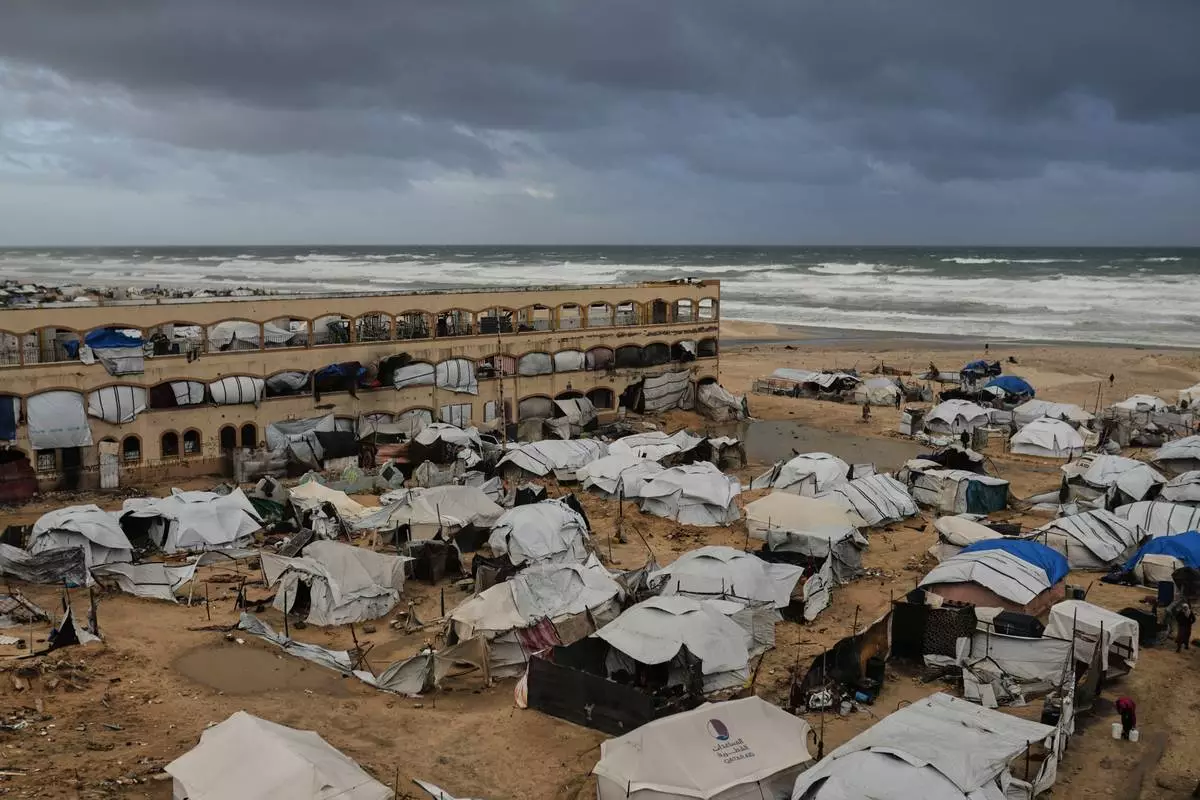
A view of a displacement camp sheltering Palestinians on a beach amid stormy weather in Gaza City, Tuesday, Jan. 13, 2026. (AP Photo/Jehad Alshrafi)
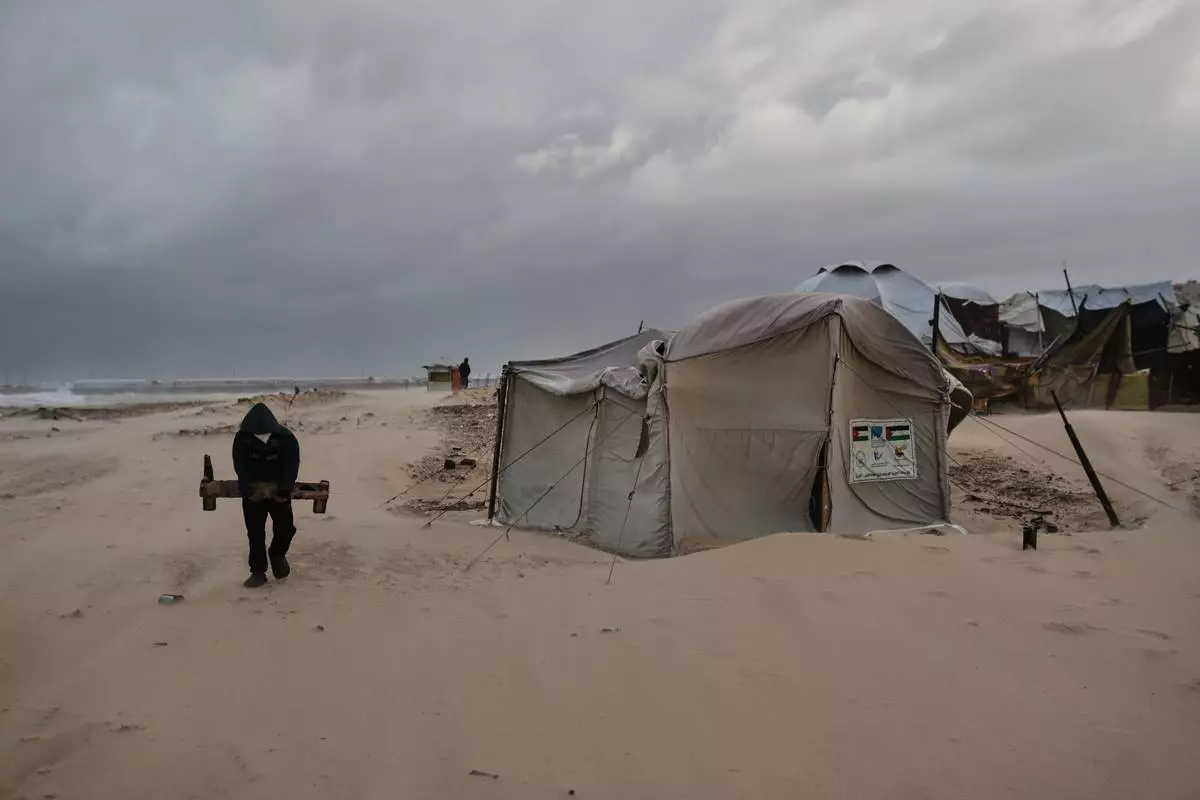
A man carries a piece of wood at a displacement camp sheltering Palestinians on a beach amid stormy weather in Gaza City, Tuesday, Jan. 13, 2026. (AP Photo/Jehad Alshrafi)
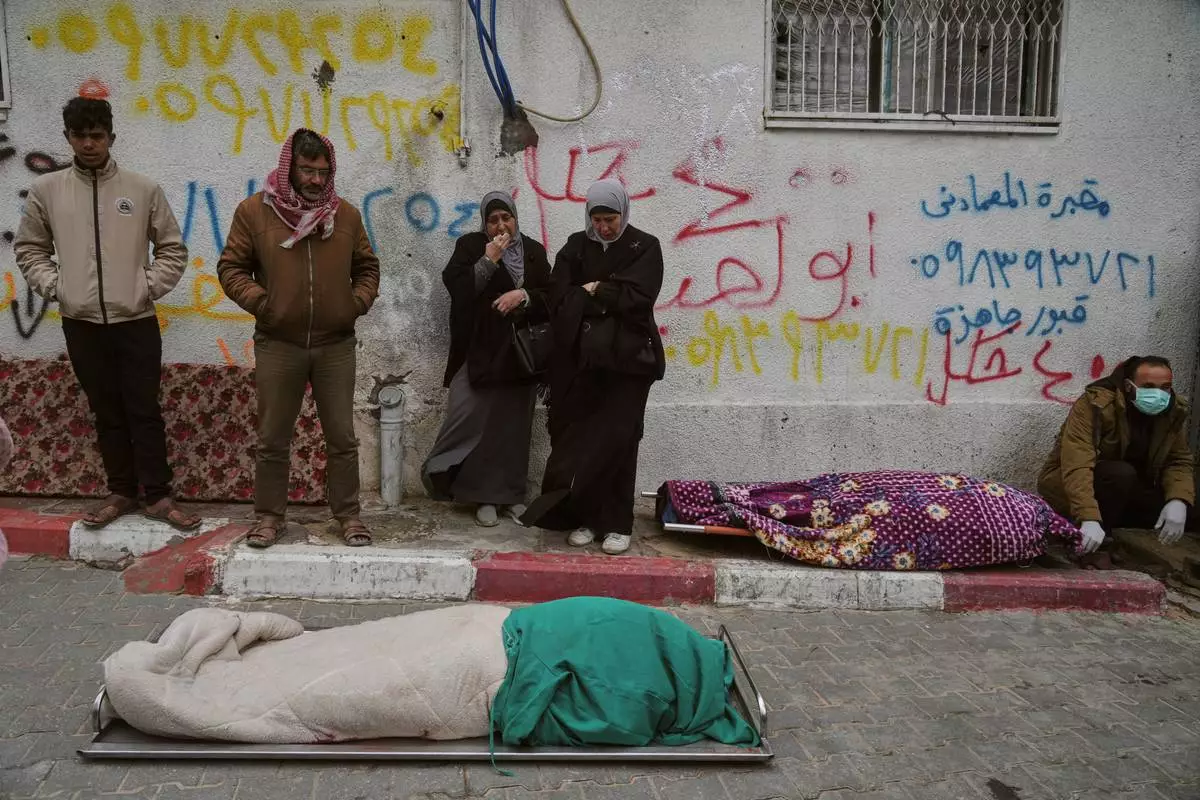
Members of the Hamouda family bid farewell to relatives who died when a damaged building collapsed onto their tents during a storm of wind and rain, at Al-Shifa Hospital in Gaza City, Tuesday, Jan. 13, 2026. (AP Photo/Jehad Alshrafi)
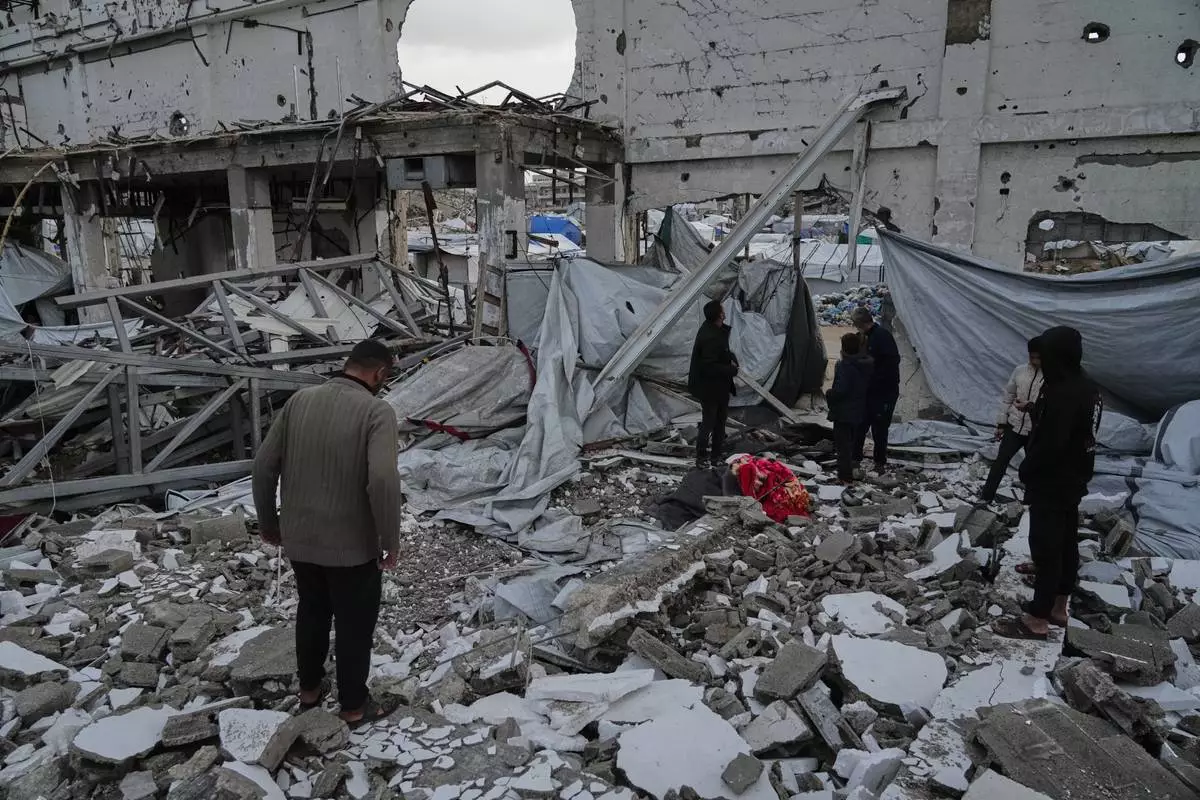
People inspect the site where at least four Palestinians died following the collapse of walls onto tents sheltering displaced people in Gaza City amid rainfall and strong winds, Tuesday, Jan. 13, 2026. (AP Photo/Jehad Alshrafi)