The three astronauts of the Shenzhou-20 crewed spaceflight mission have boarded the spaceship which is slated to be launched from northwest China's Jiuquan Satellite Launch Center to the Tiangong space station at 17:17 Thursday (Beijing Time).
Chen Dong, the mission commander, and his crew mates Chen Zhongrui and Wang Jie got aboard the spaceship with the help of technicians.
The Shenzhou-20 astronauts will complete in-orbit rotation with the Shenzhou-19 crew and stay at the space station for approximately six months.
During the mission, the new crew will witness the arrival of the Tianzhou-9 cargo craft and Shenzhou-21 crewed spaceship.
They will undertake a range of tasks, including space science experiments, application tests, extravehicular activities, and cargo handling. Their mission also involves installing protective devices against space debris, and deploying and retrieving extravehicular payloads and equipment.
They will also participate in science education, public outreach, and other onboard experimental activities.
The Shenzhou-19 astronauts are scheduled to return to the Dongfeng landing site in north China's Inner Mongolia Autonomous Region on April 29.
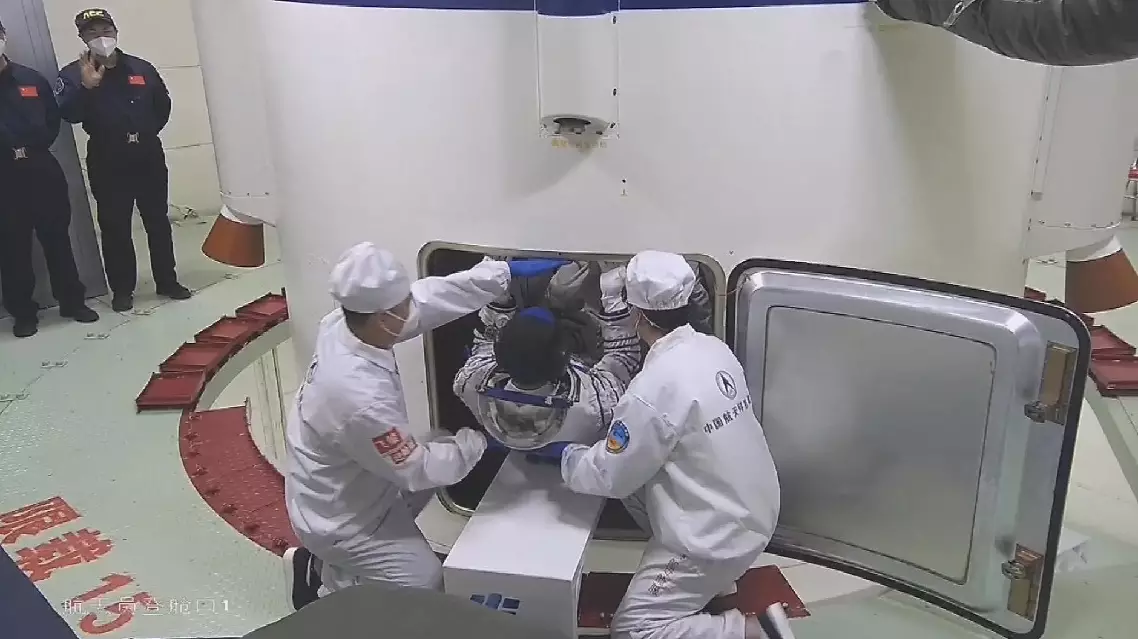
Shenzhou-20 astronauts board spaceship ahead of launch
Shenzhou-20 astronauts board spaceship ahead of launch
Shenzhou-20 astronauts board spaceship ahead of launch
Hungarians voted in parliamentary elections on Sunday, with about 8.1 million people eligible to cast ballots, according to the National Election Office.
Polls opened at 06:00 local time and closed at 19:00, with initial results expected late on Sunday evening.
Of the total, about 7.6 million voters were eligible to cast ballots in person at more than 10,000 polling stations nationwide, while some 500,000 were eligible to vote by mail.
Five parties or alliances are competing in the election. The latest opinion polls showed strong support for both Prime Minister Viktor Orban's ruling Fidesz-Christian Democratic People's Party alliance and the opposition Tisza party led by Peter Magyar.
Among smaller parties, the far-right Our Homeland Movement is seen as having a chance to enter parliament, while others, including the Democratic Coalition and the Hungarian Two-Tailed Dog Party, are widely viewed as unlikely to cross the threshold.
This election marks Orban's fourth parliamentary race since returning to power in 2010, with the outcome set to determine whether he can secure a fifth consecutive term.
Under Hungary's electoral law, parliamentary elections are held every four years. The Hungarian parliament has 199 seats, including 106 filled through direct elections in single-member constituencies and 93 allocated to parties that enter parliament. The party or alliance that secures a majority of seats has the right to form a government.
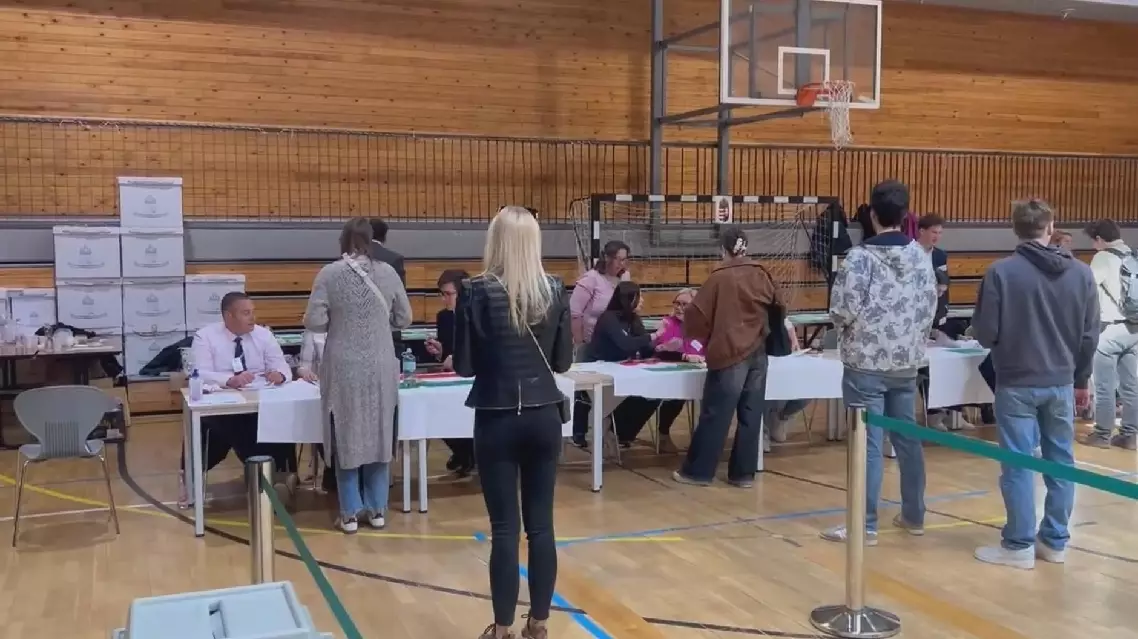
Hungarians vote in parliamentary elections