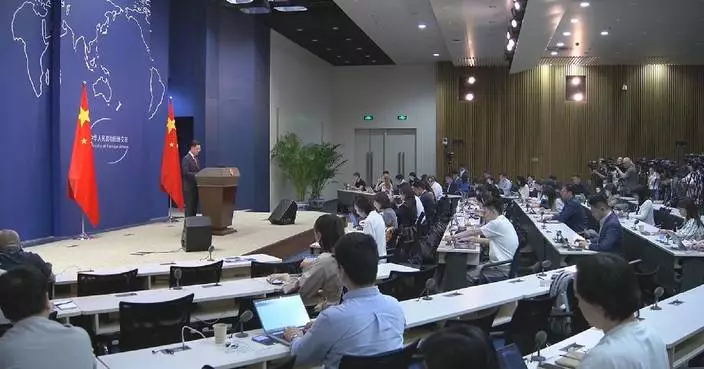
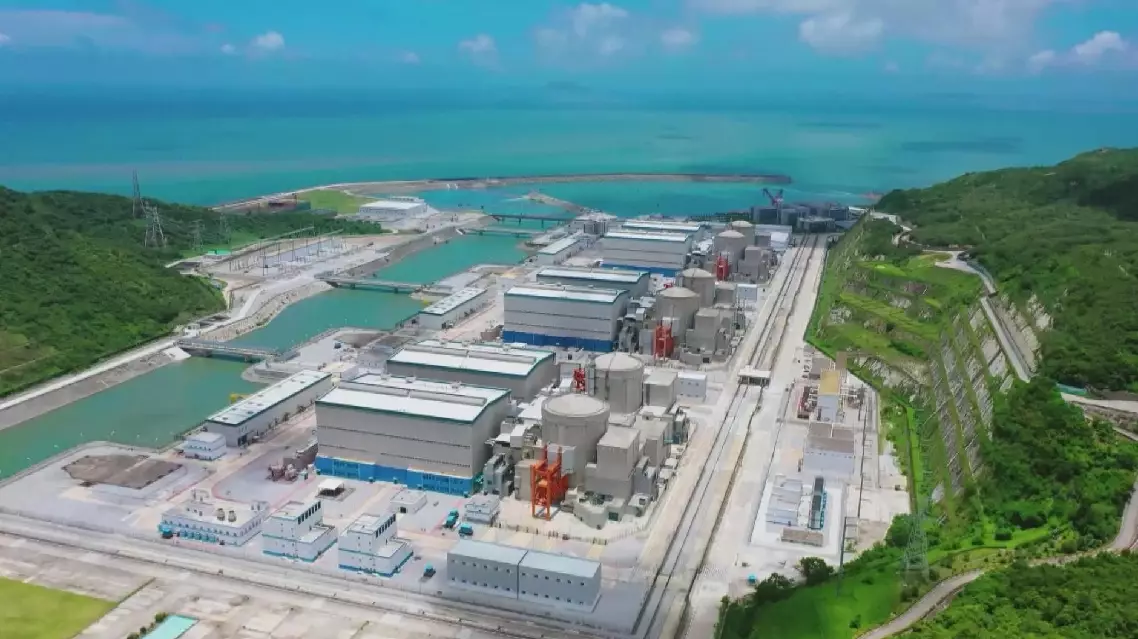
China has emerged as the world's largest nuclear power operator in terms of installed capacity, with tight regulations for radioactive waste disposal, the Ministry of Ecology and Environment said on Wednesday.
Up to now, the installed capacity of nuclear power units on the Chinese mainland has reached 113 million kilowatts, ranking first globally, the ministry told a regular press conference in Beijing.
While China's nuclear power industry began relatively late, the country has effectively absorbed international experiences and adopted advanced, reliable reactor designs, allowing it to gain a competitive edge in the sector.
To date, nuclear power units on the Chinese mainland have safely operated for over 600 reactor-years with an excellent safety performance.
"Nuclear facilities inevitably generate radioactive wastes during their normal operations, which are categorized into gaseous, liquid, and solid forms. Both gaseous and liquid wastes are treated to meet national standards before being released into the environment. Meanwhile, solid waste is classified and handled according to its radiation levels. Currently, over 90 percent of solid waste generated by China's nuclear power plants during normal operations is low-level radioactive waste," said Liu Lu, director of the Radiation Source Safety Regulation Department under the Ministry of Ecology and Environment.
Under strict supervision, each million-kilowatt nuclear power unit produces no more than 50 cubic meters of low-level radioactive solid waste per year. After temporary on-site storage, this waste is transported to centralized disposal facilities for permanent containment. High-level radioactive materials generated during nuclear plant operations are also subject to extremely strict safety requirements, with full-process supervision from production to disposal.
According to the ministry, China has also established the world's largest radiation monitoring network over the years, ensuring that radiation levels around nuclear facilities remain well within safe limits.
The national network includes 1,835 monitoring points, covering all cities at or above the prefecture level, key border ports, and areas surrounding nuclear facilities.
Additional provincial networks further expand the monitoring coverage. In total, more than 100 monitoring points have been established around key nuclear plants, including automatic atmospheric radiation monitoring stations and environmental sampling points for water, soil, and wildlife.
Monitoring data confirms that the country's radiation environment has remained at safe levels for many years.
China boasts world's largest nuclear power capacity with manageable risks: official