Skip to Content Facebook Feature Image

Iran and the US hold hours of expert talks in Oman over Tehran's rapidly advancing nuclear program

News

Iran and the US hold hours of expert talks in Oman over Tehran's rapidly advancing nuclear program
News

News

Iran and the US hold hours of expert talks in Oman over Tehran's rapidly advancing nuclear program

2025-04-27 13:26 Last Updated At:13:31

MUSCAT, Oman (AP) — Iran and the United States held in-depth negotiations in Oman over Tehran's rapidly advancing nuclear program on Saturday, ending the discussions with a promise for more talks and perhaps another high-level meeting next weekend.

The talks ran for several hours in Muscat, the mountain-wrapped capital of this sultanate on the eastern edge of the Arabian Peninsula.

More Images
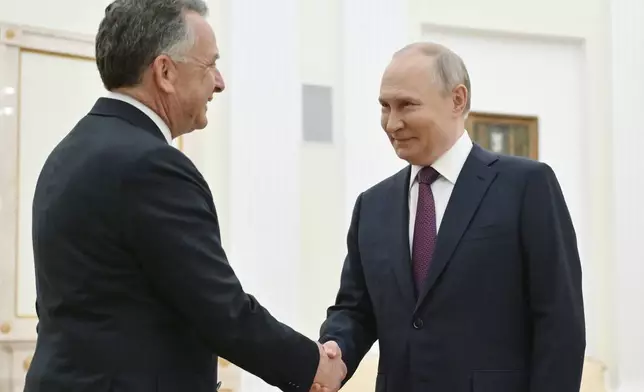
Russian President Vladimir Putin, right, and U.S. President Donald Trump's special envoy Steve Witkoff greet each other prior to their talks at the Kremlin in Moscow, Russia, Friday, April 25, 2025. (Kristina Kormilitsyna, Sputnik, Kremlin Pool Photo via AP)
Russian President Vladimir Putin, right, and U.S. President Donald Trump's special envoy Steve Witkoff greet each other prior to their talks at the Kremlin in Moscow, Russia, Friday, April 25, 2025. (Kristina Kormilitsyna, Sputnik, Kremlin Pool Photo via AP)
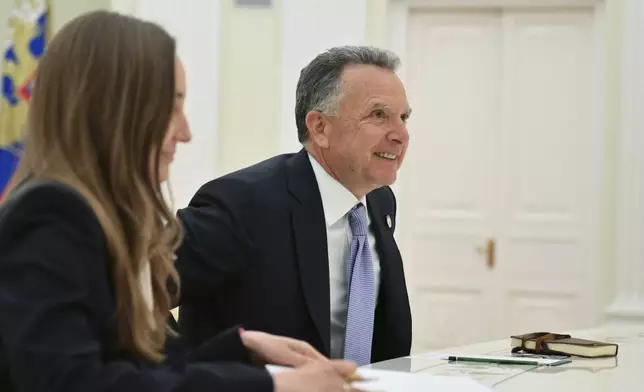
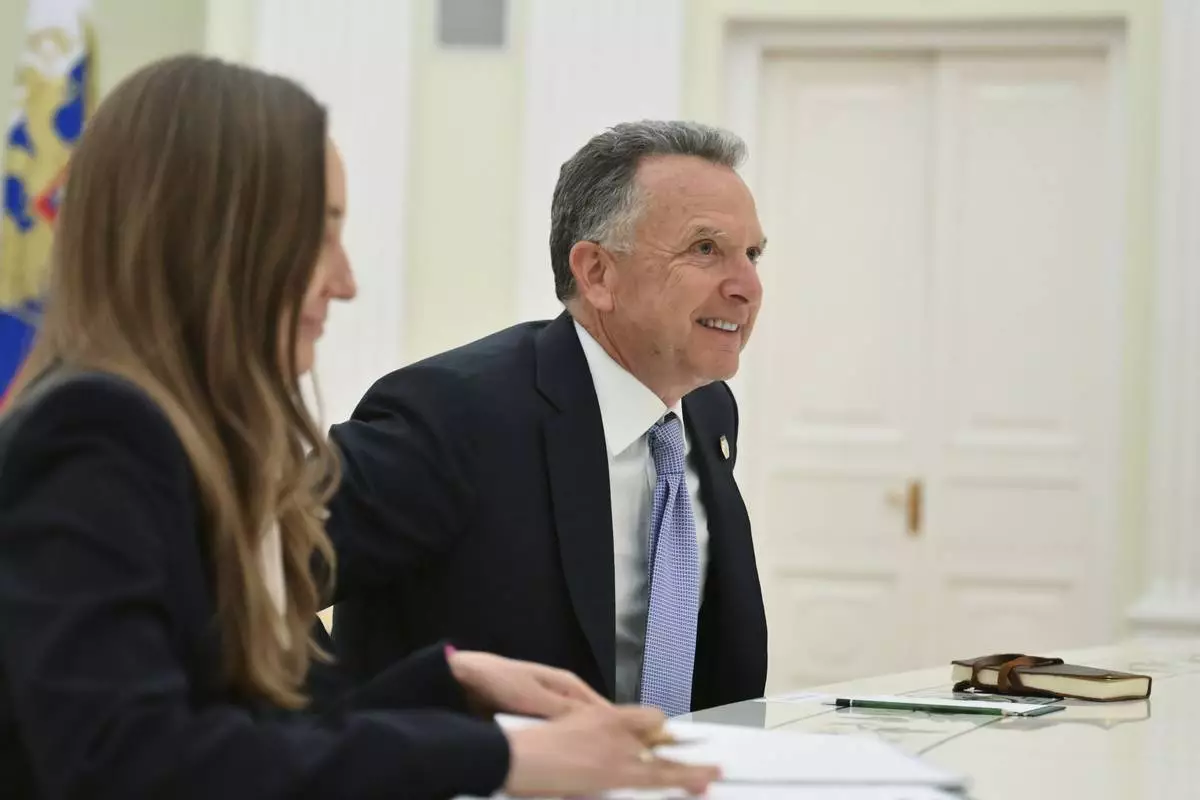
U.S. President Donald Trump's special envoy Steve Witkoff attends the talks with Russian President Vladimir Putin at the Kremlin in Moscow, Russia, Friday, April 25, 2025. (Kristina Kormilitsyna, Sputnik, Kremlin Pool Photo via AP)

U.S. President Donald Trump's special envoy Steve Witkoff attends the talks with Russian President Vladimir Putin at the Kremlin in Moscow, Russia, Friday, April 25, 2025. (Kristina Kormilitsyna, Sputnik, Kremlin Pool Photo via AP)

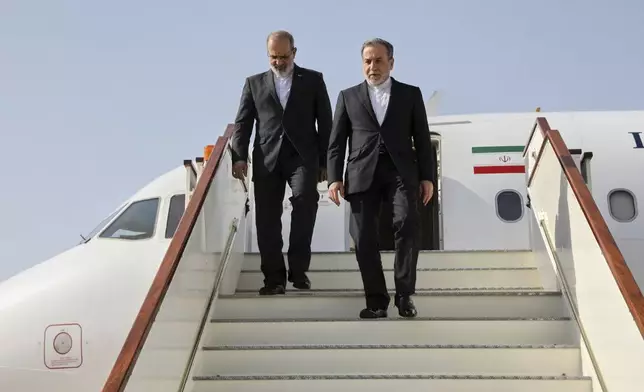
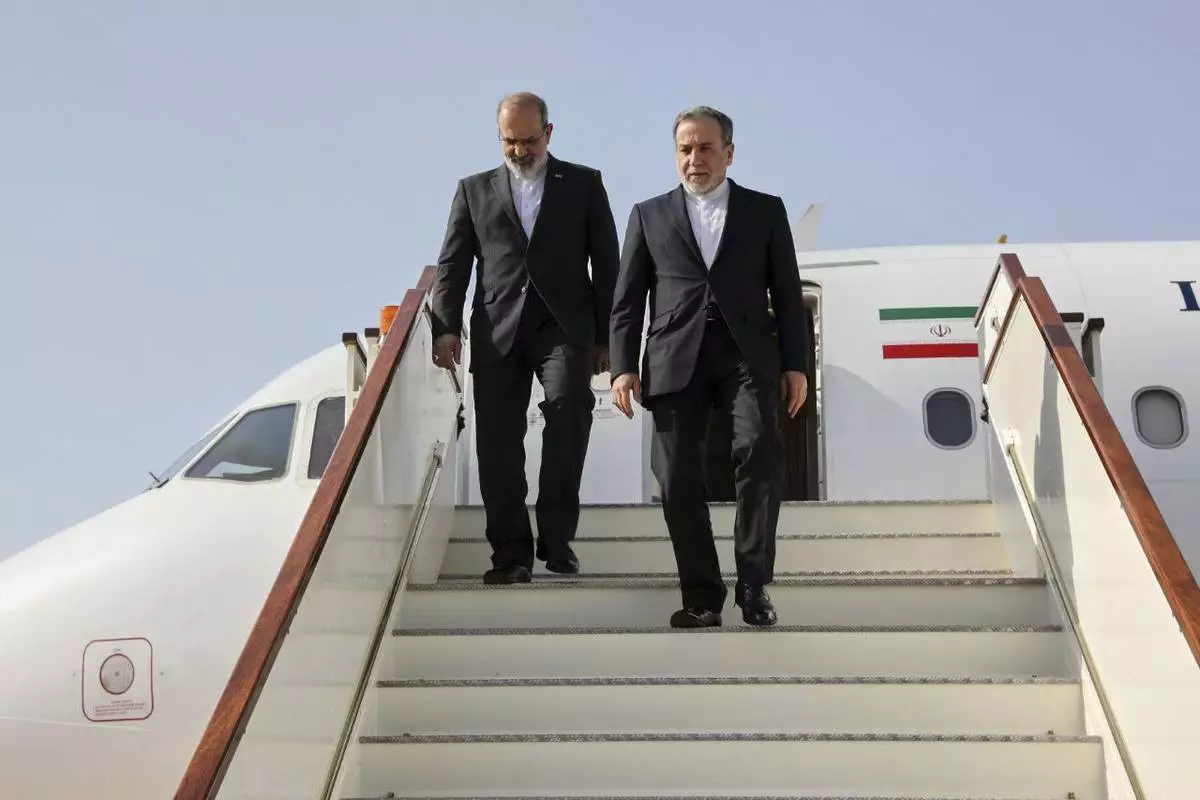
In this photo released by Iranian Foreign Ministry, Iranian Foreign Minister Abbas Araghchi, right, steps out from his plane as he arrives at Muscat, Oman, Friday, April 25, 2025, a day prior to negotiations with U.S. Mideast envoy Steve Witkoff. (Iranian Foreign Ministry via AP)
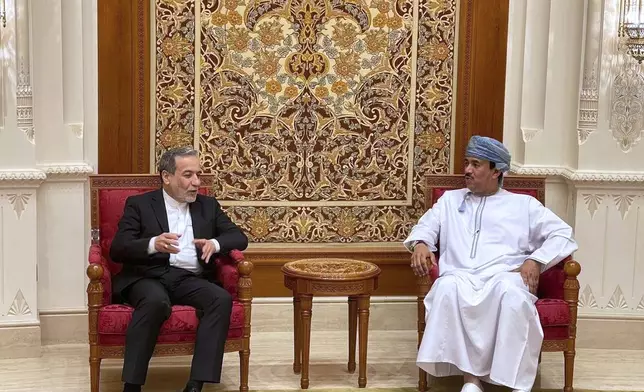
In this photo released by Iranian Foreign Ministry, Iranian Foreign Minister Abbas Araghchi, right, steps out from his plane as he arrives at Muscat, Oman, Friday, April 25, 2025, a day prior to negotiations with U.S. Mideast envoy Steve Witkoff. (Iranian Foreign Ministry via AP)
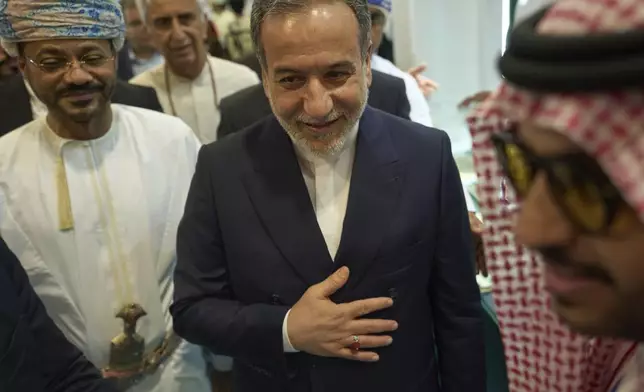
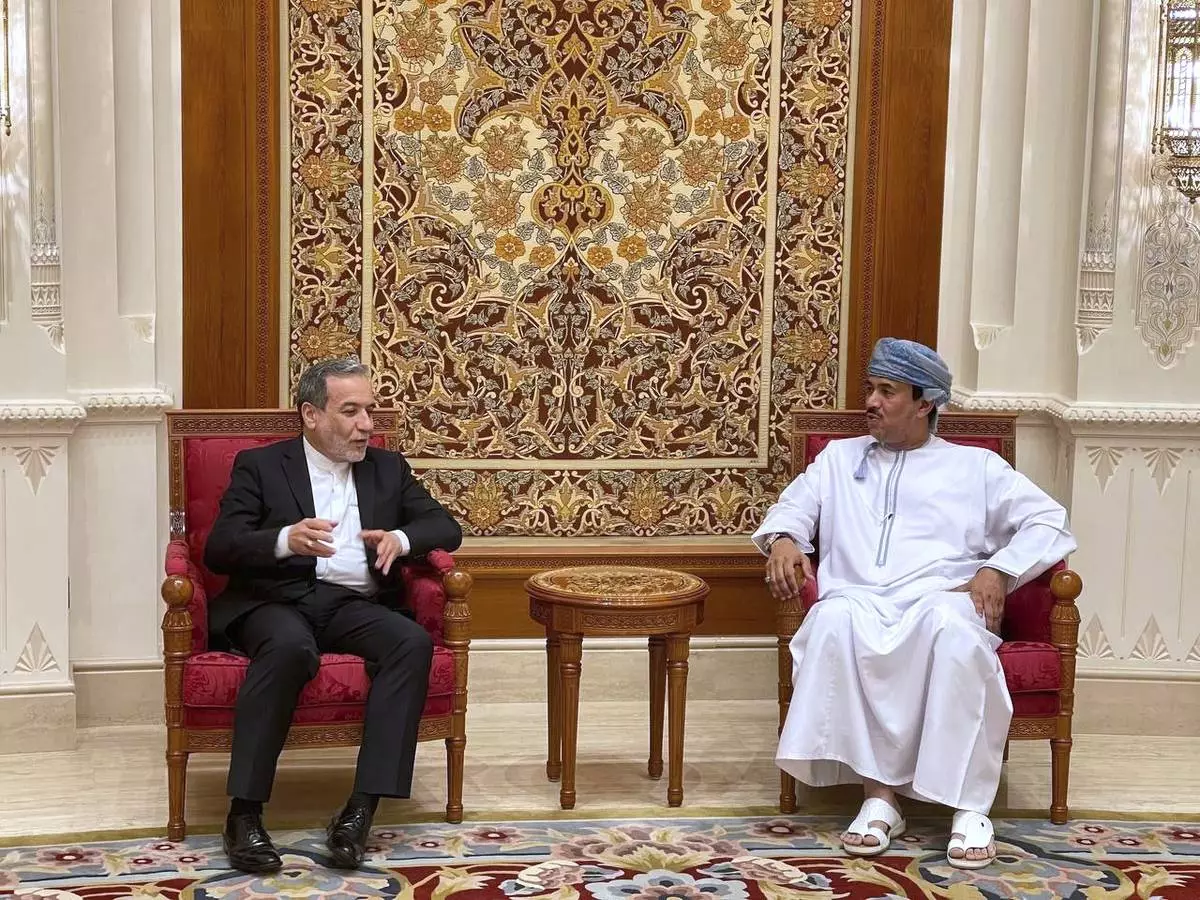
In this photo released by Iranian Foreign Ministry, Iranian Foreign Minister Abbas Araghchi, left, speaks with an unidentified Omani official upon his arrival at Muscat, Oman, Friday, April 25, 2025, a day prior to negotiations with U.S. Mideast envoy Steve Witkoff. (Iranian Foreign Ministry via AP)

In this photo released by Iranian Foreign Ministry, Iranian Foreign Minister Abbas Araghchi, left, speaks with an unidentified Omani official upon his arrival at Muscat, Oman, Friday, April 25, 2025, a day prior to negotiations with U.S. Mideast envoy Steve Witkoff. (Iranian Foreign Ministry via AP)

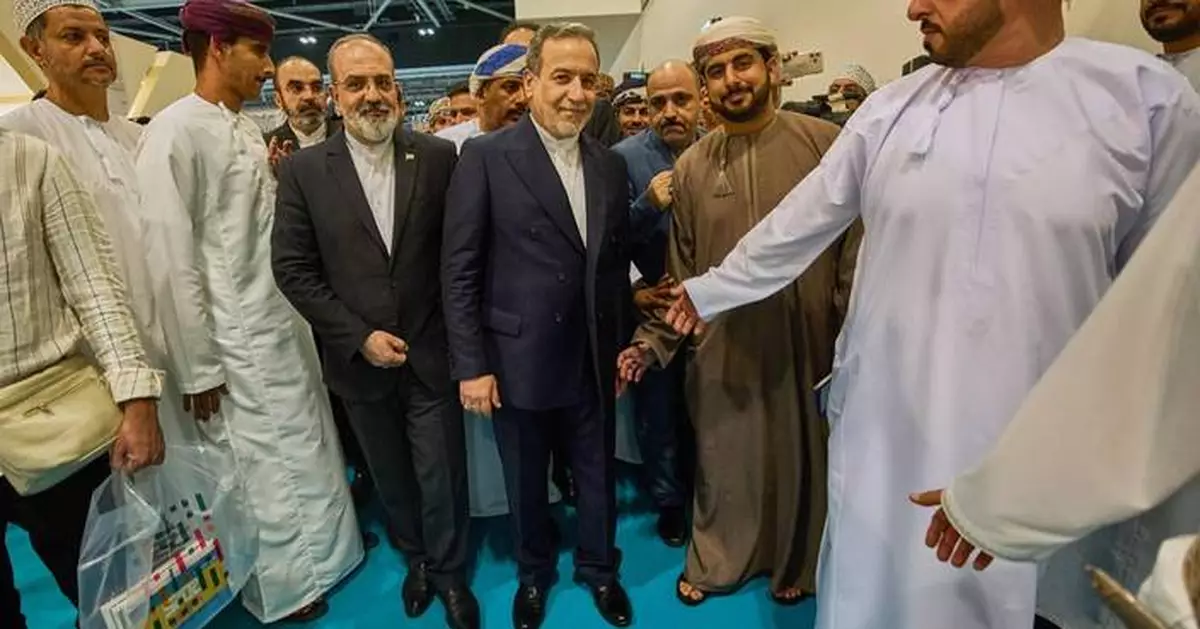
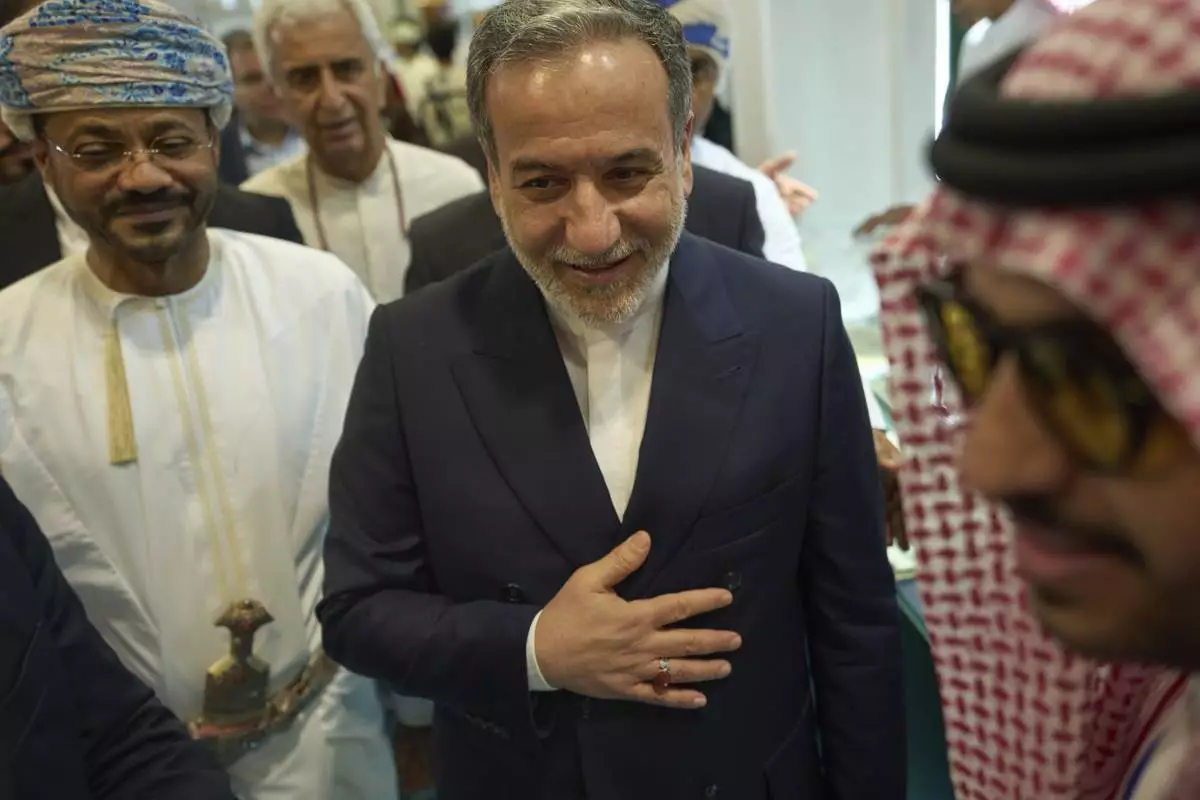
Iranian Foreign Minister Abbas Araghchi, center, and Omani Foreign Minister Badr al-Busaidi, left, walk through the Muscat International Book Fair in Oman, Friday, April 25, 2025. (AP Photo/Fatima Shbair)
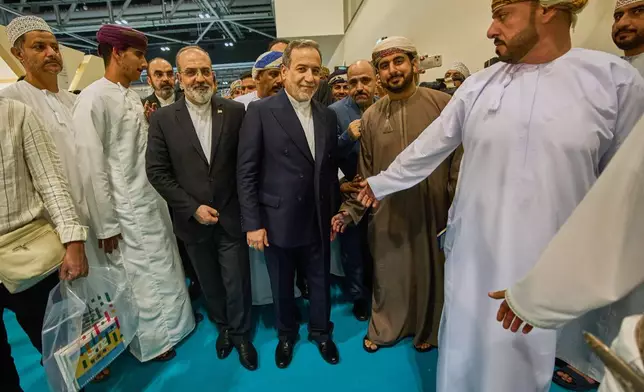
Iranian Foreign Minister Abbas Araghchi, center, and Omani Foreign Minister Badr al-Busaidi, left, walk through the Muscat International Book Fair in Oman, Friday, April 25, 2025. (AP Photo/Fatima Shbair)

Iranian Foreign Minister Abbas Araghchi, visits the Muscat International Book Fair in Oman, Friday, April 25, 2025. (AP Photo/ Fatima Shbair)

Iranian Foreign Minister Abbas Araghchi, visits the Muscat International Book Fair in Oman, Friday, April 25, 2025. (AP Photo/ Fatima Shbair)

Iranian Foreign Minister Abbas Araghchi told state television after the talks that the parties exchanged written points throughout the day in discussions that he described as “very serious and work-focused.”

“This time, the negotiations were much more serious than in the past, and we gradually entered into deeper and more detailed discussions," he said. “We have moved somewhat away from broader, general discussions — though it is not the case that all disagreements have been resolved. Differences still exist both on major issues and on the details.”

A senior U.S. administration official said that the talks were “positive and productive.”

“This latest round of direct and indirect discussions lasted over four hours,” the official said on condition of anonymity to discuss the talks. “There is still much to do, but further progress was made on getting to a deal. We agreed to meet again soon, in Europe, and we thank our Omani partners for facilitating these talks.”

Omani Foreign Minister Badr al-Busaidi, who has mediated the two previous round of talks in Muscat and Rome, offered a positive note at the end of Saturday's negotiations.

Iran and the U.S. “identified a shared aspiration to reach agreement based on mutual respect and enduring commitments,” al-Busaidi posted on X. “Core principles, objectives and technical concerns were all addressed. Talks will continue next week with a further high level meeting provisionally scheduled for May 3.”

Araghchi arrived Friday in Oman on the eve of the talks and visited the Muscat International Book Fair, surrounded by television cameras and photojournalists. Witkoff was in Moscow on Friday to meet with Russian President Vladimir Putin, and arrived on Saturday to Oman.

Meanwhile on Saturday, a major explosion rocked a port in southern Iran just after the talks began, killing 18 people and injuring some 800 others. Authorities offered no immediate cause for the blast, which appeared to have been caused by a highly combustible material — though officials ruled out its oil and gas industry. The private security firm also linked to a shipment of a chemical ingredient used to make missile propellant to the port as well.

The talks seek to limit Iran’s nuclear program in exchange for the lifting of some of the crushing economic sanctions the U.S. has imposed on the Islamic Republic closing in on a half-century of enmity.

U.S. President Donald Trump has repeatedly threatened to unleash airstrikes targeting Iran’s program if a deal isn’t reached. Iranian officials increasingly warn that they could pursue a nuclear weapon with their stockpile of uranium enriched to near weapons-grade levels.

Iran's 2015 nuclear deal with world powers did limit Tehran's program. However, Trump unilaterally withdrew from it in 2018, setting in motion years of attacks and tensions. The wider Middle East also remains on edge over the Israel-Hamas war in the Gaza Strip.

Trump, traveling to Rome for the funeral of Pope Francis, again said that he hoped negotiations would lead to a new nuclear deal. However, he still held out the possibility of a military strike if they didn't.

“The Iran situation is coming out very well,” Trump said on Air Force One. “We've had a lot of talks with them and I think we're going to have a deal. I'd much rather have a deal than the other alternative. That would be good for humanity."

He added: “There are some people that want to make a different kind of a deal — a much nastier deal — and I don’t want that to happen to Iran if we can avoid it.”

From the Iranian side, Iranian Deputy Foreign Minister Majid Takht-e Ravanchi headed up Tehran’s expert team, said Mohammad Golzari, an Iranian government official. Takht-e Ravanchi took part in the 2015 nuclear talks.

The U.S. technical team was led by Michael Anton, the director of U.S. Secretary of State Marco Rubio’s policy planning staff. Anton doesn't have the nuclear policy experience of those who led Washington’s efforts in the 2015 talks.

Iran has insisted that keeping its enrichment is key. But Witkoff has muddied the issue by first suggesting in a television interview that Iran could enrich uranium at 3.67%, then later saying that all enrichment must stop. The demand that all enrichment stop also has been repeated by Rubio.

However, Iranians remain hopeful that the talks could be successful, as the Iranian rial has rebounded from historic lows during which it took more than 1 million rials to buy $1.

“It’s OK to negotiate, to make the nuclear program smaller or bigger, and reach a deal,” Tehran resident Farzin Keivan said. “Of course we shouldn’t give them everything. After all, we’ve suffered a lot for this program.”

Amir Vahdat in Tehran, Iran, and Matthew Lee in Washington, contributed to this report.

The Associated Press receives support for nuclear security coverage from the Carnegie Corporation of New York and Outrider Foundation. The AP is solely responsible for all content.

Additional AP coverage of the nuclear landscape: https://apnews.com/projects/the-new-nuclear-landscape/
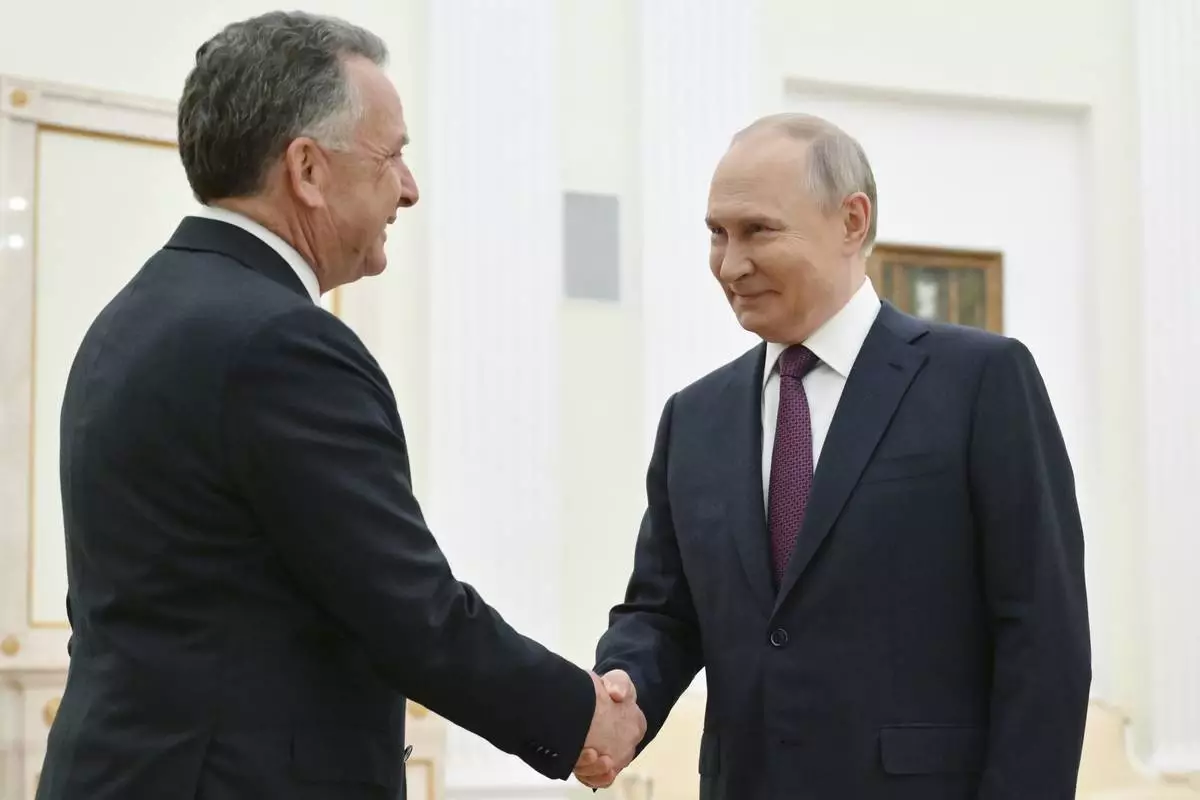
Russian President Vladimir Putin, right, and U.S. President Donald Trump's special envoy Steve Witkoff greet each other prior to their talks at the Kremlin in Moscow, Russia, Friday, April 25, 2025. (Kristina Kormilitsyna, Sputnik, Kremlin Pool Photo via AP)
Russian President Vladimir Putin, right, and U.S. President Donald Trump's special envoy Steve Witkoff greet each other prior to their talks at the Kremlin in Moscow, Russia, Friday, April 25, 2025. (Kristina Kormilitsyna, Sputnik, Kremlin Pool Photo via AP)
U.S. President Donald Trump's special envoy Steve Witkoff attends the talks with Russian President Vladimir Putin at the Kremlin in Moscow, Russia, Friday, April 25, 2025. (Kristina Kormilitsyna, Sputnik, Kremlin Pool Photo via AP)

U.S. President Donald Trump's special envoy Steve Witkoff attends the talks with Russian President Vladimir Putin at the Kremlin in Moscow, Russia, Friday, April 25, 2025. (Kristina Kormilitsyna, Sputnik, Kremlin Pool Photo via AP)

In this photo released by Iranian Foreign Ministry, Iranian Foreign Minister Abbas Araghchi, right, steps out from his plane as he arrives at Muscat, Oman, Friday, April 25, 2025, a day prior to negotiations with U.S. Mideast envoy Steve Witkoff. (Iranian Foreign Ministry via AP)
In this photo released by Iranian Foreign Ministry, Iranian Foreign Minister Abbas Araghchi, right, steps out from his plane as he arrives at Muscat, Oman, Friday, April 25, 2025, a day prior to negotiations with U.S. Mideast envoy Steve Witkoff. (Iranian Foreign Ministry via AP)
In this photo released by Iranian Foreign Ministry, Iranian Foreign Minister Abbas Araghchi, left, speaks with an unidentified Omani official upon his arrival at Muscat, Oman, Friday, April 25, 2025, a day prior to negotiations with U.S. Mideast envoy Steve Witkoff. (Iranian Foreign Ministry via AP)

In this photo released by Iranian Foreign Ministry, Iranian Foreign Minister Abbas Araghchi, left, speaks with an unidentified Omani official upon his arrival at Muscat, Oman, Friday, April 25, 2025, a day prior to negotiations with U.S. Mideast envoy Steve Witkoff. (Iranian Foreign Ministry via AP)

Iranian Foreign Minister Abbas Araghchi, center, and Omani Foreign Minister Badr al-Busaidi, left, walk through the Muscat International Book Fair in Oman, Friday, April 25, 2025. (AP Photo/Fatima Shbair)
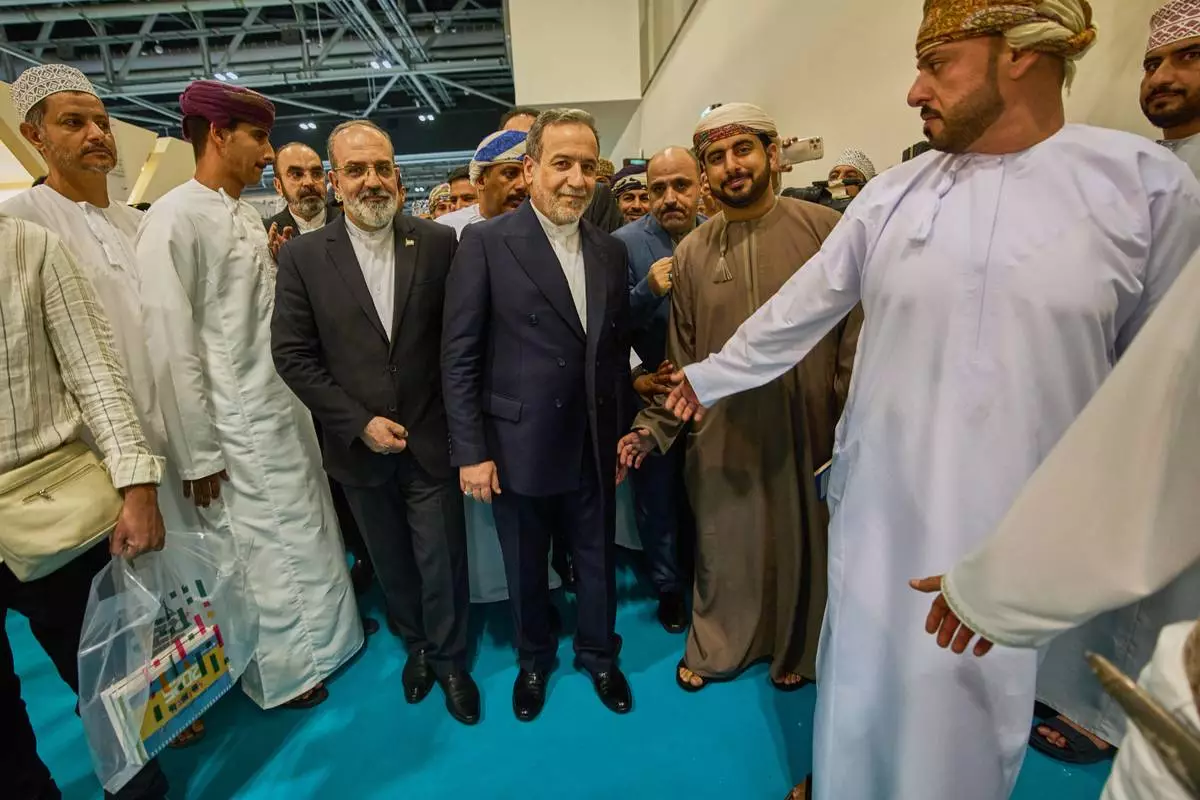
Iranian Foreign Minister Abbas Araghchi, center, and Omani Foreign Minister Badr al-Busaidi, left, walk through the Muscat International Book Fair in Oman, Friday, April 25, 2025. (AP Photo/Fatima Shbair)

Iranian Foreign Minister Abbas Araghchi, visits the Muscat International Book Fair in Oman, Friday, April 25, 2025. (AP Photo/ Fatima Shbair)
Iranian Foreign Minister Abbas Araghchi, visits the Muscat International Book Fair in Oman, Friday, April 25, 2025. (AP Photo/ Fatima Shbair)
WASHINGTON (AP) — The United States carried out a lightning military strike on Venezuela early Saturday, capturing President Nicolás Maduro and his wife, Cilia Flores, and spiriting them out of the country. President Donald Trump said the U.S. is “going to run” Venezuela until a transition of power can occur and the U.S. will tap the country's vast oil reserves as part of a rebuilding effort.

American officials say Maduro and his wife will face narco-terrorism charges in U.S. courts.

The overnight operation left Venezuela reeling, with its leadership uncertain and details of casualties and the impact on its military still to emerge. Countries across the region and the wider world were absorbing the destabilizing implications of the apparently unilateral U.S. action.

Here’s what we know — and what we don’t.

Explosions rang out and low-flying aircraft swept through Venezuela’s capital, Caracas, early Saturday. At least seven blasts were heard in an attack that lasted less than 30 minutes. The targets appeared to include military infrastructure. Smoke was seen rising from the hangar of a military base in Caracas and another military installation in the capital was without power.

Venezuelan ruling party leader Nahum Fernández told The Associated Press that Maduro and Flores were at their home within the Ft. Tiuna military installation outside Caracas when they were captured.

Venezuelan officials said people had been killed, but the scale of casualties was unclear.

The attack followed months of escalating pressure by the Trump administration, which has built up naval forces in the waters off South America and since early September has carried out deadly strikes on alleged drug-smuggling boats in the eastern Pacific and Caribbean. Last week the U.S. struck Venezuelan soil with a CIA drone strike at a docking area alleged to have been used by drug cartels.

Trump said during a news conference Saturday the U.S. would run the country and gestured to officials arrayed behind, including Secretary of State Marco Rubio, Defense Secretary Pete Hegseth and Dan Caine, chairman of the Joint Chiefs of Staff, and said they’d be the ones doing it “for a period of time.”

Trump claimed the American presence was already in place, though there were no immediate signs of this. He suggested the U.S. would use revenues from oil sales to pay for running the country.

“We’re going to get reimbursed for everything that we spend,” he said.

Trump claimed that Venezuelan Vice President Delcy Rodríguez had been sworn in as president shortly before he spoke to reporters and added she had spoken with Rubio.

“She is essentially willing to do what we think is necessary to make Venezuela great again. Very simple,” Trump said.

U.S. Attorney General Pam Bondi said on social network X that Maduro and Flores had both been indicted in the Southern District of New York and “will soon face the full wrath of American justice on American soil in American courts.”

Maduro was indicted in March 2020, during Trump’s first term, but the indictment against Flores was not previously made public.

In the indictment made public on Saturday, Maduro is charged with narco-terrorism conspiracy, cocaine importation conspiracy, possession of machine guns and destructive devices and conspiracy to possess machine guns and destructive devices.

U.S. authorities accused Maduro of leading a “a corrupt, illegitimate government that, for decades, has leveraged government power to protect and promote illegal activity, including drug trafficking.” The indictment alleges the drug trafficking “enriched and entrenched Venezuela’s political and military elite.”

Authorities estimate that as much as 250 tons of cocaine were trafficked through Venezuela by 2020, according to the indictment. The drugs were moved on go-fast vessels, fishing boats and container ships or by plane from clandestine airstrips, authorities allege.

Trump said Maduro and his wife are aboard a U.S. warship and will face prosecution in New York.

Trump gave some details of the operation during a Saturday morning interview on “Fox and Friends.”

He said a few U.S. members of the operation were injured but he believed no one was killed.

He said Maduro was “highly guarded” in a presidential palace akin to a “fortress” and the Venezuelan leader tried to get to a safe room but wasn’t able to get there in time.

Trump said U.S. forces practiced the operation ahead of time on a replica building, and the U.S. turned off “almost all of the lights in Caracas,” although he didn’t detail how they accomplished that.

Venezuela’s vice president, Delcy Rodríguez, also offered some details of the operation, saying some Venezuelan civilians and members of the military were killed.

The U.S. does not recognize the jurisdiction of the International Criminal Court, and the legal implications of the strike under U.S. law were not immediately clear.

The Trump administration maintains that Maduro is not the legitimate leader of Venezuela and claims he has effectively turned Venezuela into a criminal enterprise at the service of drug traffickers and terrorist groups.

Mike Lee, a U.S. senator from Utah, said on X that the action “likely falls within the president’s inherent authority under Article II of the Constitution to protect U.S. personnel from an actual or imminent attack.”

But some Democrats were more critical.

Sen. Tim Kaine, a Virginia Democrat, said in a statement, “President Trump’s unauthorized military attack on Venezuela to arrest Maduro — however terrible he is — is a sickening return to a day when the United States asserted the right to dominate the internal political affairs of all nations in the Western Hemisphere.”

Maduro’s government accused the United States of an “imperialist attack” on civilian and military installations and urged citizens to take to the streets.

Armed individuals and uniformed members of a civilian militia took to the streets of a Caracas neighborhood long considered a stronghold of the ruling party. But in other areas of the city, the streets remained empty hours after the attack. Parts of the city remained without power, but vehicles moved freely.

Venezuela’s neighbor Colombia sent troops to the border and anticipated an influx of refugees.

Latin American leaders were sharply divided over the strikes. Trump’s right-wing ally President Javier Milei of Argentina celebrated the operation, while leftist Brazilian President Luiz Inácio Lula da Silva condemned American actions and warned of the sharp repercussions of past American interventions in Latin America.

Cuba, a supporter of the Maduro government and a longtime adversary of the United States, urged the international community to respond to what President Miguel Díaz-Canel Bermúdez called “the criminal attack.”

Russia’s Foreign Ministry said the attack and capture of Maduro would be “an unacceptable infringement on the sovereignty of an independent state.”

U.S. allies in Europe — critical of Maduro but mindful of international law — offered muted responses as they scrambled to understand the scale and implications of the attack.

European Union foreign policy chief Kaja Kallas said the bloc “has repeatedly stated that Mr Maduro lacks legitimacy and has defended a peaceful transition. Under all circumstances, the principles of international law and the U.N. Charter must be respected. We call for restraint.”

British Prime Minister Keir Starmer said he had not spoken to Trump about the attack and stressed that “the U.K. was not involved in any way.” Spanish Prime Minister Pedro Sánchez said Spain was “conducting a thorough monitoring of the events in Venezuela” and called for “de-escalation and responsibility.”

Lawless reported from London. Associated Press Writer Danica Kirka in London contributed to this story.

FILE - President Nicolas Maduro acknowledges supporters alongside first lady Cilia Flores during his closing election campaign rally in Caracas, Venezuela, July 25, 2024. (AP Photo/Fernando Vergara, File)

FILE - President Nicolas Maduro acknowledges supporters alongside first lady Cilia Flores during his closing election campaign rally in Caracas, Venezuela, July 25, 2024. (AP Photo/Fernando Vergara, File)

Pro-government armed civilians patrol in La Guaira, Venezuela, Saturday, Jan. 3, 2026, after U.S. President Donald Trump announced that President Nicolás Maduro had been captured and flown out of the country. (AP Photo/Matias Delacroix)

Pro-government armed civilians patrol in La Guaira, Venezuela, Saturday, Jan. 3, 2026, after U.S. President Donald Trump announced that President Nicolás Maduro had been captured and flown out of the country. (AP Photo/Matias Delacroix)

Supporters of Venezuelan President Nicolás Maduro embrace in downtown Caracas, Venezuela, Saturday, Jan. 3, 2026, after U.S. President Donald Trump announced that Maduro had been captured and flown out of the country. (AP Photo/Cristian Hernandez)

Supporters of Venezuelan President Nicolás Maduro embrace in downtown Caracas, Venezuela, Saturday, Jan. 3, 2026, after U.S. President Donald Trump announced that Maduro had been captured and flown out of the country. (AP Photo/Cristian Hernandez)

Men watch smoke rising from a dock after explosions were heard at La Guaira port, Venezuela, Saturday, Jan. 3, 2026. (AP Photo/Matias Delacroix)

Men watch smoke rising from a dock after explosions were heard at La Guaira port, Venezuela, Saturday, Jan. 3, 2026. (AP Photo/Matias Delacroix)

Smoke raises at La Carlota airport after explosions and low-flying aircraft were heard in Caracas, Venezuela, Saturday, Jan. 3, 2026. (AP Photo/Matias Delacroix)

Smoke raises at La Carlota airport after explosions and low-flying aircraft were heard in Caracas, Venezuela, Saturday, Jan. 3, 2026. (AP Photo/Matias Delacroix)

Recommended Articles