Skip to Content Facebook Feature Image

Aptiv Powers Intelligent Edge Applications From Automotive to Robotics at CES 2026

Business

Aptiv Powers Intelligent Edge Applications From Automotive to Robotics at CES 2026
Business

Business

Aptiv Powers Intelligent Edge Applications From Automotive to Robotics at CES 2026

2026-01-05 14:02 Last Updated At:15:00

SCHAFFHAUSEN, Switzerland--(BUSINESS WIRE)--Jan 5, 2026--

Aptiv PLC (NYSE: APTV), a global industrial technology company, will showcase at CES 2026 how its intelligent edge solutions enable devices to sense, think, and act in real time—while continuously optimizing performance throughout their lifecycle. This approach brings advanced computing and artificial intelligence closer to where data is generated, unlocking AI-driven solutions for transportation, robotics, aerospace, and beyond.

More Images
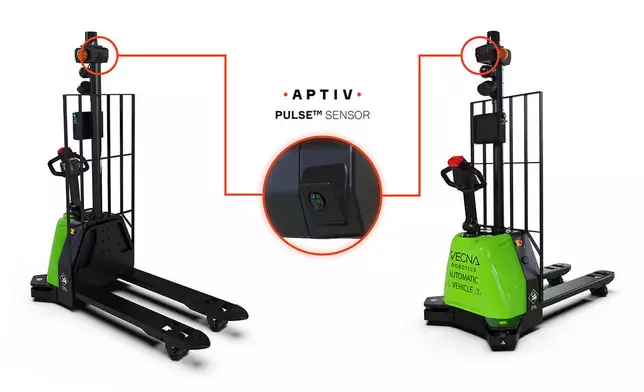
Aptiv’s advanced perception portfolio and machine learning technologies are integrated into Vecna Robotics’ platform.
Aptiv’s advanced perception portfolio and machine learning technologies are integrated into Vecna Robotics’ platform.

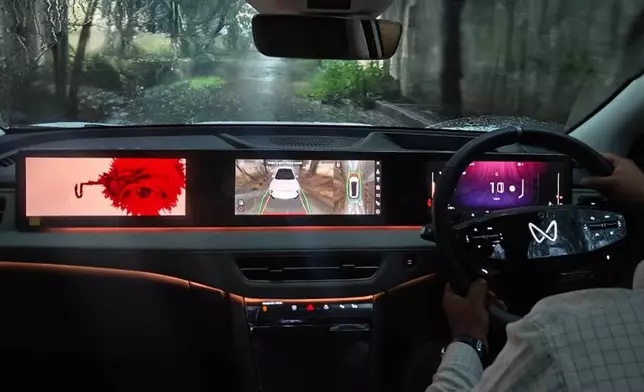
Aptiv’s Digital Cockpit enables OEMs to deliver smarter, safer, personalized experiences with advanced cabin monitoring and premium infotainment.
Aptiv’s Digital Cockpit enables OEMs to deliver smarter, safer, personalized experiences with advanced cabin monitoring and premium infotainment.

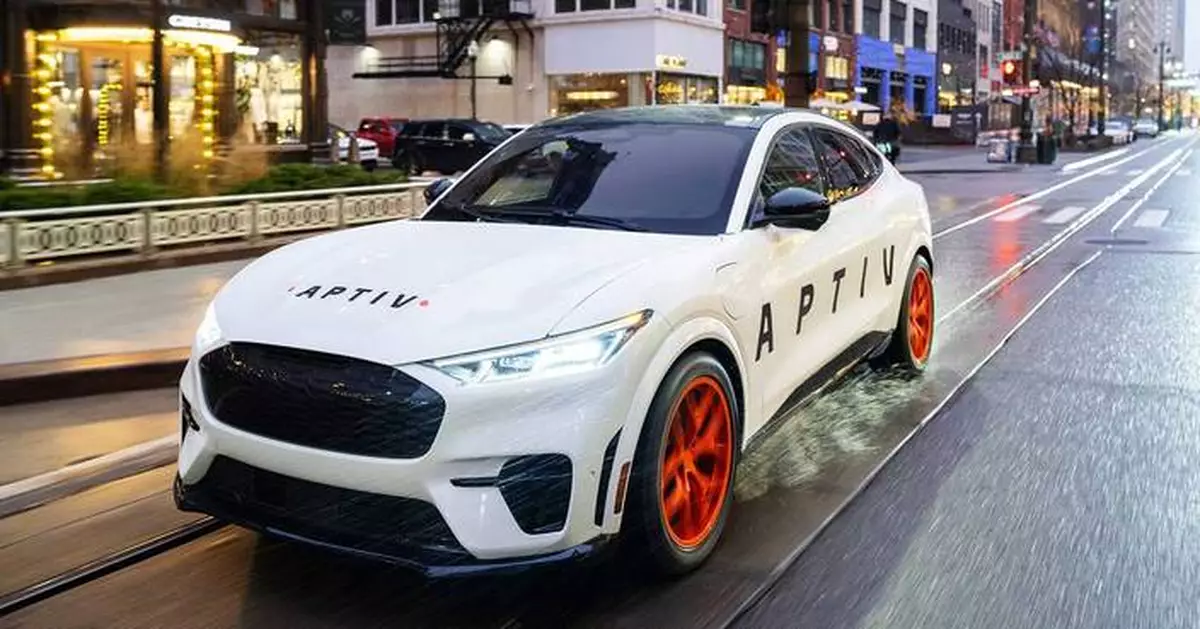
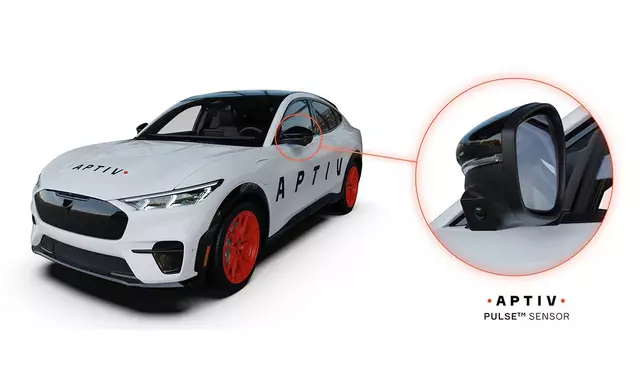
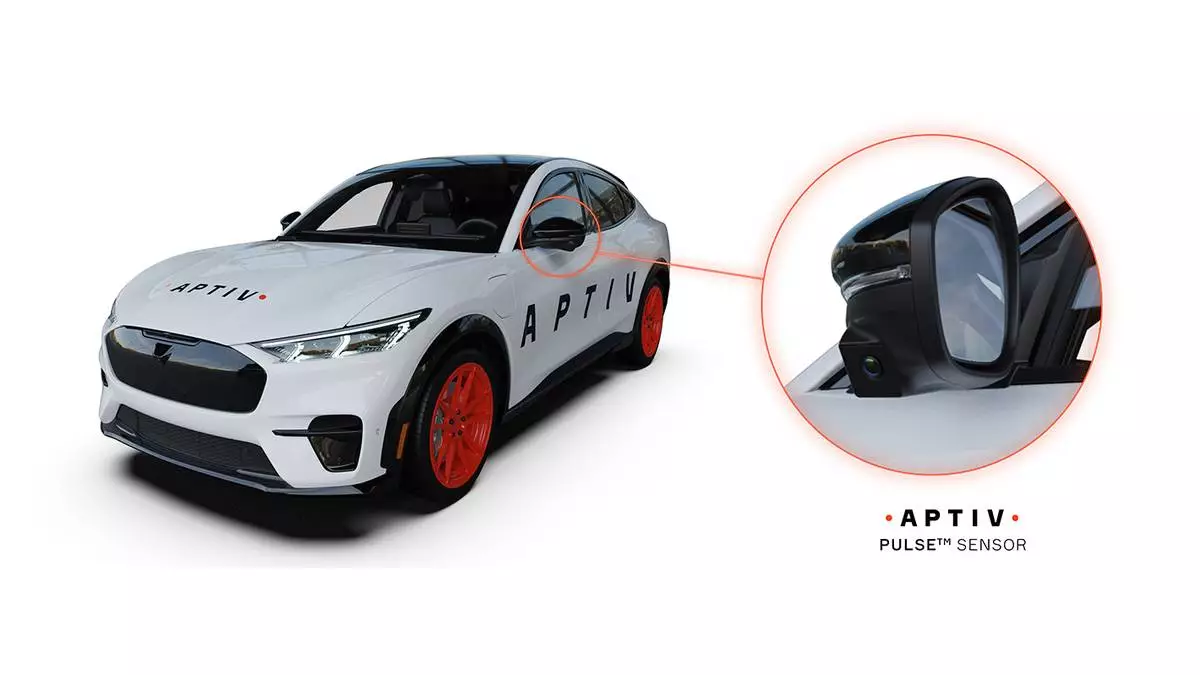
Aptiv’s AI-powered ADAS platform with Gen 8 radars and PULSE™ sensor delivers human-like, hands-free autonomy and 360° perception for all driving scenarios.
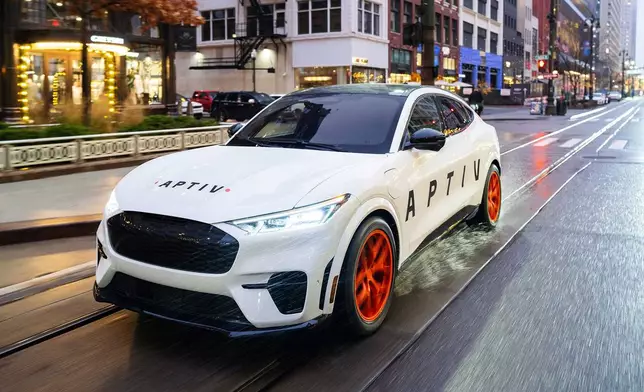
Aptiv’s AI-powered ADAS platform with Gen 8 radars and PULSE™ sensor delivers human-like, hands-free autonomy and 360° perception for all driving scenarios.

Aptiv Powers the Intelligent Edge from Automotive to Robotics at CES 2026

Aptiv Powers the Intelligent Edge from Automotive to Robotics at CES 2026

This press release features multimedia. View the full release here: https://www.businesswire.com/news/home/20260104888341/en/

By processing data locally at the edge, rather than relying solely on centralized cloud systems, Aptiv’s solutions enable faster response time and greater optimization at a system level.

“At CES 2026, we’re demonstrating how Aptiv enables real-time perception, decision-making, and actuation—transforming how vehicles and other intelligent, connected devices deliver safer, more adaptive, and smarter experiences,” said Javed Khan, Executive Vice President and President of Intelligent Systems at Aptiv. “We’re leveraging our leading technologies—proven in millions of vehicles on the road today—and successfully extending them into other mission-critical applications from robotics to aerospace and beyond.”

The Future of Automated Mobility

In the automotive domain, Aptiv will showcase its next-generation end-to-end (E2E) AI-powered ADAS platform, designed to deliver safer, more human-like driving and enhanced hands-free (L2++) autonomy across both highway and urban environments. This E2E approach leverages AI for perception, fusion and behavior planning which learn from real-world driving data to continuously evolve and improve over time.

Central to this platform are Aptiv’s recently launched Gen 8 radars, delivering industry-leading range, resolution, and object detection in all conditions. Combined with advanced Machine Learning algorithms, these radars enable robust driving solutions across diverse scenarios. Complementing them is the Aptiv PULSE™ sensor, which integrates surround-view cameras with ultra-short-range radar for seamless 360° perception. These technologies provide full coverage across urban, highway, and parking scenarios— helping drivers and automated systems navigate safely, regardless of weather or lighting conditions.

Scalable Digital Cockpit Innovations

At CES 2026, Aptiv will also unveil its latest Digital Cockpit technologies—engineered to enhance the safety and in-cabin experience for both passenger and commercial vehicles. Leveraging Aptiv’s unique capabilities in user experience, ADAS, and middleware, these solutions help drivers and vehicles collaborate during hands-free driving, keeping drivers informed and ready to intervene when needed, and empowering OEMs to unlock innovative, personalized experiences.

Aptiv’s Driver Monitoring System (DMS) and Cabin Monitoring System (CMS) utilize advanced vision and radar sensing to inform occupancy status, these sensors enable smarter, safety-critical decisions in the vehicle. Aptiv’s CMS can replace traditional seat-based occupant detection with vision-based sensing, reducing complexity and cost, and improving reconfigurability, while meeting stringent safety standards. Behind the scenes, a virtual synthetic data environment accelerates development by generating scalable, realistic datasets to train AI-powered systems.

Greater personalization is enabled by Aptiv’s Cockpit Sound Suite, Face ID, and other modular software features, built on the Aptiv Android Automotive Framework. Directional audio alerts deliver scalable audio experiences—from stereo to immersive spatial sound—while ensuring critical warnings reach the right occupant without disrupting others. Face ID seamlessly supports user profiles and adjusts vehicle and ecosystem preferences, including mirrors, seat position, and ADAS sensitivity, reducing the distractions of manual adjustment. This open and flexible approach is further enhanced by collaborations with strategic partners, empowering OEMs to control the software that defines their vehicles.

Connecting the Future: The Aptiv LINC™ Software Platform, 5G and C-V2X

Aptiv will also highlight its collaboration with Verizon to explore the potential of Cellular Vehicle-to-Everything (C-V2X) technology, where 5G connectivity, edge computing, and automotive innovation converge to improve road safety.

Powered by Aptiv’s cloud-native platform, featuring Wind River technology, the new Aptiv LINC™ Software Platform and Verizon’s Edge Transportation Exchange — a mobile-network V2X communication platform, this proof of concept exemplifies how high-speed, low-latency communication can enable safer mobility ecosystems. Applications include sharing vulnerable road user detections between vehicles by leveraging 5G C-V2X services - for example, allowing vehicles to share the location of pedestrians or cyclists, which might otherwise be blocked from view.

These capabilities are enabled, in part, by the Aptiv Layered Infrastructure for Networking and Compute (LINC™) Software Platform, which is purpose built for complex and real time embedded features. More than just middleware, it is a comprehensive, modular software solution that enables truly software-defined vehicles. LINC delivers capabilities such as communications middleware, middleware tooling, software-defined networking, container management, edge intelligence, and more, all designed to accelerate development and unlock advanced functionality, such as those envisioned by C-V2X.

Multi-Industry Insights

Aptiv’s CES 2026 pavilion will also feature software and hardware solutions powering multiple robotics and aerospace applications. This includes an AI-powered collaborative robot and next-generation Autonomous Mobile Robot for scalable material handling, which integrates Aptiv’s award-winning PULSE sensor and compute solutions. Other showcases will highlight platforms including the VxWorks® real-time operating system, Wind River Helix® Virtualization Platform, and Wind River Cloud Platform. These exhibits underscore Aptiv’s commitment to enabling mission-critical applications across multiple end markets.

Aptiv Takes the Stage at CES

Aptiv will host two speaking engagements at CES 2026 in Las Vegas.

From Cars to Aerospace – How Edge AI Is Powering the Future of Advanced Mobility

5G, Edge & Vehicles – How Telecom and Automotive Are Bringing C-V2X to Life

Aptiv invites CES attendees, media, and industry stakeholders to join these sessions and engage in conversations that are shaping the future of mobility and intelligent systems across industries. For more information about Aptiv’s news, please visit: https://www.aptiv.com/en/newsroom/article/aptiv-powers-the-intelligent-edge-from-automotive-to-robotics-at-ces-2026

FAQ:

What is Aptiv showcasing at CES 2026?

Aptiv will demonstrate its Intelligent Edge solutions that enable real-time sensing, thinking, and acting across automotive, robotics, aerospace, and other mission-critical applications. Highlights include:

How does Aptiv’s Intelligent Edge technology benefit mobility and other industries?

By processing data locally at the edge instead of relying solely on cloud systems, Aptiv’s solutions deliver:

What panels and sessions will Aptiv host at CES 2026?

Aptiv will lead two key discussions:

About Aptiv

Aptiv is a global industrial technology company enabling more automated, electrified, and digitalized solutions across multiple end-markets. Visit aptiv.com.
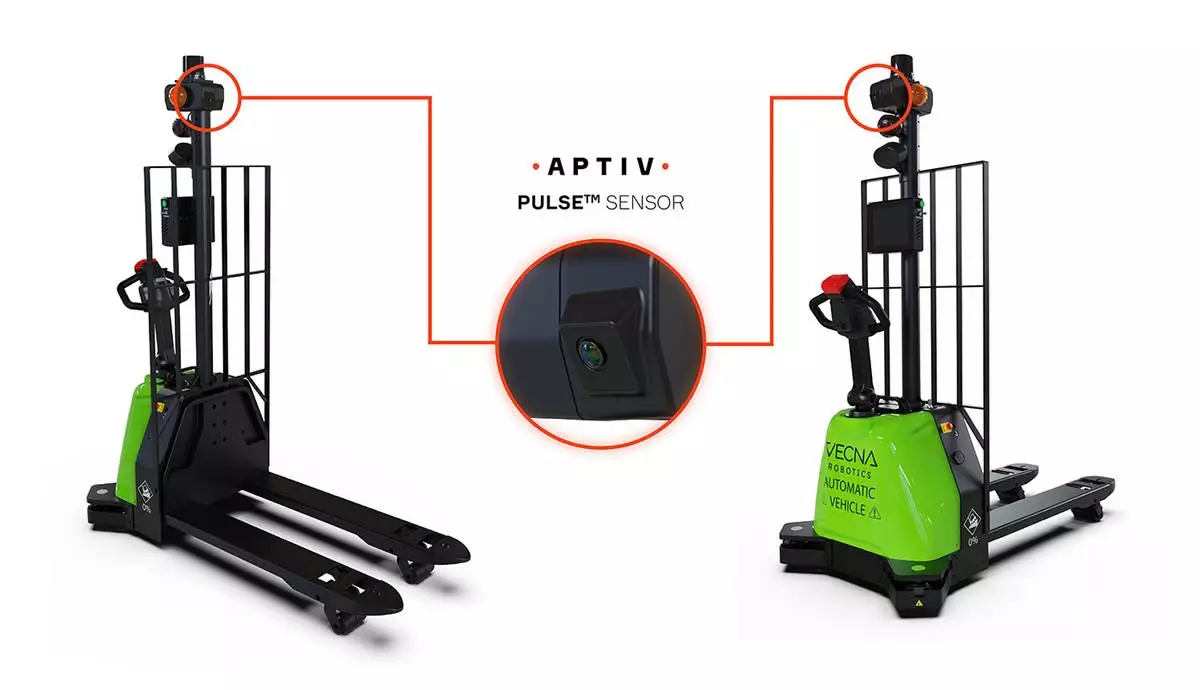
Aptiv’s advanced perception portfolio and machine learning technologies are integrated into Vecna Robotics’ platform.

Aptiv’s advanced perception portfolio and machine learning technologies are integrated into Vecna Robotics’ platform.

Aptiv’s Digital Cockpit enables OEMs to deliver smarter, safer, personalized experiences with advanced cabin monitoring and premium infotainment.
Aptiv’s Digital Cockpit enables OEMs to deliver smarter, safer, personalized experiences with advanced cabin monitoring and premium infotainment.

Aptiv’s AI-powered ADAS platform with Gen 8 radars and PULSE™ sensor delivers human-like, hands-free autonomy and 360° perception for all driving scenarios.
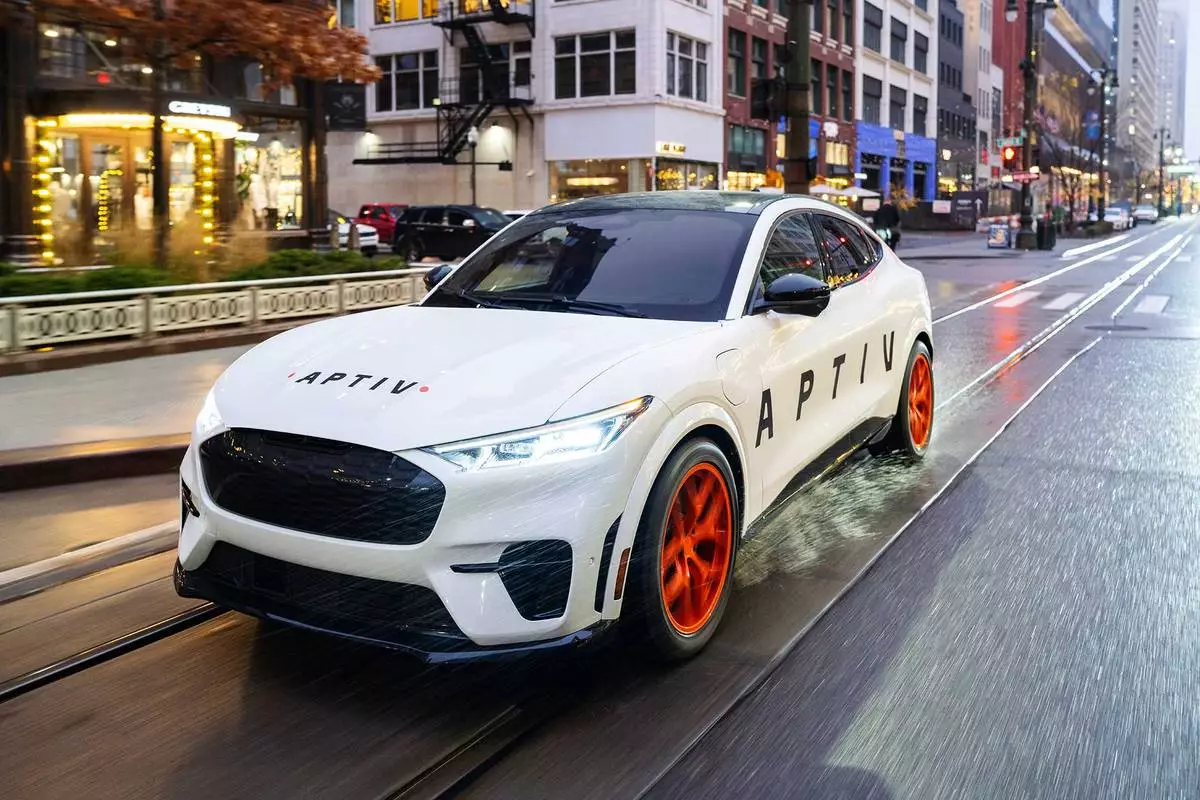
Aptiv’s AI-powered ADAS platform with Gen 8 radars and PULSE™ sensor delivers human-like, hands-free autonomy and 360° perception for all driving scenarios.

Aptiv Powers the Intelligent Edge from Automotive to Robotics at CES 2026


Aptiv Powers the Intelligent Edge from Automotive to Robotics at CES 2026

INDIANAPOLIS (AP) — Tarris Reed Jr. sat at his locker Thursday, fielding questions about his run as the interior-scoring, rebound-snagging force in UConn's latest Final Four push.

Yet he wasn't the main attraction.

That's because across the room, an even bigger gaggle of reporters waited for freshman guard Braylon Mullins — the Indiana kid who hit an all-timer of a shot to send the Huskies back to the sport's biggest stage — to return for his own round of interviews.

“Guards are the ones that hit the big shots,” Reed said Thursday when asked about big men getting their due, adding with a grin: “We just do our job, we do the dirty work — and we're used to doing it our whole life so we have fun doing it.”

Maybe so, but there's no minimalizing the impact of size this week in Indianapolis. Not with the Final Four boasting its biggest quartet of teams going back roughly two decades, starting with guys such as Reed, Michigan's Aday Mara, Arizona's Koa Peat and Illinois' 7-foot Ivisic twins as anchors to lineups with size radiating all the way out to the perimeter.

The average height of the Final Four teams is nearly 79.1 inches, or roughly 6 feet 6, according to KenPom’s analytics site. That edges last year’s average of nearly 78.3 inches for the biggest of any Final Four going back to the start of KenPom’s data in 2007.

Illinois (28-8) is Division I's tallest team with an average roster height of nearly 6-7 (80 inches), while Arizona (36-2) is seventh at nearly 6-6 (79 inches). Michigan (35-3) and UConn (33-5) are in the top 30 nationally with nearly identical averages slightly behind the Wildcats.

Consider it a sign of the premium each team put on building a roster to overwhelm teams inside, on the glass and with game-altering length spanning the gaps between.

That kind of size, strength and wingspan creates trouble cascading through the matchups. ACC Network analyst Luke Hancock said teams are also thriving by finding power forwards and centers capable of stepping outside to stretch defenses further and create space, eliminating the ability for a defense to simply collapse on a lone big man.

“Guards still win in March,” said Hancock, the most outstanding player of the 2013 Final Four in Louisville’s later-vacated title run. "But I think these guys have become almost like a necessary component. If you want to win championships, you need a big 4 and a monster 5.”

And it's manifesting in several ways as March Madness reaches its final act.

The Illini have had the best defensive tournament efficiency of the Final Four teams while dominating the glass to complete those stops. Their roster includes an influx of European talent, including Tomislav (7-1) and Zvonimir Ivisic (7-2), as well as 6-9 forward David Mirkovic from Montenegro.

The Illini also brings 6-9, 235-pound graduate Ben Humrichous off the bench, while the outlier in the big lineup is 6-2 senior guard Kylan Boswell as a strong backcourt defender.

The South Region champion has allowed .976 points per possession in the NCAA Tournament to lead the remaining four teams. Throw in the fact that Illinois is outrebounding opponents by 16.3 per game, and it's been a perfectly timed boost to an already elite offense with those forwards and centers capable of hitting from behind the arc, too.

"Playing in the summer, you could tell it’s a little bit harder to do some things just because you’ve got Z at the rim, who’s 7-foot-2 and a great shot blocker," 6-6 forward Jake Davis said. “You got Tommy down there. So anybody you’re going up against in practice is super tall. ... We’ve just got a bunch of length everywhere. And you could tell early on that we could cause problems for other teams.”

The Illini will be tested against Reed, a 6-foot-11, 265-pound senior whose scoring (21.8) and rebounding (13.5) averages in the tournament are the best of any player still standing.

That included opening the tournament with a video game-type stat line of 31 points and 27 rebounds against Furman, making him the first player with 30-plus points and 25-plus rebounds in an NCAA Tournament game since Houston’s Elvin Hayes did it twice in 1968.

He’s coming off a 26-point showing in the comeback from 19 down to stun Duke in the Elite Eight.

“He’s a monster,” said UConn senior Alex Karaban, who was part of the Huskies’ 2023 and 2024 title winners. “He’s been so dominant. He’s really playing like the most dominant player in college basketball right now.”

When it comes to the No. 1 seeds, the Wolverines have hummed with 90-plus points in four tournament wins. The Wildcats have been right behind in offensive efficiency despite being shooting fewer 3-pointers than just about every other Division I team all season.

Their meeting Saturday matches strengths.

Michigan has used the 7-3, 255-pound Mara to protect the paint, flanked by a pair of versatile 6-9 forwards in Associated Press first-team All-American Yaxel Lendeborg (240 pounds) and Morez Johnson Jr. (250).

“Our size definitely makes it tougher for smaller guards,” Lendeborg said. “Because we’re so versatile ... we can switch and guard point guards, make their life a little harder. And you know, we’re all strong bodies too. So we try to wear down teams.

“And then, toward the end of the game, that’s when we usually make our runs when we need it.”

Michigan will be tested against the Wildcats with 7-2 center Motiejus Krivas (10.4 points, 8.2 rebounds) and Peat, a 6-8, 235-pound freshman considered a strong NBA prospect.

“If you don't have the big to defend other bigs, you can't compete at this level in my opinion,” Hancock said.

“How do you make it so you're really tough to guard and you have an advantage? It’s the 4-men in this Final Four who are just so talented and the diversity of their skill sets — they can do so many things. That is the ultimate to me.”

AP March Madness bracket: https://apnews.com/hub/ncaa-mens-bracket and coverage: https://apnews.com/hub/march-madness

Arizona forward Koa Peat (10) dunks during the second half in the Elite Eight of the NCAA college basketball tournament against Purdue, Saturday, March 28, 2026, in San Jose, Calif. (AP Photo/Kelley L Cox)

Arizona forward Koa Peat (10) dunks during the second half in the Elite Eight of the NCAA college basketball tournament against Purdue, Saturday, March 28, 2026, in San Jose, Calif. (AP Photo/Kelley L Cox)

Iowa's Tavion Banks (6) has his shot blocked by Illinois' Zvonimir Ivisic (44) during the first half of an Elite Eight game in the NCAA college basketball tournament Saturday, March 28, 2026, in Houston. (AP Photo/Eric Gay)

Iowa's Tavion Banks (6) has his shot blocked by Illinois' Zvonimir Ivisic (44) during the first half of an Elite Eight game in the NCAA college basketball tournament Saturday, March 28, 2026, in Houston. (AP Photo/Eric Gay)

UConn forward Tarris Reed Jr. (5) reacts after the team's win against Duke in the Elite Eight of the NCAA college basketball tournament, Sunday, March 29, 2026, in Washington. (AP Photo/Abbie Parr)

UConn forward Tarris Reed Jr. (5) reacts after the team's win against Duke in the Elite Eight of the NCAA college basketball tournament, Sunday, March 29, 2026, in Washington. (AP Photo/Abbie Parr)

Recommended Articles