Skip to Content Facebook Feature Image

Raymond Berry, Hall of Fame wide receiver and Patriots coach, dies at the age of 93

News

Raymond Berry, Hall of Fame wide receiver and Patriots coach, dies at the age of 93
News

News

Raymond Berry, Hall of Fame wide receiver and Patriots coach, dies at the age of 93

2026-06-02 00:43 Last Updated At:00:50

NEW YORK (AP) — Raymond Berry, the Hall of Fame wide receiver who teamed with Baltimore quarterback Johnny Unitas for one of the NFL's greatest passing combinations and helped lead the Colts to victory over the New York Giants in the storied 1958 championship game, has died. He was 93.

Berry, who later coached the New England Patriots in Super Bowl XX, died May 25, the Pro Football Hall of Fame said Monday.

More Images
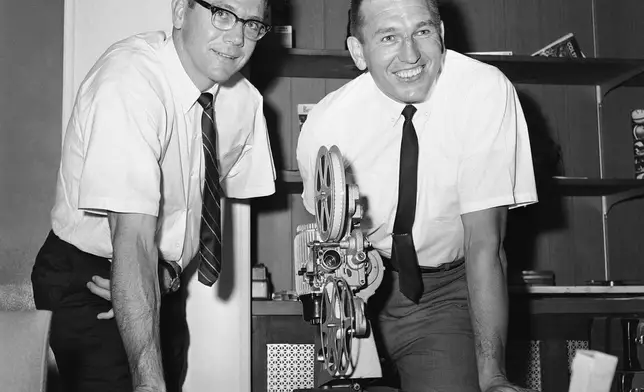
FILE - Baltimore Colts quarterback Johnny Unitas and veteran split end Raymond Berry, left, review films of previous Colt games in Baltimore on Oct. 25, 1967. (AP Photo/William Smith, file)
FILE - Baltimore Colts quarterback Johnny Unitas and veteran split end Raymond Berry, left, review films of previous Colt games in Baltimore on Oct. 25, 1967. (AP Photo/William Smith, file)

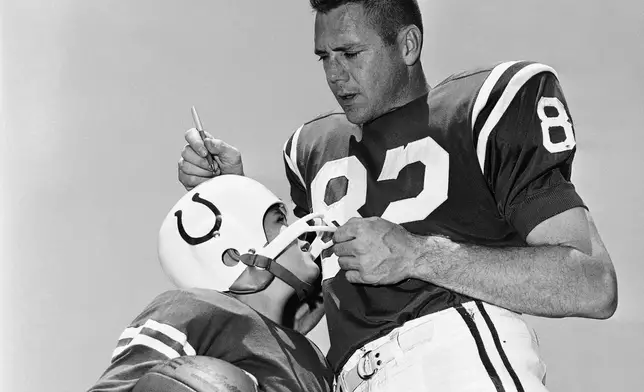
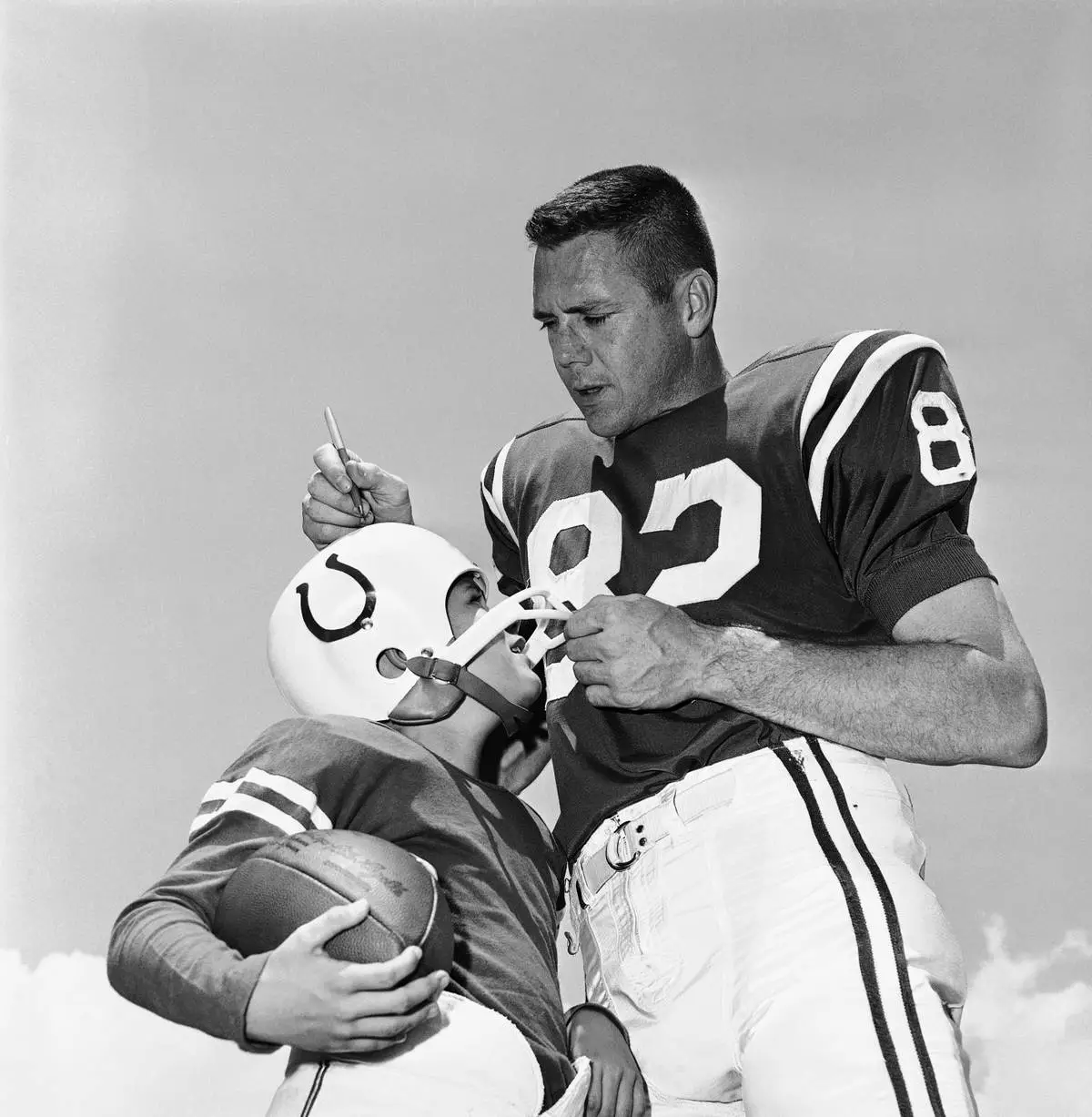
FILE - David Driscoll, 9, of Baltimore, wearing a copy of a Baltimore Colt uniform, gets an autograph on his helmet from end Raymond Berry at the Westminster training camp of the NFL club, Aug. 2, 1965. (AP Photo/William A. Smith, file)
FILE - David Driscoll, 9, of Baltimore, wearing a copy of a Baltimore Colt uniform, gets an autograph on his helmet from end Raymond Berry at the Westminster training camp of the NFL club, Aug. 2, 1965. (AP Photo/William A. Smith, file)

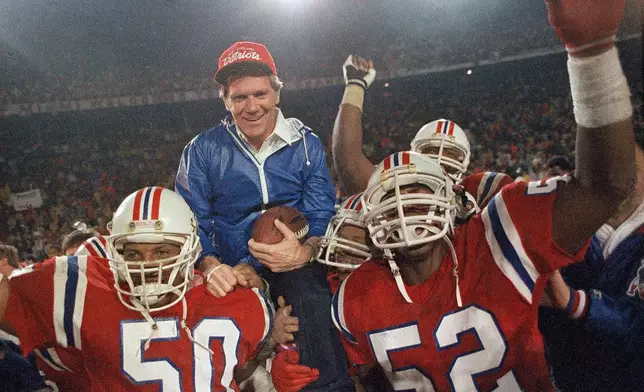
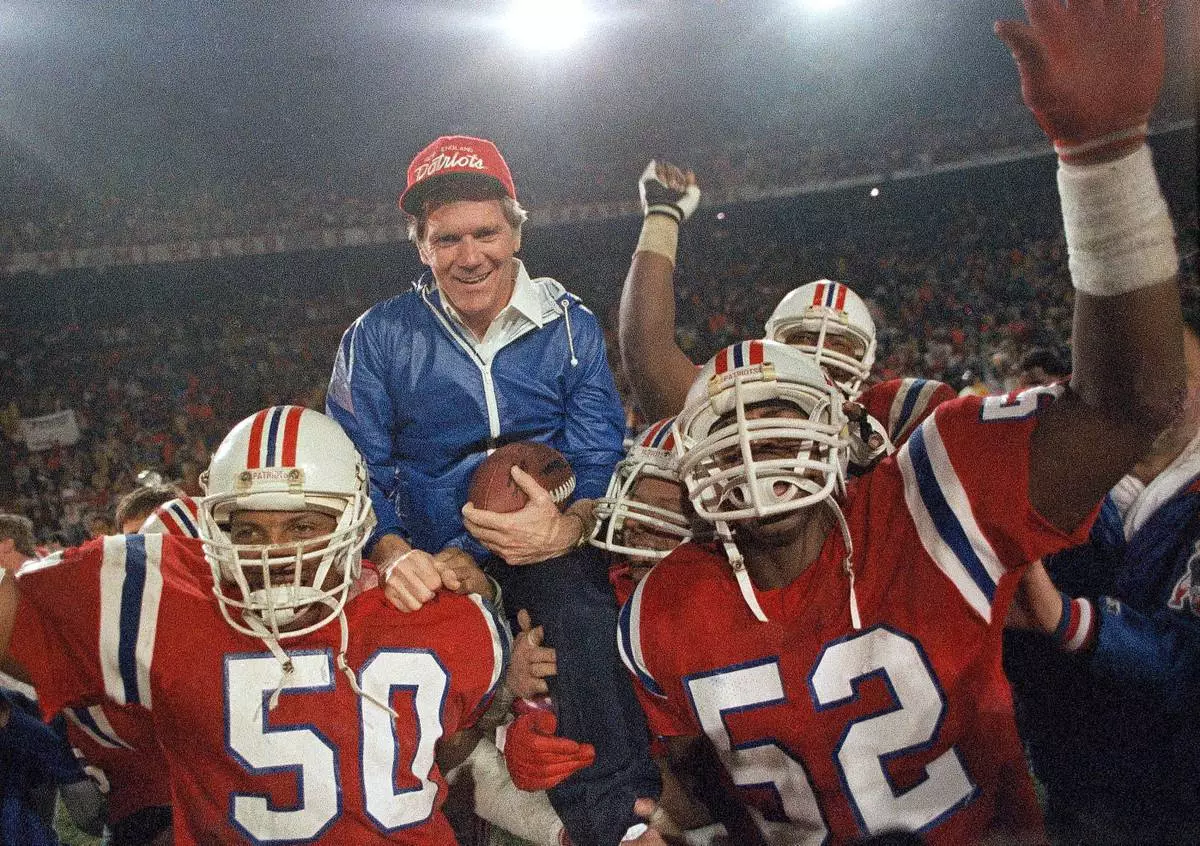
FILE - IN this Jan. 12, 1986, file photo, New England Patriots coach Raymond Berry gets a victory ride from players Larry McGrew (50) and Johnny Rembert (52) after the Patriots defeated the Miami Dolphins 31-14 in the NFL football AFC playoffs in Miami. (AP Photo/File)
FILE - IN this Jan. 12, 1986, file photo, New England Patriots coach Raymond Berry gets a victory ride from players Larry McGrew (50) and Johnny Rembert (52) after the Patriots defeated the Miami Dolphins 31-14 in the NFL football AFC playoffs in Miami. (AP Photo/File)

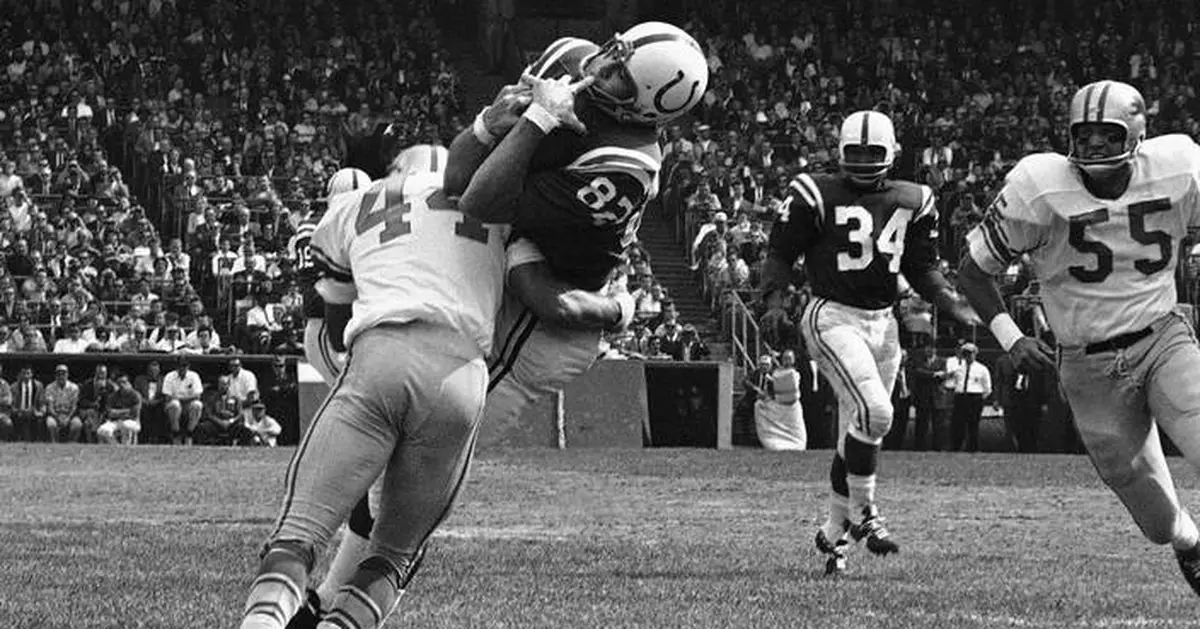
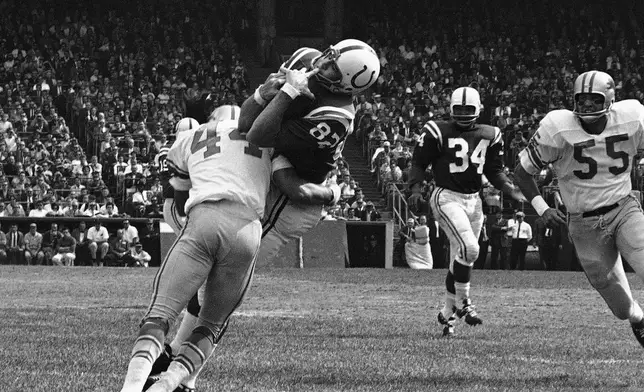
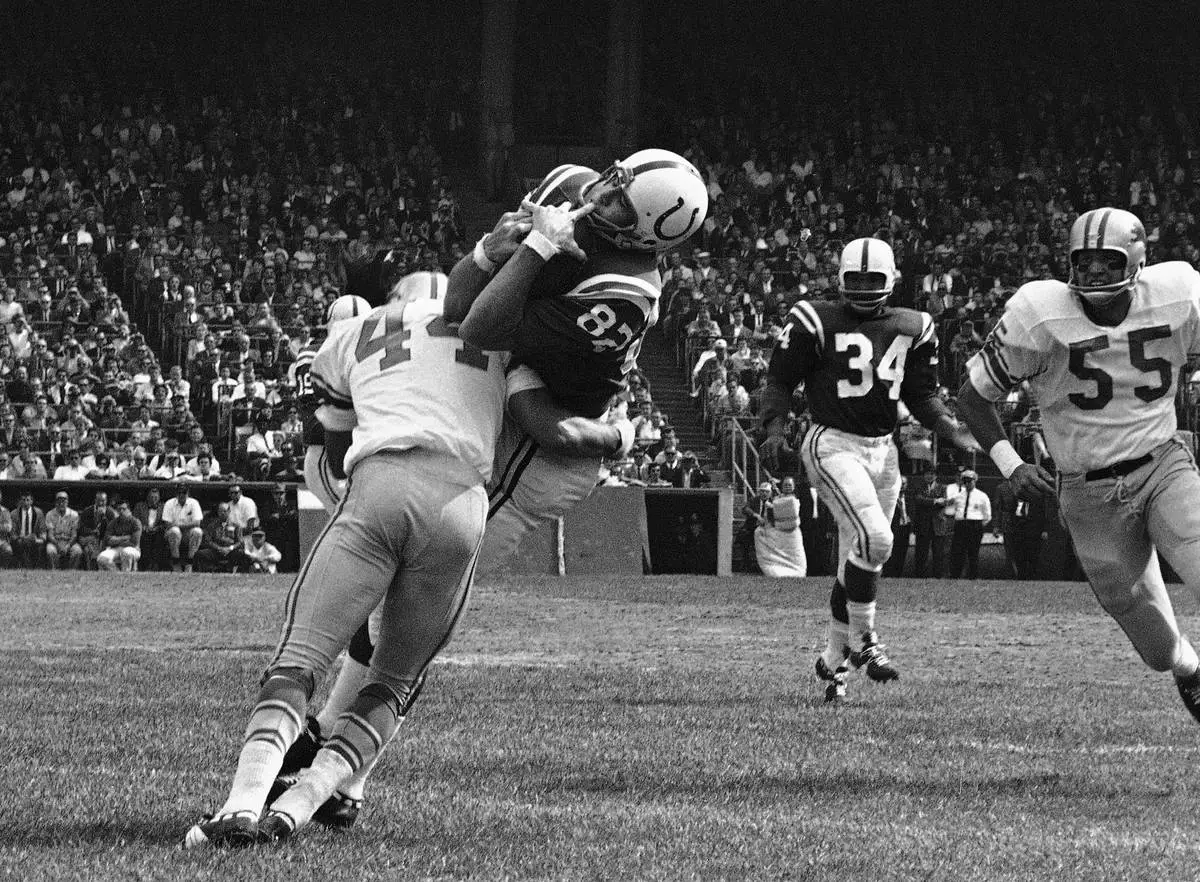
FILE - In this Sept. 30, 1962, file photo, Baltimore Colts end Raymond Berry snags a pass from quarterback John Unitas for 5-yard gain against the Detroit Lions in a football game in Baltimore. Lions' Dick LeBeau (44) makes the tackle. (AP Photo/File)

FILE - In this Sept. 30, 1962, file photo, Baltimore Colts end Raymond Berry snags a pass from quarterback John Unitas for 5-yard gain against the Detroit Lions in a football game in Baltimore. Lions' Dick LeBeau (44) makes the tackle. (AP Photo/File)

His family said in a statement that Berry died peacefully at home in Murfreesboro, Tennessee, surrounded by family, including his wife of 65 years, Sally.

“In NFL history, there are only a handful of players who we can say truly changed the sport. Raymond Berry is one of the few names on that list,” Indianapolis Colts owner Carlie Irsay-Gordon said. “As a player during a historic era of Colts football, Raymond redefined the standard for what a wide receiver could and should be. ... Simply put, not only was Raymond Berry one the greatest players in the history of the Colts, but he was one of the most influential and foundational players of the modern NFL.”

A 20th-round draft pick out of SMU in 1954, the Texas native became a model for the virtues of hard work and determination. He had average speed, legs of different length, a bad back, imperfect eyesight and oversized feet that in high school gave him the nickname “Skis.” But he willed himself into a superstar through exhaustive preparation and study, whether using Silly Putty to strengthen his fingers or simulating entire games on the practice field.

He was among the most reliable receivers in league history, rarely dropping a pass and fumbling only twice, according to the Pro Football Reference website. By his own count, he developed 88 separate routes to get open, his discipline so unyielding that even his coach, Weeb Ewbank, tried to intervene.

“One of his drills was to throw nothing but bad balls to him,” Ewbank told the Los Angeles Times in 1986. “I used to have to run John (Unitas) off — ‘John, you’ve had enough throwing today’ — and he’d say, ‘Yeah, talk to that guy out there.’”

Over 13 seasons, Berry caught a then-record 631 passes (Jerry Rice is now the all-time leader, with 1,549) for 68 touchdowns, led the NFL in receptions three times and played in six Pro Bowls. A mainstay of one of the league’s top offenses, featuring Unitas, running back Lenny Moore and offensive lineman Jim Parker, Berry played on championship teams in 1958 and 1959 and a runner-up in 1964.

Berry was inducted into the NFL Hall of Fame in 1973, and was voted on to the league’s 50th anniversary and 75th anniversary teams. The Colts retired his uniform number, 82. SMU retired his number from college, 87.

Berry was at his peak during a signature day in NFL history: the 1958 finale against the Giants at Yankee Stadium, an overtime classic known by many as “The Greatest Game Ever Played." It was nationally televised and often cited as the starting point for the league’s rise over the following decades.

Playing against the NFL’s toughest defense, Berry caught 12 passes for 178 yards and one touchdown, including three consecutive receptions during the 86-yard drive that tied the game 17-17 in regulation, and two crucial grabs during the 80-yard drive that gave the Colts a 23-17 win. The league’s first championship to finish in overtime helped make Unitas a hero and Berry his ideal target.

“We worked and got to know each other and developed timing you just can’t get any other way,” Berry later told the radio program Sports & Torts. “He (Unitas) knew I was going to be there when I was supposed to be there and he knew I was going to catch it.”

After retiring in 1967, Berry was a wide receivers coach for the Dallas Cowboys, Cleveland Browns and New England Patriots, and head coach of the Pats from 1984-89. He finished 48-39 with New England, including an 11-5 season in 1985 and a trip to Super Bowl XX. The Patriots were crushed 46-10 by the Chicago Bears in that game.

“Raymond Berry holds a special place in Patriots history,” team owner Robert Kraft said. “He led our franchise to its first Super Bowl appearance following a remarkable playoff run, a milestone that was the greatest achievement in team history at the time.”

Kraft said Raymond left a lasting impact on the Patriots and the NFL.

Soon after the Super Bowl against the Bears, the Boston Globe revealed that several New England players had drug problems. Berry had been a source for the Globe story and his push for the team to agree to drug testing was forcefully opposed by the NFL players union.

Berry, a deeply religious man who didn’t drink or smoke, had personal reasons for supporting drug treatment. His former Colts teammate, All-Pro defensive tackle Gene “Big Daddy” Lipscomb, had struggled with addiction.

“They didn’t help him, they just cut him,” Berry told The Patriot Ledger in 1986. “Three years later, he was dead.”

Berry married fellow Texan Sally Crook in 1960. They had three children.

He was born in Corpus Christi in 1933 and would credit some of his success to his high school coach, his father, Mark Raymond Berry, who taught his son the basics of football even if he didn’t play him much. He attended Schreiner College in Kerrville for a year before transferring to SMU, where during one crucial game he fumbled twice, mistakes he vowed not to commit in the pros.

With the Colts, he caught only 13 passes in his rookie season, but the following year the team signed a free agent quarterback cut by the Pittsburgh Steelers — Unitas. The two soon began practicing together.

“I didn’t know my butt from first base about how to run pass routes,” Berry told Sports & Torts. “If you saw both of us in training camp in 1956, you may have gone away sobbing. We were two pitiful football players, good grief.”

AP NFL: https://apnews.com/hub/nfl
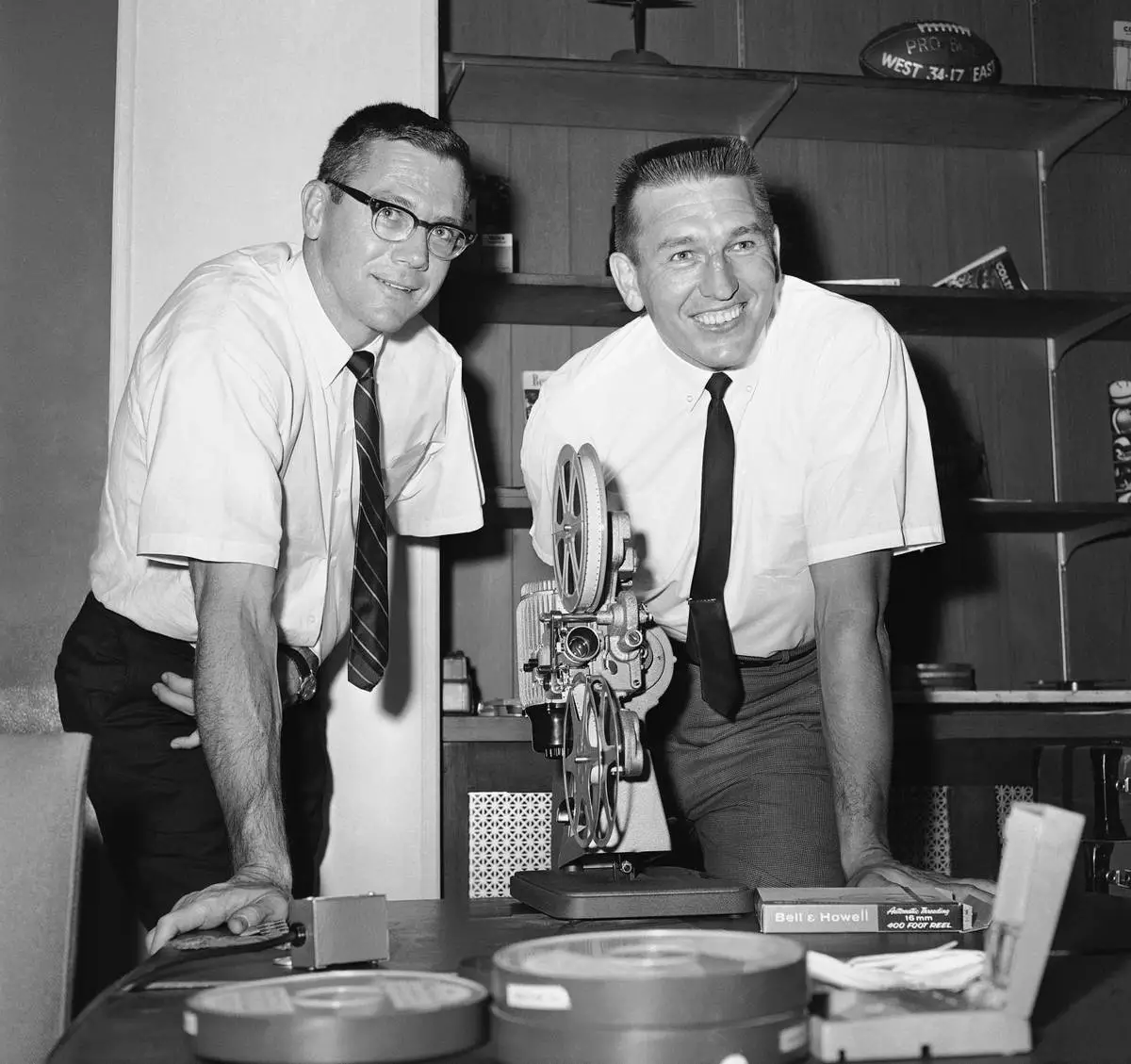
FILE - Baltimore Colts quarterback Johnny Unitas and veteran split end Raymond Berry, left, review films of previous Colt games in Baltimore on Oct. 25, 1967. (AP Photo/William Smith, file)
FILE - Baltimore Colts quarterback Johnny Unitas and veteran split end Raymond Berry, left, review films of previous Colt games in Baltimore on Oct. 25, 1967. (AP Photo/William Smith, file)

FILE - David Driscoll, 9, of Baltimore, wearing a copy of a Baltimore Colt uniform, gets an autograph on his helmet from end Raymond Berry at the Westminster training camp of the NFL club, Aug. 2, 1965. (AP Photo/William A. Smith, file)
FILE - David Driscoll, 9, of Baltimore, wearing a copy of a Baltimore Colt uniform, gets an autograph on his helmet from end Raymond Berry at the Westminster training camp of the NFL club, Aug. 2, 1965. (AP Photo/William A. Smith, file)

FILE - IN this Jan. 12, 1986, file photo, New England Patriots coach Raymond Berry gets a victory ride from players Larry McGrew (50) and Johnny Rembert (52) after the Patriots defeated the Miami Dolphins 31-14 in the NFL football AFC playoffs in Miami. (AP Photo/File)
FILE - IN this Jan. 12, 1986, file photo, New England Patriots coach Raymond Berry gets a victory ride from players Larry McGrew (50) and Johnny Rembert (52) after the Patriots defeated the Miami Dolphins 31-14 in the NFL football AFC playoffs in Miami. (AP Photo/File)

FILE - In this Sept. 30, 1962, file photo, Baltimore Colts end Raymond Berry snags a pass from quarterback John Unitas for 5-yard gain against the Detroit Lions in a football game in Baltimore. Lions' Dick LeBeau (44) makes the tackle. (AP Photo/File)

FILE - In this Sept. 30, 1962, file photo, Baltimore Colts end Raymond Berry snags a pass from quarterback John Unitas for 5-yard gain against the Detroit Lions in a football game in Baltimore. Lions' Dick LeBeau (44) makes the tackle. (AP Photo/File)
WASHINGTON (AP) — The world is getting more uptight about lending money to President Donald Trump’s government — causing interest rates to climb in ways that are worsening affordability pressures, hampering economic growth and creating a new risk for Republicans in November’s midterm elections.

The energy price spike triggered by the Iran war has seeped into the price of bonds that help fund the U.S. government. Interest rates on a 10-year U.S. Treasury note are topping 4.44%, up from 3.95% before the war started at the end of February. Average mortgage rates have climbed to their highest levels in nine months, while auto sales are slumping.

The challenge is global in scale, as interest rates have risen for multiple countries as the world has been adjusting to the prospect of higher inflation, mounting questions about the sustainability of government debt and a dramatic surge in investment in artificial intelligence.

Trump has tried to assure Americans that he has a plan to trim the roughly $1.8 trillion annual budget deficit. In the past, he has pointed to revenue from tariffs, payments from foreigners for his “Gold Card” visa, spending cuts made by the Department of Government Efficiency, and faster economic growth. Last week, he said the fraud task force led by Vice President JD Vance would be the key to unlocking massive savings.

“If he does really great, we’ll have a balanced budget without having to do anything,” Trump said.

Economists say Trump’s strategies to meaningfully curb the deficit are unlikely to deliver the promised results.

The cost of servicing the national debt has tripled since 2021 to more than $1 trillion annually, said Jessica Riedl, a budget and tax fellow at the Brookings Institution.

“President Trump signed a tax cut bill that will likely add $5 trillion to 10-year deficits — and tariffs are offsetting only a small fraction of those costs,” she said. “Budget deficits are still projected to soar past $4 trillion annually within a decade under current policies.”

Deficits are expected to grow over the next decade as the costs of Social Security and Medicare outstrip tax revenues.

The 10-year U.S. Treasury rate climbed as high as 4.67% in the middle of May and has since eased as negotiations over the Iran ceasefire continued — just as rates initially climbed in 2025 because of Trump's “Liberation Day” tariffs and then began to decline once Trump backed off the most extreme increases.

When Kent Smetters, faculty director of the Penn Wharton Budget Model, broke down the math tied to rising 30-year Treasury yields, he estimated that 60% of the increase had come from the expectation that America will continue its outsized borrowing and the other 40% was tied to the inflation driven by the Iran war and Trump’s tariffs.

Glenn Hubbard, a former chairman of the White House Council of Economic Advisers during the George W. Bush administration, worries that the U.S. may no longer have the same borrowing capacity as before to effectively combat an economic crisis, such as the 2008 crash or the coronavirus pandemic.

“I don’t think we have the space that we had in 2008 or 2020 to deal with it,” said Hubbard, now a professor at Columbia University's Business School. “Washington doesn’t seem to be full of ideas — good or bad — to solve it.”

Higher interest rates are giving Democratic candidates in the races to determine control of the House and Senate another line of attack at a time when voters are concerned about high costs for food and gasoline.

In Colorado’s fifth congressional district, Democrat Jessica Killin is leaning into the message that the persistent deficits and higher interest rates make it harder to buy or renovate a home, afford a new car or manage credit card debt.

“Things are already expensive,” said Killin, an Army veteran who was a top aide to Doug Emhoff, the former second gentleman. “We can already talk about gas, but the cost of borrowing only makes that worse.”

Joe Reagan, an Army veteran also seeking the Democratic nomination, said in an email that he is talking “a lot about fiscal stewardship” in his campaign. “Every dollar spent paying interest is a dollar that isn’t being invested in infrastructure, education, veterans’ services, or economic growth," he said.

They are challenging Republican Rep. Jeff Crank in a district that their party views as a potential pickup. Killin said the deficit is an example of how “Trump says one thing and does the opposite.”

In his March 2025 address to Congress, Trump declared that “in the near future, I want to do what has not been done in 24 years: balance the federal budget. We’re going to balance it.”

Crank, the Republican incumbent, did not reply to requests for comment.

The administration maintains that it is going to steadily reduce budget deficits. As a share of the overall economy, the deficit last year was lower than it was in 2024, though that drop depended in part on tariff revenues that are subject to refunds after the Supreme Court ruled them to be illegal.

Treasury Secretary Scott Bessent last week cited a report showing that there was as much as $500 billion annually in fraudulent government spending that could be eliminated, “so that would reduce the deficit substantially.”

Bessent appeared to draw that conclusion from a 2024 report by the Government Accountability Office that estimated there had been between $233 billion to $521 billion each year in fraudulent spending. But those numbers were drawn in part from the pandemic era when the government borrowed heavily to stabilize the economy.

The White House and Treasury did not respond to questions about the source of Bessent’s claims.

On deficits, Bessent told reporters at the White House that the administration was essentially dealt a bad hand from former President Joe Biden, a Democrat. “We inherited the worst budget deficit in history — in history — when we were not in a recession or not at war,” Bessent said.

Bessent had previously announced that the administration would aim to reduce the annual deficit to 3% of overall U.S. gross domestic product. It’s roughly double that percentage currently and Bessent did not directly answer a question about the timeline for hitting his target.

As of now, investors continue to buy shares in U.S. companies, causing the stock market to increase in value in a sign of confidence in America’s economic potential. But the increase in interest rates also suggests that investors view the national debt as a vulnerability for the U.S.

The financial markets might be able to inflict enough pain with higher rates in order to compel political leaders to address the systemic imbalances. Multiple economists said they expected that markets would force the deficit issue before voters would.

Hubbard emphasized that the whole bond market system rests on the trust that the debt will be repaid. He noted that the word “credit” is linked to a Latin term that is also the root of the word creed about a system of beliefs.

“That is what debt is about: I believe you will pay me back,” Hubbard said. “That works until it doesn’t.”

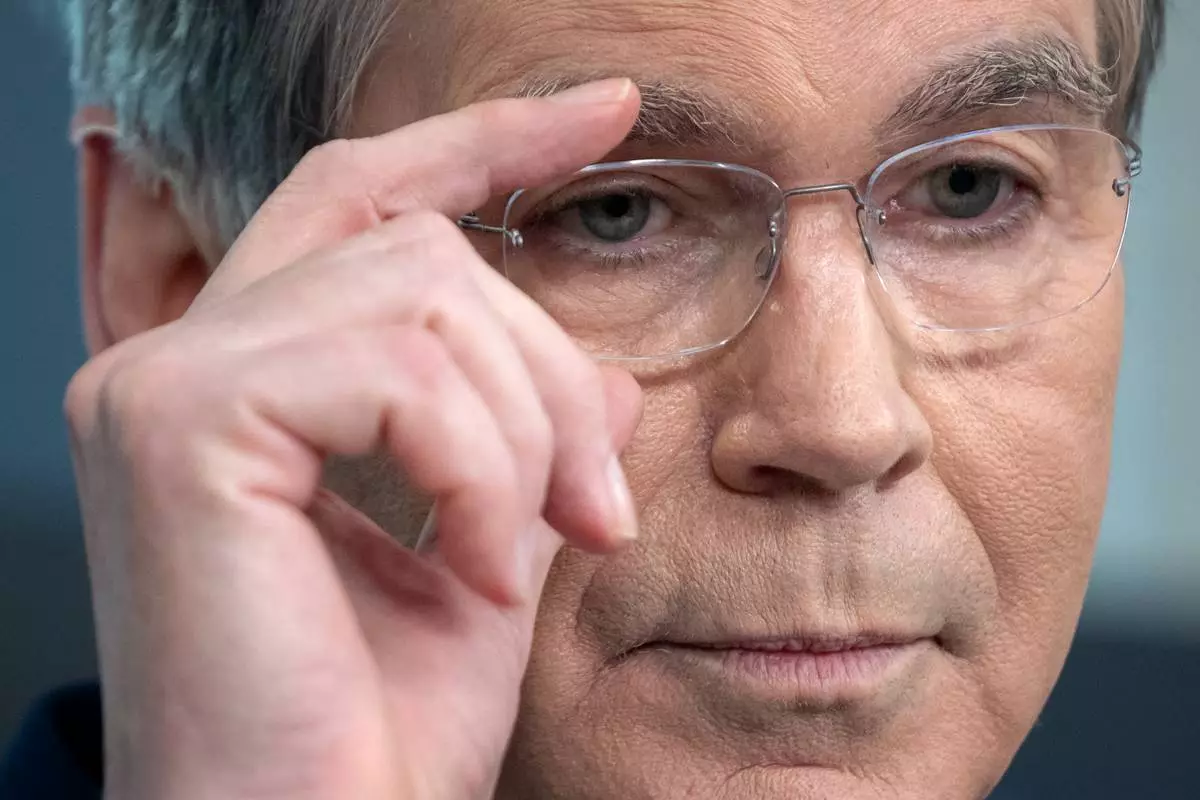
Treasury Secretary Scott Bessent listens to a reporter's question in the James Brady Press Briefing Room at the White House, Thursday, May 28, 2026, in Washington. (AP Photo/Mark Schiefelbein)

Treasury Secretary Scott Bessent listens to a reporter's question in the James Brady Press Briefing Room at the White House, Thursday, May 28, 2026, in Washington. (AP Photo/Mark Schiefelbein)

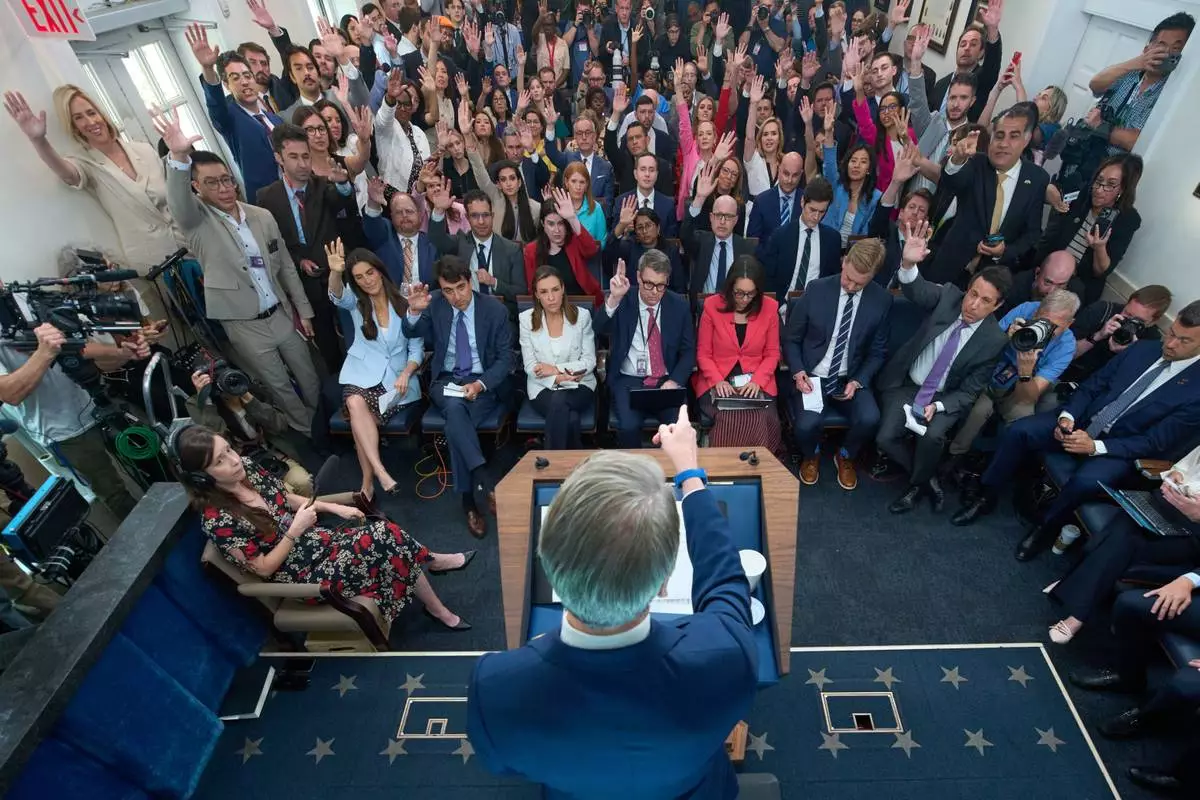
Treasury Secretary Scott Bessent calls on a reporter in the James Brady Press Briefing Room at the White House, Thursday, May 28, 2026, in Washington. (AP Photo/Jacquelyn Martin)

Treasury Secretary Scott Bessent calls on a reporter in the James Brady Press Briefing Room at the White House, Thursday, May 28, 2026, in Washington. (AP Photo/Jacquelyn Martin)

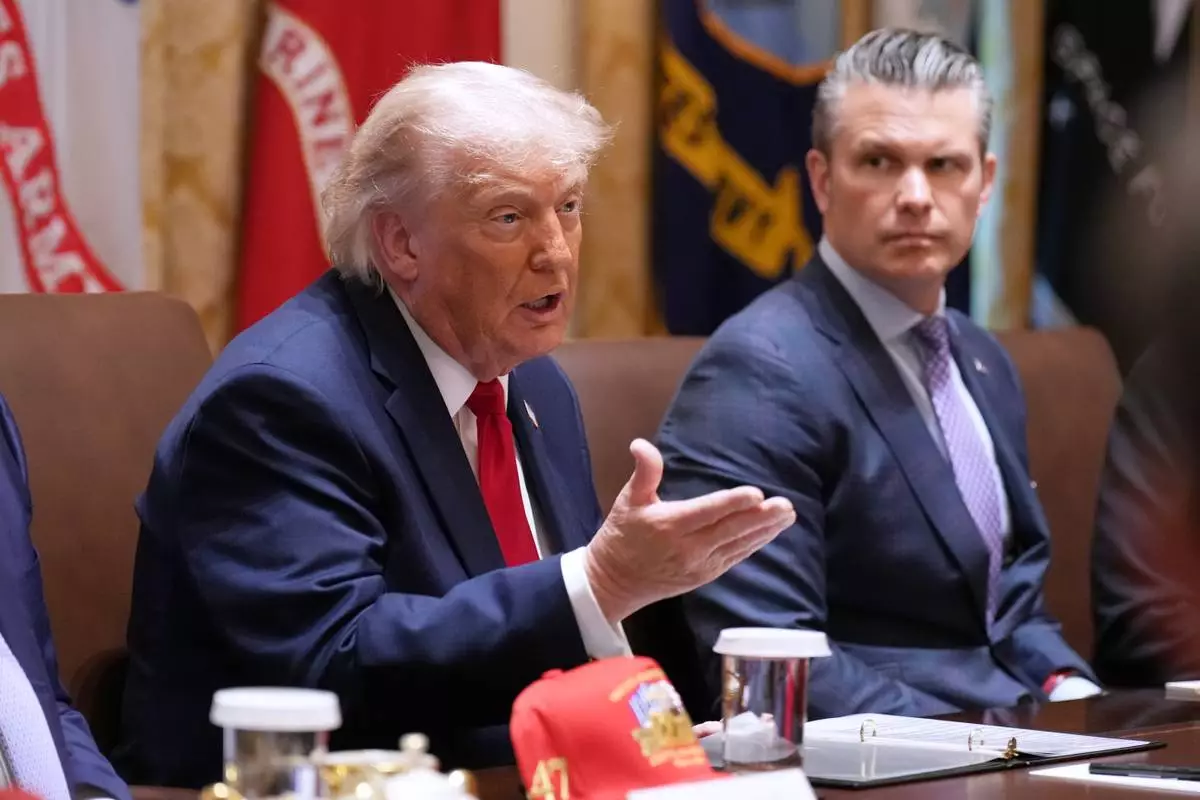
President Donald Trump speaks during a Cabinet meeting at the White House, Wednesday, May 27, 2026, in Washington, as Secretary of Defense Pete Hegseth, looks on. (AP Photo/Jacquelyn Martin)

President Donald Trump speaks during a Cabinet meeting at the White House, Wednesday, May 27, 2026, in Washington, as Secretary of Defense Pete Hegseth, looks on. (AP Photo/Jacquelyn Martin)

Recommended Articles