WASHINGTON (AP) — The rise of remote work since the pandemic has made businesses more reluctant to hire young, inexperienced workers and is the key driver of higher unemployment rates for recent college graduates, a study released Monday has found.
The study, by the Federal Reserve Bank of New York, compared occupations that can be done remotely — such as software development — with those that are done in person, such as nursing. The study finds that the unemployment rate among young college graduates in “remotable” jobs rose by about 1 percentage point from 2017-2019 to 2022-2024.
Yet for older workers in those fields — those aged 29 and over — the jobless rate declined slightly, leading to a notably higher unemployment rate for younger college graduates in remotable occupations compared with older workers.
Yet in non-remotable jobs, there has been little gap in the unemployment rates between older and younger college grads, the study finds. A similar pattern exists for those without college degrees, the New York Fed said.
The study, led by New York Fed research economist Natalia Emanuel, concludes that businesses are reluctant to hire new college grads into remote work because it is harder to train and mentor them if they work outside of the office. The authors of the study calculate that remote work is responsible for nearly two-thirds of the rise in the unemployment rate for young college graduates since the pandemic.
“Remote work has weakened incentives to hire young workers by impeding on-the-job training,” the study said. “Employers may not want to hire fresh graduates onto distributed teams because it is more difficult to teach them the requisite skills from afar."
The study lands amid widespread concern over the employment prospects of college graduates as artificial intelligence makes inroads into a variety of white-collar jobs, including finance, law, entertainment, and media. This spring, college graduates have been booing references to AI during commencement speeches.
But the study notes that the worsening employment picture for young college grads pre-dates the development of artificial intelligence tools such as ChatGPT. And when the authors looked at the exposure different occupations had to AI, it found that AI had little impact on youth unemployment.
The unemployment rate for college grads under 29 rose 20% from before the pandemic to 3.7%, on average, in 2022-2025, the New York Fed said. For college grads aged 22 through 27, unemployment reached 5.8% last year, the highest outside the pandemic since 2012.
The study's findings are consistent with the low-hire, low-fire state of the job market, where layoffs are low and the unemployment rate is mostly stable, but those out of work are struggling to find new jobs.
The New York Fed study also looked at detailed data from an unnamed Fortune 500 tech company and found that its hiring patterns mirrored what they had seen in the broader data.
When the company's offices were closed and staff worked remotely, “the firm hired fewer inexperienced workers and more experienced workers, who might need less mentorship to do their jobs well," the study said.
“Once its offices reopened, the company shifted back to hiring younger workers,” the study said. But even after the reopening, the company favored more experienced workers for teams that included remote work.

FILE - Empty desks are in an office building in the Manhattan borough of New York on Aug. 2, 2024. (AP Photo/Ted Shaffrey, file)

FILE - Connor Scott, 24, and Zoe Lloyd, 21, meet up at a local coffee shop and restaurant to work on their studies on April 20, 2026 in Flagstaff, Ariz. (AP Photo/Cheyanne Mumphrey, file)
BOGOTA, Colombia (AP) — Bombastic pro-Trump lawyer Abelardo de la Espriella pulled ahead in Colombia’s presidential race in the first round of elections over the weekend, capitalizing on a growing appetite for crackdowns on criminal groups across Latin America.
Second-place finisher, progressive Sen. Iván Cepeda, and his ally, President Gustavo Petro, have questioned the election results, without providing evidence.
Cepeda on Monday called on de la Espriella to debate him ahead of their June 21 runoff. De la Espriella replied on X: “Are you ready, coward? … First, acknowledge the election results and let’s debate right now.”
De la Espriella rapidly gained traction ahead of Sunday’s election and won nearly 44% of the vote. Cepeda, who had consistently led polling, won less than 41%.
In the runoff, De la Espriella is expected to scoop up additional votes from Colombians who supported other conservative candidates in the first round.
Cepeda will face an uphill battle, said Sergio Guzmán, a political analyst. De la Espriella's win is "a shift in public opinion that is very difficult to overcome. So now Abelardo is emerging as the likely favorite to win.”
Markets in Colombia and the Colombian peso jumped on Monday, likely a product of de la Espriella’s proposal to roll back regulations on businesses and willingness to open the country to fracking — a sharp turn from Petro’s environmental agenda.
The 47-year-old De la Espriella, known as “El Tigre” or “The Tiger,” has never held office in Colombia and prided himself on living a luxurious life in Italy before deciding to run for president.
He pitched himself as an outsider who would cozy up to U.S. President Donald Trump and follow El Salvador President Nayib Bukele's war on gangs, which has driven down homicide rates but fueled accusations of human rights abuses.
“I will wipe out narcoterrorism and those who I've declared a military target like cockroaches, like rats. I will unleash upon them the wrath of God never seen before,” de la Espriella said in an interview with The Associated Press in the final stretch of the campaign, where he promised to open 10 mega-prisons to fight crime.
He joins a growing number of leaders across Latin America, from Chile to Honduras, seeking to latch onto the “Bukele model” as voters across Latin America are ditching leaders who pitched progressive policies aimed at addressing the root issues of conflict such as lack of opportunities for young people and corruption.
De la Espriella's supporters come from a wide range of backgrounds. Yolanda Peréz, a 64-year-old woman serving coffee in Colombia's capital, Bogotá, said with a wink the day before the election: “I'm thinking of voting for El Tigre.”
Miguel Maheca, a 20-year-old first-time voter, flashed his ballot to his mother as he strolled out of the polling station on Sunday, saying with a grin, “Love isn't what's going to make us safe in Colombia."
But experts say El Salvador's security successes will be nearly impossible to replicate in a country like Colombia, which is more than 50 times larger than the Central American nation and has many more armed groups fighting for territory.
The Trump administration is playing a more aggressive role in Latin America than any U.S. government in decades, putting mounting pressure on countries like Colombia, Mexico and Ecuador to crack down on crime.
De la Espriella made a name for himself as a lawyer defending high-profile clients such as former President Álvaro Uribe as well as controversial figures like Alex Saab, a close ally of Venezuela’s ousted president Nicolás Maduro who faces legal issues in the U.S.
The progressive Cepeda has promised to carry on his ally Petro's fraught plan to achieve “total peace” by negotiating peace pacts with guerrillas and criminal gangs.
Their political movement was born from a rejection by many Colombians of a militarized offensive by Uribe in decades past to beat back guerrillas of the Revolutionary Armed Forces of Colombia, or FARC. Thousands of civilians were killed by Colombian forces in a scandal known as “false positives.”
De la Espriella “represents a return to the paramilitary politics and drug-trafficking — a mafia-run, plutocratic and corrupt past that the country experienced during Álvaro Uribe’s two administrations,” Cepeda said on Sunday.
Petro, a former rebel, won Colombia's presidency in 2022, ending decades of domination by leaders from Uribe's political movement. He gained massive support from rural-dwelling, Indigenous and poorer Colombians who felt they had never been directly spoken to by the country's leaders.
Now that movement is backed into a corner.
“This is de la Espriella’s election to lose,” wrote Renata Segura, director of International Crisis Group's Latin America and the Caribbean Program. “Cepeda thought he could win appealing squarely to the left, and that proved to be a massive mistake. How he pivots in the next month will determine if he has any chance to win.”
Follow AP’s coverage of Latin America and the Caribbean at https://apnews.com/hub/latin-america
This version corrects the spelling of the first name of the leading candidate to Abelardo.
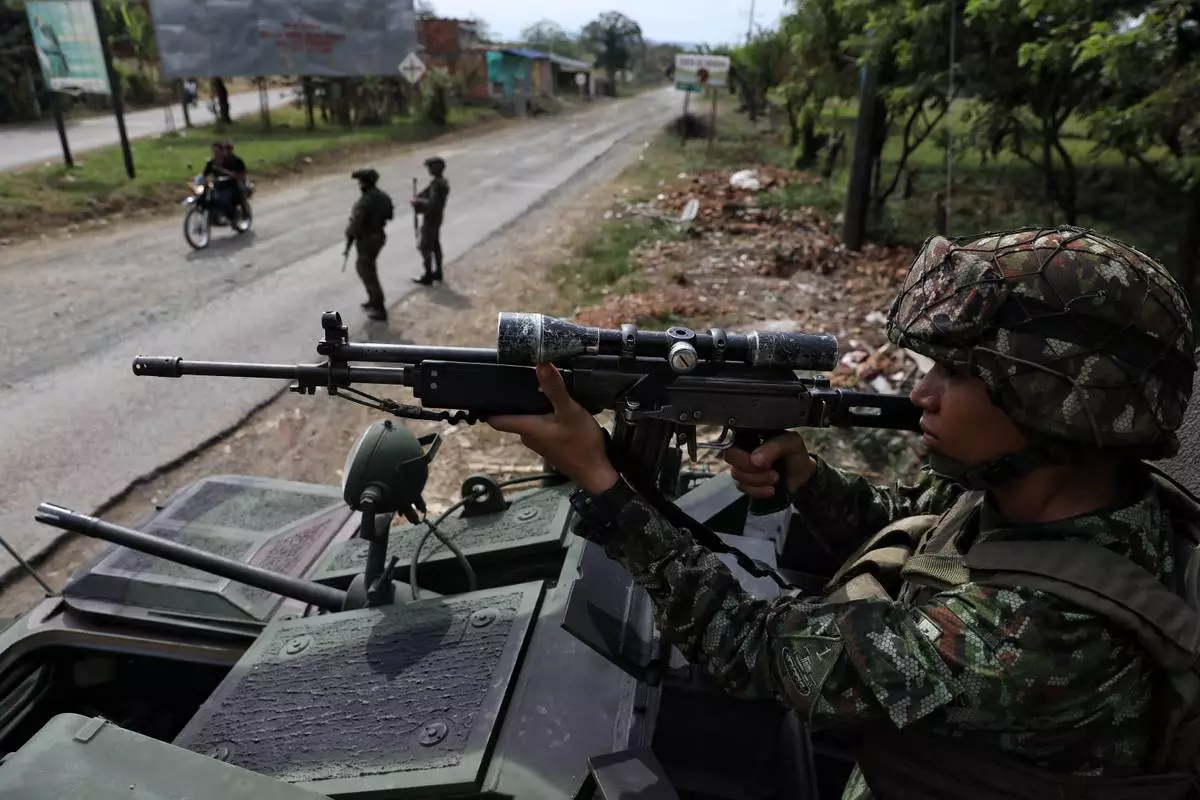
Soldiers guard during the presidential election in Santander de Quilichao, Colombia, Sunday, May 31, 2026. (AP Photo/Santiago Saldarriaga)
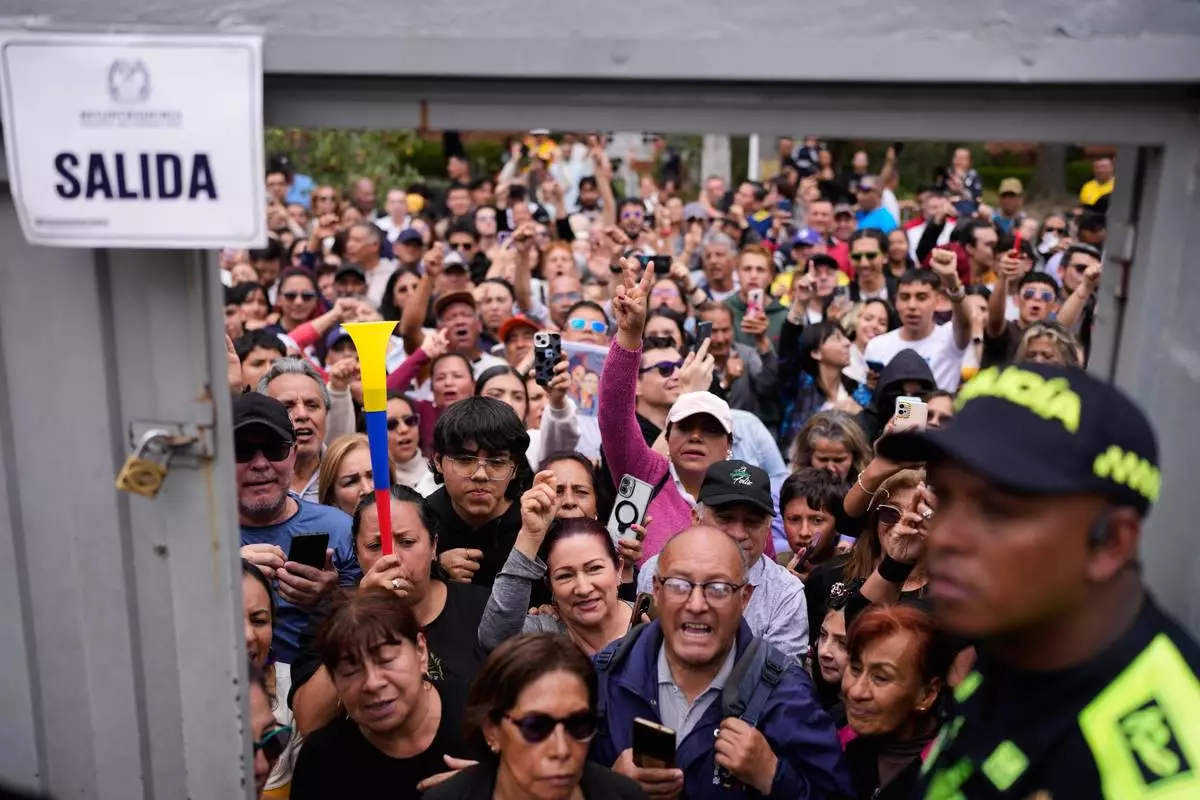
Supporters of presidential candidate Ivan Cepeda of the ruling Historic Pact coalition gather outside the polling station where he voted during the presidential election in Bogota, Colombia, Sunday, May 31, 2026. (AP Photo/Matias Delacroix)
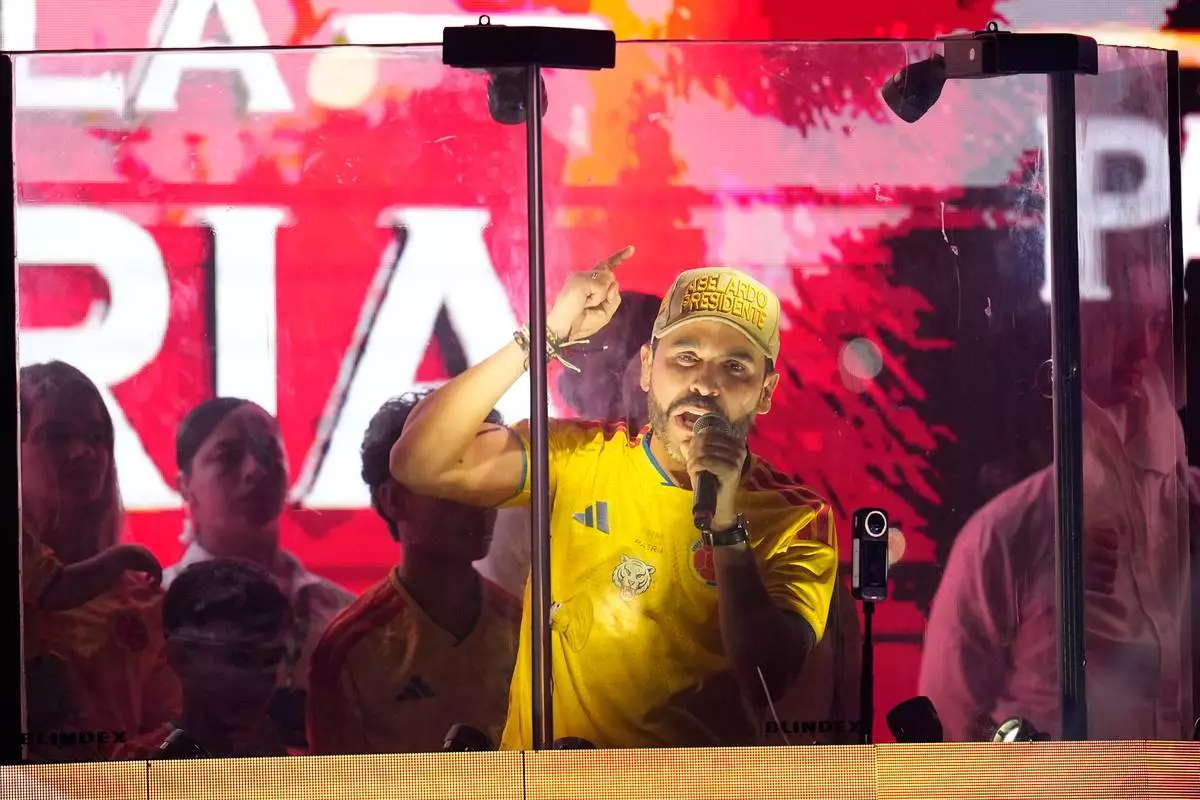
Presidential candidate Abelardo de la Espriella of the Defenders of the Motherland movement addresses supporters from inside a bulletproof booth after leading the first round of the presidential election and advancing to a runoff in Barranquilla, Colombia, Sunday, May 31, 2026. (AP Photo/Fernando Vergara)
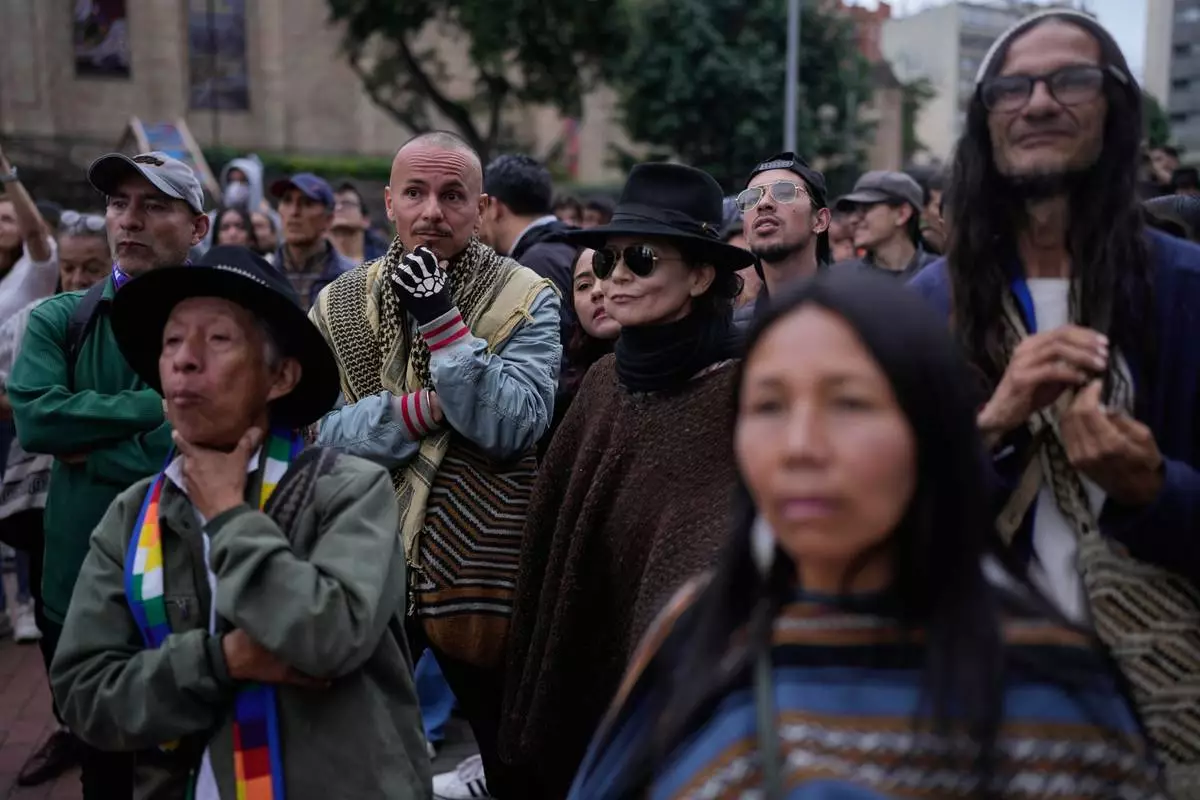
Supporters of presidential candidate Ivan Cepeda of the ruling Historic Pact coalition react as presidential election results are announced in Bogota, Colombia, Sunday, May 31, 2026. (AP Photo/Matias Delacroix)
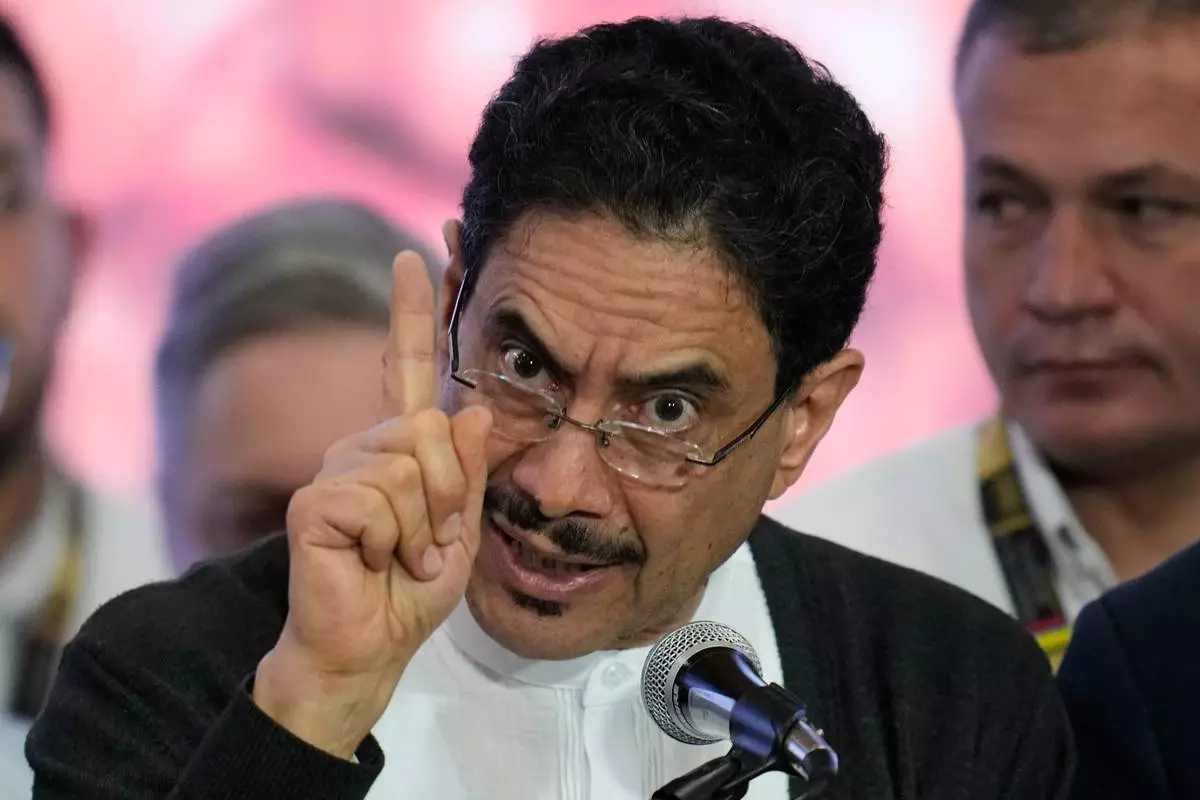
Presidential candidate Ivan Cepeda of the ruling Historic Pact coalition addresses supporters after advancing to a runoff election in second place in Bogota, Colombia, Sunday, May 31, 2026. (AP Photo/Matias Delacroix) CORRECTION: Corrects Paloma Valencia to Ivan Cepeda, and photographer Jose Vargas to Matias Delacroix
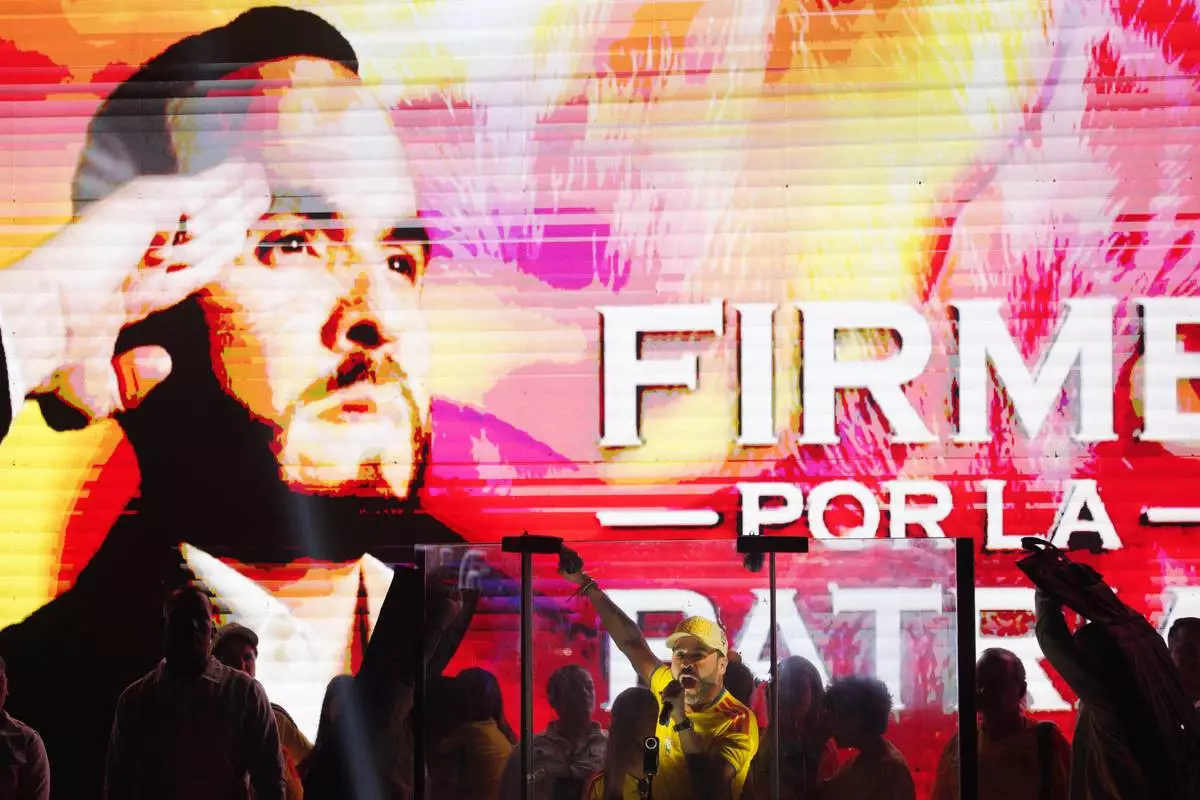
Presidential candidate Abelardo de la Espriella of the Defenders of the Motherland movement addresses supporters from inside a bulletproof booth after leading the first round of the presidential election and advancing to a runoff in Barranquilla, Colombia, Sunday, May 31, 2026. (AP Photo/Ivan Valencia)
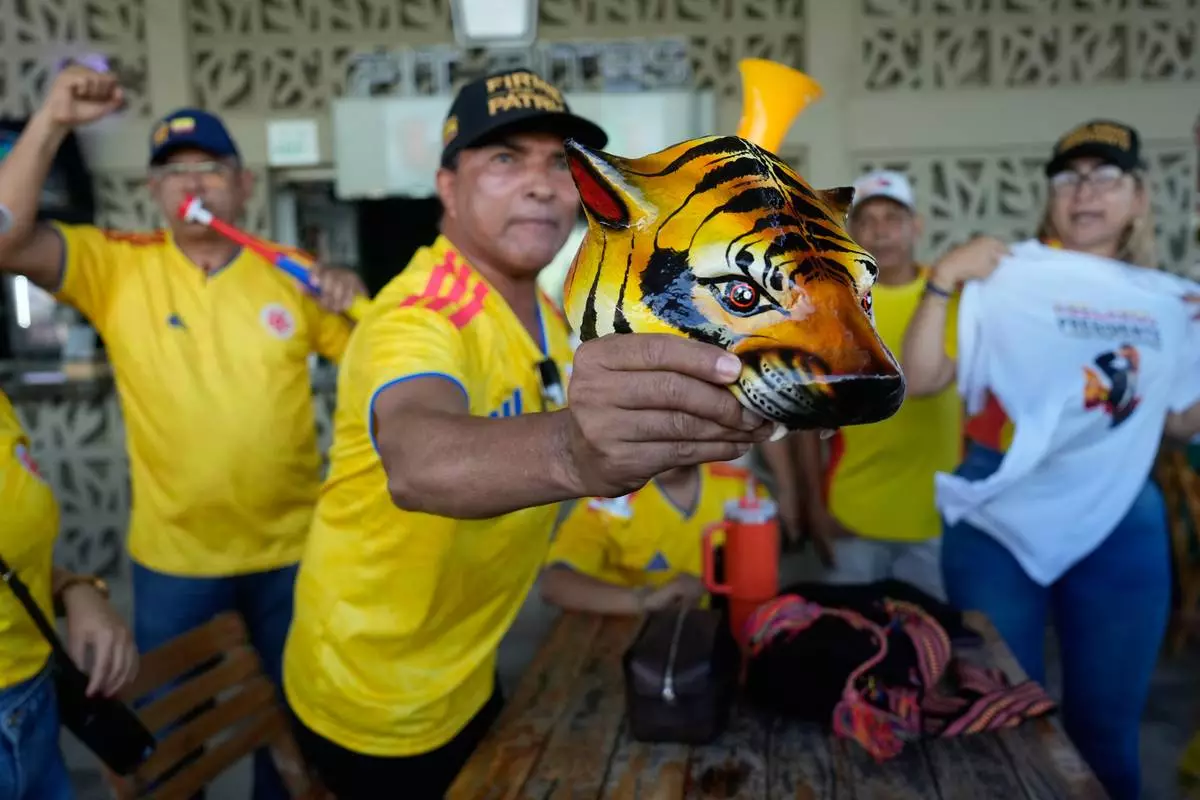
Supporters of presidential candidate Abelardo de la Espriella of the Defenders of the Motherland movement celebrate election results in Barranquilla, Colombia, Sunday, May 31, 2026. (AP Photo/Fernando Vergara)
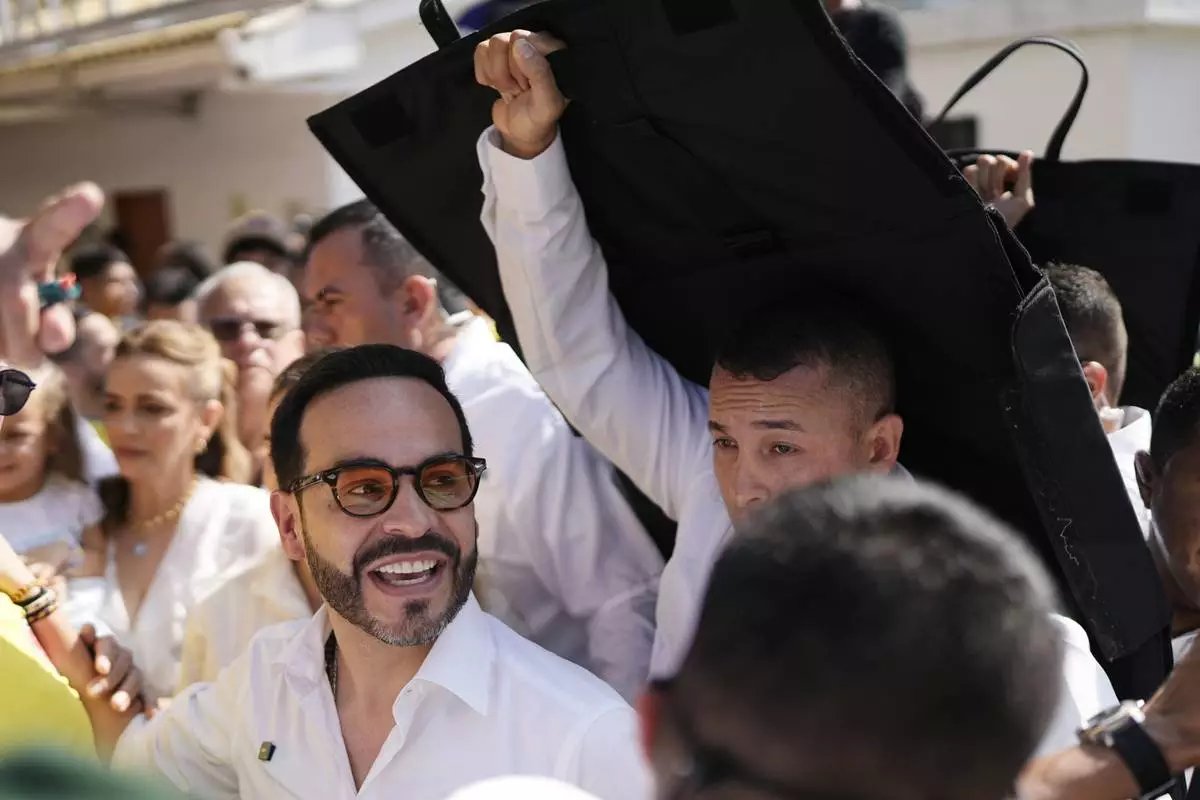
Presidential candidate Abelardo de la Espriella of the Defenders of the Motherland movement depart a polling station after voting during the presidential election in Barranquilla, Colombia, Sunday, May 31, 2026. (AP Photo/Ivan Valencia)