DUBAI, United Arab Emirates (AP) — The United States said Monday that it bombed radar and drone sites in Iran after Tehran shot down an American drone over the weekend. Iran then said it launched a strike of its own, and Kuwait reported incoming fire.
The nominal ceasefire between Iran and the U.S. has been repeatedly tested with such back-and-forth attacks, even as officials from both countries try to negotiate an end to the war. It’s not clear how close they are to a deal — and there is always the risk that an attack could derail those talks.
In the meantime, Iran has maintained its chokehold on the Strait of Hormuz, disrupting global energy supplies and driving up the price of fuel around the world, with far-reaching consequences.
Fighting has also escalated between Israel and the Lebanese militant group Hezbollah, despite their nominal ceasefire. Israel has extended its occupation deep into Lebanon, and Hezbollah — which joined the war in support of its main backer, Iran — continues to launch drones into Israel.
The U.S. military’s Central Command said it carried out the strikes in Iran on Saturday and Sunday around the city of Geruk and on Qeshm Island.
“The measured and deliberate strikes occurred ... in response to aggressive Iranian actions that included the shootdown of a U.S. MQ-1 drone that was operating over international waters,” Central Command said.
“U.S. fighter aircraft swiftly responded by eliminating Iranian air defenses, a ground control station, and two one-way attack drones that posed clear threats to ships transiting regional waters.”
Kuwait said its air defenses opened fire early Monday morning to intercept incoming drone and missile fire.
Around the same time, Iran’s paramilitary Revolutionary Guard said it responded to an American attack without saying where, likely referring to the attack on Kuwait. In a statement carried by the state-run IRNA news agency, the Guard said that U.S. forces had targeted a telecommunications tower.
Kuwait is home to U.S. Army Central, the Mideast forward command for the Army. While the U.S. Air Force no longer flies the MQ-1 Predator, the U.S. Army still does.
Iranian state television later shared footage of the ballistic missile launch, including a close-up showing a sticker on its body depicting a bruised U.S. President Donald Trump overlaid on a “closed” Strait of Hormuz with the caption: “Until the last American soldier leaves the region.”
The attacks represent the latest escalation between the U.S. and Iran. Over the weekend, the U.S. fired a missile into the engine room of a Gambia-flagged cargo ship trying to break its blockade of Iranian ports.
A trickle of ships has made it out of the strait, through which a fifth of all traded oil and natural gas once passed, but pressure continues on global energy supplies, as well as on chemical fertilizer. That has led to fears of food shortages. The Gulf region produces 30% of globally traded chemical fertilizers.
Trump met with advisers on Friday but has yet to decide on whether to move ahead with a deal to extend the ceasefire and reopen the strait. Iran has said the deal had not been finalized.
The U.S. and Israel launched the war with strikes on Iran on Feb. 28. Trump has offered shifting goals for the conflict, although preventing Iran from building a nuclear weapon is among them. Iran has insisted its nuclear program is peaceful, though it has enough highly enriched uranium to build several nuclear weapons, should it choose to do so.
U.S. Vice President JD Vance suggested last week that negotiators are trying to strike general terms on Iran’s nuclear program, with the specifics to be hammered out in the ensuing talks.
Iranian Foreign Ministry spokesperson Esmail Baghaei on Monday again accused the U.S. of “constantly” changing its positions.
“From the beginning, we knew — and we continue to know — that we are negotiating in an atmosphere of mistrust," Baghaei told journalists.
Trump expressed optimism about the talks in a post on his Truth Social platform early Monday in Washington.
“Iran really wants to make a deal, and it will be a good one for the U.S.A. and those that are with us,” he wrote. “Just sit back and relax, it will all work out well in the end — It always does!”
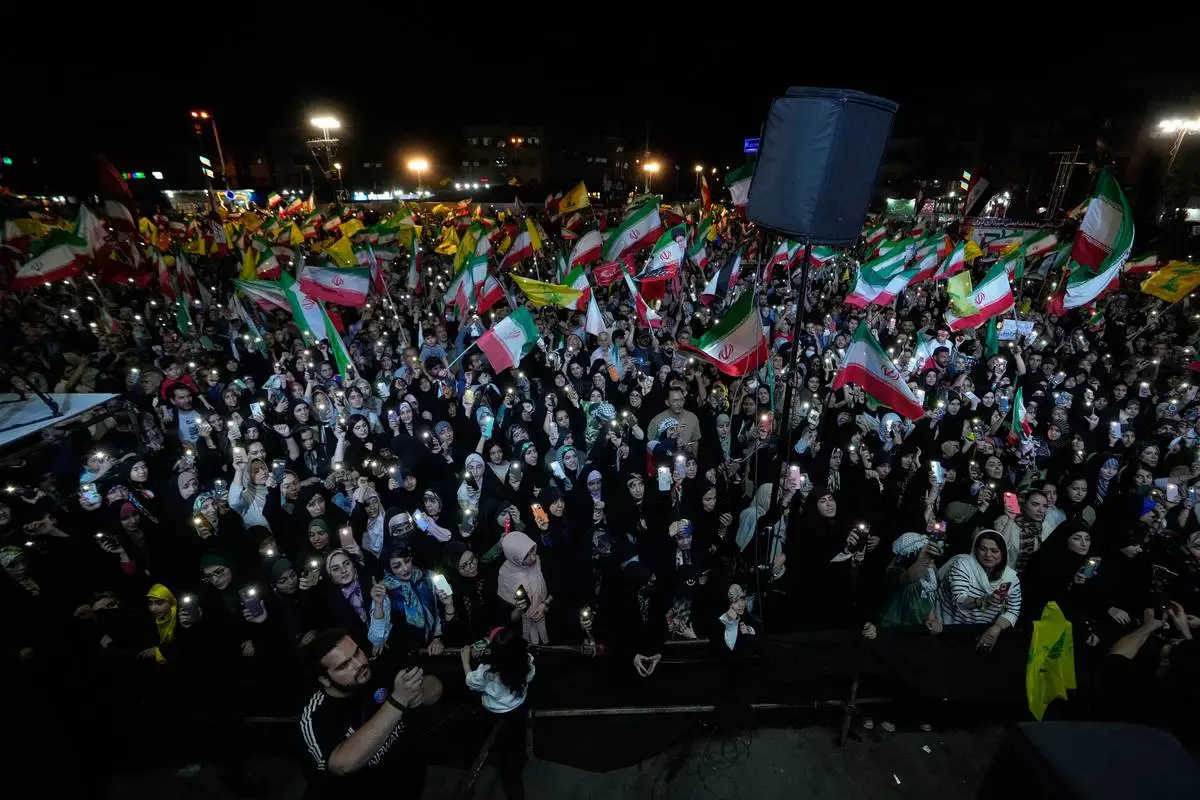
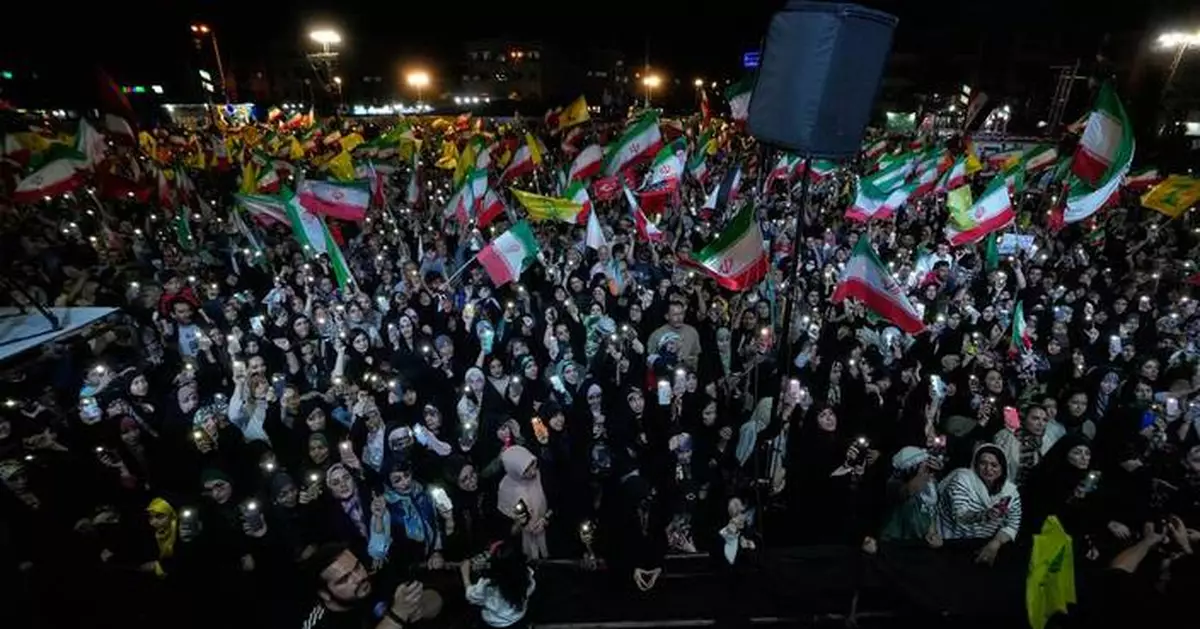
Demonstrators wave Iranian flags and flags of Lebanon's militant Hezbollah group during a pro-government gathering at Islamic Revolution Square in Tehran, Iran, Saturday, May 30, 2026. (AP Photo/Vahid Salemi)
KUALA LUMPUR, Malaysia (AP) — Malaysia on Monday began enforcing rules barring millions of children younger than 16 from having social media accounts, joining a global effort to tighten online safety protections for young users.
The rules require social media platforms with at least 8 million users including Facebook, Instagram, TikTok and YouTube, to implement age-verification systems and block users under 16 from creating accounts.
Malaysia’s Communications and Multimedia Commission said Monday that age verification for existing users will be rolled out progressively over the next six months.
Users identified as under 16 will have a month to download or transfer their data, including photos and videos, before any restrictions, suspensions, or other actions are applied, it said in a statement.
Companies that fail to comply could face penalties of up to 10 million ringgit ($2.5 million). But parents whose children manage to bypass the law will not be penalized.
The government said the measures are aimed at protecting children from harmful content, cyberbullying and platform features designed to encourage excessive use.
Other countries including Australia,Brazil and Indonesia have introduced or announced age-based restrictions or requirements for children’s access to social media. Countries including Britain, France, Spain, Denmark, Thailand and South Korea are also studying or developing similar approaches.
The regulator said the rules are not intended to prevent children from accessing digital technology.
“These measures help strengthen the protection of children in the online environment, while providing added reassurance to parents in navigating increasingly complex digital risks," it has said.
Platforms are required to improve user safety, discourage excessive use and take action against underage accounts and harmful content.
Technology companies have yet to detail how they will comply with Malaysia’s new requirements.
Clara Koh, Meta’s director of public policy for Southeast Asia, had cautioned in April that Malaysia's blanket under-16 ban could backfire by driving teenagers away from protected apps and into unregulated corners of the internet.
She said Meta has launched “teen accounts” for those under 18 that limits contact, screen time and exposure to inappropriate content.
Malaysia's curbs come as governments face growing pressure to address concerns about social media’s impact on children’s mental health and online safety.
In March, a U.S. jury ordered Meta and YouTube to pay millions of dollars in damages in a case alleging that platform design features contributed to harm suffered by a young user.
Kuala Lumpur parents Saravanan Ganasan and Jayaradha Veerasamy — whose children are 12 and 15 — approve of the changes. They already banned their kids from using social media, believing minors lack the psychological capacity to cope with it.
The couple ban unsupervised scrolling on TikTok and Instagram. Devices are kept out of bedrooms, screen time is limited to common areas, and their son is not allowed to lock his phone with a password.
“Exposure is what we fear,” Saravanan said. “The wrong kind of exposure will do damage to the mind.”
Aadhavan Saravanan, 15, said he believes he would be addicted to social media if allowed full freedom. “Social media is like, a luxury and it’s not a necessity,” he said
The couple said the restrictions have forced their children to develop offline life skills. Instead of scrolling, Aadhavan reads books in a backyard mango tree and repairs broken household appliances, while their daughter cooks and does crafts.
“A lot of parents are very scared that children get bored,” the kids' mother, Jayaradha, said. “But boredom is actually very good because they start thinking out of the box.”
But Shaun Hew, who lives in the Kuala Lumpur suburb of Cheras, feels the new restrictions go too far.
Hew believes social media offers an outlet for his kids to spend time productively, as long as there is proper adult oversight. His 11-year-old son uses platforms to learn cooking and his daughter, 14, uses YouTube for exam revision.
He worries a sudden cutoff could cause teenagers to rebel and find unregulated ways to bypass internet blocks.
Some critics contend that Malaysia’s move could increase the risks of data privacy breaches and expand state surveillance.
“It is very much following the trend but in a way that is raising alarms due to requiring a government ID for age verification,” said Benjamin Loh, social science lecturer at Monash University in Malaysia.
Loh also said experiences elsewhere suggest age-based restrictions have yet to prove consistently effective. Without penalties on parents, families can easily bypass the law by creating accounts for their children, he said.
“This is a major gap that unless regulators are willing to fix, will result in the law having little effect in stopping children from using social media,” he added.
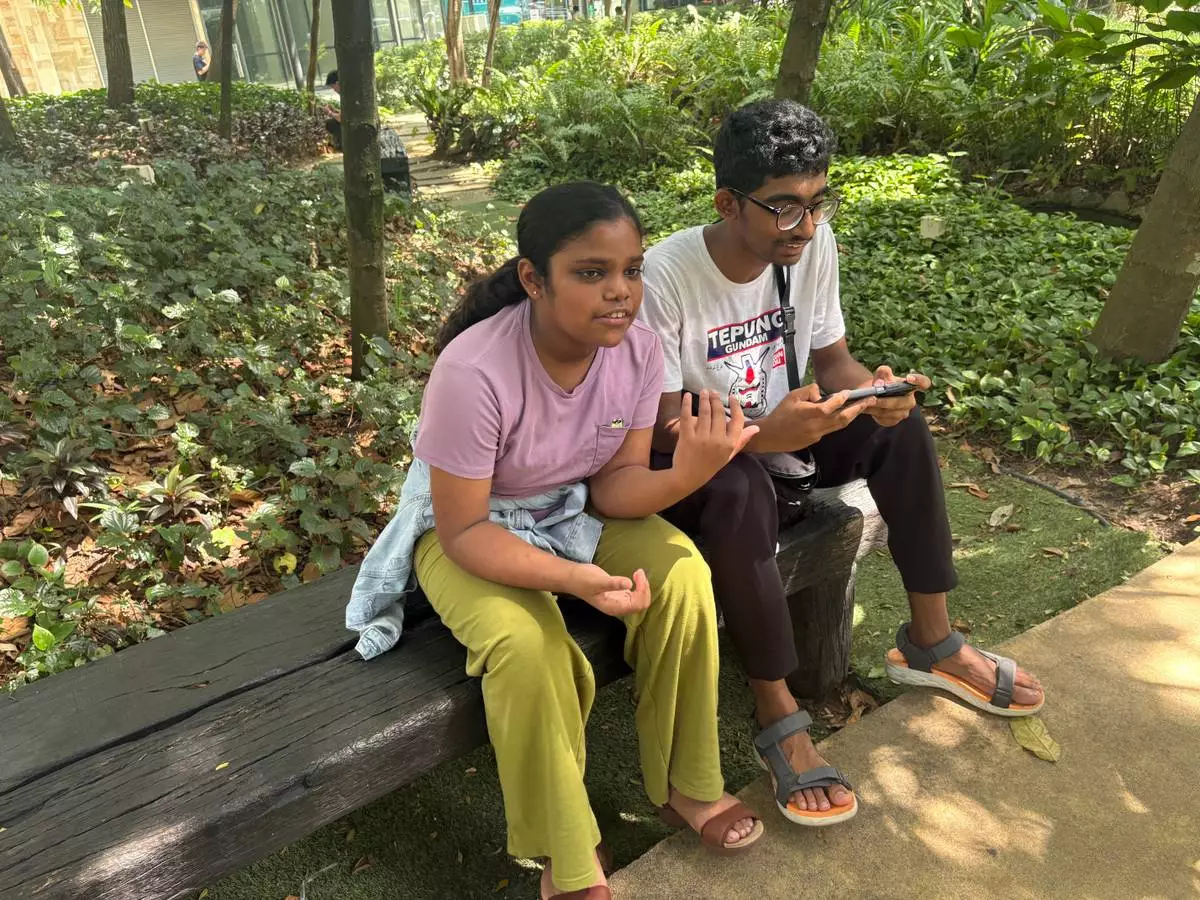
Siblings Saaradha Saravanan, 12, left, and Aadhavan Saravanan, 15, sit in a park in Petaling Jaya, near Kuala Lumpur Malaysia Monday, June 1, 2026. (AP Photo/Eileen Ng)
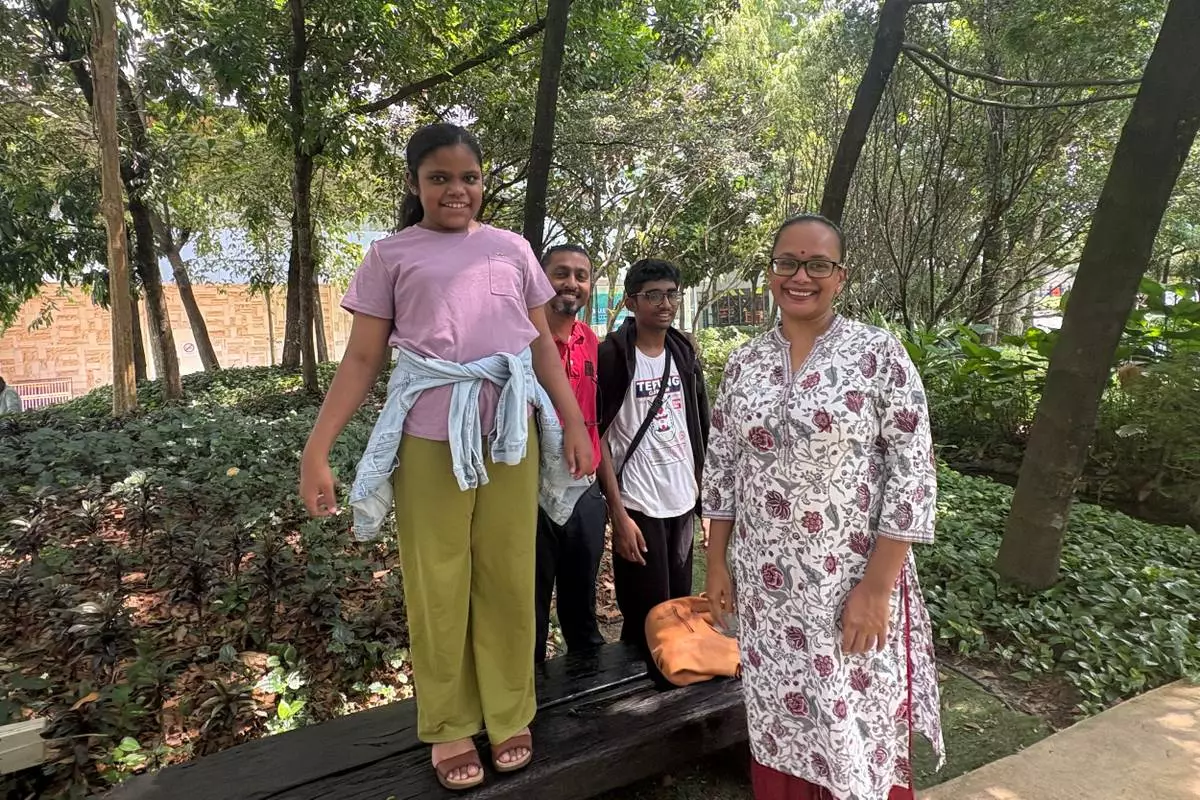
Jayaradha Veerasamy, right, and Saravanan Ganasan, second left, stand with their 12 years-old daughter Saaradha Saravanan, left, and their 15 year-old son Aadhavan Saravanan at a park in Petaling Jaya, near Kuala Lumpur, Malaysia Monday, June 1, 2026. (AP Photo/Eileen Ng)

FILE - A view of the TikTok app logo, in Tokyo, Japan, Sept. 28, 2020. (AP Photo/Kiichiro Sato, File)