KUALA LUMPUR, Malaysia (AP) — Malaysia on Monday began enforcing rules barring millions of children younger than 16 from owning social media accounts, joining a global effort to tighten online safety protections for young users.
The rules require social media platforms to implement age-verification systems and block users under 16 from creating accounts. They apply to platforms with at least 8 million users, including Facebook, Instagram, TikTok and YouTube.
Companies that fail to comply could face penalties of up to 10 million ringgit ($2.5 million). But parents whose children manage to bypass the law will not be penalized.
The government said the measures are aimed at protecting children from harmful content, cyberbullying and platform features designed to encourage excessive use.
Other countries including Australia,Brazil and Indonesia have introduced or announced age-based restrictions or requirements for children’s access to social media. Countries including Britain, France, Spain, Denmark, Thailand and South Korea are also studying or developing similar approaches.
Malaysia’s Communications and Multimedia Commission said the rules are not intended to prevent children from accessing the internet or digital technology. Instead it set expectations for service providers to address online harms and ensure age-appropriate safeguards are in place.
“These measures help strengthen the protection of children in the online environment, while providing added reassurance to parents in navigating increasingly complex digital risks," the regulator said in a statement last month.
Platforms will be required to introduce safety-by-design features, including protections against manipulative design that encourages compulsive use, and take action against underage accounts and harmful content.
Technology companies have yet to detail how they will comply with Malaysia’s new requirements.
The regulator said a grace period will be given for platforms to complete implementation of age-verification systems.
Clara Koh, Meta’s director of public policy for Southeast Asia, had cautioned in April that Malaysia's blanket under-16 ban could backfire by driving teenagers away from protected apps and into unregulated corners of the internet.
She said Meta has launched “teen accounts” for those under 18 that limits contact, screen time and exposure to inappropriate content.
Malaysia's curbs come as governments face growing pressure to address concerns about social media’s impact on children’s mental health and online safety.
In March, a U.S. jury ordered Meta and YouTube to pay millions of dollars in damages in a case alleging that platform design features contributed to harm suffered by a young user.
Despite support from many parents, Malaysia’s move has also raised concerns over data privacy.
“It is very much following the trend but in a way that is raising alarms due to requiring a government ID for age verification,” said Benjamin Loh, social science lecturer at Monash University in Malaysia.
Loh said experiences elsewhere suggest age-based restrictions have yet to prove consistently effective. Without parent penalties, he said families can easily bypass the law by creating accounts for their children.
“This is a major gap that unless regulators are willing to fix, will result in the law having little effect in stopping children from using social media,” he added.

FILE - A view of the TikTok app logo, in Tokyo, Japan, Sept. 28, 2020. (AP Photo/Kiichiro Sato, File)
BEIRUT (AP) — Israeli troops have captured a strategic mountain topped with a Crusader-built castle in southern Lebanon in the deepest incursion into the country in more than a quarter-century, the military said Sunday, while U.S. Secretary of State spoke to Lebanese and Israeli leaders to an effort keep negotiations going.
The taking of Beaufort castle, near the city of Nabatiyeh, followed days of airstrikes and intense fighting in nearby villages between Israeli troops and Hezbollah militants.
The capture marked a major Israeli advance in the latest Israel-Hezbollah war, which began on March 2, when Hezbollah fired rockets into northern Israel two days after the U.S. and Israel attacked its main backer, Iran.
Since then, Israel has launched a ground invasion, capturing dozens of Lebanese villages and towns close to the border. Hezbollah has launched thousands of missiles and drones at Israeli soldiers in southern Lebanon and northern Israel.
The Israeli push came despite a nominal ceasefire that has been in place since April 17 and just days before Lebanon and Israeli hold their next round of direct talks in Washington starting Tuesday.
Secretary of State Marco Rubio spoke to Lebanese President Joseph Aoun and Israeli Prime Minister Benjamin Netanyahu to propose a fresh path to continue ongoing negotiations, according to a U.S. official who spoke on condition of anonymity to discuss private diplomatic conversations. Under the proposal, Hezbollah would halt all attacks on Israel and Israel would refrain from escalating military operations in the Lebanese capital of Beirut, according to the official.
In a televised statement, Lebanese Parliament Speaker Nabih Berri, a key Hezbollah ally, said he can guarantee the militant group's “full, comprehensive and immediate commitment to a ceasefire."
“But who will force Israel to stop its aggression?” he said in a statement on his television station, NBN.
French Foreign Minister Jean-Noël Barrot requested an emergency meeting of the United Nations Security Council to discuss Israeli military operations in Lebanon, which he described as “unacceptable.”
“Nothing can justify the prolongation of Israeli military operations in Lebanon and its increasingly deep occupation of Lebanese territory,” Barrot said Sunday on French television BFM TV.
Diplomats said the council meeting might take place Monday afternoon, speaking on condition of anonymity ahead of a formal announcement.
The Israeli military's Arabic-language spokesperson, Avichay Adraee, posted photographs on X showing Israeli troops walking outside the castle, and Defense Minister Israel Katz wrote on X that they raised an Israeli flag over the castle. Israeli troops previously captured the castle in 1982 and held it until they withdrew from Lebanon in 2000.
“Twenty six years after the withdrawal from the security zone in Lebanon, the Israeli flag has returned to fly on the peaks that overlook the Galilee towns,” Katz said Sunday at a memorial ceremony for Israeli soldiers killed in its previous occupation of southern Lebanon.
Katz said Israel intends to hold the castle as its troops work to destroy thousands more homes that he says were used by Hezbollah and other military infrastructure in southern Lebanon.
The Beaufort fortress, perched high atop Lebanon’s rolling green hills and overlooking the Litani River, has been a strategic military asset for centuries.
Built as a Crusader castle around the 12th century on top of previous fortifications, it has also been used by Saladin’s Jerusalem army, Mamluks, Ottomans, the French mandate and the Palestine Liberation Organization. The Crusaders named it Beaufort, which is Old French for “beautiful fortress.”
The 1982 capture of the castle from the PLO was a major victory for the Israeli military, which was then led by Defense Minister Ariel Sharon, who later became prime minister. At the time, the Israeli army pushed all the way north and occupied Beirut.
In 2000, the castle was partially restored and opened to visitors.
During the previous Israel-Hezbollah war in 2024, UNESCO gave enhanced protection to 34 cultural sites in Lebanon, including Beaufort Castle, to safeguard them from damage.
The castle is a few kilometers north of the Israel border and overlooks wide parts of southern Lebanon and northern Israel. In Arabic, it is called Al-Shaqif castle, an old Syriac word referring to the formidable rocky area.
Beaufort is symbolic across the region, including in Israel, where it was one of the best-known places Israel controlled during the 18-year occupation. An Israeli film titled “Beaufort” explores moral questions about war in the last days before the military withdrew.
In recent days, Israel has expanded the scope of its operations in Lebanon, sending troops across the Litani River, which previously served as a de-facto boundary, and demanding that residents leave much of southern Lebanon.
“The occupation of Beaufort is a dramatic stage and a dramatic shift in the policies we are leading,” Israeli Prime Minister Benjamin Netanyahu said Sunday, citing the military occupation of security zones in Syria, Lebanon and Gaza along Israel’s borders. He said Israel has killed 3,000 Hezbollah militants since the start of the war. Hezbollah has not disclosed its casualty numbers.
Israel has designated the area from the Litani up to the Zahrani River a combat zone. Some residents have already left the area due to intense strikes in recent days, but people remain.
Israeli troops have been advancing for days in villages close to Beaufort castle. They are now about 5 kilometers (3 miles) from Nabatiyeh, a major center in southern Lebanon. They have called on people to leave that area, as well as the coastal city of Tyre, the country’s fourth-largest city, and its surroundings.
There was no immediate comment from Hezbollah or the Lebanese government on the Israeli push.
The expanded operation would give Israel an upper hand in the upcoming talks with Lebanon in Washington, said Beirut geopolitical analyst Joe Macaron.
“We are at a tipping point,” Macaron said, adding that it is still too early to say how Hezbollah will react to the loss of land. “The more land they (the Israeli military) can grab before the ceasefire, the more they can impose conditions on Hezbollah before their withdrawal.”
Israel has continued striking near Tyre, including near the Hiram Hospital. The Lebanese Health Ministry said 13 health workers were wounded in the strike. Elsewhere, a strike in Deir al-Zahrani, near Nabatiyeh, killed eight people and wounded 16 others, according to Lebanon's state-run National News Agency.
Hezbollah overnight claimed two attacks targeting Israeli troops and a Merkava tank in the southwestern town of Bayada near the border. In recent days, the group has said it has clashed with Israeli troops in several towns just north of the river near Nabatiyeh and the strategic castle. It also claimed attacks deeper into Israel near the northern city of Haifa, Nahariya, as well as border areas.
Hezbollah on Saturday fired salvos of rockets into northern Israel, including Kiryat Shmona, the largest city in the area.
Hezbollah's use of hard-to-detect fiber optic drones has been deadly for the Israeli military, which is struggling to respond. There have been nearly 200 alerts for Israeli civilians across northern Israel warning of drones and missiles in the past 24 hours, according to Israel's military.
The latest round of fighting between Israel and Hezbollah has killed 3,350 people in Lebanon and displaced more than 1 million people.
According to Netanyahu’s office, at least 25 Israeli soldiers and a defense contractor have been killed in or near southern Lebanon, including one on Saturday. Two civilians have also been killed in northern Israel.
Lidman reported from Tel Aviv, Israel. Associated Press Writer Edith M. Lederer at the United Nations contributed to this report.
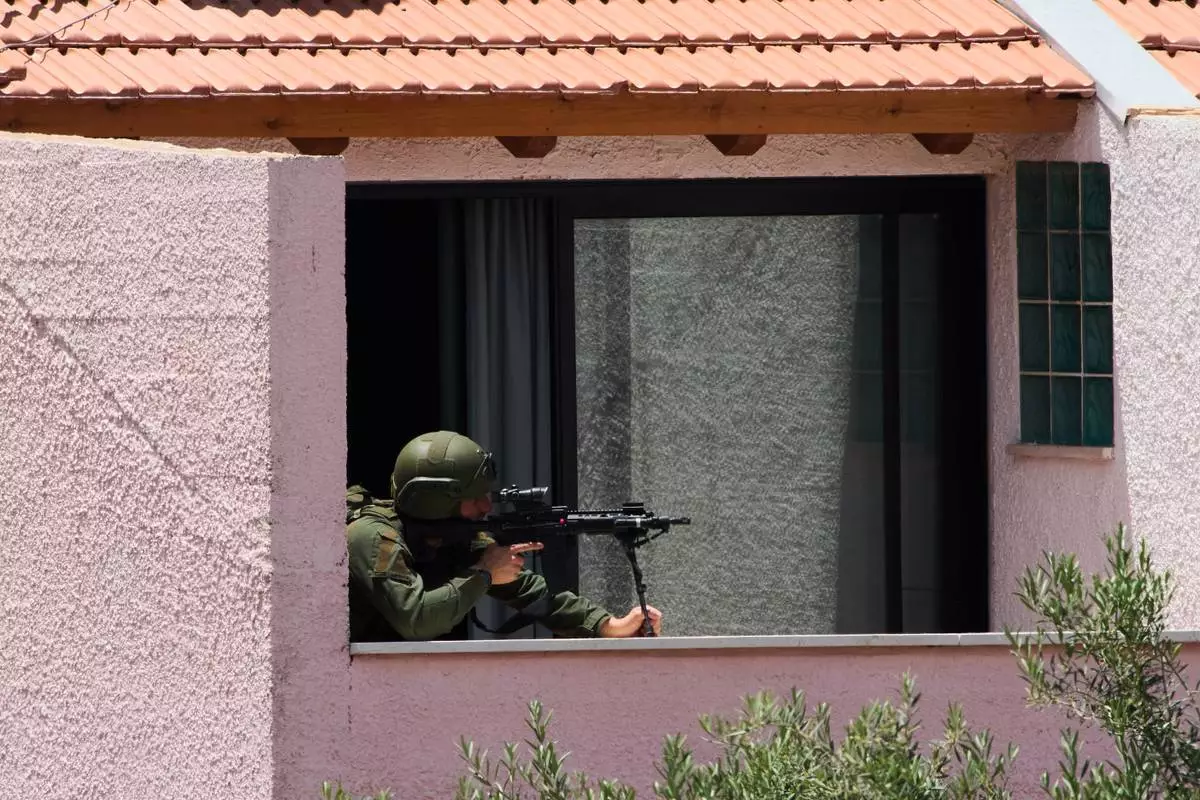
An Israeli solider takes a position in a house in the community of Metula, northern Israel, on the border with Lebanon Sunday, May 31, 2026. (AP Photo/Ariel Schalit)
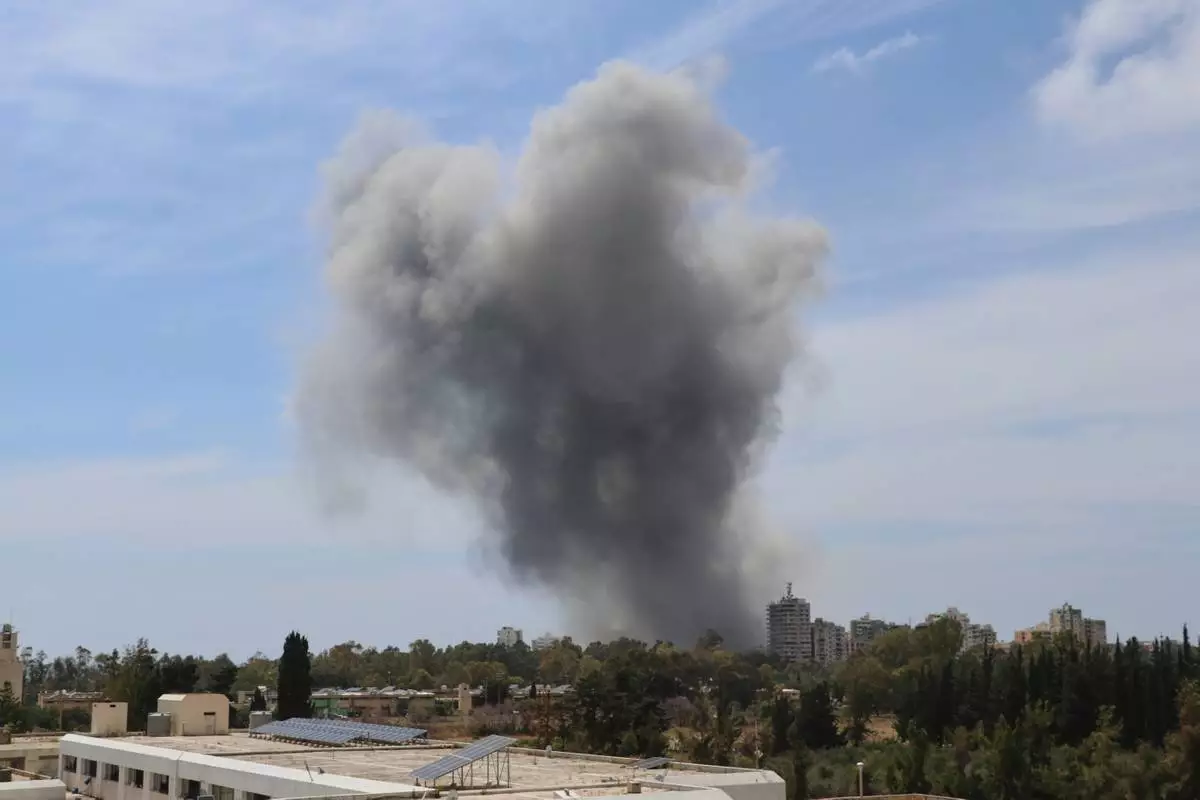
Smoke rises following an Israeli airstrike in the southern port city of Tyre, Lebanon, Sunday, May 31, 2026. (AP Photo)
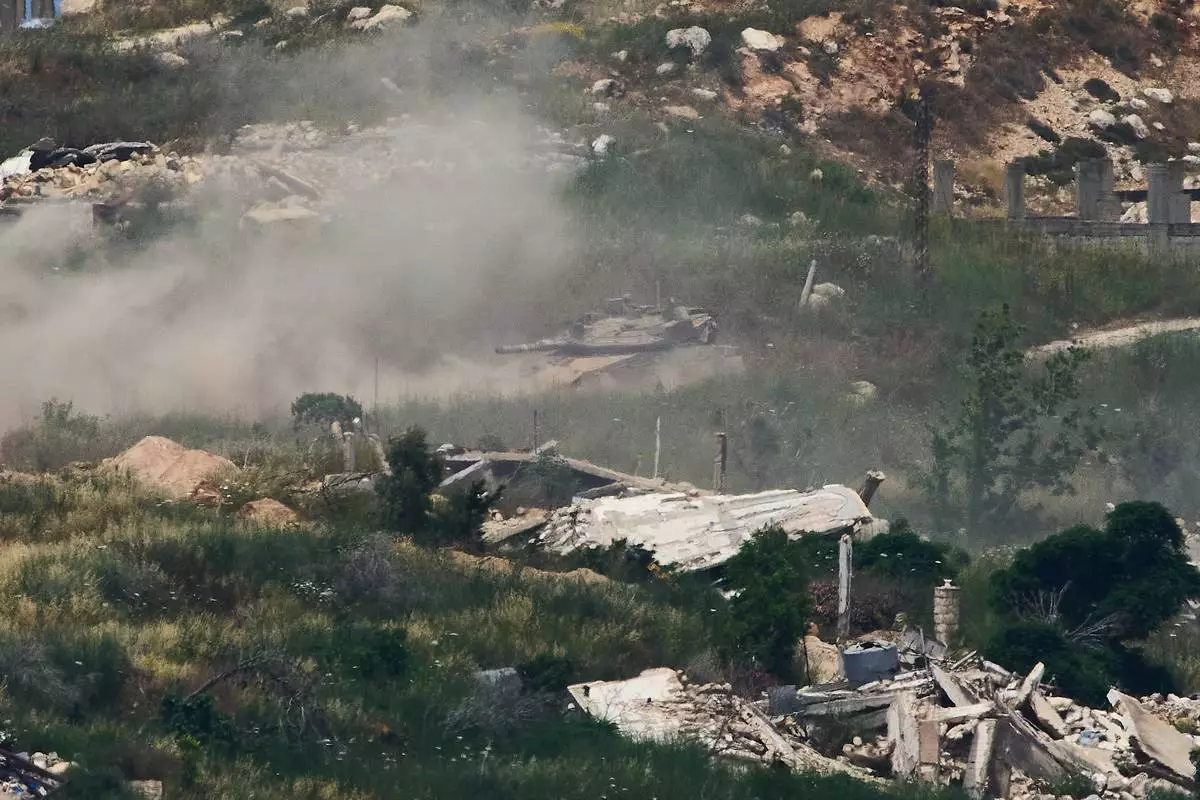
Israeli soldiers drive a tank in southern Lebanon as seen from northern Israel, Sunday, May 31, 2026. (AP Photo/Ariel Schalit)
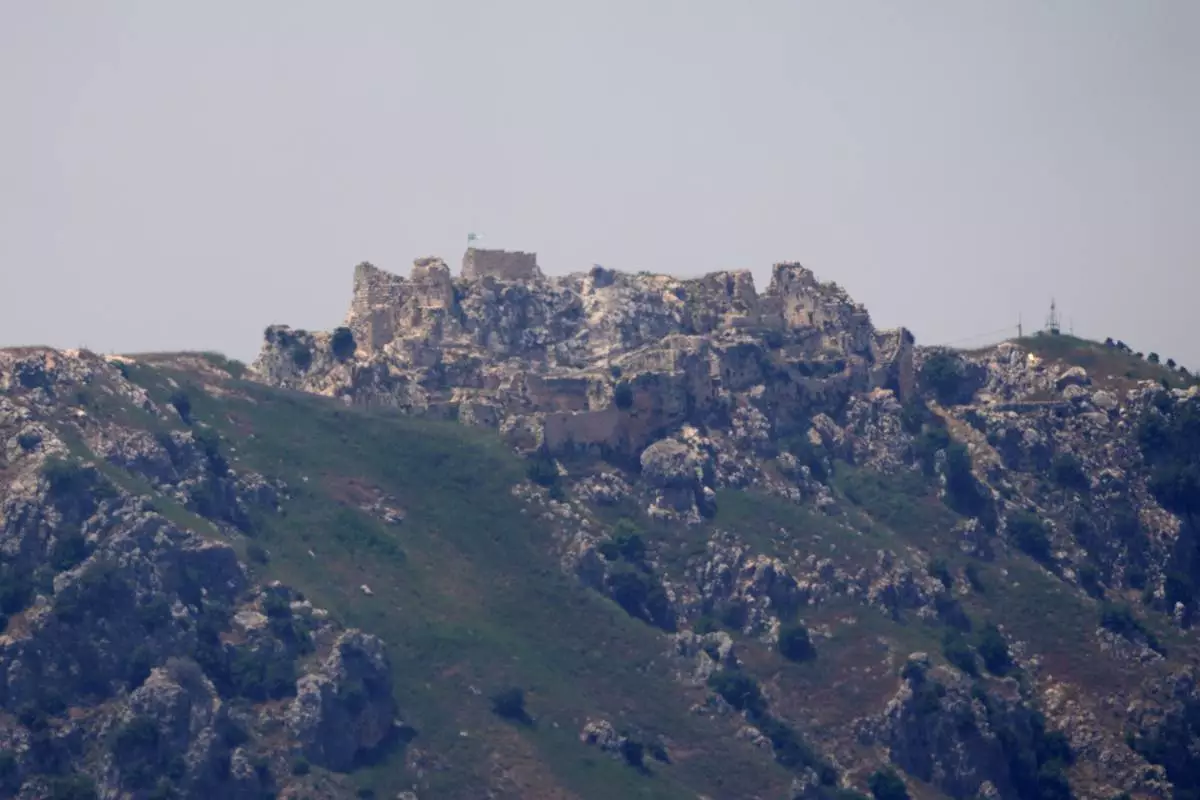
A view of he Beaufort Castle in southern Lebanon as seen from northern Israel, Sunday, May 31, 2026. (AP Photo/Ariel Schalit)
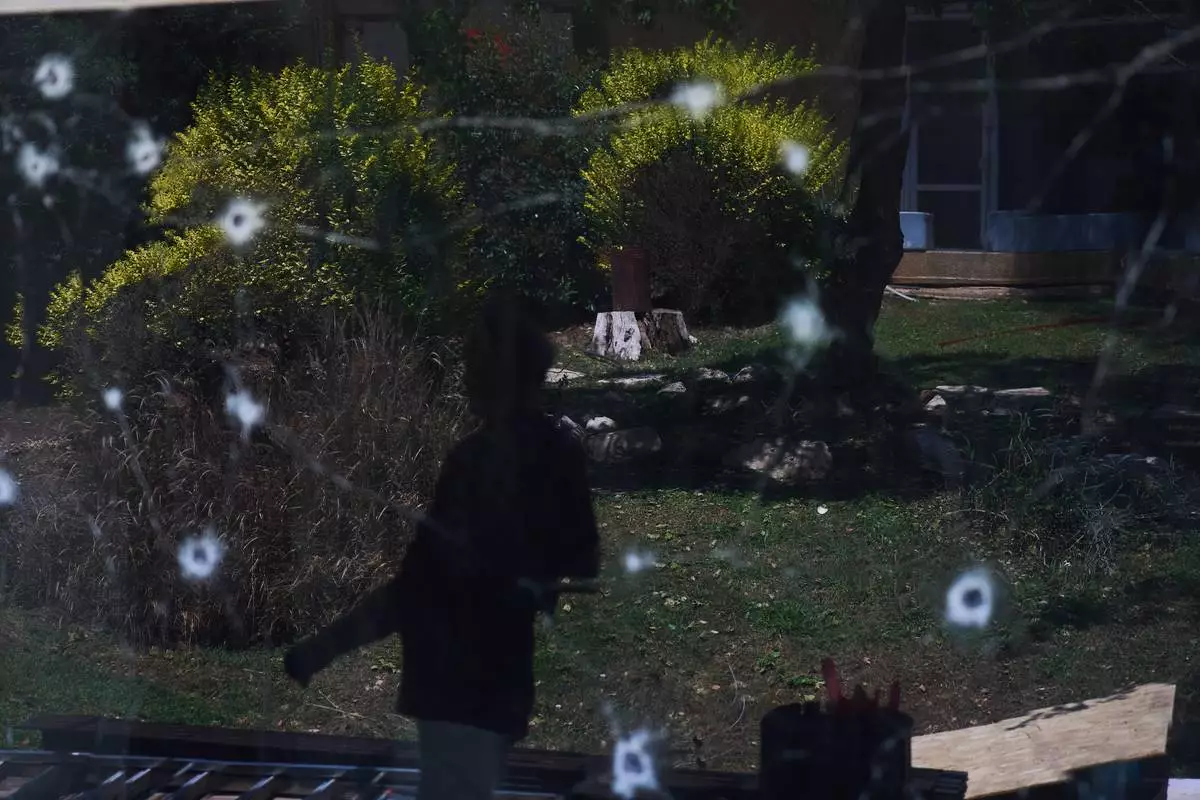
A person walks past the site struck by a rocket fired from Lebanon on Saturday in Kiryat Shmona, northern Israel, Sunday, May 31, 2026. (AP Photo/Ariel Schalit)
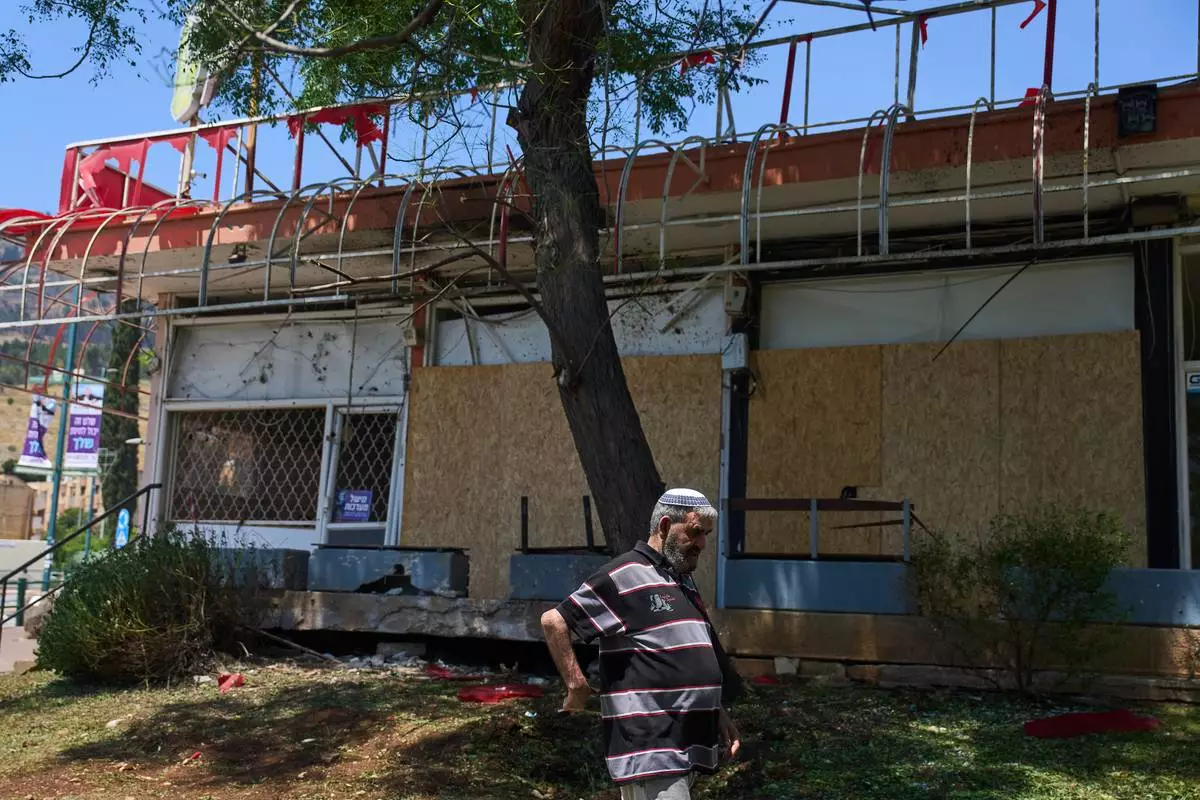
A local resident walks past the site struck by a rocket fired from Lebanon on Saturday in Kiryat Shmona, northern Israel, Sunday, May 31, 2026. (AP Photo/Ariel Schalit)
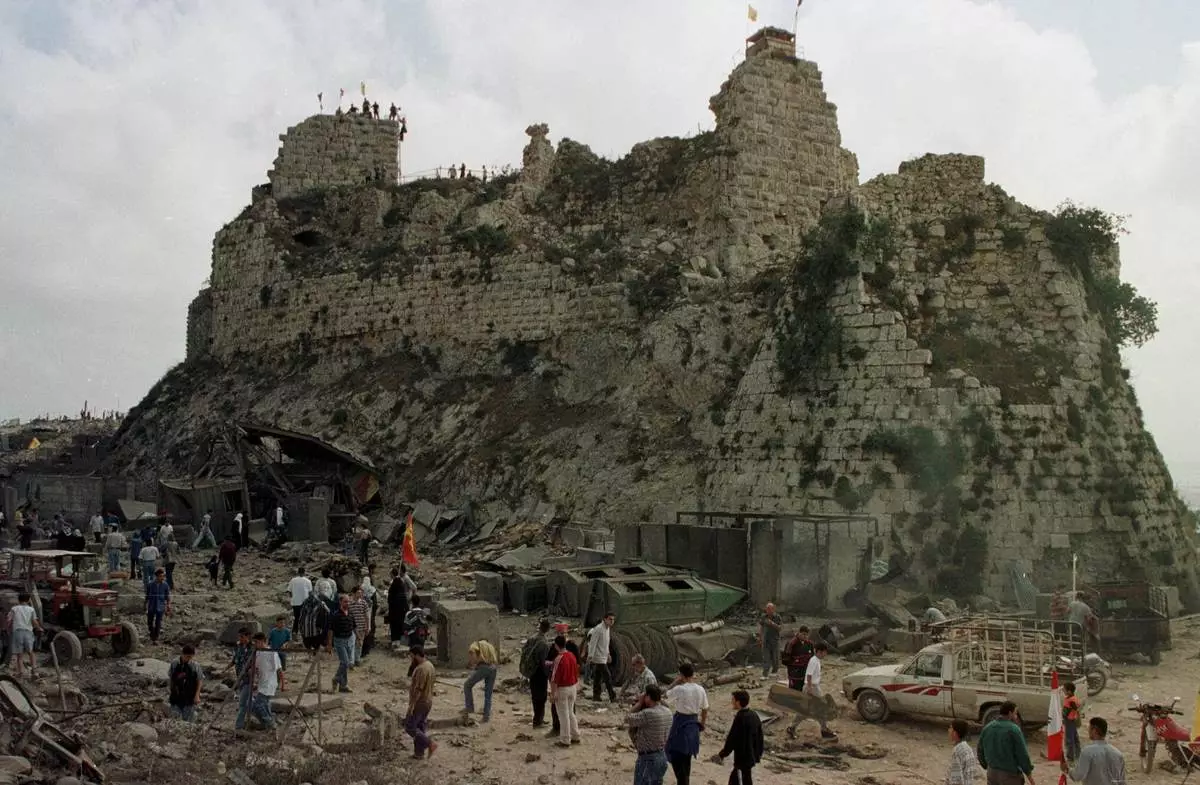
FILE -Villagers inspect the damage to Beaufort Castle, 10 kilometers (6 miles) northwest of the southern market town of Nabatiyeh, Lebanon, Wednesday, May 24, 2000. (AP Photo/Ahmed Mantash, File)