Skip to Content Facebook Feature Image

Azerbaijani president describes his China visit as very encouraging

China

China

China

Azerbaijani president describes his China visit as very encouraging

2025-04-26 14:59 Last Updated At:17:37

President of Azerbaijan Ilham Aliyev is very satisfied with the outcomes of his visit to China, describing the trip as very encouraging.

Aliyev arrived in Beijing on Tuesday for a three-day state visit to China. On Wednesday, Chinese President Xi Jinping and Aliyev held talks and signed a joint statement on establishing the comprehensive strategic partnership between the two countries.

They also witnessed the signing of 20 cooperation agreements between the two countries in various sectors, including justice, Belt and Road cooperation, green development, digital economy, intellectual property rights, and space cooperation.

The visit marks the first time in six years since Aliyev visited China in April 2019. In July last year, the two leaders met in the Kazakh capital Astana ahead of the 24th Meeting of the Council of Heads of State of the Shanghai Cooperation Organization (SCO) and elevated the bilateral relations to the strategic partnership.

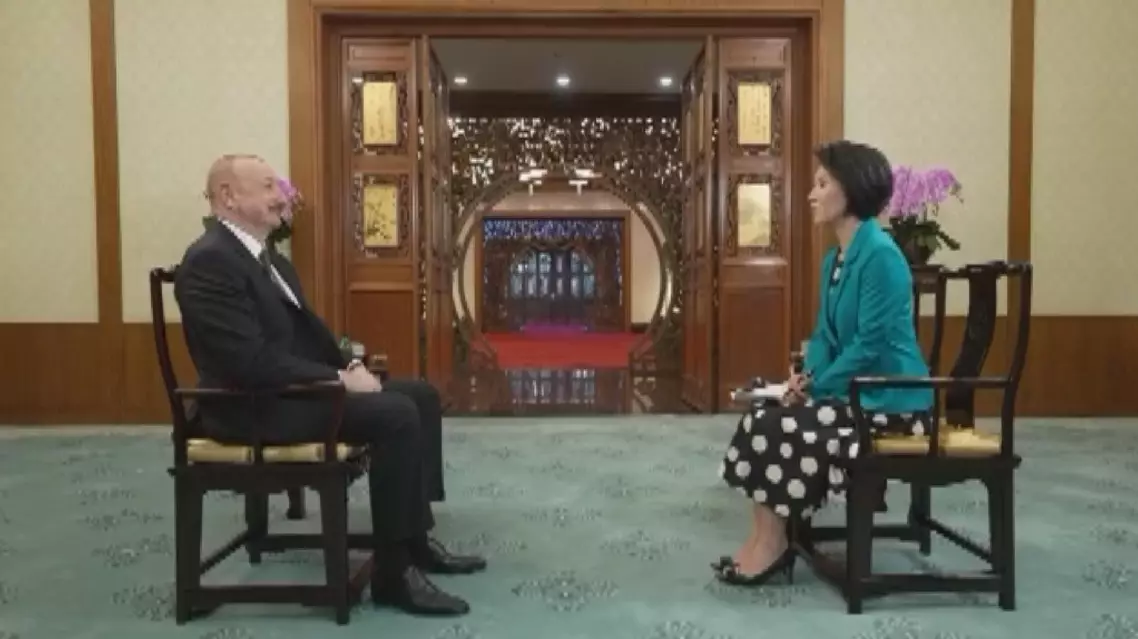
In an interview with the China Media Group (CMG) on Wednesday, Aliyev said that the last meeting represents a very important milestone in bilateral cooperation and this visit elevated the bilateral relations to a higher level.

"Despite the fact that less than one year have passed since our last meeting, we signed with President Xi Jinping Declaration on Comprehensive Strategic Partnership. So we elevated our relationship even higher. Along with that, 20 more documents have been signed which cover broad range of areas. So I would say that the relations are excellent as well as the visit. I'm very satisfied with results. First, I'm very honored that President Xi Jinping invited (me) to pay a state visit to China. And the atmosphere, hospitality, friendship and also substance of our discussions was really very encouraging. We elevated our relations on a higher level," he said.

Having witnessed China's transformation since his first visit to China in 2005, Aliyev expressed admiration for China's rapid development and economic success, and congratulated the Chinese leadership on the accomplishments.

"During my meetings with Chinese leadership, I underlined that every time I come to China I see development, I see a lot of new infrastructure projects, new buildings, beautiful city. And I congratulated my friends with extraordinary achievement and social and economic development, as well as in activity of China on international arena. And always coming here is a great pleasure. I've been many times. My first visit to China was in 2005. So I witnessed throughout the 20 years the rapid development and extraordinary transformation of the country. What can be seen and also what I read about the economic performance and what I get as information really demonstrate that your country is on the right track and congratulations with that," he said.
Azerbaijani president describes his China visit as very encouraging

Azerbaijani president describes his China visit as very encouraging

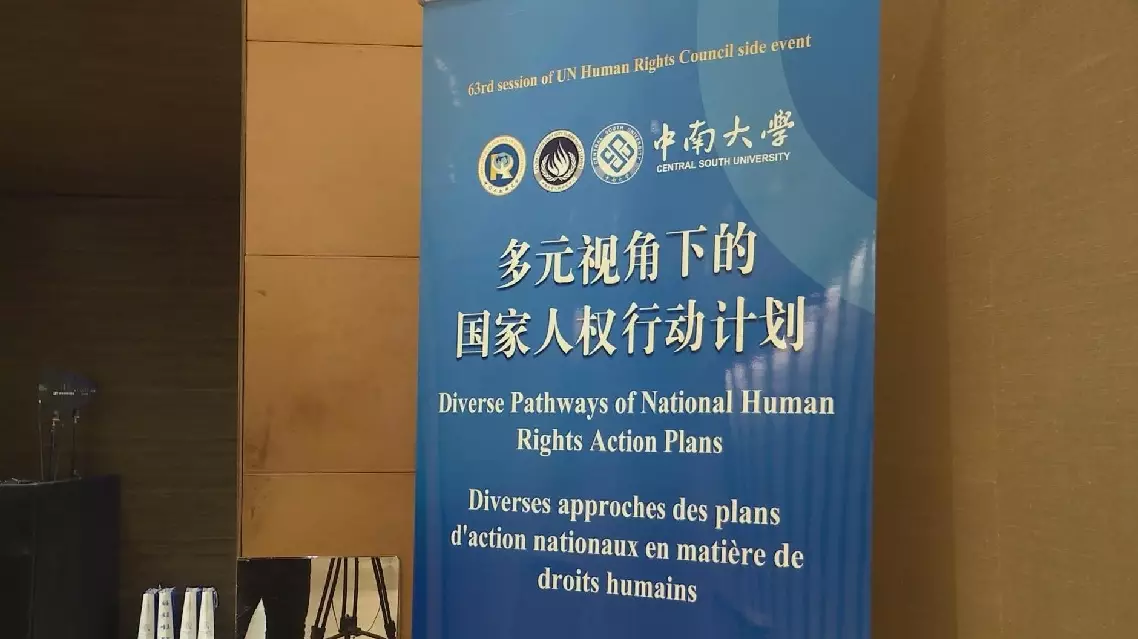
Human rights action plans must roll out in diverse, context-specific pathways according to the needs of each country, experts stressed at a side event on Tuesday held at the Palais des Nations in Geneva during the 63rd session of the United Nations Human Rights Council (UNHRC).

Titled "Diverse Pathways of National Human Rights Action Plans," the event convened researchers, scholars, and civil society representatives from multiple countries to hold in-depth discussions on the formulation and execution of national human rights strategies.

Participants reached a broad consensus on the need to deepen international dialogue and mutual learning to jointly advance the healthy development of the global human rights endeavor.

At the event, Chinese experts provided a systematic overview of China's National Human Rights Action Plan, which was released in June this year.

Mao Junxiang, executive director of the Human Rights Center at Central South University in central China's Changsha City, highlighted that the action plan is closely aligned with the country's 15th Five-Year Plan (2026-2030) for national economic and social development. He outlined five defining characteristics of the plan, noting that it is grounded in reality, people-centered, keeps pace with the times, maintains a global vision, and focuses on action. Mao noted that this approach has enabled China to forge a distinct path of human rights development centered on strategic planning and concrete implementation.

Li Juan, a Chinese researcher at the same center, focused on the protection of digital rights. She introduced China's tangible achievements in bridging the digital divide through robust network infrastructure, leveraging digital and intelligent technologies to empower public services, healthcare, education, and livelihoods, and establishing sound ethical frameworks for artificial intelligence.

A representative from the China Ethnic Minorities' Association for External Exchanges detailed the country's practices in forging a strong sense of community for the Chinese nation, promoting common prosperity and development and safeguarding the equal rights of all ethnic groups.

International comparison and theoretical reflection were another key focus of the event. Peter Herrmann, a member of the European Academy of Sciences and Arts, pointed out existing shortcomings in some European countries regarding the protection of immigrants' rights and basic social welfare.

Meanwhile, Efe Can Gurcan, a Turkish scholar and researcher at the Human Rights Center of Central South University, drew upon the Vienna Declaration and Program of Action to compare the different pathways of human rights governance between China and the United States, elaborating on how diverse cultural and political contexts shape human rights practices.

UN side event highlights diverse pathways for national human rights plans

UN side event highlights diverse pathways for national human rights plans

Recommended Articles