The two-day 2026 Barcelona AI Summit opened Tuesday in Spain, with the emphasis on moving artificial intelligence (AI) from ambitious concepts to practical deployment.
Alongside keynote forums and speeches, this year’s event includes several exhibition halls where visitors can watch AI demos and try interactive experiences.
In one exhibition area, aspiring boxers can test their form with the help of AI-powered coaching. A system uses cameras to capture movement trajectories, analyzing punch speed, body rotation and defensive actions, and identifying weaknesses in training.
"We're looking for visibility and to showcase our technology in real conditions, so anybody from any level can test and see a score and how they train, how can they improve their technique," said Amelys Servais, the exhibitor.
Developers of a robot dog showcased their advancements in this area of robotics that has long touted promise for industrial uses. The artificial canine exhibits improved control through the use of cameras and sensors that can perceive the surrounding environment, analyze human movement, and even understand human language.
"We have a language model we built on top of the robot. We have text-to-speech, so we can speak to a microphone and it responds back to us. As well, we have an auto-explore feature which, through the use of lidar sensors, it can walk around automatically and map its region," said Kacper Poniatowski, engineer of the device.
The summit also showcased AI applications in scenarios including enterprise services and immersive experiences, showing the transformation of the technology toward emerging real-world products.
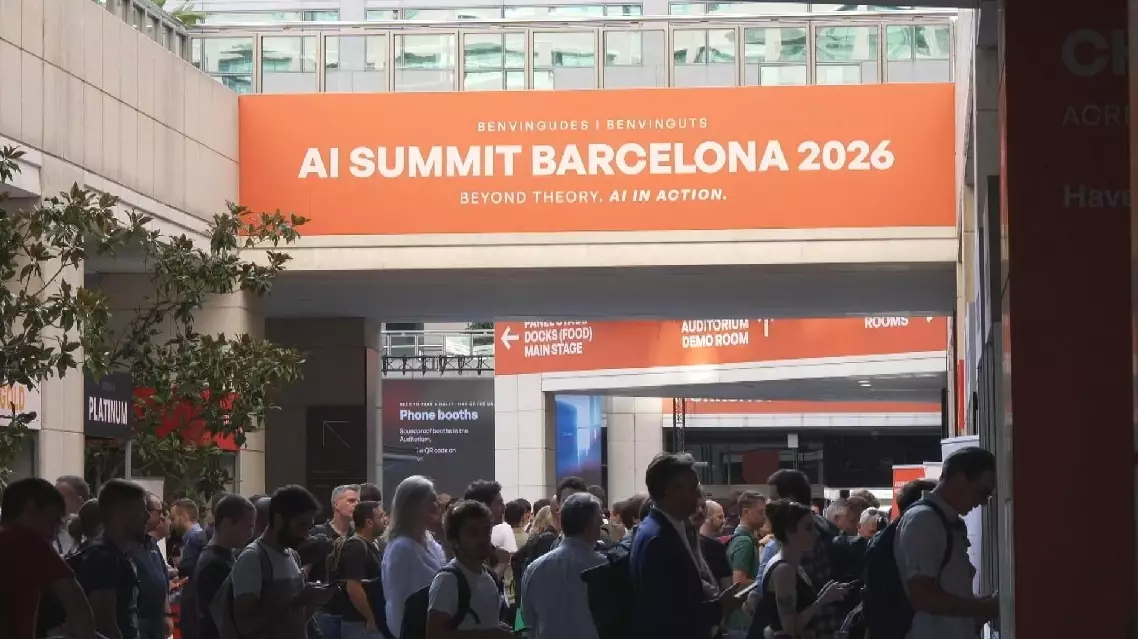
Barcelona AI Summit highlights real-world applications of AI
China's rapid advancements in artificial intelligence (AI) have anchored global tech discussions at the AI Summit Barcelona 2026 which opened on Tuesday, drawing praises from industry leaders and international experts gathering at the summit.
The two-day event is held at the World Trade Center in Barcelona, a city on the northeastern coast of Spain.
Official data showed that by 2025, the scale of China's core AI industry surpassed 1.2 trillion yuan (about 179 billion U.S. dollars), supported by more than 6,200 enterprises.
A comparative analysis of large models released at the summit evaluated platforms across key metrics, including core capabilities, context windows, multimodal performance, open weights, and cost efficiency, with Chinese models such as DeepSeek and Qwen featured prominently in open-weight discussions.
"What happened in China in the last 20 years is absolutely amazing. It's now leading the change. So, the models we see, Kimi or Deepseek, were able to go further than some of the American companies by being open source, for instance. We need to have a broader collaboration with China because we will play together. It's a world game anyway," said Guillaume Rostand, CEO of AI Events Barcelona.
"I believe what the Chinese companies are doing is very impressive. They're really pushing the open source frontier," said Kacper Poniatowski, an AI engineer.
European exhibitors also emphasized the potential for collaborative growth while acknowledging regional regulatory priorities.
"We welcome all the models coming from China. They are really good. We need to do it, of course, secure, because in Europe we talk much about security. But the same way, we need to be forward as China is, China is an example to the world in this sense," said Rodny Coronel, an exhibitor.
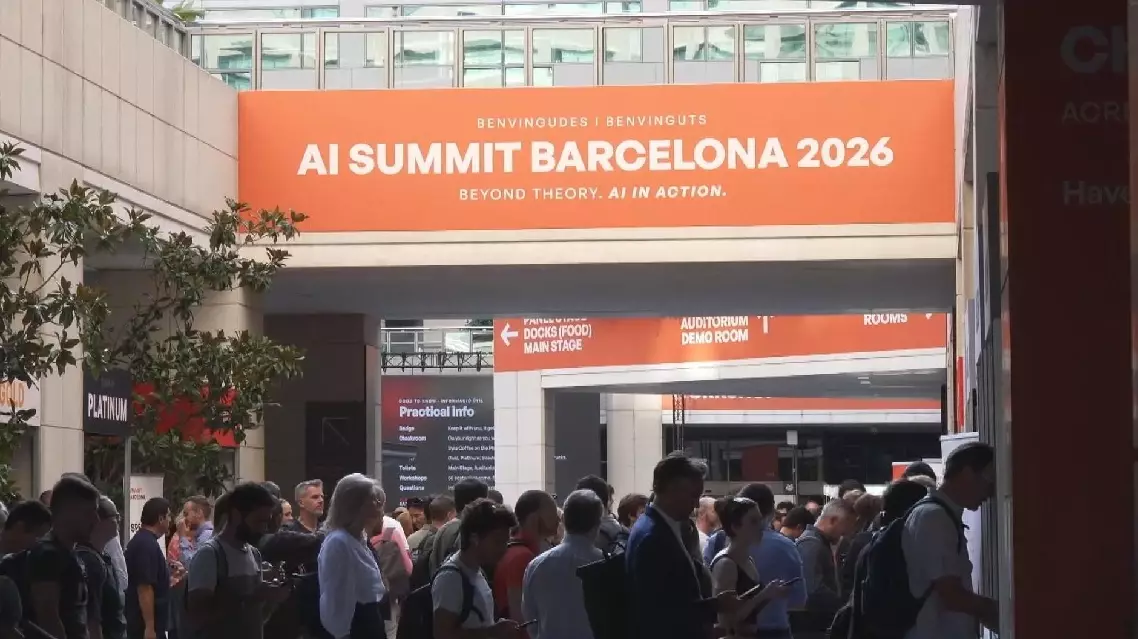
China's AI advancements under spotlight at Barcelona summit