The recent surge in the price of gold has added momentum to a modern-day gold rush in one of New Zealand's most historic towns, where the precious metal was first discovered 160 years ago.
Located in a remote part of New Zealand's South Island, Reefton has a population of less than 1,000. Its well-preserved 19th-century buildings could be mistaken for a movie set but are lasting reminders of the town's original gold boom.
The town's mining museum tells the story of a 19th-century boom that also attracted hundreds of miners and left some buried in the local cemetery.
"Reefton was a very rich town. You probably know its claim to fame: it had the first public street, electrically driven street lighting in the Southern Hemisphere," said John Taylor, a mining engineer and historian.
Once mining stopped, Reefton relied on farming, forestry, and tourism. However, the arrival of mining companies from Canada and Australia has sparked a wave of excitement, with predictions that the area still holds gold worth billions of dollars. Many gold miners are back -- and thinking big.
Core samples are being taken from a prospecting area, aiming to locate a mine site that could operate for decades.
"We want to take Reefton from a town today of just under a thousand; we think with a mine like ours it would potentially triple that," said Rob Eckford, chief executive of the Canadian resource exploration company Rua Gold, speaking via video link from Vancouver, Canada.
Local businessman John Bougen has investments in dozens of properties and businesses, like the historic Dawson's Hotel, and says business is booming.
"We've now got a mining boom, we've got a tourism boom. We've got agriculture going really well, thanks to the great environment here for milk," he said.
Meanwhile, the New Zealand Government says that the future of mining has "never looked brighter," and it has praised international companies for "driving a new generation of mining activity," which will provide significant job opportunities.
Just south of Reefton, Australia's Federation Mining company has drilled a three-kilometer underground tunnel and expects to employ more than 200 people over the next decade, extracting gold worth more than 2 billion dollars.
"In terms of the economic impact, it's about 250 million dollars revenue per annum, in full production, into the New Zealand regional economy," said Simon Delander, vice-president of Federation Mining, an Australian company, speaking via video link from Sydney.
But local experts like John Taylor say environmental restrictions won't make mining easy.
"I've got no problem with quoting quite large potential, but whether you can actually mine any of that potential at a profit remains to be proven," he said.
However, new accommodation is already being built for mine workers as Reefton prepares for its next boom.
"You'll have other mining companies starting as well, so I see Reefton being a great host town, and they've really embraced the heritage of mining," said Delander.
For John Bougen -- and many other locals -- the character of Reefton is deeply tied to its mining legacy, a legacy that continues to shape the town's identity and future.
"This is a heritage town. It lives and breathes mining. It does it well, it does it responsibly and ecologically, and the whole fruit, but the point is, that's what a lot of people are here for now," said Bougen.
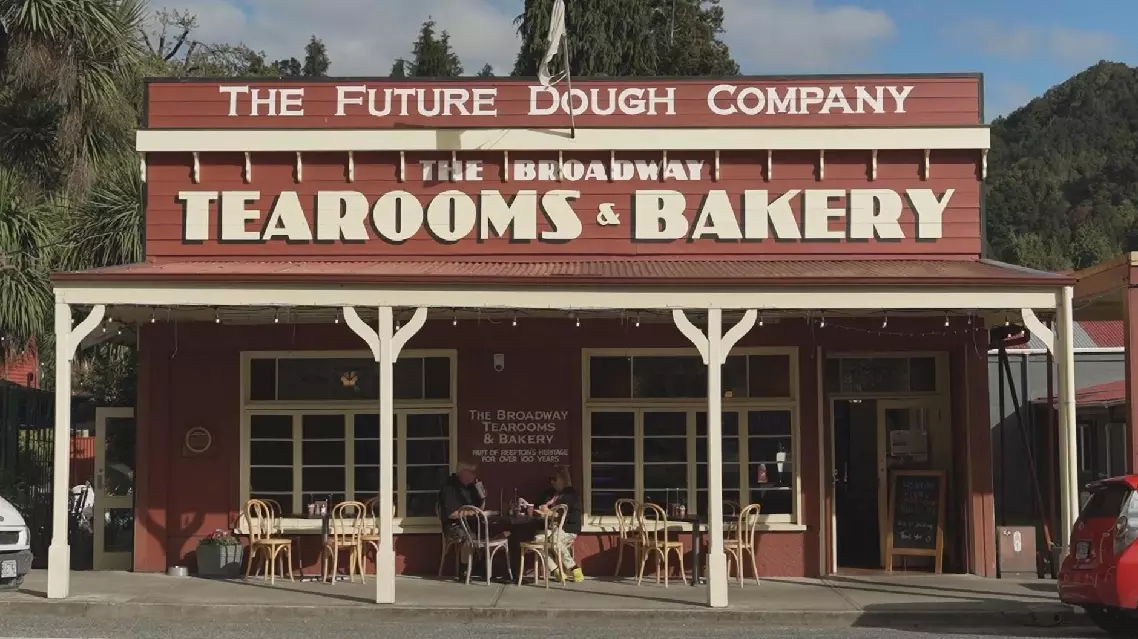
Historic New Zealand mining town sees new wave of gold fever