KYIV, Ukraine (AP) — Russian President Vladimir Putin on Monday declared a unilateral 72-hour ceasefire next week in Ukraine to mark Victory Day in World War II as the U.S. presses for a deal to end the 3-year-old war. Kyiv insisted on a longer and immediate truce.
The Kremlin said the truce, ordered on “humanitarian grounds,” will run from the start of May 8 and last through the end of May 10 to mark Moscow's defeat of Nazi Germany in 1945 — Russia's biggest secular holiday.
Click to Gallery
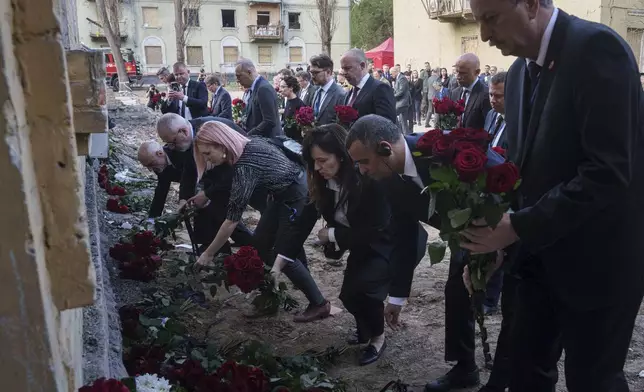
Representatives of embassies place flowers on a wall of a house destroyed by Thursday's Russian strike on a residential neighborhood in Kyiv, Ukraine, on Friday, April 25, 2025. (AP Photo/Evgeniy Maloletka)
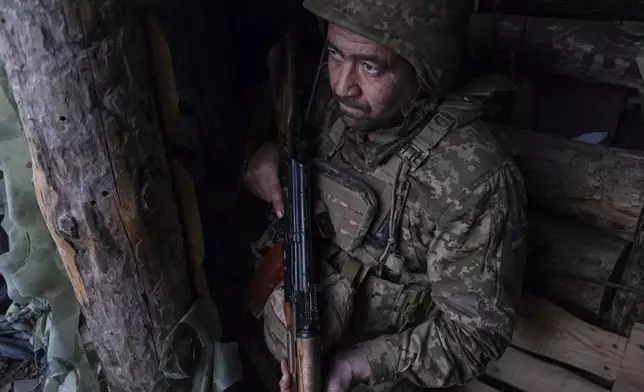
In this photo provided by Ukraine's 93rd Kholodnyi Yar Separate Mechanized Brigade press service, a soldier looks out of a shelter on the anti-drone firing position in Kostyantynivka, the site of the heavy battles with the Russian troops in the Donetsk region, Ukraine, Thursday, April 24, 2025. (Iryna Rybakova/Ukraine's 93rd Mechanized Brigade via AP).
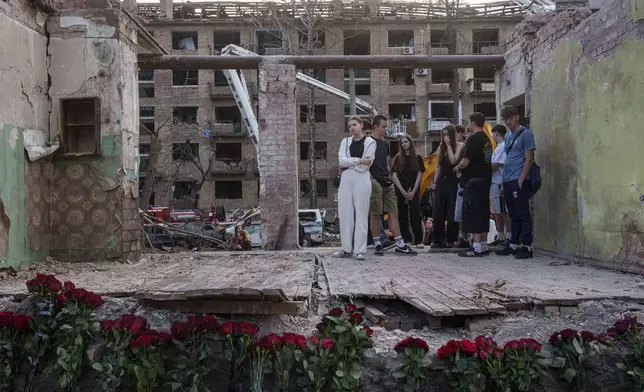
Friends of Danylo Hudya, 17, who was killed in a Thursday Russian strike, stand together in the remains of a house in a residential neighborhood in Kyiv, Ukraine, on Friday, April 25, 2025. (AP Photo/Evgeniy Maloletka)
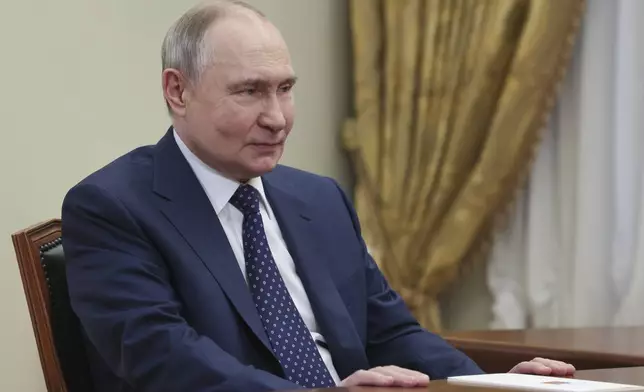
Russian President Vladimir Putin meets with Russian State Duma Chairman Vyacheslav Volodin in St. Petersburg, Monday, April 28, 2025. (Mikhail Metzel, Sputnik, Kremlin Pool Photo via AP)
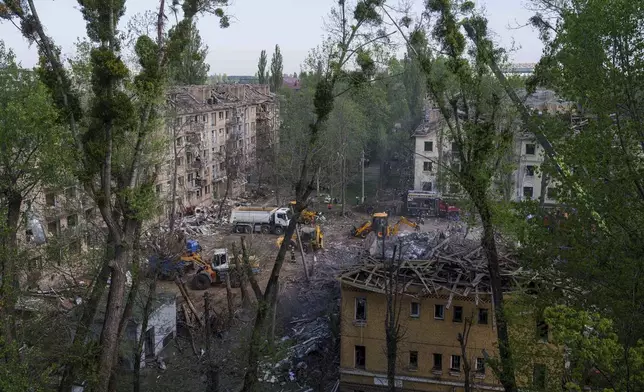
Rescue workers clear the rubble of a house destroyed by a Russian strike on a residential neighbourhood in Kyiv, Ukraine, on Thursday, April 24, 2025. (AP Photo/Evgeniy Maloletka)
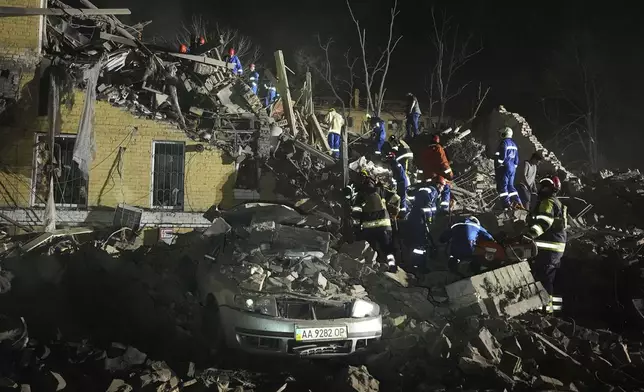
Ukrainian search personnel clear the rubble after a Russian ballistic missile attack in Kyiv, Ukraine, early Thursday, April 24, 2025. (AP Photo/Efrem Lukatsky)
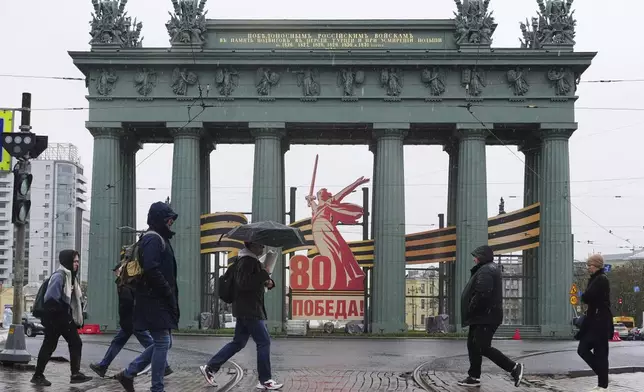
People cross the street past 'Moscow's Triumphal Gate' decorated with a large-scale composition depicting a replica of the 'Motherland Calls' monument ahead of celebrations of the 80th anniversary of the Soviet Union's victory over Nazi Germany during World War II in St. Petersburg, Russia, Monday, April 28, 2025. (AP Photo/Dmitri Lovetsky)
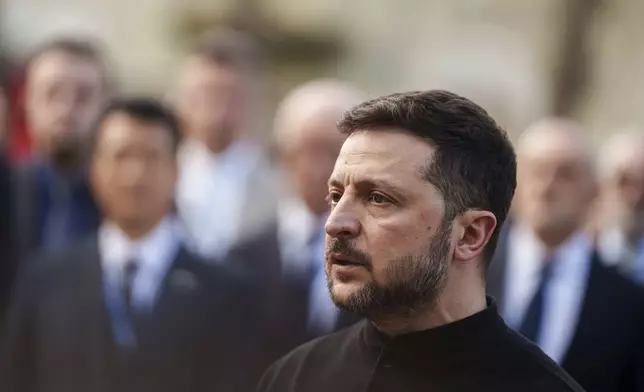
President Volodymyr Zelenskyy answers journalists' questions near a house destroyed by Thursday's Russian strike on a residential neighborhood in Kyiv, Ukraine, on Friday, April 25, 2025. (AP Photo/Evgeniy Maloletka)
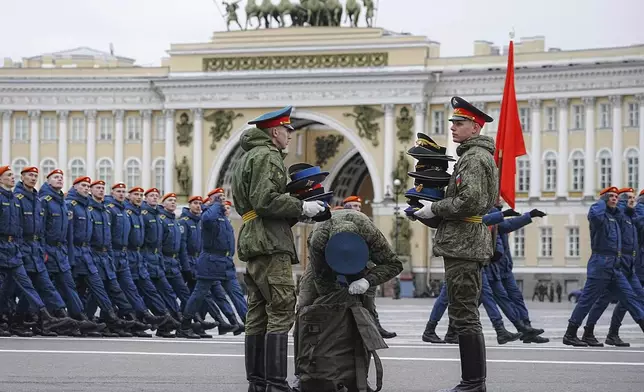
Honour guard soldiers pack caps after a rehearsal for the Victory Day military parade, which will take place at Dvortsovaya (Palace) Square on May 9 to celebrate 80 years after the victory in World War II, in St. Petersburg, Russia, Tuesday, April 22, 2025. (AP Photo/Dmitri Lovetsky)
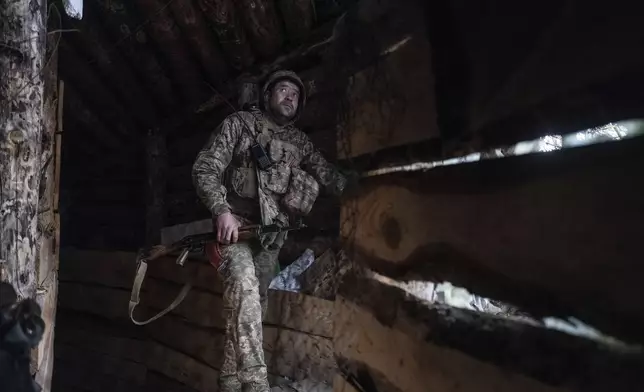
In this photo provided by Ukraine's 93rd Kholodnyi Yar Separate Mechanized Brigade press service, a soldier looks out of a shelter on the anti-drone firing position in Kostyantynivka, the site of the heavy battles with the Russian troops in the Donetsk region, Ukraine, Thursday, April 24, 2025. (Iryna Rybakova/Ukraine's 93rd Mechanized Brigade via AP).
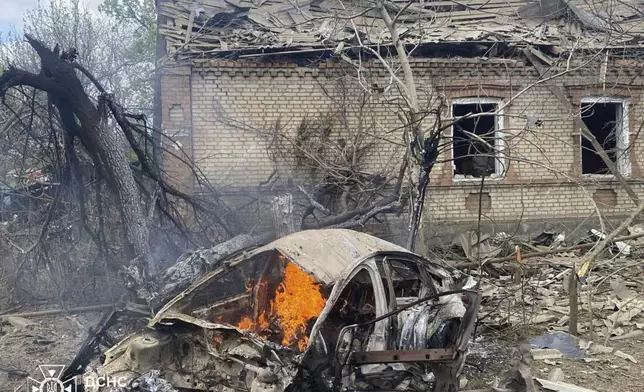
In this photo provided by the Ukrainian Emergency Service, a car burns against the background of a damaged private house following Russia's air raid in the Donetsk region, Ukraine, Monday, April 28, 2025. (Ukrainian Emergency Service via AP)
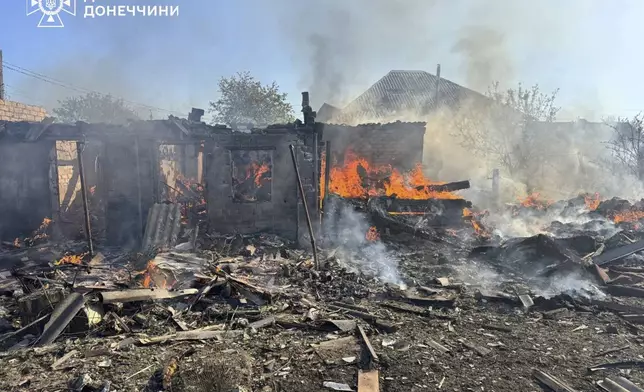
In this photo provided by the Ukrainian Emergency Service, damaged private houses burn following Russia's air raid in the Donetsk region, Ukraine, Monday, April 28, 2025. (Ukrainian Emergency Service via AP)
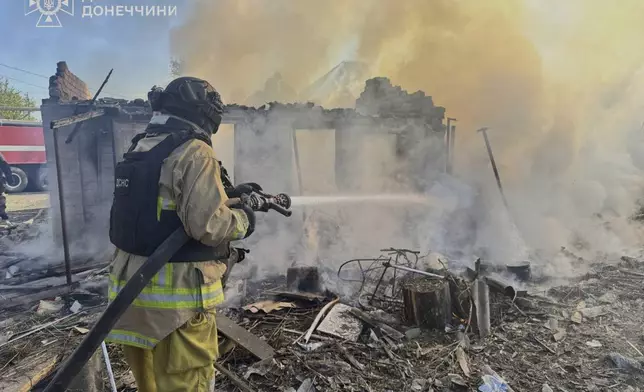
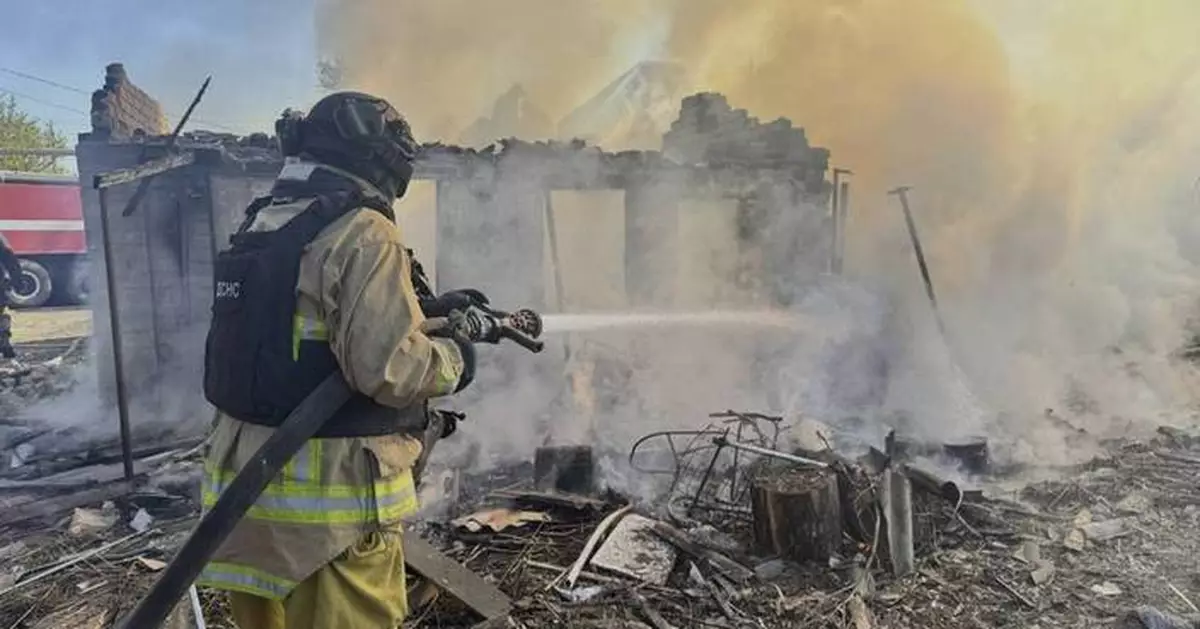
In this photo provided by the Ukrainian Emergency Service, a firefighter puts out a fire at ruined private houses following Russia's air raid in the Donetsk region, Ukraine, Monday, April 28, 2025. (Ukrainian Emergency Service via AP)
Ukraine, which has previously agreed to U.S. President Donald Trump's proposal of a full 30-day ceasefire, dismissed Putin's move as window dressing.
“If Russia truly wants peace, it must cease fire immediately,” Ukrainian Foreign Minister Andrii Sybiha said, according to the ministry. He emphasized that Kyiv is ready for a “lasting, reliable, and complete ceasefire” for at least 30 full days.
“Why wait for May 8? If we can cease fire now from any date and for 30 days — so that it is real, and not just for a parade,” he said without specifying whether Ukraine would be ready to accept the Moscow-proposed truce.
The Kremlin had urged Ukraine to follow suit.
“Russia believes that the Ukrainian side should follow this example,” it said, warning that “in case of violations of the ceasefire by the Ukrainian side, the Russian armed forces will give an adequate and efficient response."
Putin previously announced a unilateral 30-hour Easter ceasefire and Ukraine voiced readiness to reciprocate any genuine truce at the time, but it said Russian attacks continued. Moscow, in turn, accused Ukraine of failing to halt its attacks.
Russia and Ukraine had also earlier pledged to observe a 30-day halt on strikes on energy infrastructure that was brokered by the Trump administration, but they repeatedly accused each other of massive violations until the measure expired.
The truce attempts underlined the massive challenges for monitoring any possible halt to hostilities along the more than 1,000-kilometer (over 600-mile) line of contact.
Up until now, Putin had refused to accept a complete unconditional ceasefire, linking it to a halt in Western arms supplies to Ukraine and Ukraine’s mobilization effort.
The Kremlin reaffirmed that “the Russian side again declares its readiness for peace talks without preconditions aimed at removing the root causes of the Ukrainian crisis and constructive cooperation with international partners.”
Ukrainians in Kyiv scoffed at Putin's move.
“There is no trust in any of Putin’s proposals," said Nazar Lutsenko, a lawyer. He added that “we absolutely want the war to end on terms that are favorable to us, on fair terms.”
A soldier with the 156th Brigade, who identified himself only by his first name, Kostiantyn, in keeping with military rules, dismissed the truce as “ridiculous,” adding that perhaps “there will not be such harsh shelling as there is every evening here, but fighting will be conducted in one way or another."
Student Oleksandra Serpilova viewed the declaration as “another attempt to keep America engaged, to give Trump hope that some kind of negotiations are possible.”
Just before the ceasefire announcement, Ukraine and Russia targeted each other with long-range strikes.
Russia's drone attack early Monday damaged an infrastructure facility in Cherkasy, central Ukraine, disrupting gas supplies to households in the city, Mayor Anatolii Bondarenko said.
The Russian Defense Ministry said its forces downed 119 Ukrainian drones overnight, most of them over Russia’s Bryansk border region. In Ukraine, air raid sirens rang out across the country Monday morning. There were no immediate reports of casualties or damage.
The outcome of a push by Trump’s administration to swiftly end the fighting, which has cost tens of thousands of lives, remains unclear, clouded by conflicting claims and doubts about how far each side might be willing to compromise amid deep hostility and mistrust.
The clock is ticking on Washington’s engagement in efforts to resolve Europe’s biggest conflict since World War II.
U.S. Secretary of State Marco Rubio said Sunday that this week would be “very critical.” The U.S. needs to “make a determination about whether this is an endeavor that we want to continue to be involved in,” he said on NBC’s “Meet the Press.”
American military aid has been crucial for Ukraine’s war effort, and further help could be at risk if the Trump administration walks away from attempts to end the war.
Trump said over the weekend he harbors doubts about Putin’s sincerity in pursuing a deal, as Russian forces have continued to strike civilian areas of Ukraine with cruise and ballistic missiles while the talks have proceeded.
But on Friday, Trump described a brokered settlement on the war as “close.”
Western European officials have accused the Kremlin of dragging its feet on peace talks so that Russia's larger forces, which have battlefield momentum, can seize more Ukrainian land.
Russian Foreign Minister Sergey Lavrov discussed the war in a phone call Sunday with Rubio, the Russian Foreign Ministry said. They focused on “consolidating the emerging prerequisites for starting negotiations,” the statement said, without elaborating.
Russia has effectively rejected a U.S. proposal for an immediate and full 30-day halt in the fighting by imposing far-reaching conditions. Ukraine has accepted it, Ukrainian President Volodymyr Zelenskyy says.
A French diplomatic official said over the weekend that Trump, Zelenskyy and French President Emmanuel Macron agreed “to pursue in the coming days the work of convergence” to obtain “a solid ceasefire.”
The diplomat said a truce is a “prior condition for a peace negotiation that respects the interest of Ukraine and the Europeans.”
The official was not authorized to be publicly identified in accordance with French presidential policy.
Ukraine, meanwhile, has balked at surrendering land to Russia in return for peace, which Washington has indicated could be necessary.
A key point of leverage for Ukraine could be a deal with Washington that grants access to Ukraine’s critical mineral wealth.
Ukraine and the U.S. have made progress on a mineral agreement, with both sides agreeing that American aid provided so far to Kyiv will not be taken into account under the terms of the deal, Ukrainian Prime Minister Denys Shmyhal said Sunday.
“We have good progress,” he said after talks with U.S. Treasury Under Secretary Scott Bessent in Washington.
“The main thing is that we clearly defined our red lines: The agreement must comply with Ukraine’s Constitution, legislation, and European commitments, and must be ratified by Parliament,” Shmyhal said.
Russia's full-scale invasion of its neighbor in February 2022 has developed a significant international dimension, further complicating negotiations.
Putin on Monday thanked North Korea for sending what the U.S. estimates are thousands of troops to help defeat Ukraine, as well as allegedly supplying artillery ammunition.
Iran has also helped Russia in the war, with Shahed drones, and China has sold Russia machinery and microelectronics that Moscow can use to make weapons, Western officials say.
The U.S. and Europe have been Kyiv's biggest backers.
Follow AP’s coverage of the war in Ukraine at https://apnews.com/hub/russia-ukraine
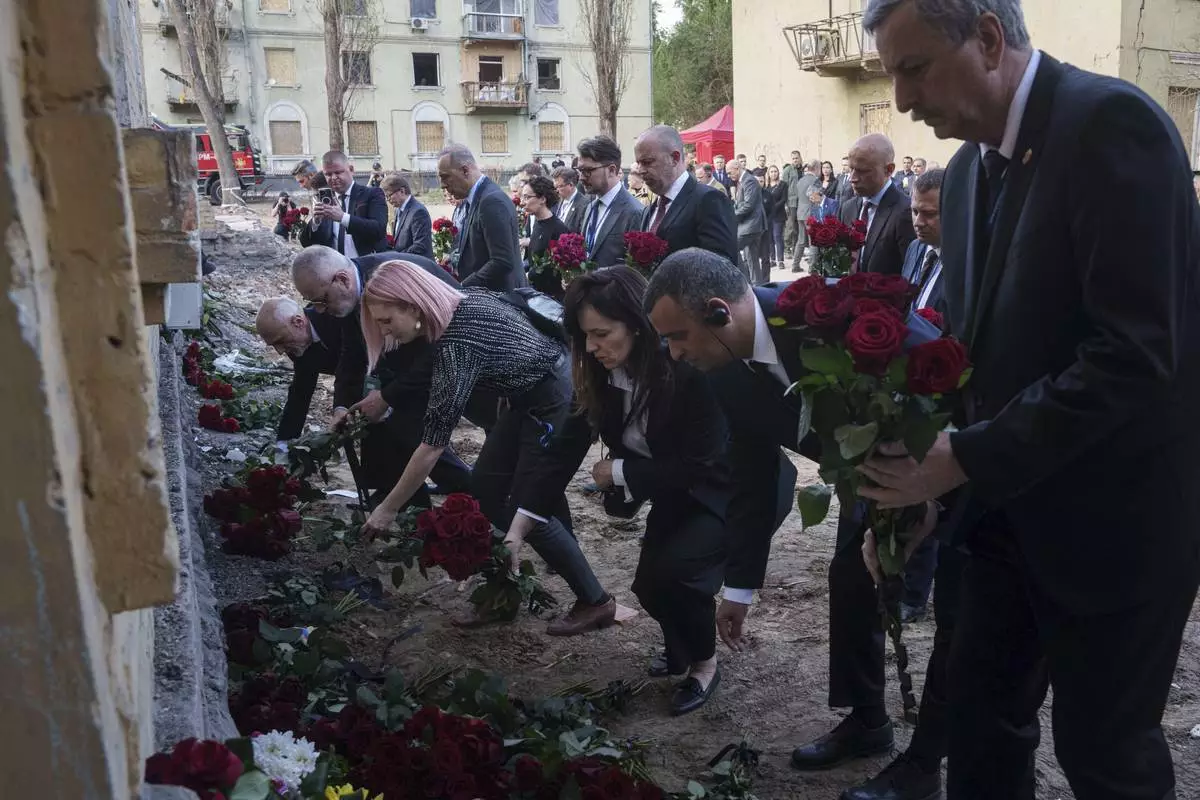
Representatives of embassies place flowers on a wall of a house destroyed by Thursday's Russian strike on a residential neighborhood in Kyiv, Ukraine, on Friday, April 25, 2025. (AP Photo/Evgeniy Maloletka)
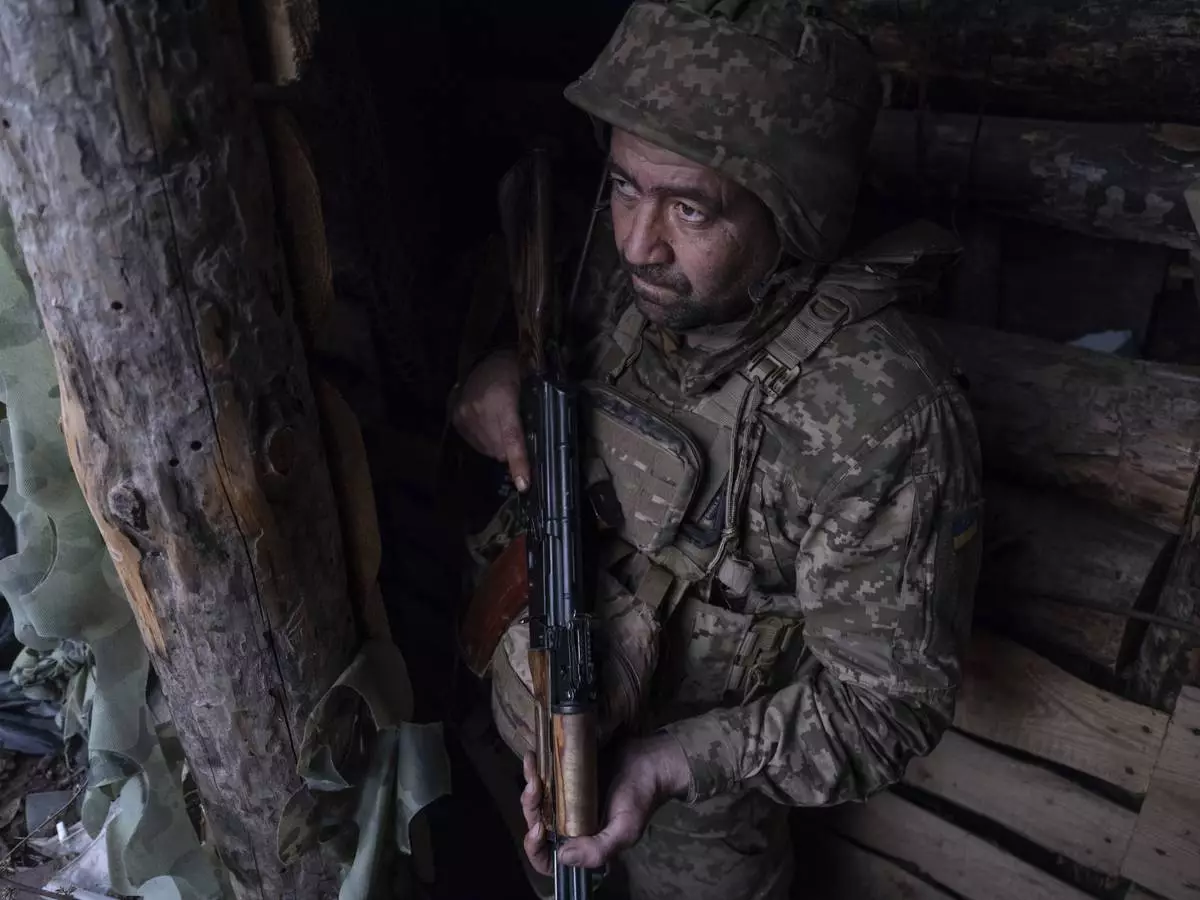
In this photo provided by Ukraine's 93rd Kholodnyi Yar Separate Mechanized Brigade press service, a soldier looks out of a shelter on the anti-drone firing position in Kostyantynivka, the site of the heavy battles with the Russian troops in the Donetsk region, Ukraine, Thursday, April 24, 2025. (Iryna Rybakova/Ukraine's 93rd Mechanized Brigade via AP).
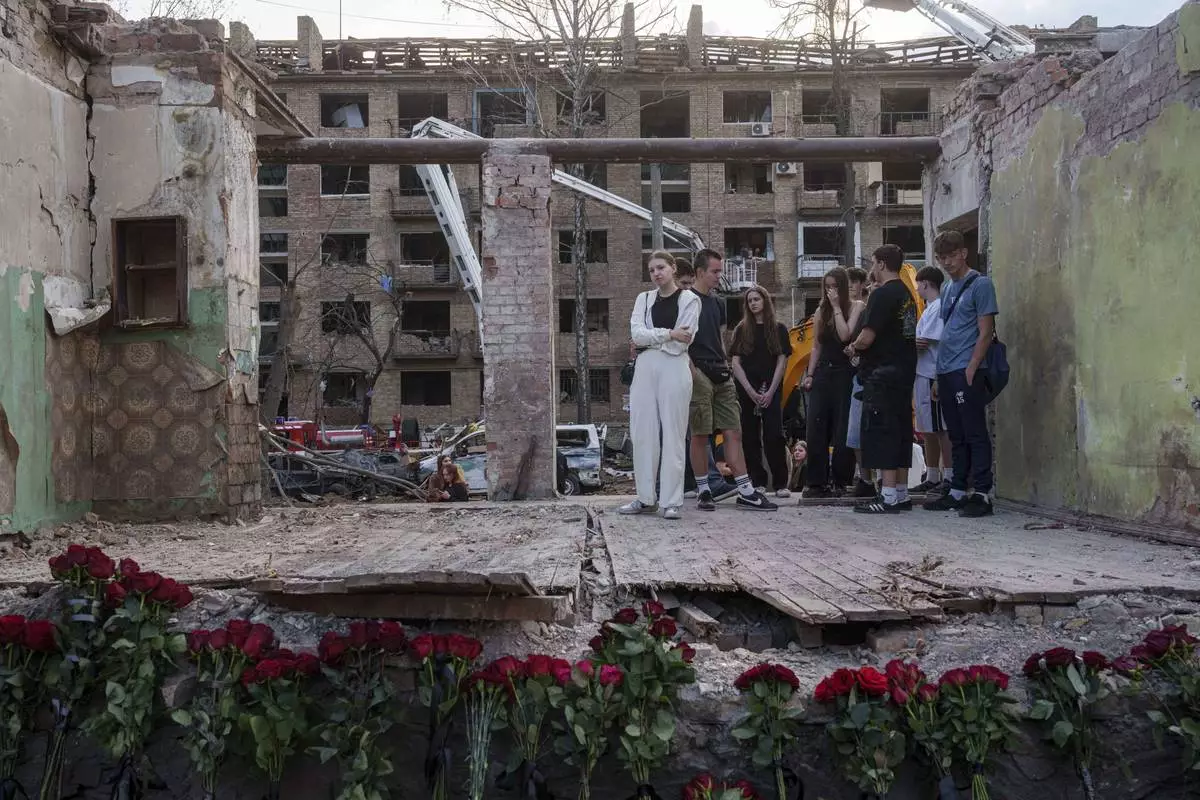
Friends of Danylo Hudya, 17, who was killed in a Thursday Russian strike, stand together in the remains of a house in a residential neighborhood in Kyiv, Ukraine, on Friday, April 25, 2025. (AP Photo/Evgeniy Maloletka)
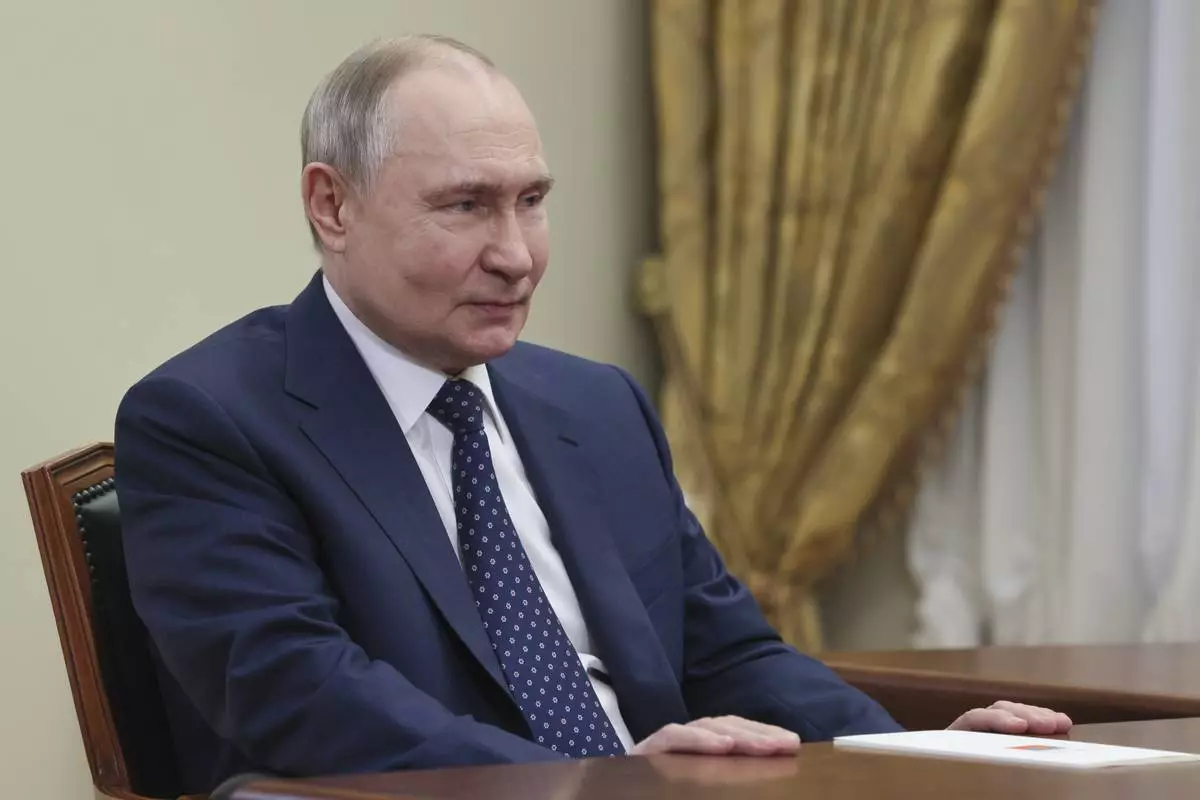
Russian President Vladimir Putin meets with Russian State Duma Chairman Vyacheslav Volodin in St. Petersburg, Monday, April 28, 2025. (Mikhail Metzel, Sputnik, Kremlin Pool Photo via AP)
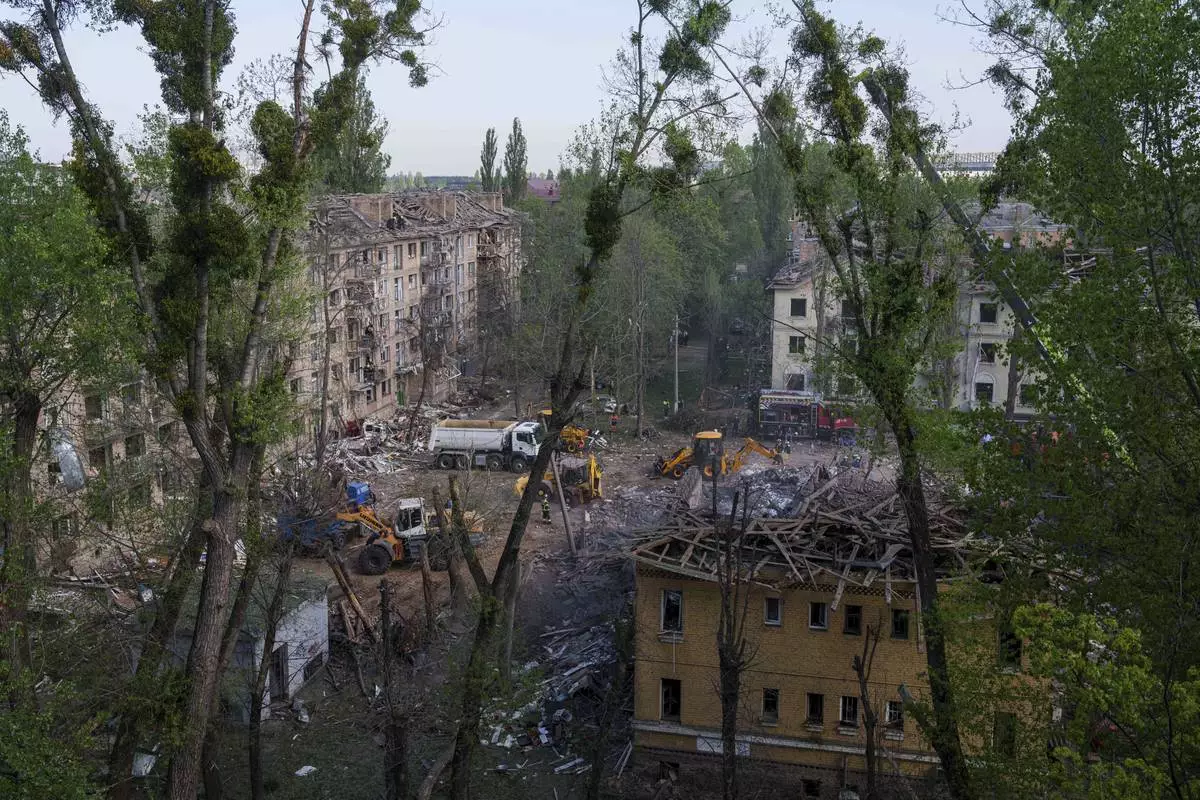
Rescue workers clear the rubble of a house destroyed by a Russian strike on a residential neighbourhood in Kyiv, Ukraine, on Thursday, April 24, 2025. (AP Photo/Evgeniy Maloletka)
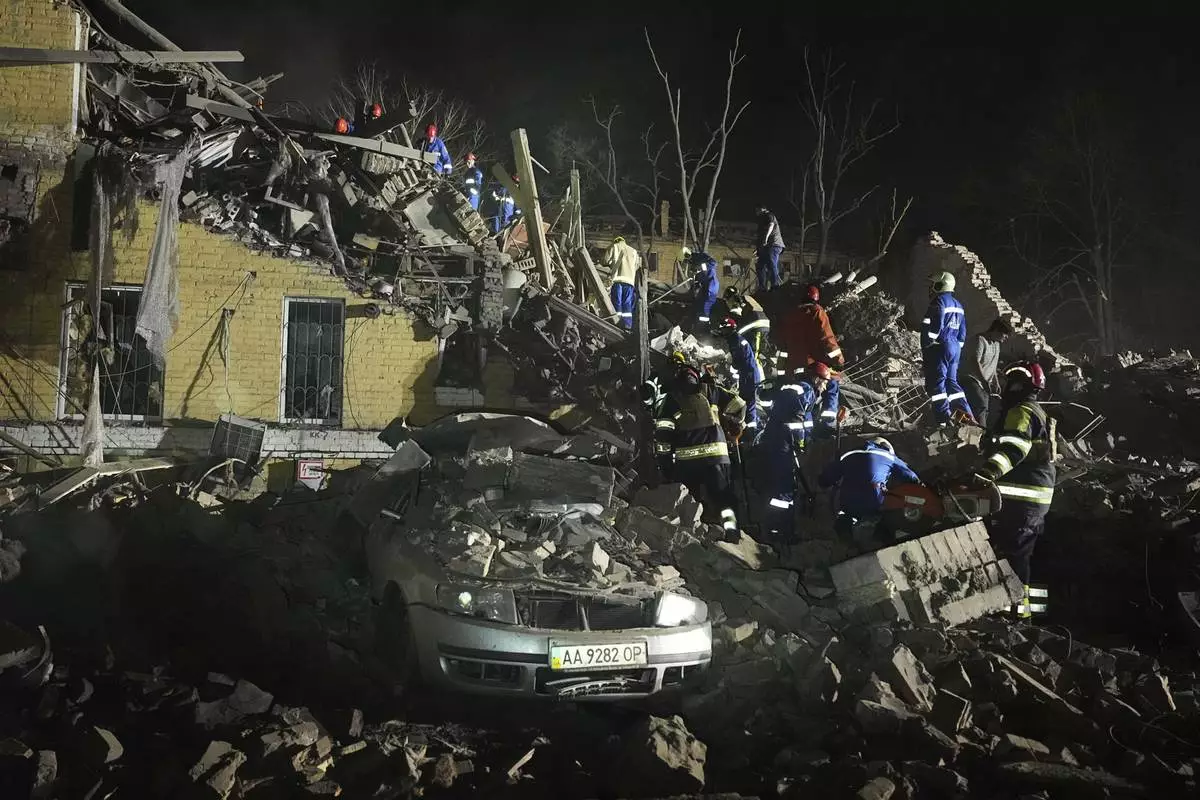
Ukrainian search personnel clear the rubble after a Russian ballistic missile attack in Kyiv, Ukraine, early Thursday, April 24, 2025. (AP Photo/Efrem Lukatsky)
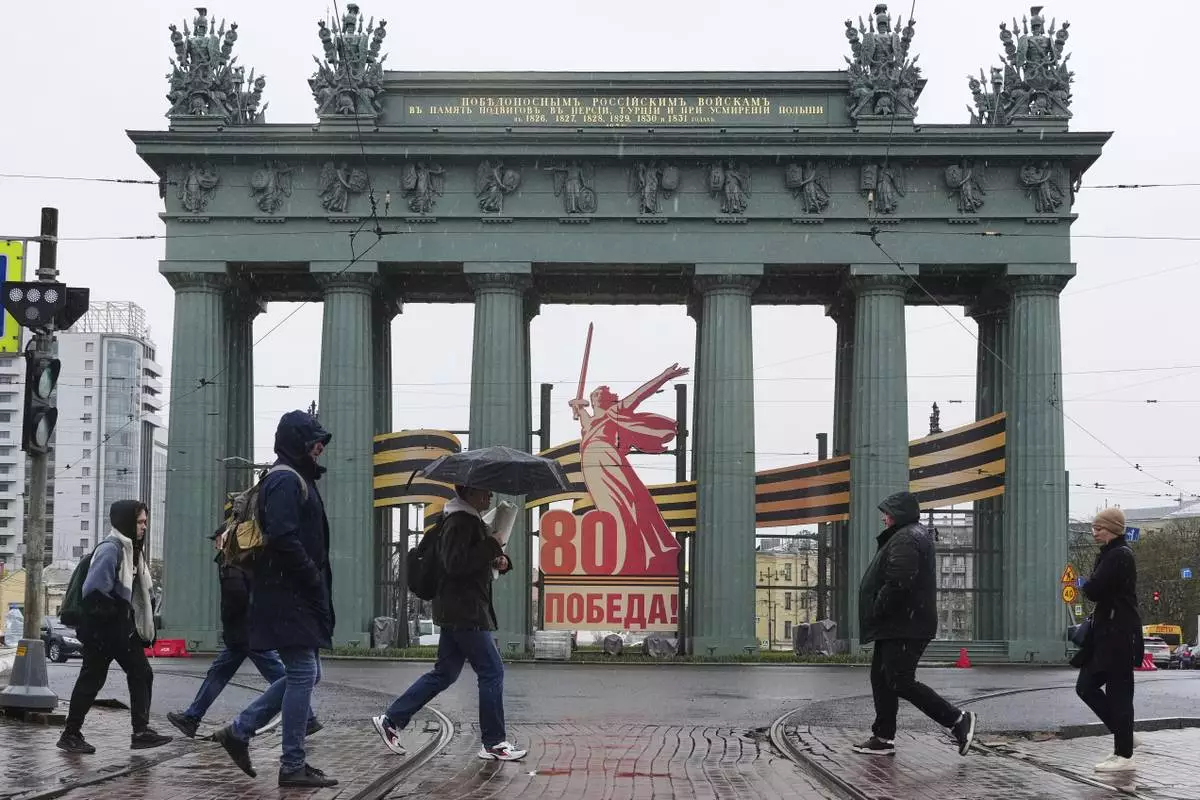
People cross the street past 'Moscow's Triumphal Gate' decorated with a large-scale composition depicting a replica of the 'Motherland Calls' monument ahead of celebrations of the 80th anniversary of the Soviet Union's victory over Nazi Germany during World War II in St. Petersburg, Russia, Monday, April 28, 2025. (AP Photo/Dmitri Lovetsky)
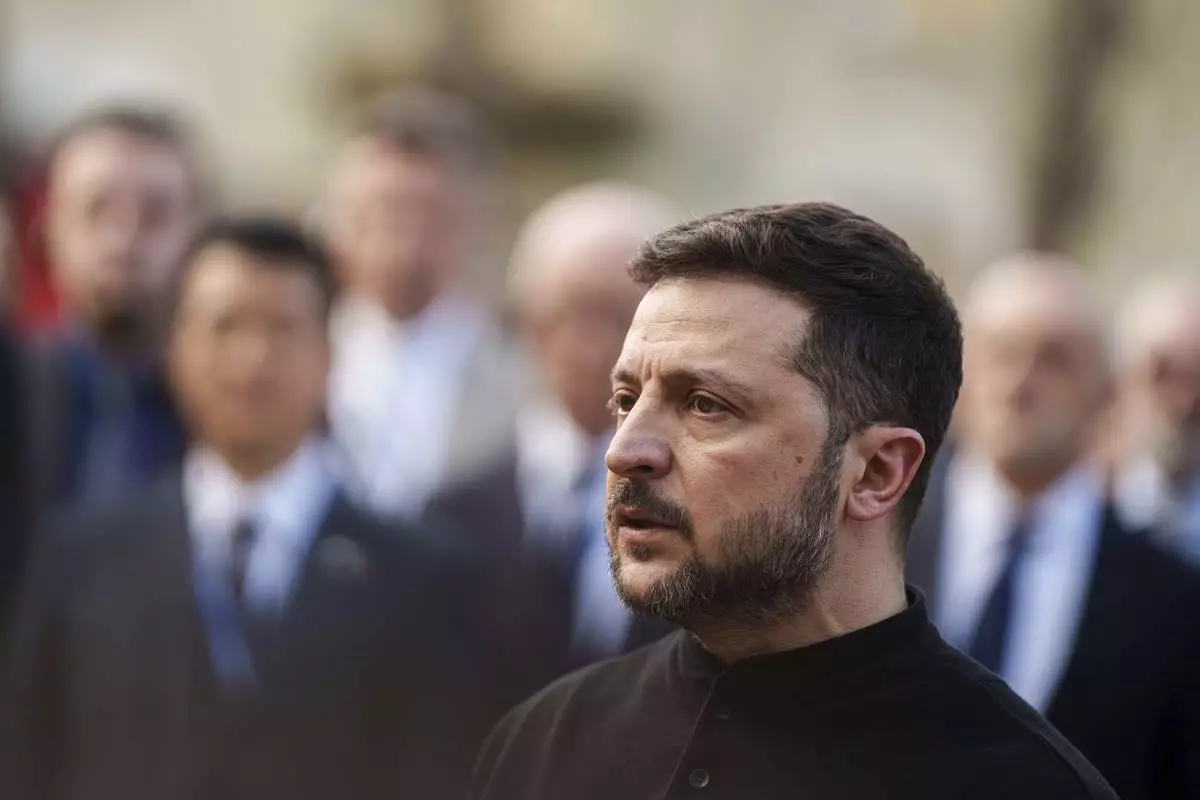
President Volodymyr Zelenskyy answers journalists' questions near a house destroyed by Thursday's Russian strike on a residential neighborhood in Kyiv, Ukraine, on Friday, April 25, 2025. (AP Photo/Evgeniy Maloletka)
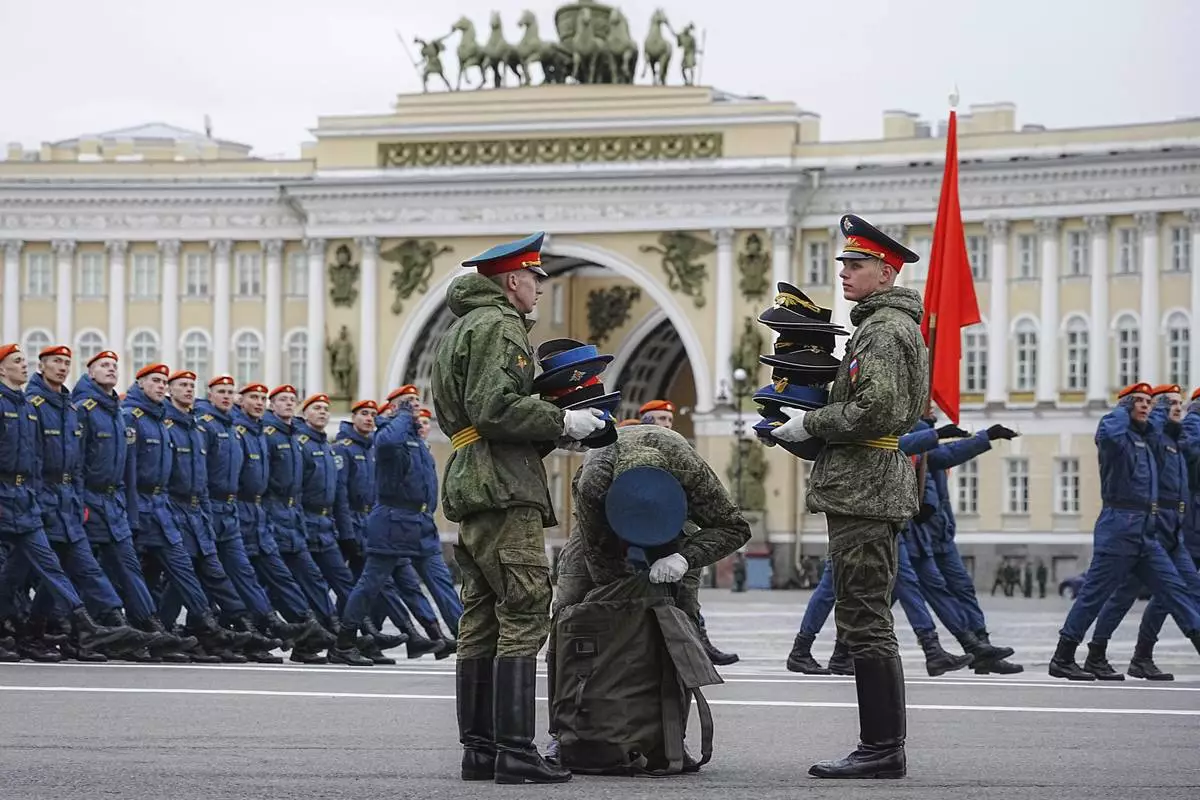
Honour guard soldiers pack caps after a rehearsal for the Victory Day military parade, which will take place at Dvortsovaya (Palace) Square on May 9 to celebrate 80 years after the victory in World War II, in St. Petersburg, Russia, Tuesday, April 22, 2025. (AP Photo/Dmitri Lovetsky)
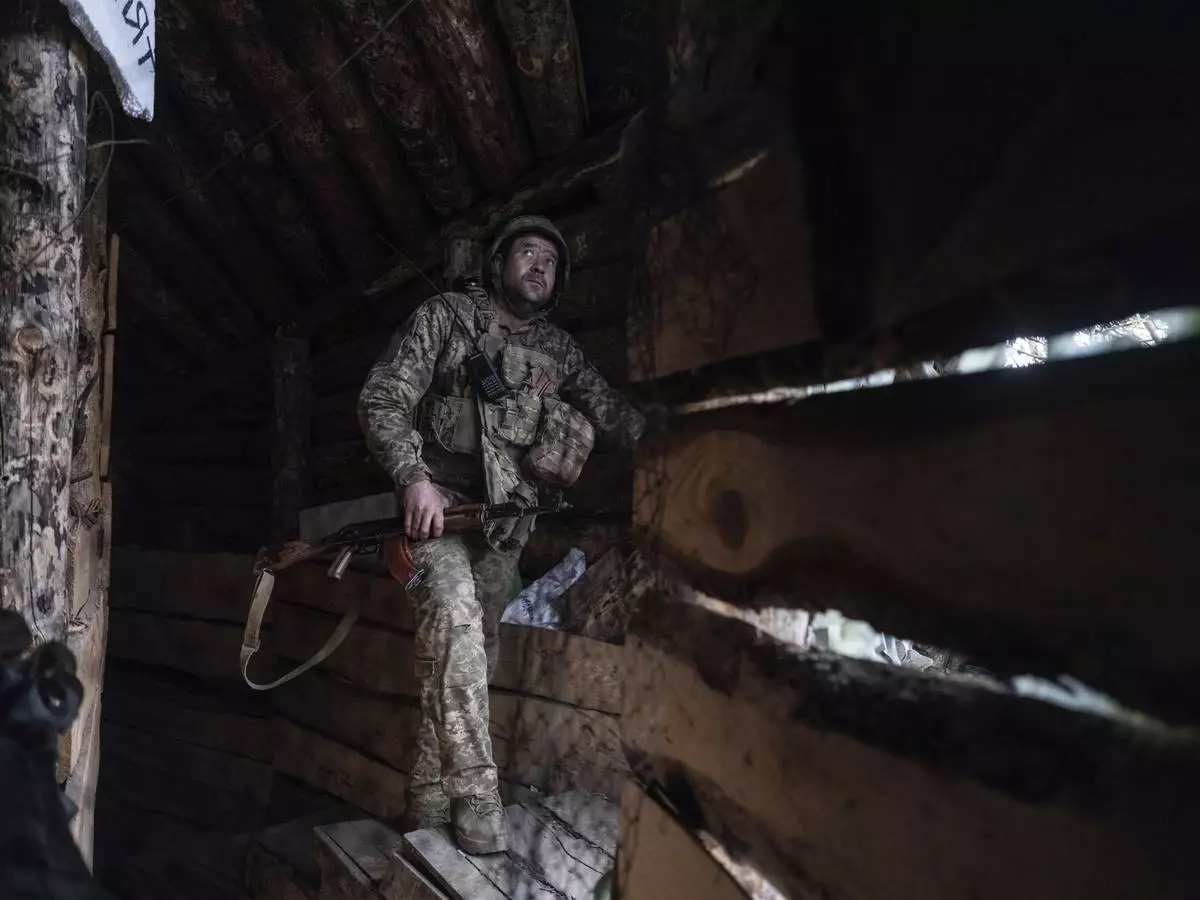
In this photo provided by Ukraine's 93rd Kholodnyi Yar Separate Mechanized Brigade press service, a soldier looks out of a shelter on the anti-drone firing position in Kostyantynivka, the site of the heavy battles with the Russian troops in the Donetsk region, Ukraine, Thursday, April 24, 2025. (Iryna Rybakova/Ukraine's 93rd Mechanized Brigade via AP).

In this photo provided by the Ukrainian Emergency Service, a car burns against the background of a damaged private house following Russia's air raid in the Donetsk region, Ukraine, Monday, April 28, 2025. (Ukrainian Emergency Service via AP)
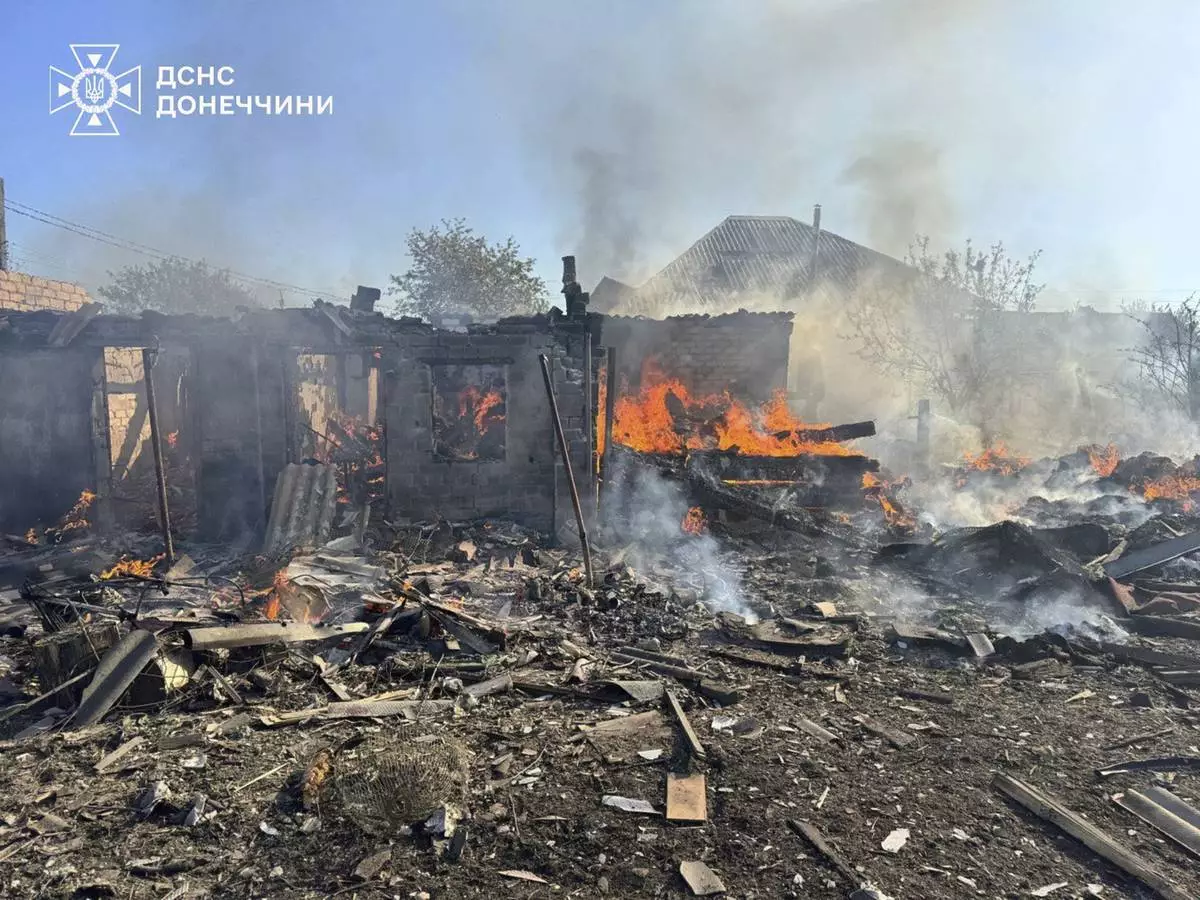
In this photo provided by the Ukrainian Emergency Service, damaged private houses burn following Russia's air raid in the Donetsk region, Ukraine, Monday, April 28, 2025. (Ukrainian Emergency Service via AP)
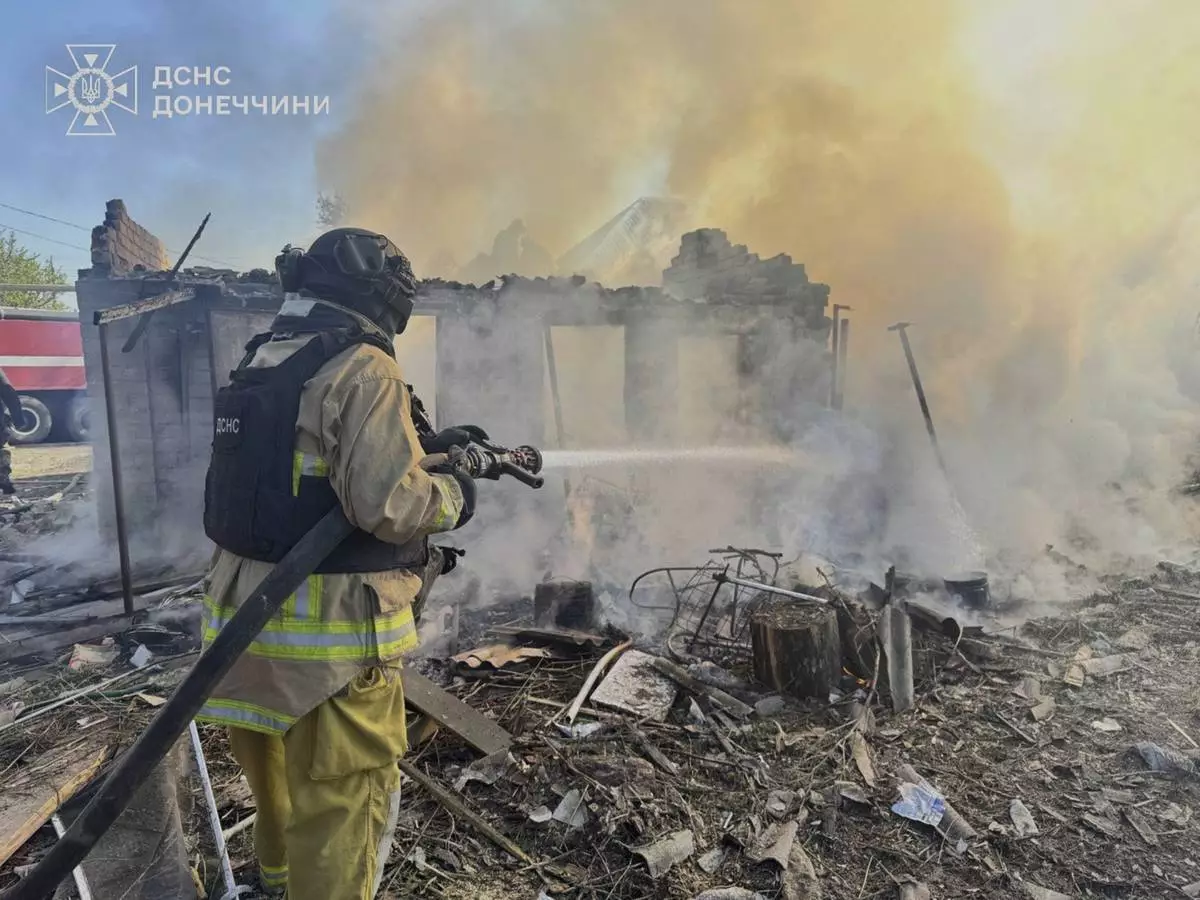
In this photo provided by the Ukrainian Emergency Service, a firefighter puts out a fire at ruined private houses following Russia's air raid in the Donetsk region, Ukraine, Monday, April 28, 2025. (Ukrainian Emergency Service via AP)